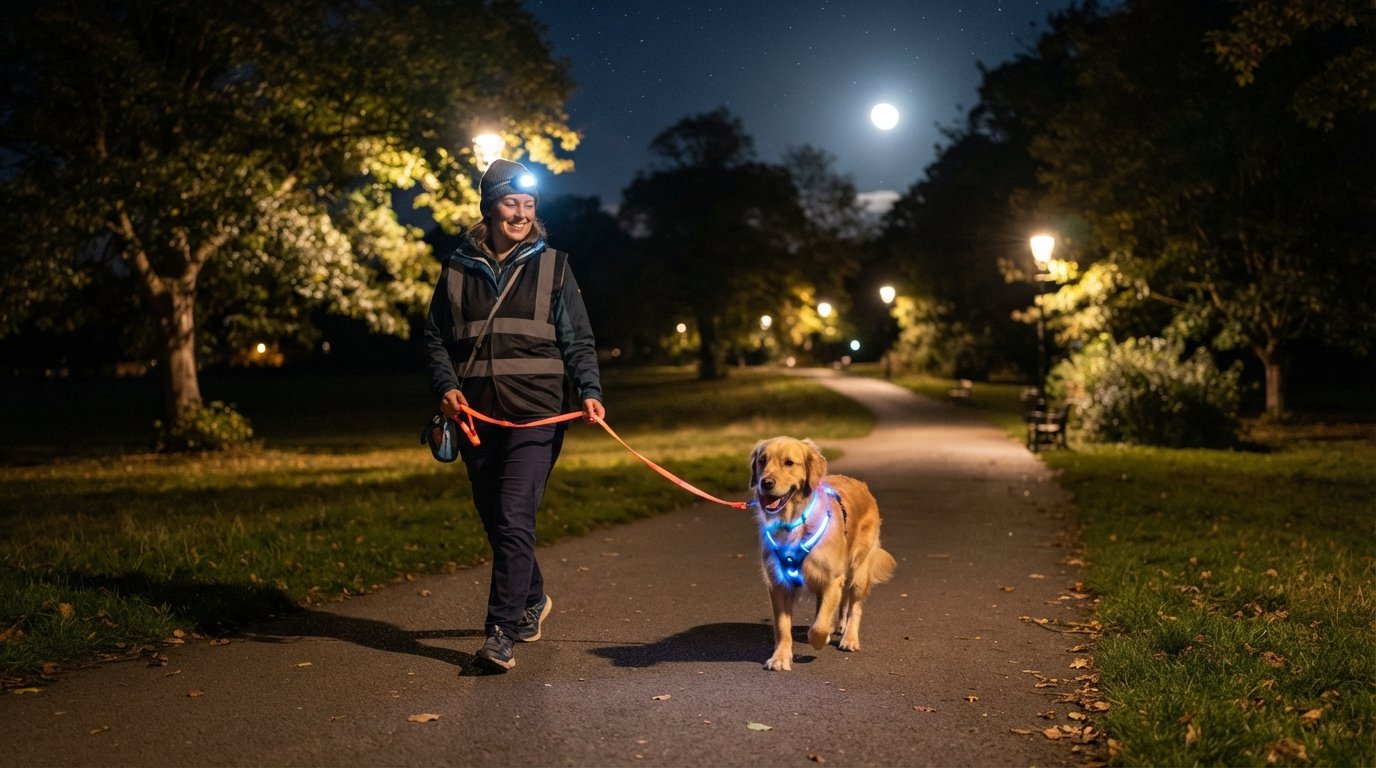
Have you noticed how walking your dog at night feels like an obstacle course after the clocks fall back? During my first autumn walking my golden retriever after sunset, visibility disappeared faster than expected. That night taught me lessons daytime walks never could, and I have refined my approach ever since.
This guide draws on years of trial and error, plus advice from trainers and safety experts. It covers gear that works, safe routes, and wildlife precautions I wish I had learned sooner. These tested habits help keep tails wagging safely while walking your dog at night.
Find a quick-answer summary, a deeper safety breakdown, my favorite light-up leash recommendation, and a printable-style checklist. Keep the checklist by the door for walking your dog at night. Think of this as advice from a fellow pet parent, not a dry manual.
Key Takeaways
- Reflective gear and LED leashes dramatically boost visibility during evening outings.
- Sticking to familiar, well-lit routes reduces trip hazards and surprise encounters.
- Wildlife awareness matters more once the sun goes down, especially in suburban areas.
- A hands-free, light-up leash keeps both hands ready for emergencies.
- Printable checklists make it easy to prep gear before you head out the door.
- Small changes, like adjusting walk times, can make a big safety difference.
Quick Answer: 5 Rules for Safe Night Dog Walks
You may want the essentials, so here are my best night walk tips for dogs from years of evening strolls.
These five rules cover routes and gear, and they work wherever darkness comes early.
- Stick to familiar, well-lit routes you know by heart, even when the streetlights are the only light source.
- Keep your dog leashed and close, and think twice about retractable leashes once the sun goes down.
- Gear up with reflective and LED items so drivers and cyclists spot you well before they’re close.
- Stay alert by skipping headphones and keeping an eye out for approaching traffic.
- Carry your phone and a noise deterrent, like a small air horn, just in case something unexpected happens.
Many readers ask about timing. I find early evening works best for most dogs and owners, as the sun drops before full darkness.
Want the full story behind these night walk tips for dogs? I’ll explain each rule, gear choice, and safety habit below.
Is It Safe to Walk Your Dog at Night?
Yes, nighttime dog walking safety is possible when you respect the risks that come with darkness. I take my dog out most evenings after sunset. Preparation beats luck every time. Three dangers need your full attention: distracted drivers, wildlife, and hidden ground hazards.
Dealing with Drivers and Low Visibility
Cars are the biggest threat on any night walk. Research shows drivers react more slowly after dark, especially when headlights create bright spots and deep shadows.
Dark clothing on you or your dog quickly disappears in those shadows. A driver using a phone or squinting into headlights may not see you in time.
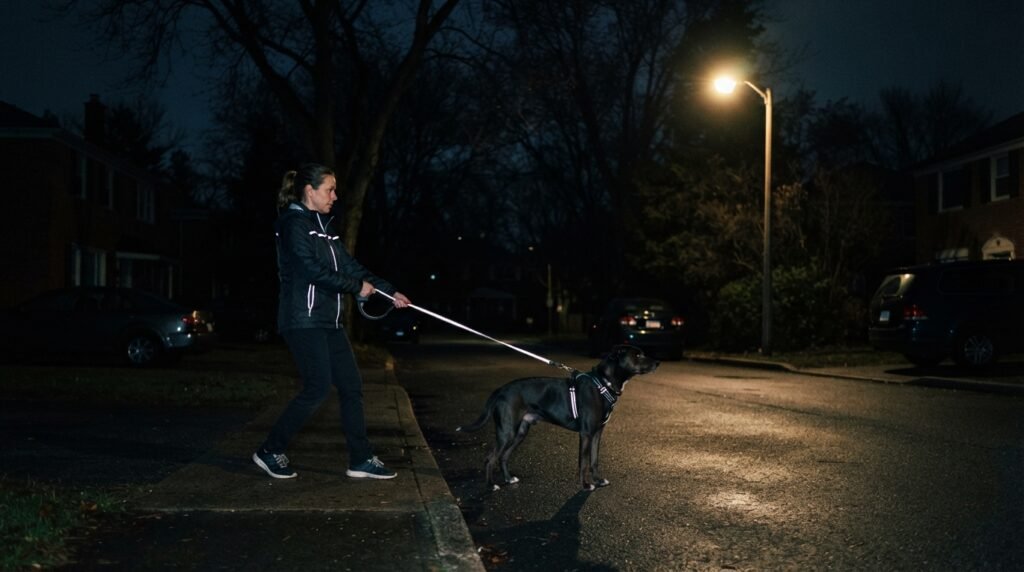
I always walk facing traffic so I can react if a car gets too close. I also wear reflective gear, even on short trips around the block. These small habits sharply lower your risk with little effort.
Wildlife Encounters After Dark
Nighttime brings out different animals than a midday stroll. Coyotes, foxes, and owls become more active after sunset because they are hunting.
“Lower visibility affects both your pet and other people, and predators like coyotes, birds of prey, and foxes are more active at night,” says Danielle Rakestraw.
Small dogs face the greatest risk because they can look like prey from far away. Larger dogs may also fear rustling leaves or a sudden hoot overhead.
My dog becomes more reactive after dark and barks at sounds he ignores in daylight. Watching his body language helps me notice trouble before it worsens.
Trip Hazards You Can’t See Coming
Curbs, potholes, and cracked sidewalks blend into the pavement after dark. Broken glass and loose debris can turn a routine walk into a twisted ankle.
I no longer rely on streetlights alone. A flashlight or headlamp aimed a few feet ahead reveals low-light hazards before my dog or I step on them.
This gear protects you as well as your dog. A handler who trips while holding a leash can lose control quickly, causing new problems.
| Night Walk Risk | Why It’s Dangerous | Quick Fix |
|---|---|---|
| Low Visibility & Drivers | Slower driver reaction times; dark clothing blends into shadows | Wear reflective gear and walk facing traffic |
| Wildlife Encounters | Coyotes, foxes, and owls hunt after dark; small dogs can look like prey | Avoid wooded areas and keep leash short |
| Trip Hazards | Curbs, potholes, and debris are invisible in low light | Carry a flashlight or headlamp |
Managing these three risks greatly improves nighttime dog walking safety before you need fancy gear.
How Shorter Days Change Your Dog Walking Routine
I once thought daylight saving time was only an annoying clock change twice a year. Then I got a dog, and it became a scheduling emergency. One week, I walk in warm evening light; the next, I am dog walking in the dark at that hour.
That change catches many dog owners off guard. Here is what happens when the clocks fall back and how I keep my dog’s routine steady.
What Happens When Daylight Saving Time Ends November 1
When daylight saving time ends, clocks fall back one hour overnight. My usual 6 p.m. walk once happened in full daylight, but now happens after sunset.
Across most of the U.S., sunset shifts to 4:30 and 5:30 p.m. in early November, depending on location. My relaxed after-work walk becomes dog walking in the dark almost overnight, with zero warning built into the calendar.
This change catches many dog owners off guard. A familiar sidewalk can look completely different without streetlights or daylight.
This sudden shift affects visibility, driver awareness, and my dog’s energy level. A calm daylight walk can feel rushed or tense when darkness arrives early.
Shifting Your Walk Schedule Without Stressing Your Dog
Dogs thrive on routine, so I never change the schedule overnight. Instead, I shift walk times 10 to 15 minutes earlier every few days before the time change.
Many dog behavior resources point to a sweet spot for evening walks between 7:30 and 9 p.m. That window balances wind-down time before bed with safety concerns about walking too late or straight into pitch darkness.
Earlier walks near dusk, rather than full darkness, keep my dog calmer and easier to manage. Some dogs resist at first, especially when dinner or bathroom breaks happen at exact times.
Here is the gradual shift schedule I use with my own dog before the time change:
| Timing | Walk Time | Goal |
|---|---|---|
| 2 weeks before time change | 6:00 p.m. | Keep normal schedule, track sunset time |
| 1 week before time change | 5:45 p.m. | Shift 15 minutes earlier |
| Week of time change | 5:15–5:30 p.m. | Match new, earlier sunset |
| After adjustment | 7:30–9:00 p.m. | Settle into a safe, consistent routine |
Small, steady changes help my dog adapt with less stress. They also keep both of us safer when dog walking in the dark becomes normal for the season.
Visibility Gear That Works for Walking Your Dog at Night
Let me save you the guesswork: the right reflective dog gear makes night walks feel safe, not stressful. I’ve tested more leashes, collars, and harnesses than I care to admit.
Some gear lights itself. Other pieces reflect light toward drivers and cyclists. Knowing this difference helps you build a setup that works after sunset.
https://www.youtube.com/watch?v=sUOwVBOyLSs
Light-Up Leashes: My Go-To High-Visibility Dog Leash Pick
My favorite night-walk item is a leash that glows without streetlights. I switched to an LED leash a couple of years ago and never looked back.
Unlike reflective-only leashes, mine uses a small rechargeable battery inside the handle. It casts a soft glow along its full length, so drivers spot us from down the block.
I charge mine for about two hours and get three or four nights of steady use. That reliability helps when I forget to check my phone’s flashlight battery.
Reflective Strips, Vests, and Harnesses
Here’s a distinction I wish someone had explained sooner. Active gear emits light, while passive gear like reflective dog gear bounces light toward its source.
A reflective harness or vest will not glow in darkness, but headlights make it shine brightly. I choose high-contrast colors like neon yellow or blaze orange for my dog’s vest.
Those bright colors stand out in dim light, before a reflective strip catches a direct beam. Bold color and reflective trim give drivers two chances to notice us.
LED Collar Lights and Headlamps for Dog Walkers
A clip-on LED collar light completes my dog’s nighttime outfit. Most models flash in a 360-degree pattern, helping cars spot us from any direction.
I also wear a headlamp instead of carrying a flashlight. It keeps both hands free for the leash and my phone when my dog lunges toward a squirrel or raccoon.
Headlamps for dog walkers come in cheap, lightweight options. I slide mine over a baseball cap and forget it is there until I need it.
Comparison Table: Which Visibility Gear Fits Your Walk
The right gear depends on your budget, route, and need to stay hands-free. I built this table from my own testing to help you decide quickly.
Use it as a starting point, not a strict rulebook. Most of my nighttime setups combine two or three options.
| Gear Type | Visibility Range | Hands-Free | Average Cost | Best For |
|---|---|---|---|---|
| LED Light-Up Leash | Up to 300 feet | No | $15-$25 | Well-traveled streets with traffic |
| Reflective Harness/Vest | Up to 500 feet with light source | Yes | $10-$20 | Dogs who pull or need extra coverage |
| LED Collar Light | 360-degree, up to 200 feet | Yes | $8-$15 | Backup lighting for any walk |
| Headlamp | Up to 100 feet, directional | Yes | $12-$20 | Dark trails or unlit sidewalks |
Featured: LED Retractable Dog Leash with Flashlight
Of every high-visibility dog leash I’ve tried, I choose this LED model with a built-in flashlight each night. It combines three jobs in one tool: a leash, light, and brake. That combination helps on dark sidewalks and unlit trails.
Overview and Why I Use One
This high-visibility dog leash looks like a standard retractable leash at first glance. However, its handle holds a bright LED flashlight. I turn it on before leaving, and the beam lights the path several feet ahead.
The retractable design lets my dog sniff and explore within a set range, while the light keeps us visible. I need no separate flashlight or clip-on gear. One tool does double duty when I juggle poop bags and a coffee mug.
Brake Control for Sudden Stops
A responsive brake is this leash’s most important feature. If a car turns a corner too fast or a cat crosses the yard, I must stop my dog instantly.
This high-visibility dog leash has a firm, one-button brake that locks the cord length immediately. I test it before every walk to confirm it works smoothly.
Cheaper retractable leashes may have delayed or weak brakes, creating danger in a split second. A strong brake also shortens the leash near crosswalks or other dogs, without changing gear.
Choosing Between 3m and 5m Lengths
Choose based on your dog’s size, training level, and usual walking area. A 3-meter leash suits smaller dogs and narrow sidewalks with heavy foot traffic. It keeps your dog close near busy intersections.
A 5-meter leash suits larger dogs or open parks with room to roam safely. I use that length in my neighborhood park, then reel it in to 3 meters near streets.
If your dog pulls hard or lacks loose-leash skills, start with the shorter option. You can build confidence together over time.
Honest Limits: What This Leash Can’t Do
I want to be upfront: a retractable leash is not right for every walk or dog. Expert caution supports this point.
“Retractable leashes can reduce your control over your dog and make it harder for drivers to see you coming, especially compared to a standard six-foot leash.”
This caution matters most on busy streets or with dogs that lunge or startle easily. I switch to a short, fixed leash in heavy traffic or unfamiliar areas.
The flashlight improves visibility, but it cannot replace a standard leash’s tighter control. Know your dog and route, then choose the right tool for that night’s walk.
Route and Leash-Length Tips
I’ve learned that gear alone won’t keep my dog safe after dark. My route matters as much as the flashlight clipped to my leash.
My route and leash length can create a calm, steady walk or a scramble in the dark. Here is how I consider both each night.
Picking Well-Lit, Familiar Routes
I always stick to streets I know. Familiar ground helps me remember sidewalk dips, exposed tree roots, and a neighbor’s loose gate.
Unlit areas hide these hazards. A path that seems safe by day can become a maze of curbs, potholes, and wildlife after sunset.
I keep my dog on the main path instead of letting her explore dark corners or overgrown edges. Those areas may hide trip hazards and startled animals.
My rule is simple: if I cannot see it clearly, we do not walk through it.
Adjusting Leash Length for Night Visibility
Once I choose a safe route, leash length becomes my next tool. I shorten it so my dog stays close and I can react quickly.
A shorter leash keeps her silhouette within my flashlight’s beam instead of letting her drift into shadow.
This works even better when I pair it with an LED dog collar. The light glows at her neck, so I can track that small dot as she moves.
A loose, long leash may feel generous, but it creates distance when darkness limits visibility. After sunset, shorter control works best.
Retractable Leash vs Regular Leash: Which Is Safer at Night
This is the question I hear most, and the answer depends on my route. My retractable leash has a built-in flashlight and brake. It offers hands-free light and quick stopping power on quiet, open sidewalks.
Dog trainer Askeland recommends a standard 6-foot leash for better nighttime control and visibility. This matters most in busy areas or near traffic. A fixed-length leash keeps my dog at a predictable distance, with no slack to extend suddenly if she spots something interesting.
I switch between them based on the route. I always point readers to this detailed Retractable Leash vs Regular Leash comparison for each style’s pros and cons. It helps them choose which option fits their nightly walks.
| Leash Type | Length Range | Control Level | Best Use Case |
|---|---|---|---|
| LED Retractable Leash | 3m–5m | Moderate, brake-assisted | Quiet streets, open paths |
| Standard 6-Foot Leash | 6 feet fixed | High, consistent | Busy sidewalks, near traffic |
| Hands-Free Waist Leash | 4–6 feet | Moderate, less precise | Jogging, familiar routes |
Wildlife and Weather Precautions
Nighttime risks involve more than headlights or sidewalk cracks. Wild animals become active after sunset, while weather can make sidewalks dangerous. I prepare for both before clipping on the leash.
Coyote and Wildlife Safety on Night Walks
Coyotes do not punch a time clock, and neither do owls or foxes. Dusk and the hours after dark are prime hunting times for predators living near suburban neighborhoods.
Coyotes, birds of prey, and foxes are most active at night and will hunt small animals, making small dogs especially vulnerable during evening walks.
That warning changed how I walk my small dog after sunset. I now carry a compact air horn clipped to my jacket zipper. One blast usually startles a curious coyote before it gets close, and the horn is louder than my voice against an unfamiliar stray dog.
Walking Safely in Rain, Fog, and Cold
Rain and fog reduce visibility for everyone, including drivers, before darkness arrives. I wear a bright, reflective rain jacket and put a waterproof reflective cover over my dog’s harness when rain is forecast. Fog muffles sound too, so I stay alert near intersections, where cars may approach before I hear them.
Cold weather brings a hidden hazard: ice. Patches that look like wet pavement under a streetlight may be solid ice, and I have slipped after misjudging them. I slow down on frosty nights and keep my dog’s leash short enough to catch a stumble before a fall.
Understanding Your Dog’s Night Vision and Eyesight
Dogs have a reflective eye layer called the tapetum lucidum. It bounces light through the retina, giving most dogs sharper dog night vision and eyesight than the average human has. That helps explain why my dog spots a rabbit in the bushes long before I notice it move.
Better night vision does not guarantee confidence. Some dogs hesitate at unfamiliar shadows or shy from sounds they cannot place in the dark. If your dog seems cautious after sunset, vision may not be the cause; calm, well-lit walks can build nighttime trust.
Night Walk Checklist
I keep a simple checklist by my front door to avoid leaving after dark without the right gear. It has saved me when I was half-asleep and nearly forgot my leash light. Screenshot this night walk checklist, or print it and place it near your leash hooks.
A good routine removes guesswork from every walk. Here is what I grab and check before stepping outside.
Gear to Bring Every Time
My bag by the door always holds the same core items. A reliable headlamp for dog walkers is essential because it keeps both hands free for leash control and pickup duty.
| Item | Purpose | Why It Matters |
|---|---|---|
| Headlamp | Hands-free lighting | Keeps your path and your dog visible without blocking leash hand |
| Reflective collar or leash | Visibility for drivers | Catches headlights from far away |
| Charged phone | Emergency contact | Lets you call for help or use GPS if lost |
| Air horn | Deterrent | Startles wildlife or aggressive animals |
| Poop bags | Cleanup | Always pack extra for unexpected stops |
Night walks hide grime, so I keep waterless paw wash by the door. My pro tip: wipe paws after every outing to remove mud, road grit, or chemicals hidden in the dark.
Quick Pre-Walk Safety Check
Before clipping on the leash, I run through a quick mental list. It takes seconds but covers the basics every time.
- Phone charged and in pocket
- Reflective gear on both of us
- Route planned and familiar
- Weather checked for rain or fog
“I never leave the house without my phone, a blast of light, and something reflective on both of us.”
This gear mindset also helps when planning trips with your dog. My Dog Road Trip Essentials guide covers travel-ready pet gear. Much of it overlaps with night-walk basics, so check it if adventures are on your calendar.
Conclusion
I started walking my dog at night when the clocks changed. Now, it is a favorite part of my day. Quiet streets, cool air, and a slower pace make evening walks different from our daytime routine. I would not trade them.
The right gear made a big difference for me. A light-up leash, reflective strips, and a strong headlamp made walking your dog at night less stressful. Familiar, well-lit routes and alertness around wildlife complete the routine I trust each evening.
If your dog seems unsure about night walks, give it time. Some dogs adjust in a few days, while others need a few weeks. Early evening, right after dinner, works well for most households, but you will find your own rhythm.
Bundle up, clip on that light-up leash, and head out the door. Walking your dog at night does not have to feel risky once you know your gear and timing. Here is to safer, cozier walks all season long.
FAQ
Is it safe to walk my dog at night?
Yes, nighttime dog walking safety mostly depends on preparation. I stick to familiar, well-lit routes, keep my dog leashed and close, and wear reflective dog gear. Drivers have less reaction time after dark, so visibility matters most.
What’s the best gear for dog walking in the dark?
My go-to gear includes a high-visibility dog leash with built-in LEDs, a reflective collar or harness, and a headlamp. The leash helps drivers spot my dog, while the headlamp keeps my hands free and reveals curbs or potholes. I also love an LED dog collar because its 360-degree glow catches drivers’ eyes before headlights reach us.
What time is best for a night walk with my dog?
I aim for early evening, right before full darkness. This timing suits most dogs’ bladder and energy needs, and natural light helps me navigate. After daylight saving time ends, I shift my dog’s walk earlier over a week or two to avoid abrupt stress.
Should I use a retractable leash for nighttime dog walking?
I love my LED retractable leash for everyday walks, but it has limits. Experts like Askeland note that retractable leashes provide less control and visibility to drivers than standard leashes. I use a shorter, traditional leash on busy streets or unfamiliar terrain after dark, based on training and location.
How do I keep my dog safe from coyotes and other wildlife on night walks?
I take coyote and wildlife safety seriously because coyotes, foxes, and owls become more active after sunset. I carry a small air horn as a deterrent, keep the leash short, and stay alert in wooded or open areas. These steps matter most for small-breed dogs, which are more vulnerable to predators.
Can dogs see better than humans in the dark?
Dog night vision is impressive because of their eye structure, so most dogs see better in low light than humans. However, better eyesight does not always mean greater confidence. Some dogs remain hesitant or spooked because unfamiliar sounds and shadows feel different after sunset.
What should I bring on every night walk with my dog?
My night walk checklist includes a charged phone, headlamp, reflective dog gear, and poop bags. I also carry an air horn for wildlife encounters. I keep waterless paw wash by the door because darkness hides what my dog’s paws picked up.
How does daylight saving time affect my dog’s walking routine?
When clocks fall back on November 1, a comfortable 6 p.m. walk can suddenly happen in near-total darkness. I gradually shift my dog’s walk earlier in the days before, preventing confusion or resistance from sudden changes.