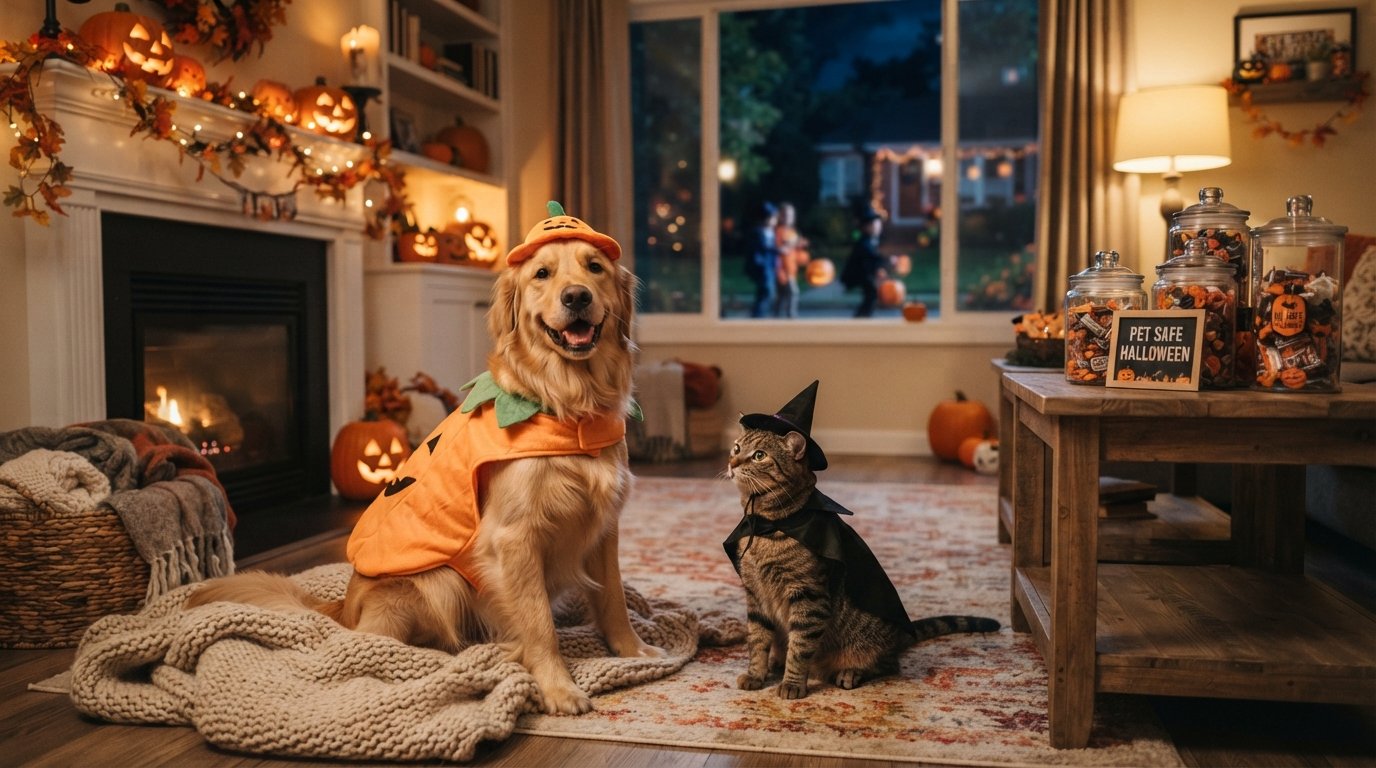
Could the scariest part of October 31st be the open front door swinging again and again?
I love decorating my porch and handing out treats. For Halloween pet safety, I keep my calm house safe for dogs and cats.
Candy sits on every table. Kids race through the hallway with pillowcases full of sweets.
Costumed strangers ring the bell nonstop, and the door opens every few minutes.
That combination creates real risks for curious or anxious animals.
Good preparation starts long before the first trick-or-treater knocks. This guide covers candy dangers, costume do’s and don’ts, and home setup.
It also explains calming techniques, decoration hazards, and what to do if an emergency strikes.
Your furry companion does not need to join the festivities to stay happy.
With a few simple steps, you can keep this spooky season fun for everyone, including four-legged family members.
This guide reflects the latest 2026 recommendations from veterinarians and animal safety experts.
Key Takeaways
- Plan ahead by removing tempting treats and securing doors before guests arrive.
- Check costumes and collars for a comfortable, hazard-free fit.
- Create a quiet, safe space away from the noise and foot traffic.
- Watch for toxic ingredients like chocolate and xylitol in holiday candy.
- Keep decorations, wires, and candles out of paws’ reach.
- Know the signs of stress and have a vet’s number ready just in case.
Halloween Pet Safety at a Glance: The 5 Biggest Risks for Pets
If you have only a minute, here is a quick look at Halloween pet hazards that can threaten pets.
Quick Answer: The five biggest Halloween pet hazards are toxic candy, choking hazards, costume stress, open flames, decoration cords, and escape risk. Choking hazards include wrappers and decorations, while escape risk rises at a busy front door. The guide explains each risk, but this snapshot shows what to watch for tonight.
I group Halloween pet hazards into four categories: candy and food, costumes, decorations, and anxiety or escape risk. Each area has different dangers, but together they cause nearly every emergency call vets receive on Halloween night.
“Candy wrappers create a swallowing hazard. Electrical cords attract pets that like to chew. Candles bring burn and fire risks. An open front door gives a frightened dog or cat a way out.”
| Risk | Common Cause | Quick Safety Tip |
|---|---|---|
| Toxic Candy | Chocolate, xylitol, raisins | Store candy in sealed containers, out of paw’s reach |
| Choking Hazards | Wrappers, foil, small decor pieces | Sweep floors and check pet bowls after guests leave |
| Costume Distress | Tight fits, blocked vision or movement | Run a short trial before the big night |
| Decoration Dangers | Candles, cords, glow sticks | Swap open flames for battery-operated lights |
| Escape & Anxiety | Frequent door opening, loud visitors | Keep pets in a quiet room with ID tags on |
I’ll explain each Halloween pet hazard later, with practical steps to keep your dog or cat safe. For now, use this list as your safety cheat sheet before trick-or-treaters ring the doorbell.
Is Halloween Candy Dangerous for Pets?
My neighbor’s dog needed emergency care after raiding fun-size chocolate bars. That bowl by the door looks festive, but it hides serious risks for dogs and cats. Knowing chocolate toxicity in dogs, xylitol poisoning in pets, and wrapper hazards helps protect pets, while choosing pet-safe Halloween candy starts with knowing what to avoid.
1. Chocolate Toxicity in Dogs and Cats
Chocolate contains theobromine, a compound dogs cannot break down quickly. Dark and baking chocolate contain the most theobromine, making them more dangerous than milk chocolate. Even a small square of baker’s chocolate can cause serious chocolate toxicity in dogs, regardless of breed size.
Cats face the same risk, though they rarely seek sweets. If a curious cat licks melted chocolate from a wrapper, vomiting, a racing heart, tremors, or seizures can appear within hours. I always call my vet after chocolate exposure because early treatment works best.
2. Xylitol Poisoning in Pets: The Hidden Danger in Sugar-Free Treats
Xylitol is a sugar substitute in sugar-free gum, mints, and some “healthier” Halloween candies. In dogs, it causes rapid insulin release, which drops blood sugar within minutes. This reaction can damage the liver, and xylitol poisoning in pets can become fatal without quick treatment.
The hard part is finding xylitol on a label. It may appear as birch sugar, so I check each package before candy reaches my pets. Even one piece of sugar-free gum can poison a small dog.
3. Wrappers, Foil, and Choking Hazards
Wrappers create danger beyond the candy itself. Foil, cellophane, and plastic can cause choking or block the intestines. A painful blockage sometimes requires surgery.
I’ve also learned to watch for raisins in Halloween treat mixes. Raisins can cause acute kidney failure in dogs, so I treat them like chocolate.
These signs may mean your pet swallowed candy packaging:
- Vomiting or repeated retching
- Sudden loss of appetite
- Unusual lethargy or hiding
- Straining or difficulty passing stool
Pet Candy Danger-Level Table (Low, Moderate, Severe)
To simplify choices on Halloween night, I created this danger-level table for common treats. Bookmark or screenshot this pet-safe Halloween candy guide before trick-or-treaters arrive.
| Candy or Treat | Danger Level | Why It’s Risky |
|---|---|---|
| Hard candy, lollipops | Low | Not toxic, but a choking hazard if swallowed whole |
| Milk chocolate | Moderate | Contains theobromine; large amounts cause vomiting and diarrhea |
| Treats containing raisins | Moderate to Severe | Can trigger acute kidney failure in dogs |
| Dark or baking chocolate | Severe | High theobromine content; toxic in small amounts |
| Sugar-free gum or candy (xylitol) | Severe | Causes rapid blood sugar drop and possible liver failure |
How to Choose a Safe Pet Costume
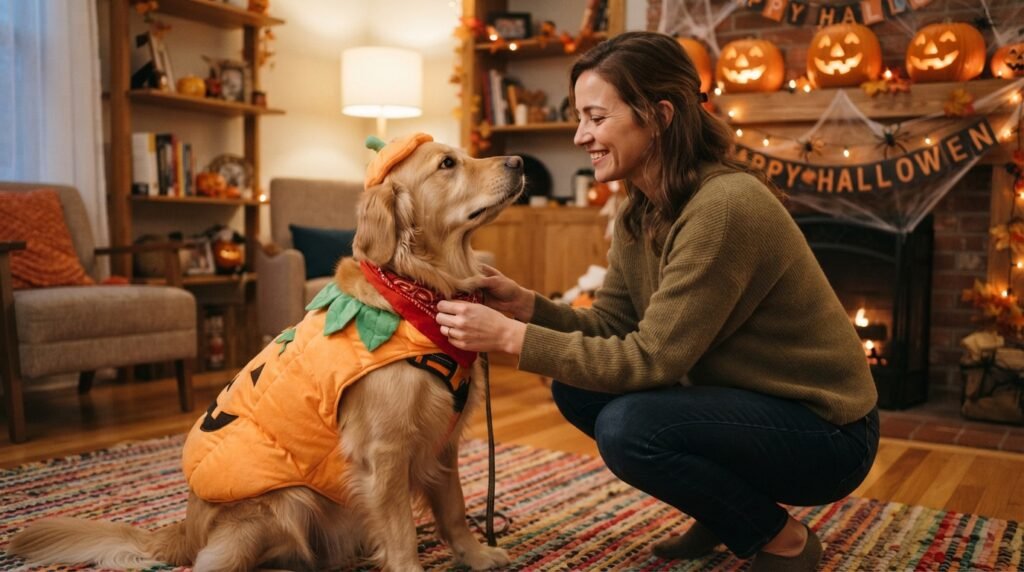
Before taking a Halloween photo, learn what makes a pet costume safe. Your dog or cat should move, breathe, and see easily. Good halloween dog costume safety starts before trick-or-treaters arrive.
Treat a costume like gear, not a prop. It should keep your pet comfortable while helping them look adorable.
1. Getting the Fit Right
A costume that pinches, slips, or bunches can quickly stress your pet. Try it at home before Halloween night, then check the fit carefully.
Look for these things:
- Room for your pet to walk, sit, and lie down naturally
- No tight bands around the neck, chest, or legs
- No loose fabric that could catch on furniture or paws
- A snug fit that won’t slip off during movement
Try the costume several days early, not on party night. You can adjust it or choose another one if needed.
2. Protecting Your Pet’s Vision and Movement
Masks, hoods, and oversized headpieces can block your pet’s sight and hearing. A dog that cannot see clearly may bump into things or fear unknown sounds.
A costume needs to allow normal movement, breathing, vision, and hearing.
Dangling accessories also pose risks. Small buttons, beads, and loose strings can cause choking if your pet chews them. Check every costume piece for parts that could come loose and end up in my dog’s mouth.
3. Preventing Overheating and Stress
Layered or heavy costumes quickly trap body heat, creating risks for any pet. Short-nosed breeds, such as pugs, bulldogs, and Persian cats, already struggle to cool themselves, so extra fabric adds danger.
Watch for these warning signs during a costume trial:
| Warning Sign | What It Means | What To Do |
|---|---|---|
| Heavy panting | Pet is overheating or anxious | Remove costume immediately and offer water |
| Drooling more than usual | Stress response or heat buildup | Take costume off and move to a cool space |
| Freezing in place | Fear or discomfort | End the costume session right away |
| Trying to escape or hide | Pet dislikes the costume | Skip the costume for Halloween night |
I watch these signs whenever I dress my dog. A short, low-stress trial tells me whether the costume will work.
4. When to Skip the Costume Altogether
Some pets dislike clothes, and that is perfectly fine. If your dog or cat paws at the costume, acts agitated, or shows distress, stop.
A comfortable pet matters more than a cute photo. Replace the costume with a festive bandana or a simple orange-and-black collar. Your pet can still have a fun Halloween picture without feeling anxious or trapped in something they hate wearing.
Preparing Your Home Before Trick-or-Treaters Arrive
Preparing my home for trick-or-treaters takes more than candy bowls and porch lights. I must also plan for my pet’s safety because Halloween brings doorbell rings, strange costumes, and open front doors. That combination makes it one of the riskiest nights of the year for a pet to bolt.
I run through a short checklist before the first knock. A little preparation helps keep my dog or cat calm and secure all evening.
1. Microchip and ID Tags for Pets (ASPCA Halloween Tips)
Before anything else, I check that my pet’s collar tags are legible. I confirm my microchip registration lists my current phone number and address.
Following ASPCA Halloween tips is my yearly habit. The organization reminds pet owners that frightened animals can slip through open doors within seconds.
“Double-check your dog’s ID tags and microchip contact details are completely up to date ahead of time.”
Keeping microchip and id tags for pets current makes reuniting with a lost pet much easier. A quick update takes minutes if something unexpected happens.
2. Gathering Halloween Night Supplies
I stock a small supply kit before guests arrive. Having everything ready means I will not scramble when the doorbell starts ringing nonstop.
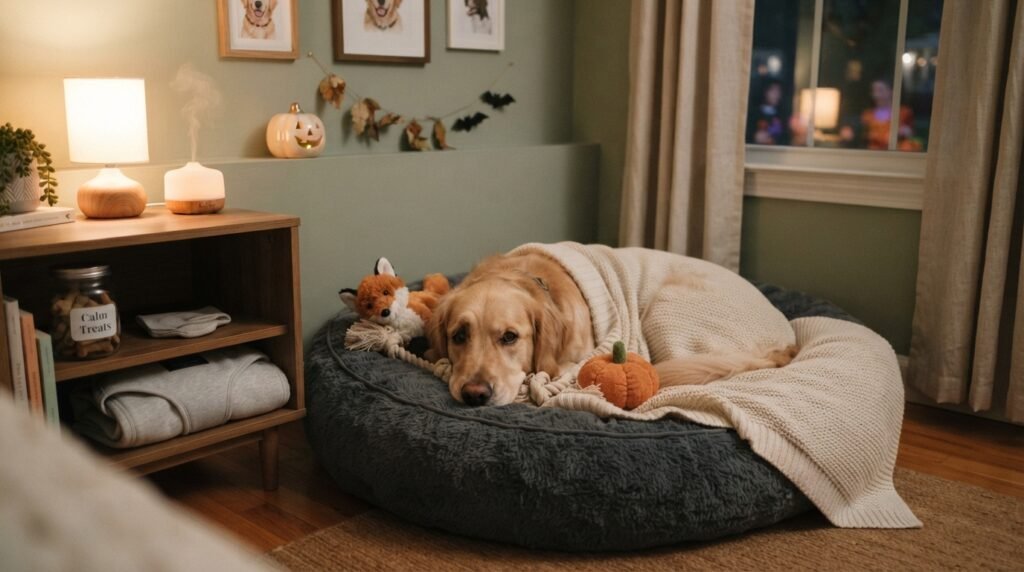
- Comfy bedding or a favorite blanket
- A toy that keeps my pet distracted
- White noise or calming music
- Fresh water in a spill-proof bowl
- A few treats for the quiet room
These small comforts help my pet feel safe, even with strangers at the door all night.
3. Setting Up Escape-Proof Barriers and Gates
I set up physical barriers well before dusk. Baby gates near the entryway stop my dog from darting toward the open door.
I keep exterior doors closed between visitors. I also keep my cat away from the entryway because cats can slip outside unnoticed faster than people expect.
| Preparation Step | What to Do | Why It Matters |
|---|---|---|
| ID Tags | Confirm legible contact info | Helps strangers return a lost pet quickly |
| Microchip | Verify current registration details | Backs up ID tags if a collar falls off |
| Baby Gates | Block access to the front entryway | Prevents a sudden dash out the door |
| Closed Doors | Keep interior doors shut near entry points | Creates an extra layer of escape protection |
How to Keep Pets Calm When Trick-or-Treaters Arrive
A steady stream of costumed kids at your door may seem fun, but it can threaten your pet. The doorbell, masks, and unfamiliar voices create intense pressure in a short time. Simple steps can make this stressful night manageable for your dog or cat.
Before the first knock, check that your pet’s microchip and ID tag are current. I covered that step in detail earlier, and it matters as much as anything here. Afterward, focus on keeping your pet physically and emotionally settled through the chaos.
1. Creating a Quiet Room for Anxious Pets
I always recommend setting up a quiet room before the sun goes down. Pick a back bedroom or bathroom away from the front entrance. Fill it with familiar bedding, favorite toys, and fresh water.
A quiet room separates your pet from noise, visitors, and constant door activity. A TV or white noise machine can mask the doorbell. For many pets, this change makes the biggest difference in their calmness all evening.
2. Managing the Front Door Safely
Keep pets away from the front door during peak trick-or-treating hours. Close curtains if outside activity causes stress; flashing lights and moving shadows can trigger fear.
Brief your kids and guests ahead of time. Nobody should open the door wide enough for a curious pet to slip out. Do not force your pet to greet visitors, even if they seem curious rather than scared.
3. Easing Trick-or-Treater Pet Anxiety for Dogs
Trick-or-treater pet anxiety appears differently in every dog, but common warning signs are worth watching for:
- Hiding under furniture or in corners
- Trembling or shaking
- Heavy panting without exertion
- Pacing back and forth
- General restlessness
- Excessive barking at the door
- Trying to escape through doors or gates
A longer walk earlier in the day burns nervous energy before guests arrive. Some owners find calming aids, such as anxiety wraps or vet-approved supplements, genuinely helpful. When unsure, let your dog stay in the quiet room instead of meeting strangers in costumes.
4. Keeping Cats Safe on Halloween Indoors
Cats rarely bark or pace like dogs. Instead, they may bolt or freeze, making them harder to monitor during a busy evening.
Keeping cats safe on Halloween means keeping them indoors, away from entryways and open doors. This advice matters for every cat, but especially black cats, who face a higher risk of Halloween mischief or mistreatment. A closed bedroom with litter box, water, and cozy hiding spot keeps them secure until the last trick-or-treater goes home.
Decorations to Watch
I love a dramatic yard, but I first view every Halloween decoration through my dog’s eyes. Spooky props for trick-or-treaters may look like chew toys, snacks, or hazards to curious pets. Before decorating, I walk through my home and ask if my cat or dog could knock, chew, or swallow pieces.
A few simple swaps keep the Halloween spirit alive without risking a trip to the emergency vet. For more ideas beyond October, my Pet-Safe Holiday Decorating guide offers year-round tips for protecting curious pets around seasonal décor.
1. Candles and Open Flames
Real candles inside jack-o’-lanterns look charming, but they are risky around wagging tails and bouncing paws. A knocked-over candle can start a fire or burn curious noses within seconds.
I always swap real flames for battery-operated flameless candles. They provide the same warm glow without any fire risk and are easy to find in most grocery or craft stores.
2. Glow Sticks and Glow Jewelry
Glow sticks and glow jewelry add a fun nighttime touch, but they are not completely harmless. The liquid inside is not highly toxic, but bites can cause drooling, foaming, and mouth irritation.
I let only children and adults use these items, keeping them away from pets that may mistake them for toys. If your dog bites one, rinse their mouth and offer fresh water to help the discomfort pass.
Cords, Lights, and Inflatables
String lights, fog machines, and animated props share one risk: cords. Pets, especially puppies and kittens, may see dangling wires as invitations to chew.
I tape down or hide every cord possible, running them along walls instead of open floors. Inflatable decorations need the same care because a playful paw or eager sniff can tip one over or pop it.
Fake Spiderwebs and Small Decor Pieces
Stretchy cobweb material looks great on a porch, but it is a swallowing hazard for pets that chew stringy objects. Small plastic skeletons, spiders, and figurines carry the same risk on the floor.
I place all small or stretchy items beyond paw’s reach, especially with cats that love batting objects around. A few extra minutes of checking can prevent an unplanned vet visit later that night.
| Decoration Type | Main Risk | Safer Alternative |
|---|---|---|
| Real Candles | Burns, fire hazard | Battery-operated flameless candles |
| Glow Sticks/Jewelry | Drooling, mouth irritation | Keep out of pet reach; supervise use |
| Cords & Wires | Chewing, shock risk | Tape down or conceal along walls |
| Fake Spiderwebs/Small Figures | Choking, swallowing hazard | Place high up or in enclosed display areas |
What to Do in a Halloween Pet Emergency
Quick action can prevent tragedy when a Halloween mishap becomes a pet emergency. I make a simple plan before the night starts because panic can cloud clear thinking. Knowing who to call for a vet emergency and what to say saves precious minutes.
1. Calling the Pet Poison Hotline
If my dog or cat may have eaten chocolate, xylitol, or an unknown treat, I call a pet poison hotline. I do not wait for symptoms.
Both the ASPCA Animal Poison Control Center and the Pet Poison Helpline staff licensed experts 24/7, every day. These services charge a consultation fee, but that small cost provides fast, accurate guidance from trained animal toxicology experts.
| Hotline | Phone Number | Availability |
|---|---|---|
| ASPCA Animal Poison Control Center | (888) 426-4435 | 24/7, fee applies |
| Pet Poison Helpline | (855) 764-7661 | 24/7, fee applies |
2. Vet Call Checklist: Information to Have Ready
Before I call, I gather key details. This saves time and helps the vet or hotline staff give the right advice immediately.
“Find out: What your pet ate, how much they ate, when they ate it, what ingredients are in the product. Keep the packaging… Contact your veterinarian for advice… Do not induce vomiting unless a veterinary professional tells you to do so.”
I watch for signs that require urgent veterinary care. These include difficulty breathing, collapse, severe weakness, unresponsiveness, or injuries from escape attempts.
- What the pet ate and how much
- The exact time it happened
- Product packaging or ingredient label
- Any symptoms already showing
3. Building a Dog First Aid Kit Before Halloween Night
I keep a small first aid kit stocked and easy to grab throughout Halloween weekend. It includes hydrogen peroxide, but I use it only when a vet or pet poison hotline advises me.
Other must-haves include gauze, a soft muzzle, tweezers, and a printed list of emergency numbers. For a full supply checklist, I put together a detailed Dog First Aid Kit guide that explains everything I keep on hand.
Halloween Night Safety Checklist
When the porch light flicks on, I run through one last check of the house before the doorbell rings. This quick sweep takes less than five minutes, but it catches small risks that can lead to late-night vet visits. I treat it as cheap insurance against a stressful, expensive emergency.
Here’s the Halloween safety checklist I use every year. I keep a copy taped inside my front door so nothing slips through the cracks.
- Candy is stored where pets can’t reach it, not left in a bowl on the counter.
- Kids and guests know not to feed pets any Halloween candy, even small pieces.
- Costumes fit well, with no pinching, blocked vision, or tripping hazards.
- Small decorations, cords, and glow sticks are secured out of paws’ reach.
- A quiet room is set up with water, bedding, and a favorite toy.
- ID tags and microchip details are current and easy to read.
- Gates, screen doors, and latches are checked twice before dark.
I keep my vet’s number and the ASPCA Poison Control line saved under one contact labeled “Pet Emergency.” That way, I won’t need to search for a number if something goes wrong.
A five-minute check before dusk can spare you a frantic, expensive drive to the emergency vet later that night.
If time is short, start with candy storage and the quiet room. Those two steps alone prevent the most common Halloween emergencies for pets.
| Checklist Task | Time Needed | Why It Matters |
|---|---|---|
| Store candy out of reach | 1 minute | Prevents chocolate and xylitol poisoning |
| Check costume fit | 1 minute | Avoids choking and overheating |
| Secure decorations and cords | 2 minutes | Stops chewing and electrical hazards |
| Set up quiet room | 3 minutes | Reduces stress from noise and strangers |
Conclusion
To me, Halloween pet safety means my dog or cat need not join every tradition. Skipping costumes and securing the candy bowl can help my pet stay safe. A cozy room away from the front door can help my pet stay relaxed.
Check my pet’s microchip information and keep ID tags current. Stock a first aid kit before trick-or-treaters ring the bell. These steps can stop a stressful night from becoming an emergency room visit.
If something goes wrong, I won’t wait. I’ll call my vet or the pet poison hotline right away and explain what my pet ate, touched, or experienced. Quick action matters more than guessing about home remedies.
I encourage every pet owner to bookmark this Halloween safety checklist. Share it with family members or guests answering the door this year.
A quick reminder to close the gate or hold the leash can prevent a scary situation. If you still have questions about costumes, candy, or keeping an anxious pet calm, contact your veterinarian. Do this before the big night arrives. A safe Halloween starts with a plan, and my pet will thank me for it.
FAQ
What are the most common halloween pet hazards I should watch for?
In my experience, the biggest Halloween pet hazards fit five categories. These include chocolate and xylitol, wrappers and small decorations, costume distress, and flames or cords. An open front door also creates an escape risk, so I mentally review these areas before trick-or-treaters arrive.
How can I find pet-safe halloween candy to keep in the house?
I choose candy without chocolate, xylitol, or raisins, and store it where pets cannot reach or knock it over. For pet-safe Halloween candy, choose regular sugar instead of sugar alcohols, then keep it high or behind a closed door.
Why is chocolate toxicity in dogs and cats such a big concern on halloween?
Chocolate toxicity happens because dogs and cats react to theobromine. Dark and baking chocolate contain more theobromine than milk chocolate, making them dangerous in small amounts. I treat any unattended Halloween candy bowl as an emergency because a few bite-sized bars can harm a small dog.
What is xylitol poisoning in pets, and why is it so dangerous?
Xylitol poisoning occurs when dogs eat sugar-free gum or “healthier” candies sweetened with xylitol. It can trigger rapid insulin release, dangerous low blood sugar, or liver failure. I double-check labels because xylitol is easy to miss without a careful search.
What does halloween dog costume safety actually involve?
Halloween dog costume safety depends on fit, visibility, and temperature. I test the costume days ahead. Nothing should block my dog’s eyes or trip their paws. I watch for overheating, including heavy panting or drooling, especially in short-nosed breeds.
How do I know if my pet’s costume is too tight or unsafe?
If a costume pinches, limits movement, or shifts while my dog walks, I remove it at once. I also check for buttons, beads, or dangling strings that could become swallowing hazards.
Why does the ASPCA recommend microchip and ID tag checks before Halloween?
Microchip and ID tag checks matter on Halloween because doorbells and an open door create escape risks. Following the ASPCA Halloween tips I rely on every year, I check that collar tags are readable. I also confirm microchip registration details are current before the first trick-or-treater arrives.
What’s the best way to handle trick-or-treater pet anxiety in dogs?
I manage trick-or-treater pet anxiety by watching for pacing, heavy panting, or barking. Then I give my dog an earlier walk, a calming aid if needed, or a quiet room instead of guests. No rule says a dog must join the doorbell action.
What’s the safest approach to keeping cats safe on Halloween?
Keeping cats safe on Halloween means keeping them indoors and away from entry points. When startled, cats may bolt or hide instead of bark; this matters especially for black cats, who face Halloween risks.
Are glow sticks and glow jewelry safe around pets?
Glow-stick liquid is not highly toxic, but it can cause drooling and mouth irritation if a pet bites one. I keep glow jewelry and glow sticks well out of reach.
What should I do if my pet eats something toxic on Halloween night?
I call a pet poison hotline immediately instead of waiting for symptoms. I keep the ASPCA Animal Poison Control Center and Pet Poison Helpline numbers saved in my phone year-round. I also keep the wrapper or packaging nearby, so I can identify what my pet ate.
What belongs in a dog first aid kit for Halloween emergencies?
My Halloween-ready first aid kit includes hydrogen peroxide (only under a vet’s guidance), gauze, a muzzle, and tweezers. It also includes a written list of emergency contact numbers. Preparing before the first doorbell rings has saved me much stress in past years.