

Finding rain gear that fits your furry friend can be tough. A Chihuahua needs something different from a Great Dane. Short-haired Greyhounds and double-coated Huskies have their own needs.
I’ve done a lot of research. Fit, coverage, and weather protection are more important than looks. The Non-stop Dogwear Fjord Raincoat 2.0 is my top pick for many breeds. It comes in 14 sizes and is truly waterproof with a 20,000mm rating. It also has a 20,000 g/m2/24hr breathability rating.
If you’re on a tight budget, the Ruffwear Sun Shower is a good choice. It’s only $60 and has a 3,000mm waterproof rating.
By the end of this guide, you’ll know how to measure your pup. You’ll also know what features to look for. And you’ll find the perfect raincoat for your dog’s outdoor adventures in wet weather.
Key Takeaways
- Different breeds need different raincoat styles based on body shape, coat type, and activity level
- Proper fit is more important than appearance when selecting protective outerwear
- The Non-stop Dogwear Fjord 2.0 offers superior waterproof protection with a 20,000mm rating across 14 sizes
- Budget-conscious owners can rely on the Ruffwear Sun Shower at $60 with 3,000mm waterproofing
- Breathability ratings prevent overheating during active outdoor activities
- Accurate measurements ensure proper coverage and comfort for your companion
What’s the Best Dog Raincoat for My Breed and Size?
Choosing the right dog raincoat starts with more than just breed. It’s about accurate body measurements, your dog’s activity level, and their coat type. These factors work together to find the perfect fit.
Breed is a good starting point. Knowing if you have a Dachshund or a Labrador is important.
But, dogs within the same breed can vary a lot. Two Golden Retrievers can have different chest depths and back lengths.
A good raincoat should cover from the neck to the tail. It should protect the chest and belly without limiting movement. This is key for walks or runs.
Most importantly, it must stay in place during activity. A raincoat that moves or rides up is useless.
The best options offer many sizes and adjustable features. This flexibility helps fit your dog’s unique shape.
| Raincoat Brand | Size Range | Back Length Coverage | Key Adjustable Features |
|---|---|---|---|
| Non-stop Dogwear Fjord 2.0 | 14 sizes | 24-90cm (9.4-35.4 inches) | Chest straps, belly bands, neck closure |
| Ruffwear Sun Shower | 6 sizes | 13-42 inches | Adjustable chest straps, secure closure |
| Standard Options | 4-5 sizes | 10-30 inches | Basic neck and chest adjustments |
The Non-stop Dogwear Fjord 2.0 has 14 sizes, fitting all breeds. The Ruffwear Sun Shower offers 6 sizes with adjustable straps for a perfect fit.
Small breeds need more belly coverage. They sit closer to puddles and mud. A Chihuahua or Yorkshire Terrier needs a coat that covers more.
Long-legged breeds face a different challenge. Breeds like Greyhounds or Whippets need coats that don’t ride up. The back length is less important than the chest and shoulder areas.
Activity level influences your choice as much as size. A Border Collie who runs needs a different fit than a Basset Hound who walks slowly. Active dogs need raincoats with secure fastenings and stretch panels.
Your dog’s natural coat type also matters. Double-coated breeds like Huskies may only need rain protection in extreme wet conditions. Short-haired breeds like Greyhounds or Pit Bulls need waterproof coverage more often.
Understanding fit is key, not just picking a size. I’ll show you how to measure your dog and explain breed-specific needs. These tips will help you choose the right raincoat for your dog.
Why Fit Matters More Than Style for Rain Protection
I’ve learned that fit is more important than style for rain protection. A raincoat might look cute, but if it doesn’t fit right, it won’t keep your dog dry or comfy. A bad fit can even harm your dog’s health and how they move.
Many dog owners don’t realize how important fit is for waterproof effectiveness until it’s too late. Even a coat with a high waterproof rating won’t work if it doesn’t fit right. Water will get in through gaps, making the coat useless.
A coat that’s too tight causes big problems. It can make your dog’s shoulders stiff, changing how they walk. This can lead to pain and discomfort.
Also, a tight coat can make it hard for your dog to breathe. They need to be able to move freely and breathe well, no matter the weather.
A coat that’s too loose has its own set of problems. It moves around as your dog walks, letting rain in. It might also ride up, exposing your dog’s belly.
These coats also hold water, making your dog wet even after wearing them. I’ve seen dogs come home soaked because their coats didn’t fit right.
Shoulder mobility is key. Your dog needs to be able to move their front legs fully for easy walking and running. Coats that limit this can cause joint problems over time.
Thoughtful design makes a big difference. The Non-stop Dogwear Fjord 2.0 has separate shoulder flaps for full movement. This lets your dog stay natural while staying dry.
Breathability is just as important as waterproofing for durable canine rain protection. It’s measured in grams per square meter over 24 hours (g/m²/24hr). This shows how well moisture can escape through the fabric.
Without enough breathability, your dog will feel clammy and uncomfortable. They might be technically “dry” but won’t feel it.
Good breathable dog weatherproof coats balance both waterproofing and breathability. The Fjord 2.0 has a 20,000mm waterproof rating and 20,000 g/m²/24hr breathability. This means rain stays out while your dog’s body heat and moisture can escape.
Here’s what proper fit delivers for walks:
- Natural movement without restriction or chafing
- Complete waterproof coverage with no gaps or exposed areas
- Comfortable temperature regulation through proper breathability
- Less stress for dogs who dislike being wet
- Fewer post-walk baths and cleanup sessions for you
Dogs in well-fitting raincoats are more willing to go outside when it rains. They enjoy walks more because they’re comfortable, not cold and wet.
The main point is simple: a good raincoat means happier walks, a drier dog, and less cleanup. Style is nice, but fit and function come first. Your dog’s comfort and safety are always the most important.
How to Measure Your Dog for the Perfect Raincoat Fit
Getting the right fit for your dog’s raincoat is all about taking precise measurements. These measurements ensure your dog stays comfortable and dry. You’ll need a flexible measuring tape and a helper if your dog is restless.
Have your dog stand up straight for the measurements. This is how the coat will fit during walks. If your dog can’t stand, measure when they’re calm or after exercise.
When looking for adjustable dog rain gear, these measurements help pick the right size. Most brands use these three dimensions for sizing. Let’s look at each measurement and why it’s important.
The Chest Girth Method
Chest girth is key for your dog’s comfort and movement. Start with this measurement for sizing any raincoat. Wrap the tape around the widest part of your dog’s chest, right behind the front legs.
The tape should be snug but not too tight. You should be able to slide two fingers between the tape and your dog’s body. This ensures the coat fits well without restricting movement or breathing.
This measurement is vital for deep-chested breeds like Greyhounds and barrel-chested breeds like Bulldogs. These dogs need coats that fit their unique shapes. Brands like Ruffwear and Non-stop Dogwear offer adjustable dog rain gear with chest straps for a better fit.
Many raincoats have adjustable chest straps that can expand or contract by 2-4 inches. This flexibility is great for dogs that are between sizes or whose weight changes with the seasons. Look for adjustable dog rain gear with a good range of adjustment in the chest area.
Back Length Essentials
Back length measures from the base of the neck to the base of the tail. It determines how much of your dog’s body will be covered. A good raincoat should cover most of the back without exposing the lower back and hips to rain.
Ruffwear updated their sizing guide to include back length measurements. This helps pet parents get more accurate fits, even for dogs with longer or shorter backs. Back length is key for long-backed breeds like Dachshunds and Corgis.
Some dogs are between sizes. In these cases, consider your dog’s build. Stockier dogs should size up for a better fit. Lean dogs can size down without losing coverage.
Brands like Non-stop Dogwear offer sizes from 24cm to 90cm in back length. This range means even the smallest Chihuahuas and largest Great Danes can find adjustable dog rain gear that fits. When measuring, keep the tape straight along the spine, not following the back’s curve.
Neck Opening Measurements
Neck circumference is important to keep rain out. Measure around the base of the neck where a collar would sit. Use the two-finger rule for a proper fit. The neck opening should be snug but not too tight.
Many high-quality raincoats have adjustable cinch closures at the neck. The Non-stop Dogwear Fjord 2.0 and Hurtta Mudventure Eco are examples. These features allow you to customize the fit for different weather conditions.
Breeds with thick neck ruffs or very thin necks benefit from adjustable neck features. Without adjustability, you might face a tough choice between a coat that fits the body but gaps at the neck, or one that fits the neck but is too tight elsewhere. Quality adjustable dog rain gear offers multiple adjustment points to solve this problem.
Neck adjustability is also great for active dogs. It keeps the coat in place during play or running. This prevents the frustration of constantly adjusting the gear during walks.
| Measurement Type | How to Measure | Why It Matters | Adjustment Features |
|---|---|---|---|
| Chest Girth | Around widest part of rib cage, behind front legs (two-finger rule) | Ensures breathing comfort and freedom of movement | Adjustable chest straps expand 2-4 inches |
| Back Length | Base of neck (collar position) to base of tail along spine | Determines body coverage and prevents exposure | Size ranges from 24cm to 90cm available |
| Neck Circumference | Around base of neck where collar sits (two-finger rule) | Prevents rain from entering at the top opening | Adjustable cinch closures for custom fit |
| Best Practice | Dog standing naturally, flexible measuring tape, helper if needed | Accurate measurements prevent returns and ensure comfort | Look for multiple adjustment points in quality gear |
Measuring your dog before shopping saves time and ensures a good fit. Always write down the measurements and keep them handy when shopping. Remember, sizing can vary between brands, so check the specific brand’s sizing chart.
The beauty of modern adjustable dog rain gear is that it can adjust to fit even if you’re slightly off on a measurement. But starting with accurate measurements gives you the best chance of finding the perfect fit. Your dog will thank you with dry, comfortable walks, no matter the weather.
Understanding Breed-Specific Raincoat Needs
I’ve learned that breed characteristics greatly affect raincoat effectiveness. All dogs need rain protection, but some breeds have special needs. Your dog’s body shape, leg length, and coat type determine what design features will keep them dry and comfortable.
The right raincoat can make a big difference for your dog. I’ll explain the key considerations for different body types and coat characteristics. This will help you make a smart choice.
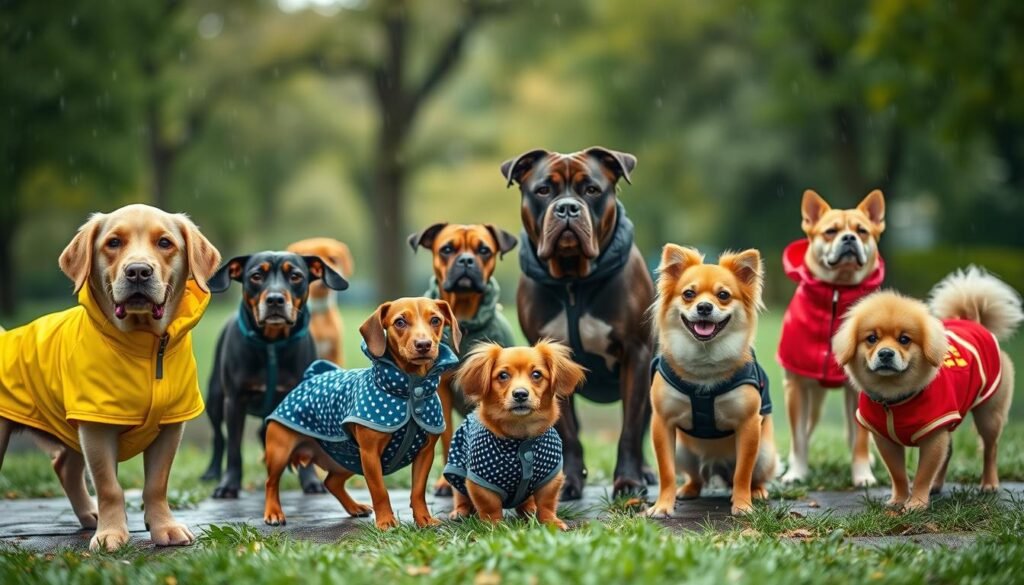
Short-Legged Breeds and Underbelly Coverage
Corgis, Dachshunds, Basset Hounds, and small terriers face a unique challenge. Their bellies are closer to puddles, wet grass, mud, and slush. Standard raincoats often leave these breeds with soaked, muddy bellies.
These dogs need extended belly coverage and lower side panels that reach down toward their legs. The Canada Pooch Torrential Tracker is great for small dog rain jackets. It keeps vulnerable areas dry without restricting movement.
Short-legged breeds also benefit from raincoats with leg coverage. The Non-stop Dogwear Fjord Overall Raincoat protects their legs, preventing mud splatter and keeping long belly fur clean. Adjustable leg straps prevent the coat from dragging on the ground or shifting during walks.
“The biggest mistake I see owners make is choosing a coat based on back length alone, forgetting that short-legged dogs need protection underneath just as much as on top.”
Tall and Long-Legged Breeds
Greyhounds, Great Danes, Dobermans, Vizslas, and Weimaraners need a different approach. They require raincoats that cover well without restricting their stride. Many coats for medium-sized dogs don’t work for tall breeds.
The key for these dogs is shoulder mobility. Restricted shoulders can cause gait problems and discomfort, which is bad for active dogs. Large breed dog raincoats must allow full front leg extension even at speed.
The Non-stop Dogwear Fjord coats and Ruffwear Sun Shower have separate shoulder flaps that move with each stride. This prevents the binding and restriction common in less thoughtful large breed dog raincoats. These breeds tend to have less body fat and shorter coats, making them more susceptible to getting chilled when wet.
Tall, lean breeds need waterproof protection for dryness, warmth, and health. A coat that covers enough area while allowing freedom of movement is key to their comfort in rainy weather.
Double-Coated vs Short-Haired Breeds
Coat type affects raincoat needs as much as body shape does. I’ve seen how different coat types respond to wet weather. Understanding these differences helps you choose the right protection.
Double-coated breeds like Labradors, Golden Retrievers, German Shepherds, and Huskies have natural weather resistance. But prolonged rain can make them cold and require extensive drying time. These breeds need waterproof dog coats for extended outdoor activities in wet conditions.
Long-haired breeds face a bigger challenge. Rough Collies, Afghan Hounds, and Shih Tzus develop matted, tangled fur when wet. Rain collects burrs and debris, leading to hours of grooming work afterward.
The Non-stop Dogwear Fjord Overall Raincoat was designed for long-haired breeds. It provides full leg coverage, keeping feathered legs and chest fur clean and dry. This prevents matting that makes grooming a nightmare after muddy walks.
Short-haired breeds like Greyhounds, Vizslas, Dobermans, Pit Bulls, and Boxers lack the insulating undercoat. They get soaked quickly and become cold faster than fluffier breeds. They need waterproof dog coats, and in colder rainy conditions, they may require insulated options like the Non-stop Dogwear Fjord Lined Raincoat.
| Breed Type | Primary Challenge | Essential Features | Recommended Solution |
|---|---|---|---|
| Short-Legged | Belly exposure to ground moisture | Extended belly panels, leg coverage | Canada Pooch Torrential Tracker |
| Tall & Long-Legged | Shoulder restriction, inadequate length | Separate shoulder flaps, extended back | Non-stop Dogwear Fjord, Ruffwear Sun Shower |
| Long-Haired | Matting, tangling, debris collection | Full leg coverage, chest protection | Non-stop Dogwear Fjord Overall |
| Short-Haired | Rapid heat loss, quick saturation | Complete coverage, optional insulation | Non-stop Dogwear Fjord Lined |
Understanding these breed-specific needs makes raincoat shopping easier. When you know what your dog’s body type and coat require, you can focus on designs that actually address those challenges. This way, you avoid settling for a generic solution.
Essential Features in the Best Dog Raincoats for Every Breed and Size
Every good raincoat has a few key features. These keep dogs dry and safe in the rain. No matter the breed or size, these features are a must.
These features are not just nice extras. They are what make a raincoat work when it rains. I look for them in all the raincoats I suggest, from cheap to expensive.
Waterproof and Windproof Fabric
Waterproof fabric is the base of a good dog raincoat. Not all raincoats are the same. That’s why knowing the waterproof rating is key.
The rating system is simple. A 5,000mm rating is good for light rain. A 10,000mm rating is better for more rain. For heavy rain, you need 20,000mm or more.
The Dog Raincoat with Hood – Waterproof & Windproof, 8 Sizes, 4 Colors is great. It’s waterproof and windproof. It has a hood to protect your dog’s head and ears.
Windproofing is just as important as waterproofing. Wind can let rain in and make your dog cold. The best breathable dog weatherproof coats keep out wind and rain while letting your dog breathe.
| Waterproof Rating | Weather Conditions | Best Use Case | Example Product |
|---|---|---|---|
| 5,000mm | Light rain, drizzle | Short walks, brief exposure | Basic rain jackets |
| 10,000mm | Moderate rain | Regular walks, 30-60 minutes | Mid-range raincoats |
| 20,000mm+ | Heavy downpours, storms | Extended outdoor time, all conditions | Non-stop Dogwear Fjord 2.0 |
Breathability is measured in g/m²/24hr. A higher rating means less moisture inside the coat. For active dogs, look for coats with ratings above 5,000 g/m²/24hr.
Taped seams are a must. Even waterproof fabric has tiny holes where it’s stitched. Good raincoats seal these with waterproof tape, making them fully waterproof.
“The difference between water-resistant and waterproof can mean the difference between a comfortable walk and a miserable experience for your dog.”
Reflective Strips for Safety
Reflective strips are a must for safety. Rain makes it hard to see, and dark skies make it even worse. Your dog can be hard to see, which is dangerous.
The best reflective dog raincoats use 3M reflective materials. These reflect light from cars and bikes, making your dog visible. This is very important for safety.
Good raincoats have reflective strips on the sides, back, and chest. This makes your dog visible from all angles. Every good raincoat I’ve seen has these reflective strips.
Here’s a simple test: shine a flashlight on the raincoat in a dark room. If it lights up well, it’s good for safety.
Adjustable Chest Straps
Adjustability is key for a good fit. Dogs come in all shapes and sizes. Adjustable dog rain gear lets you customize the fit for your dog’s body.
Adjustable chest straps do a lot. They keep the coat in place and prevent rain from getting in. They also let you adjust the fit as your dog moves.
The best raincoats have many adjustment points. Neck cinches keep water out, and chest straps keep the coat secure. Some coats also have tail adjustments for extra coverage.
The Non-stop Dogwear Fjord 2.0 has great adjustments. The Hurtta Mudventure Eco is the most adjustable I’ve seen. It’s great for dogs with unusual shapes or sizes.
Leash Hole Placement
The leash hole is important. It lets you leash your dog without taking off the raincoat. A bad design can let rain in.
I look for leash holes that are well-made. They should have reinforced edges and be placed right for your dog’s harness. The Non-stop Dogwear Fjord 2.0 has a good leash hole.
Some raincoats have drainage holes. These let water out instead of pooling. It’s a nice feature, but not essential.
Adjustable features are great for families with multiple dogs. A good coat can fit different sizes and even be shared. This makes your money go further.
Waterproof vs Water-Resistant: Understanding the Difference
The terms waterproof and water-resistant mean different things. They decide if your dog stays dry or gets wet. Many makers use these words the same way, but they really mean different things. Knowing the difference helps you pick the best coat for your dog.
Water-resistant materials have a special coating that makes water bead up. This works okay for a little rain or quick splash. But, these materials can’t handle long rain or heavy rain.
Water-resistant coats don’t work when water pressure gets too high. Like when your dog sits in wet grass. The coating wears off, and water gets through. Many owners are surprised to find their dog wet after a short walk.
Waterproof dog coats have a clear waterproof rating. This rating is usually 5,000mm to 20,000mm or more. It shows how much water pressure the fabric can handle before water gets through.
For example, light rain is about 2,000mm of water pressure. Moderate rain is 5,000mm. Heavy rain can be over 10,000mm.
| Feature | Water-Resistant | Waterproof |
|---|---|---|
| Rating | No measurable rating | 5,000mm to 20,000mm+ |
| Best For | Light drizzle, brief exposure | All rain conditions, prolonged exposure |
| Performance Duration | 15-20 minutes maximum | Hours of protection |
| Price Range | $15-$35 | $40-$120 |
The Non-stop Dogwear Fjord 2.0 has a 20,000mm waterproof rating. It’s one of the best options out there. Even lower-rated options like the Ruffwear Sun Shower at 3,000mm did well in tests. They kept water out for hours.
Some cheap coats say they’re water-resistant but fail in heavy rain. I’ve seen many that made dogs wet in just a few minutes. These coats use terms like “water-repellent” or “splash-proof” without real ratings.
Always check product specs for real waterproof ratings, not just marketing words. If a coat doesn’t have a specific mm rating, it’s likely just water-resistant. This info should be clear in the product description or specs.
Water-resistant coats might seem good because they’re cheaper and lighter. But, they’ll make your dog wet and unhappy in real rain. So, you’ll likely end up buying a waterproof coat after all.
If you’re buying a raincoat, it should be waterproof. Anything less is just an expensive, wet piece of fabric. Your dog needs real protection, not just something that looks good.
For basic protection, look for waterproof dog coats with at least 5,000mm ratings. For active dogs or places with lots of rain, choose ones rated 10,000mm or more. Spending on quality waterproof materials means your dog will stay dry and comfortable.
The Importance of Adjustability in Dog Raincoats
Adjustable features in dog raincoats do more than just fine-tune the fit—they solve real problems for real dogs. Even when you’ve measured carefully and followed every sizing guideline, dogs don’t come in standardized shapes. A 40-pound Border Collie has a completely different body type than a 40-pound Bulldog, and adjustable dog rain gear bridges that gap beautifully.
I’ve found that adjustability matters most when you realize how unique each dog’s proportions really are. Two dogs might wear the same size on paper, but one has a barrel chest while the other is lean and athletic. This is where multiple adjustment points make all the difference in achieving a secure, comfortable fit.
The best raincoat isn’t the one that fits perfectly off the rack—it’s the one you can customize to match your dog’s unique body shape and activity level.
Strategic adjustment points serve distinct purposes that go beyond basic sizing. Each location addresses a specific challenge:
- Neck cinches prevent rain from pouring down your dog’s back and can be tightened during heavy downpours or loosened for comfort during light drizzle
- Chest and belly straps keep the coat secure without restricting breathing or movement, which is critical for active dogs
- Rear or tail adjustments let you shorten or lengthen the coat to match your dog’s back length perfectly
The practical benefits of adjustable features extend well beyond that initial fitting. I appreciate how adjustability accommodates seasonal weight fluctuations—many dogs gain a few pounds during winter months, and those extra cinches mean you won’t need to buy a new coat. Growing puppies benefit tremendously, as they can wear the same coat for several months while you adjust it along the way.
For multi-dog households, adjustable raincoats become even more valuable. One well-designed coat might fit two dogs of similar but not identical sizes, making it a versatile investment.
When testing raincoats, I found the Hurtta Mudventure Eco earned its reputation as the most adjustable option with three distinct cinch closure points. This level of customization means you can truly dial in the perfect fit. The Non-stop Dogwear Fjord 2.0 impressed me with its two neck cinches and chest adjustment that remained easy to operate even with wiggly, excited dogs.
But adjustability shouldn’t sacrifice security. The quality of adjustment mechanisms matters as much as their presence. Look for reliable closures like sturdy buckles or well-designed cinches, not just Velcro, which can fail when wet or collect debris over time.
If your measurements place your dog between standard sizes, adjustable dog rain gear becomes your best solution. Those extra adjustment points can compensate for being on the edge of a size range, giving you confidence that you’re getting the right fit without guessing or compromising. When comparing raincoat options, I recommend viewing adjustability as a feature that protects your investment and ensures long-term satisfaction.
Size-by-Breed Reference Guide
This guide helps you find the right size for your dog’s breed. It suggests sizes based on common breed traits. But remember, every dog is different, so always measure your dog before buying.
Think of this guide as a starting point. Two Golden Retrievers might need different sizes because of their unique builds and activity levels.
Extra Small and Small Breeds
Small dog rain jackets need to cover the belly well. Extra small breeds are 8-12 inches in back length with chest girths of 12-18 inches. Small breeds are 12-16 inches in back length with chest measurements of 18-22 inches.
Extra small breeds commonly include:
- Chihuahuas
- Yorkshire Terriers
- Pomeranians
- Toy Poodles
- Maltese
- Papillons
Small breeds typically include:
- Pugs
- Boston Terriers
- French Bulldogs
- Miniature Schnauzers
- Shih Tzus
- Dachshunds
- Corgis
- Jack Russell Terriers
- Beagles
The Canada Pooch Torrential Tracker is great for these breeds. It comes in sizes from 8-29 inches, covering the belly well. Breeds like Dachshunds and Pugs have unique shapes, making adjustable coats essential.
When choosing a raincoat, pay extra attention to adjustable chest straps. This is very important for small breeds where fit can vary a lot.
Medium Breeds
Medium breeds vary a lot in shape and size. They are 16-22 inches in back length with chest girths of 22-28 inches. An athletic Border Collie and a stocky Bulldog might weigh the same but need different coats.
Medium breeds commonly include:
- Cocker Spaniels
- Border Collies
- Whippets
- Australian Shepherds
- English Bulldogs
- Springer Spaniels
- Standard Schnauzers
- Bull Terriers
- Basset Hounds
The Non-stop Dogwear Fjord 2.0 and Ruffwear Sun Shower are great for medium sizes. They have adjustment features for different builds. Medium breeds are the most common shape, so you have many options.
But, fit is key. A lean Whippet and a muscular Bulldog need different cuts, even in the same size category.
Large Breeds
Large breed dog raincoats need to protect from the weather without restricting movement. They are 22-28 inches in back length with chest girths of 28-36 inches. Deep-chested breeds need special attention to chest girth.
Large breeds typically include:
- Labrador Retrievers
- Golden Retrievers
- German Shepherds
- Boxers
- Dalmatians
- Doberman Pinschers
- Weimaraners
- Vizslas
- Pointers
- Setters
- Standard Poodles
- Collies
- Australian Cattle Dogs
Large breeds vary a lot in build. Dobermans and Weimaraners need careful chest measurements. Labs and Goldens need coats that fit their fuller bodies without restricting movement.
Shoulder mobility is key for large breeds who stay active in the rain. Coats with separate shoulder flaps, like those from Non-stop Dogwear and Ruffwear, provide the flexibility these dogs need.
Extra Large and Giant Breeds
Extra large and giant breeds need special sizing. They are 28 inches or more in back length with chest girths over 36 inches.
Extra large and giant breeds include:
- Great Danes
- Mastiffs
- Saint Bernards
- Newfoundlands
- Irish Wolfhounds
- Great Pyrenees
- Bernese Mountain Dogs
Non-stop Dogwear offers sizes up to 90cm (approximately 35 inches), fitting many giant breeds. But, always check the chest and neck measurements for your dog’s unique shape. Giant breeds have big chests that need extra adjustment.
Many giant breeds have thick coats that resist water, so they might not need full-body coverage. Focus on keeping their backs and shoulders dry.
Remember, this guide is just a starting point for finding the right raincoat. Always prioritize your dog’s measurements over breed generalizations for the best fit and protection.
Common Sizing Mistakes to Avoid
Choosing the wrong size raincoat is a common mistake. It’s frustrating for pet parents. But, most sizing errors can be avoided if you know what to look out for.
I’ll guide you through the biggest pitfalls. This way, you can get the right fit the first time.
The biggest mistake is ordering based on breed or weight alone. A 50-pound Husky and a 50-pound Pit Bull look different. The Husky has a deeper chest and longer back. The Pit Bull is more compact and muscular.
They need different sizes, even if they weigh the same. Always measure your dog instead of relying on breed generalizations when choosing a waterproof dog raincoat all sizes.
Another common error is sizing up “just to be safe.” You want your dog to be comfortable. But oversized raincoats have their own problems.
They shift and twist during walks. Water can get in through gaps at the neck and legs. The extra fabric can catch on branches or block your dog’s vision.
On the flip side, sizing down to save money or because a coat “looks too big” causes serious issues. Undersized coats restrict shoulder movement and compress the chest. They also cause painful chafing around the neck and legs during extended wear.
Different brands have wildly different sizing standards. Some run true to size, while others don’t. For example, Hurtta coats typically run about half to a full size large.
If you order based on another brand’s sizing, you’ll likely get the wrong fit. Always check the specific brand’s sizing chart. Also, read customer reviews about whether that particular waterproof dog raincoat all sizes runs large or small.
Many people forget to account for what their dog will wear underneath the raincoat. If you plan to use a harness under the coat—which I strongly recommend for better control—you need to measure with the harness on. The harness adds bulk around the chest that affects the fit.
The “between sizes” dilemma stumps many dog owners. Here’s my rule of thumb: stockier, broader dogs should size up, while lean, narrow dogs can size down. When in doubt, choose the coat with the most adjustment features.
Adjustable chest straps and neck closures give you the best chance of achieving proper fit with a waterproof dog raincoat all sizes.
| Sizing Mistake | What Happens | The Solution |
|---|---|---|
| Ordering by breed/weight only | Poor fit due to individual body shape differences | Always measure chest girth, back length, and neck circumference |
| Sizing up for comfort | Coat shifts, twists, allows water penetration through gaps | Order true to measurements; use adjustable features for comfort |
| Sizing down to save money | Restricted movement, chest compression, painful chafing | Invest in proper size; check for sales or consider quality over price |
| Ignoring brand sizing variations | Inconsistent fit across different manufacturers | Read brand-specific sizing charts and customer reviews carefully |
| Not measuring with harness on | Coat too tight when harness is added underneath | Take measurements while dog wears their regular walking harness |
Before you order any waterproof dog raincoat all sizes, check the return policy. Even with careful measurements, you might need to exchange for a different size. A flexible return policy gives you peace of mind.
Some retailers offer free returns or exchanges within 30 days. This takes the pressure off getting it perfect the first time.
I also recommend ordering during times when you can try the coat on your dog immediately. This way, you can process an exchange quickly if needed. Don’t wait until right before a rainy camping trip to discover the fit isn’t right.
Remember that a properly fitted raincoat should allow full range of motion in the shoulders and legs. Your dog should be able to sit, walk, run, and jump comfortably. If the coat restricts any of these movements, it’s too small—even if it matches the size chart measurements.
Caring for Your Dog’s Raincoat
Regular maintenance is key to keeping a raincoat waterproof and functional. It keeps the coat clean and hygienic while maintaining its durable canine rain protection. With the right care, your investment will last for many seasons.
Cleaning your dog’s raincoat regularly stops dirt and oils from damaging the waterproof coating. Mud, debris, and oils from your dog’s fur can harm the protective layers. Clean the coat after muddy walks or every few weeks during rainy season.
The Non-stop Dogwear Fjord 2.0 is unique because it can be machine washed and dried. This makes it easier to keep the coat clean. Just wash it in the machine on a gentle cycle and dry on low heat.
Most raincoats need hand washing and line drying. Here’s how to hand wash them:
- Rinse off mud and debris with cool water after walks
- Hand wash with mild detergent in lukewarm water
- Avoid fabric softeners, which damage waterproof coatings
- Rinse thoroughly until all soap residue is gone
- Hang to dry away from direct heat or sunlight
Proper storage is as important as cleaning for maintaining your raincoat’s effectiveness. Always dry the coat completely before storing it. Moisture can cause mildew and damage the fabric.
I hang my dog’s raincoat on a dedicated hook or lay it flat in a storage bin. Avoid crumpling or stuffing it into tight spaces. Store it in a cool, dry place away from sunlight, which can damage the fabric and waterproof treatments.
The waterproof coating may need reapplication after a lot of use. Waterproofing sprays for outdoor gear work well to refresh the water-repellent finish. Follow the manufacturer’s directions, usually on clean, dry fabric, and let it cure completely before use.
Fix small repairs quickly to prevent bigger problems. Tiny tears in seams or fabric should be fixed with seam sealer or waterproof patches right away. I keep a repair kit handy for this purpose, and fixing issues early has saved several coats from becoming unusable.
| Maintenance Task | Frequency | Method | Purpose |
|---|---|---|---|
| Basic Cleaning | After muddy walks or every 2-3 weeks | Machine wash (Fjord 2.0) or hand wash with mild detergent | Remove dirt and oils that degrade waterproofing |
| Waterproofing Refresh | Once per season or after 20-30 uses | Apply waterproofing spray to clean, dry fabric | Restore water-repellent effectiveness |
| Storage Check | End of rainy season | Ensure completely dry, hang or lay flat in cool, dry location | Prevent mildew and fabric damage during off-season |
| Damage Inspection | Monthly during active use | Check seams, straps, buckles, and reflective strips | Catch small issues before they become major problems |
Knowing when to replace your raincoat is important for your dog’s protection. Look for signs like visible water penetration, damaged buckles, and significant wear. These indicate it’s time for a new coat.
Damaged or broken buckles and straps that can’t be repaired compromise proper fit and safety. Significant wear, tearing of fabric, or loss of reflective effectiveness all signal replacement time. These issues affect both protection and visibility during walks.
With proper care and maintenance, a quality raincoat can last multiple seasons. I’ve had coats last three to four years of regular use. This makes durable canine rain protection a worthwhile investment in your dog’s comfort and your own convenience during wet weather.
The machine-washable feature of certain models like the Fjord 2.0 makes maintenance easier. Convenience directly impacts care quality, which in turn affects how long your raincoat performs at its best. Choose maintenance routines that fit your lifestyle for the best long-term results.
Shop Raincoats
Conclusion
Choosing the right dog raincoat doesn’t have to be hard. I’ve shown you how to pick with confidence. Remember, measuring your dog is key, not just their weight. Measuring their chest, back, and neck helps avoid returns and hassle.
Think about what your dog needs. Short-legged dogs need different coats than long-legged ones. Double-coated dogs need less warmth than short-haired ones. These details matter for your dog’s comfort.
Always choose truly waterproof fabric over water-resistant. Check the ratings before you buy. Look for adjustable straps, reflective strips, and durable construction for many rainy seasons.
See a raincoat as a smart investment. It saves you from wet dogs, baths, and muddy floors. Plus, rainy walks become fun again.
Whether you have a small Yorkie or a big Bernese Mountain Dog, there’s a coat for them. You now know how to find it. Your dog will stay dry and happy, and you’ll enjoy rainy days together.
FAQ
How do I know if I should choose a waterproof or water-resistant dog raincoat?
I always recommend a waterproof dog raincoat over water-resistant for real rain protection. Water-resistant coats have a coating that works for light drizzle but not for long rain. Waterproof coats have ratings like 5,000mm for light showers and 20,000mm+ for heavy rain.
Water-resistant coats might be cheaper but leave your dog wet. Always check the waterproof rating, not just “water-repellent” or “splash-proof.”
What’s the single most important measurement when sizing a dog raincoat?
Chest girth is key for sizing a dog raincoat. Measure around the widest part of your dog’s chest, just behind the front legs. This ensures a good fit and comfort.
Many quality brands like Ruffwear and Non-stop Dogwear use chest girth as the main sizing metric. Adjustable features help fit different sizes well.
Do small dogs and large dogs need different raincoat features?
Yes, small and large dogs need different features in raincoats. Small dogs need full coverage to stay dry, while large dogs need coats that don’t restrict movement.
Look for adjustable leg straps for small dogs and strong closures for large dogs. This ensures a good fit and safety.
What does the waterproof rating number actually mean?
The waterproof rating shows how much water pressure the fabric can withstand. A 5,000mm rating is for light showers, 10,000mm for moderate rain, and 20,000mm+ for heavy rain.
Non-stop Dogwear’s Fjord Raincoat 2.0 has a 20,000mm rating, perfect for heavy rain. Always check the actual rating, not just marketing terms.
Should I measure my dog with or without their harness on?
Measure your dog while wearing what they’ll wear under the raincoat. This includes the harness for better fit and safety.
Adding a harness to your dog’s chest girth measurement is important. This ensures the raincoat fits well, even with the harness.
How important are reflective strips on a dog raincoat?
Reflective strips are very important for safety. They make your dog visible in low light conditions.
Look for 3M reflective elements for the best visibility. Quality brands like Non-stop Dogwear and Ruffwear include reflective strips as standard.
What should I do if my dog measures between two sizes?
If your dog’s measurements fall between sizes, consider their build and the raincoat’s features. Stocky dogs may need a larger coat, while lean dogs can size down.
Adjustable features are key for a good fit. Check customer reviews for size accuracy. Always have a return policy for exchanges.
Do double-coated breeds like Huskies and Labs really need raincoats?
Yes, even double-coated breeds benefit from raincoats. They keep the coat dry and prevent wet-dog smell and matting.
Look for breathable coats that keep your dog comfortable. Non-stop Dogwear’s Fjord 2.0 is a good example.
Are hooded dog raincoats better than hoodless designs?
Hooded raincoats offer extra protection for the head and neck. But, some dogs may not like wearing hoods.
Choose a well-fitting, waterproof coat with good neck coverage. Many quality coats, like Ruffwear’s Sun Shower, don’t need hoods.
How long should a dog raincoat last with proper care?
A quality raincoat should last 2-4 years with proper care. Regular cleaning and storage are key.
Signs it’s time for a new coat include water penetration and damaged seams. Investing in a good coat is worth it.
Can I use the same raincoat year-round or do I need different coats for different seasons?
One waterproof coat can work for most rainy conditions. But, temperature matters for different seasons.
For mild rain, a standard coat is fine. For cold rain, an insulated coat is better. Start with a standard coat and add an insulated one for cold weather.
What’s the difference between a dog raincoat by breed and sizing by measurement?
Breed is a starting point, but measurements are more accurate. Different breeds of the same size may need different sizes.
Use breed characteristics to understand needs, but measure for a proper fit. This combination gives the best results.
Do I need to buy a more expensive raincoat for better quality?
Price doesn’t always mean quality. But, a well-made coat is worth the investment. Look for waterproof fabrics, quality construction, and reflective elements.
Brands like Non-stop Dogwear and Ruffwear offer good value. Mid-range options like the Dog Raincoat with Hood also offer quality at a lower price.
Should I choose a raincoat with a leash hole or put the leash over the coat?
Choose a raincoat with a leash hole for better control and safety. It keeps the coat secure and prevents water entry.
Look for a well-placed leash hole and reinforced seams. This ensures a secure and comfortable fit.
How do I know if a dog raincoat is too tight or too loose on my dog?
Check for a snug but not tight fit. The coat should allow for full movement and not restrict breathing.
Look for signs of discomfort or restriction. A proper fit is essential for your dog’s comfort and safety.
Are there specific raincoat features that work best for long-haired breeds?
Long-haired breeds need specific features to prevent matting and tangling. Full coverage suits and smooth linings are essential.
Extended belly coverage and easy-on designs are also important. This keeps their fur clean and dry.