
Here’s something that surprised me: nearly 70% of American pet owners travel with their dogs each year. Yet most still use bulky wire or plastic containers that barely fit in a trunk. That gap led me to test a soft-sided dog crate with my own pup before writing this guide.
As PetSmart puts it, pets need a safe, comfortable space at home, on the road, or during training. A good crate isn’t just storage. It’s your dog’s personal retreat.
This guide explains what a foldable kennel is and how it compares with heavier wire and plastic options. It covers who should avoid this style and how to choose the right size. I also share my honest take on a featured steel-frame model I tested firsthand.
You’ll get holiday travel tips, easy cleaning tricks, and a clear verdict for your needs. No fluff, just real answers.
Key Takeaways
- A soft-sided dog crate works best for calm, crate-trained dogs rather than heavy chewers or escape artists.
- Collapsible kennels are lighter and more portable than wire or plastic alternatives, making travel much easier.
- Proper sizing matters more with fabric crates since there’s less rigid structure to contain an anxious dog.
- Cleaning a foldable carrier takes less effort than scrubbing a plastic kennel, especially with removable liners.
- Holiday travel and airport trips often favor lightweight, collapsible designs over heavier alternatives.
- The right choice ultimately depends on your dog’s temperament, your travel habits, and your available space.
Quick Answer: Is a Soft-Sided Dog Crate Right for Your Dog?
I’ll save you the scrolling: a soft-sided dog crate best suits calm, already crate-trained dogs. It folds flat and weighs next to nothing. It makes a fantastic travel dog crate for road trips, camping weekends, or quick vet visits.
That said, soft crates aren’t a universal fix. I’d steer clear if your pup falls into any of these groups:
- Heavy chewers who can shred mesh panels in minutes.
- Escape artists skilled at unzipping or clawing their way free.
- Puppies still mid-training who need a sturdier, no-nonsense crate first.
Know your dog’s personality, and you’ll quickly know if this style belongs in your home.
What Is a Soft-Sided Dog Crate?
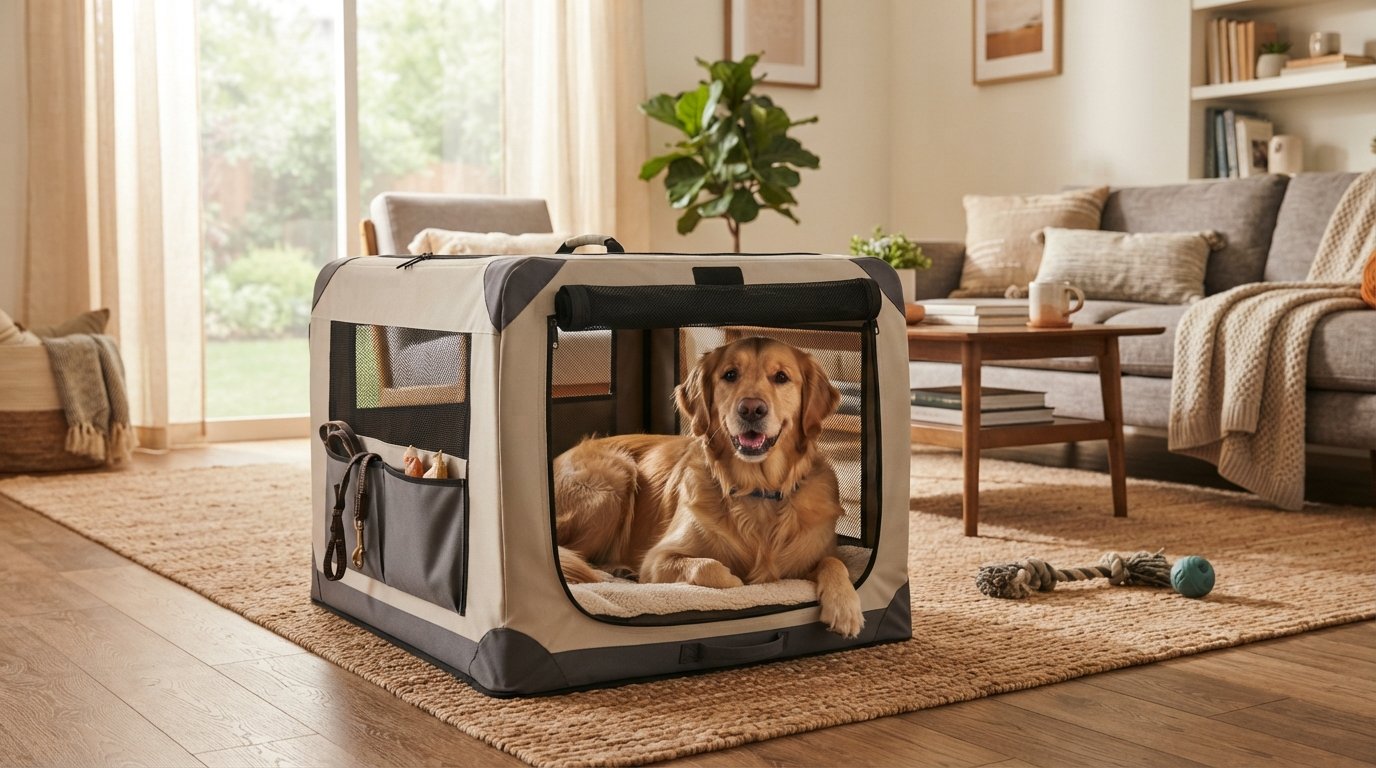
I think of a soft-sided dog crate as the travel-friendly cousin of the bulky wire crate in your garage. It’s a collapsible dog crate with a lightweight steel or aluminum frame, sturdy fabric, and mesh panels. It folds flat in seconds and fits easily in a car trunk or closet.
According to PetSmart, people typically use a dog crate for training and indoor confinement. A kennel is larger and often designed for outdoor use. A soft-sided crate fits the first category, giving your dog a cozy indoor den.
Key Features That Make These Crates Stand Out
Most soft-sided models share several features that set them apart from traditional crates.
- Fold-flat design that collapses the frame for storage or travel in seconds.
- Flexible steel connectors that snap together without tools.
- Mesh ventilation panels on multiple sides for airflow and visibility.
- Built-in carry handles, with some models including a shoulder strap for easy transport.
Materials That Hold It All Together
Quality matters because fabric does the work metal bars usually handle. Most well-made crates, like those from Sweetcrispy, use water-resistant 600D Oxford fabric over a reinforced steel tube frame.
Breathable mesh covers the doors and windows, keeping your dog cool while maintaining security. Here is a quick breakdown of each material’s purpose and benefit.
| Material | Purpose | Benefit |
|---|---|---|
| 600D Oxford Fabric | Outer shell covering | Water-resistant and tear-resistant |
| Steel Tube Frame | Structural support | Lightweight yet sturdy |
| Breathable Mesh | Doors and windows | Airflow and visibility |
| Flexible Connectors | Joint assembly | Tool-free setup and fold-flat storage |
Where These Crates Really Shine
I’ve found a collapsible dog crate works best when portability matters more than heavy-duty containment. Car trips, camping weekends, vet visits, and quick indoor confinement when dinner guests arrive suit this style well.
Unlike bulky wire crates or outdoor kennels, a soft-sided crate travels with you without weighing down your trunk.
Soft vs Wire vs Plastic Crates
Choosing a portable dog kennel means comparing soft-sided, wire, and plastic crates. Each type suits different needs. Knowing their strengths helps you choose the right crate for your dog’s lifestyle.
Weight and Portability
Soft-sided crates win by a wide margin because most fold flat in seconds and weigh under 15 pounds. They are the closest thing to a true portable dog kennel. Wire crates are heavier and bulkier, while plastic crates fall between them with a solid, one-piece shell.
If you travel often or need a crate for the trunk, a soft-sided option makes life easier.
Durability and Safety
Wire and plastic crates usually outlast fabric when dogs test their limits. Wire crates are praised as “ideal for indoor use, featuring durability and easy access.” Soft crates suit calm dogs that do not scratch, dig, or chew to escape.
Ventilation and Comfort
Each crate type handles airflow in its own way. PetSmart notes that “wire crates offer better ventilation and visibility.” It says plastic crates “provide a cave-like environment that can be more comforting for travel.”
“Wire crates offer better ventilation and visibility… plastic crates provide a cave-like environment that can be more comforting for travel.”
Soft-sided crates sit in the middle. Their breathable mesh panels let air flow freely and give your dog a quiet, private place to rest.
Travel-Friendliness
Plastic crates are “perfect for travel, offering security and enclosed comfort.” Soft-sided crates offer similar convenience with less bulk and fold flat for car rides, hotel stays, or quick vet trips. Wire crates are sturdy but harder to carry and rarely airline-approved.
Price Comparison
Budget matters too. Wire crates typically cost $30 to $100, while plastic crates cost $40 to $120.
Soft-sided crates can start lower, but premium models can reach $150. These steel-framed, multi-door designs use premium mesh and fabric.
| Crate Type | Weight | Durability | Ventilation | Travel | Price |
|---|---|---|---|---|---|
| Soft-Sided | Lightweight (5–15 lbs) | Moderate | Good (mesh panels) | Excellent | $50–$150 |
| Wire | Heavy (15–40 lbs) | High | Excellent | Fair | $30–$100 |
| Plastic | Moderate (10–25 lbs) | High | Limited | Good | $40–$120 |
Who Should NOT Use a Soft Crate
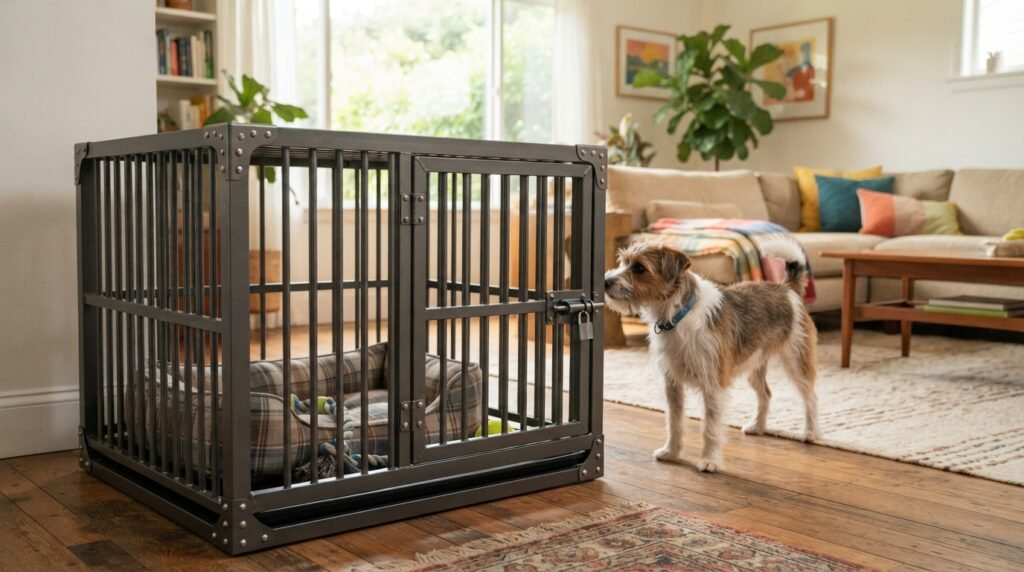
Before you click “add to cart,” consider when a soft-sided crate may fail. I love these crates for travel and storage, but they do not suit every dog. Some dogs need a sturdy indoor dog crate made from wire or plastic until their habits improve.
Heavy Chewers
If your dog chews everything, fabric and mesh will not last. A determined chewer can tear through soft panels within minutes, causing messes and creating an escape route.
For these dogs, a wire or plastic indoor dog crate provides better strength. It is safer until the chewing phase passes.
Puppies Still Mid-Training
Teething puppies and dogs still learning house training need a tougher crate that cleans easily. Soft fabric quickly absorbs odors and stains, while puppy teeth can shred mesh panels.
Use a wipeable wire or plastic crate during this stage. Once your pup is calmer and house-trained, a soft-sided crate becomes a better choice.
Escape Artists
Some dogs are skilled problem-solvers, which can create crate problems. Clever pups may unzip doors or push through mesh walls.
If your dog often breaks free, choose a reinforced crate with locking metal doors. This choice gives you peace of mind.
| Dog Type | Risk With Soft Crate | Better Option | Why It Matters |
|---|---|---|---|
| Heavy Chewer | Torn fabric, swallowed material | Wire or plastic crate | Prevents injury and destruction |
| Puppy Mid-Training | Stains, odor, chewed mesh | Easy-to-clean wire/plastic crate | Simplifies cleanup and housetraining |
| Escape Artist | Unzipping or pushing through panels | Reinforced indoor dog crate | Keeps your dog secure and safe |
How to Choose the Right Size
Before adding any lightweight dog crate to your cart, make sure you choose the right size. A crate that is too small feels like a cage, while one too large lacks the den-like security dogs seek. Choosing well from the start saves money and time, and prevents frustration when your dog refuses the crate.
How to Measure Your Dog
Grab a tape measure and get your dog to stand still; a treat can help. You need two measurements to find the right fit.
- Measure from the tip of your dog’s nose to the base of the tail. This gives you the length.
- Measure from the top of your dog’s head straight down to the floor. This gives you the height.
- Add a few inches to each measurement for comfortable wiggle room.
This approach matches advice from PetSmart, which recommends the same two-point method for sizing a crate correctly.
“Measure your dog from nose to the base of the tail and from the top of the head to the floor. Add several inches for comfort, ensuring they have plenty of room to move.”
Size Chart: Small to Extra-Large
Crate sizing usually matches your dog’s weight and body length, though breed shape can change the fit slightly. At the same weight, a deep-chested dog may need a different fit than a long, low-slung breed. Use the chart below as a starting point, then check it against your dog’s measurements.
Size Table (S, M, L, XL)
| Crate Size | Dog Weight Range | Dog Length (Nose to Tail) | Recommended For |
|---|---|---|---|
| Small (S) | Up to 20 lbs | Up to 20 inches | Chihuahuas, Yorkies, small terriers |
| Medium (M) | 21–40 lbs | 21–28 inches | Beagles, Cocker Spaniels, Corgis |
| Large (L) | 41–70 lbs | 29–36 inches | Labradors, Border Collies, Boxers |
| Extra-Large (XL) | 71–100+ lbs | 37+ inches | German Shepherds, Golden Retrievers, Mastiffs |
Fit Tips for Maximum Comfort
The golden rule is simple: your dog should stand, turn around, and lie fully stretched out without hitting the walls. Anything less feels cramped, and your dog may refuse to enter.
If you have a puppy, sizing becomes trickier. Wire crates often include adjustable dividers, letting the space grow with your puppy. You may need only one crate for your dog’s whole life.
Most soft-sided crates lack this feature, so size for your dog’s expected adult weight, not current puppy size. This trade-off gives you the portability and lighter weight of a soft-sided lightweight dog crate after your dog grows.
Featured: Foldable Soft-Sided Dog Crate with Steel Frame
I tested the Sweetcrispy foldable crate with my dog for two weeks and wrote this full breakdown. This is not a generic overview; it covers my daily experience, including the good and bad.
If you need a breathable mesh dog crate that still feels sturdy, this model deserves a close look.
Design and Build Quality
The high-strength steel frame kept the crate steady when my dog leaned against its side. Flexible connectors folded the structure flat in seconds, making car-trunk loading easy.
The outer shell uses 600D Oxford fabric, a water-resistant, wear-resistant material that handled muddy paws and a spilled water bowl. Built-in handles and secure straps helped when I moved the crate between rooms or packed it for travel.
Key Features: 4 Doors, Mesh Panels, Removable Cushion
Four doors provide access from nearly every angle. That helped when my dog refused the front door one afternoon. Three-sided mesh doors provide airflow and visibility, so my dog could watch the room without feeling boxed in.
This breathable mesh dog crate has escape-proof zippers and reinforced corner protectors that keep the mesh secure during pawing. Inside, a removable padded mat uses soft short plush fabric and keeps dogs comfortable. It goes into the washing machine after muddy walks, while a side pocket stores treats, waste bags, or a favorite toy.
Pros
- Folds flat in seconds for easy storage and transport
- Four doors give flexible access from any side
- Mesh panels maximize airflow and visibility
- Escape-proof zippers and reinforced corners add security
- Machine-washable cushion simplifies cleanup
- Lightweight yet sturdy steel frame holds its shape
Cons and Honest Limitations
I’ll be direct: this crate is not bite-proof. A determined chewer could damage the fabric or mesh over time. I would not leave it alone with a dog that destroys bedding.
The fabric also needs gentle care. Harsh detergents or high heat can wear it down quickly. It suits small to medium dogs, but larger, stronger breeds pushed the frame’s limits during long-term use.
“A soft crate works best as a travel companion or a calm-space tool, not as a permanent containment solution for a strong, anxious dog.”
Price and Value ($94.99–$149.99)
Prices range from $94.99 to $149.99 by size, which matches similar travel crates with comparable features. The steel frame, washable cushion, and four-door design offer good value for frequent travelers. It also suits anyone needing a crate that folds away in seconds.
| Size | Approx. Price | Best For | Notable Feature |
|---|---|---|---|
| Small | $94.99 | Toy and small breeds | Compact fold, fits in a car seat |
| Medium | $114.99 | Medium breeds | Balanced space and portability |
| Large | $134.99 | Larger dogs | Extra legroom, reinforced seams |
| Extra-Large | $149.99 | Multi-dog households | Heavier-duty frame support |
Holiday Car Travel Tips
I love holiday road trips with my dog, but I secure the crate first. Planning turns a bumpy drive into a smooth, stress-free trip for both of us.
Securing the Crate in Your Vehicle
I buckle the crate into the back seat with the seatbelt strap or wedge it snugly into the cargo area. This keeps it from sliding during sudden stops or sharp turns.
Soft-sided crates are easy to position because they are lightweight and flexible. I always double-check that the doors are latched before leaving the driveway.
Packing Essentials for Road Trips
I keep a small travel bag ready, so I never forget the basics. My go-to checklist includes:
- Fresh water and a collapsible bowl
- Waste bags for rest stops
- Familiar bedding from home
- A few favorite toys or chews
- Any medications my dog needs
Familiar scents from home help my dog settle into the crate faster, even in a new environment.
Keeping Your Dog Calm in Traffic
I schedule rest stops every two to three hours, so my dog can stretch and relieve himself. Calming spray on the bedding also helps during longer drives.
Before a big trip, I let my dog spend short periods in the crate at home. This builds confidence before travel day.
If your holiday plans include flying, airline rules are stricter than car travel guidelines. As PetSmart points out:
“For air travel, you’ll need a carrier that complies with airline regulations.”
A soft-sided crate like the one I’ve reviewed here is perfect for road trips and everyday home use, but it won’t meet airline cargo standards. If flying is part of your holiday plans, look specifically for an airline-approved dog crate. Confirm your airline’s size and material requirements before you book.
Care and Cleaning
My dog Max tracks in plenty of mud, so I know how to keep his crate spotless. The good news is that this easy-to-clean dog crate needs little effort to stay fresh. Simple habits keep it smelling clean and looking new after months of regular use.
Washing the Fabric and Mesh
The 600D Oxford fabric walls resist water, so most dirt wipes away with a damp cloth. I keep a small bucket of warm, soapy water nearby and scrub the panels when they look dusty.
Mesh windows collect fur and dander over time. I vacuum them with a brush attachment or wipe them by hand. The removable padded mat saves time because it unzips quickly and goes into the washing machine on a gentle cycle.
Quick Spot-Cleaning Tips
Accidents happen, especially with puppies or senior dogs. I keep pet-safe wipes nearby for quick cleanups between full washes.
For tougher spots, a simple baking soda and vinegar spray works well. Here’s my routine for quick fixes:
- Blot fresh stains immediately with a paper towel
- Spray a baking soda-vinegar mix and let it sit for five minutes
- Wipe clean with a damp cloth and air dry
- Use enzyme cleaner for odor-causing accidents
Storing the Crate When Not in Use
I appreciate the fold-flat design. When Max does not need his crate, I collapse it in under a minute and slide it into our hallway closet.
It also fits neatly in the trunk for road trips, making this easy-to-clean dog crate practical to store and maintain.
| Crate Part | Cleaning Method | Frequency | Drying Time |
|---|---|---|---|
| Oxford Fabric Walls | Wipe with damp cloth | Weekly or as needed | 15–20 minutes |
| Mesh Panels | Vacuum or hand wipe | Weekly | Instant |
| Padded Mat | Machine wash, gentle cycle | Every 2–3 weeks | 1–2 hours air dry |
| Steel Frame | Wipe with dry cloth | Monthly | Instant |
Winner by Use Case
No crate style wins every situation. Your dog’s personality and daily routine matter more than one product label. Match the right pick to how you live.
Best for Frequent Travelers
If you take weekend car trips or fly with your pup, a foldable pet carrier is my top pick. It folds flat, weighs less than a wire crate, and sets up in under a minute at hotels or campsites.
As a foldable pet carrier, it fits easily in a trunk or back seat without using much cargo space. For frequent travelers, that portability makes it worth the investment.
Best for Indoor Home Use
For everyday home use, I’ll be honest: a wire crate usually wins on durability. It handles years of daily use, scratching, and the occasional furniture bump.
Still, a soft-sided crate works well as a cozy secondary den. Many owners keep one in the living room or bedroom for naps, while the wire crate handles overnight duty.
Best for Multi-Dog Households
Multi-dog homes need choices for different sizes without draining the budget. Soft crates shine here because most lines come in several sizes for different breeds.
“Available in multiple size options to suit pets of different breeds and body types… helping you find the perfect fit.”
That range lets you outfit a home with a Chihuahua and a Labrador without mismatched gear or wasted money.
| Use Case | Best Crate Type | Why It Wins |
|---|---|---|
| Frequent Travelers | Soft-Sided Crate | Lightweight, folds flat, fast setup on the go |
| Indoor Home Use | Wire Crate | Higher durability for daily, long-term use |
| Multi-Dog Households | Soft-Sided Crate (Multiple Sizes) | Affordable fit for different breeds and sizes |
Related Reads: Dog Crate Training and Pet Travel Carriers Reviewed
Want to get your dog comfortable with crate time? Read my Dog Crate Training guide. Planning a trip soon? My Pet Travel Carriers Reviewed breakdown can help you choose road gear.
Conclusion
After weeks of testing and reviewing vet guidance, I reach the same honest answer. A soft-sided dog crate works well for calm, crate-trained dogs and owners who travel often. It is light, folds easily, and fits neatly in a car for a holiday trip to grandma’s house.
This crate is not right for every dog. Chewers, escape artists, and puppies still learning need a sturdier option until their habits become predictable. I would suggest a wire or plastic crate rather than risk a torn mesh panel.
These soft-sided dog crate recommendations combine hands-on testing with trusted, DVM-reviewed best practices. They offer the same kind of guidance found in Business Insider’s pet gear coverage. This mix of real-world use and professional insight shaped this review.
Consider your dog’s personality and how often you travel before buying a soft-sided dog crate. If you need more detail about sizing or crate-training basics, check my linked guides. They answer questions this article did not cover.
FAQ
What exactly is a soft-sided dog crate, and how is it different from a regular crate?
In my experience, a soft-sided dog crate has a lightweight steel or aluminum frame, durable fabric, and mesh. Unlike traditional wire or plastic crates, it folds flat in seconds, making it easy to store or take on trips. If you need a lightweight dog crate that leaves trunk space, this style is worth considering.
Is a soft-sided dog crate safe for my dog to use indoors?
It can be, but it depends on your dog’s personality. I’ve used mine as an indoor dog crate for my calm, crate-trained pup, and it worked well as a cozy den. I wouldn’t recommend it for a heavy chewer or dog without house manners; a sturdier wire crate is safer.
Can I use a soft-sided dog crate for air travel?
Honestly, no—not for most airlines. It makes a fantastic travel dog crate for road trips and camping, but usually fails cargo or cabin requirements. For flying, choose an airline-approved dog crate because most carriers enforce structural and ventilation rules that soft-sided models don’t meet.
How do I know which size soft-sided crate to buy for my dog?
Measure your dog from nose to tail and from floor to height, then add a few inches of room. Most brands, including the one I tested, offer a small-to-extra-large chart based on weight and length, but correct sizing matters. Most soft-sided options lack adjustable dividers found in wire crates, so sizing correctly avoids a return hassle.
Is a soft-sided dog crate a good choice for a dog that chews or tries to escape?
In my honest opinion, no. Fabric and mesh cannot withstand persistent gnawing or escape artists who unzip panels or claw through mesh. For such dogs, a reinforced wire or plastic crate is safer and more durable long-term.
How breathable is a soft-sided dog crate compared to wire or plastic options?
This is one of my favorite features of the style I tested. Breathable mesh dog crate panels on the top and sides provide airflow and clear views, which helped my dog relax. It offers a middle ground between wire’s open feel and plastic’s enclosed, cave-like comfort.
How do I clean a soft-sided dog crate?
It’s one of the easier crates I’ve maintained. The water-resistant 600D Oxford fabric and mesh wipe clean, while the removable padded mat goes into the washing machine. For accidents between full cleanings, use pet-safe wipes or a simple baking soda-vinegar spray.
Can a soft-sided dog crate handle regular car trips or camping?
Absolutely—this is where it shines. I’ve used mine as a travel dog crate for road trips and camping; it folds flat and has carry handles. Secure it with a strap or seatbelt for sudden stops, and pack water, a collapsible bowl, and familiar bedding for comfort.
Will a soft-sided crate work for a multi-dog household?
It can work well. These crates range from small to extra-large, making it easy and budget-friendly to give each dog a foldable pet carrier. This works best when all your pups are crate-trained and calm.
How does the price of a soft-sided dog crate compare to wire or plastic crates?
In my research and testing, the foldable steel-frame model I reviewed cost $94.99 to $149.99. That price is competitive because of the 600D Oxford fabric and reinforced frame. Wire crates may cost less upfront, but portability and convenience make this a good value for frequent dog travelers.