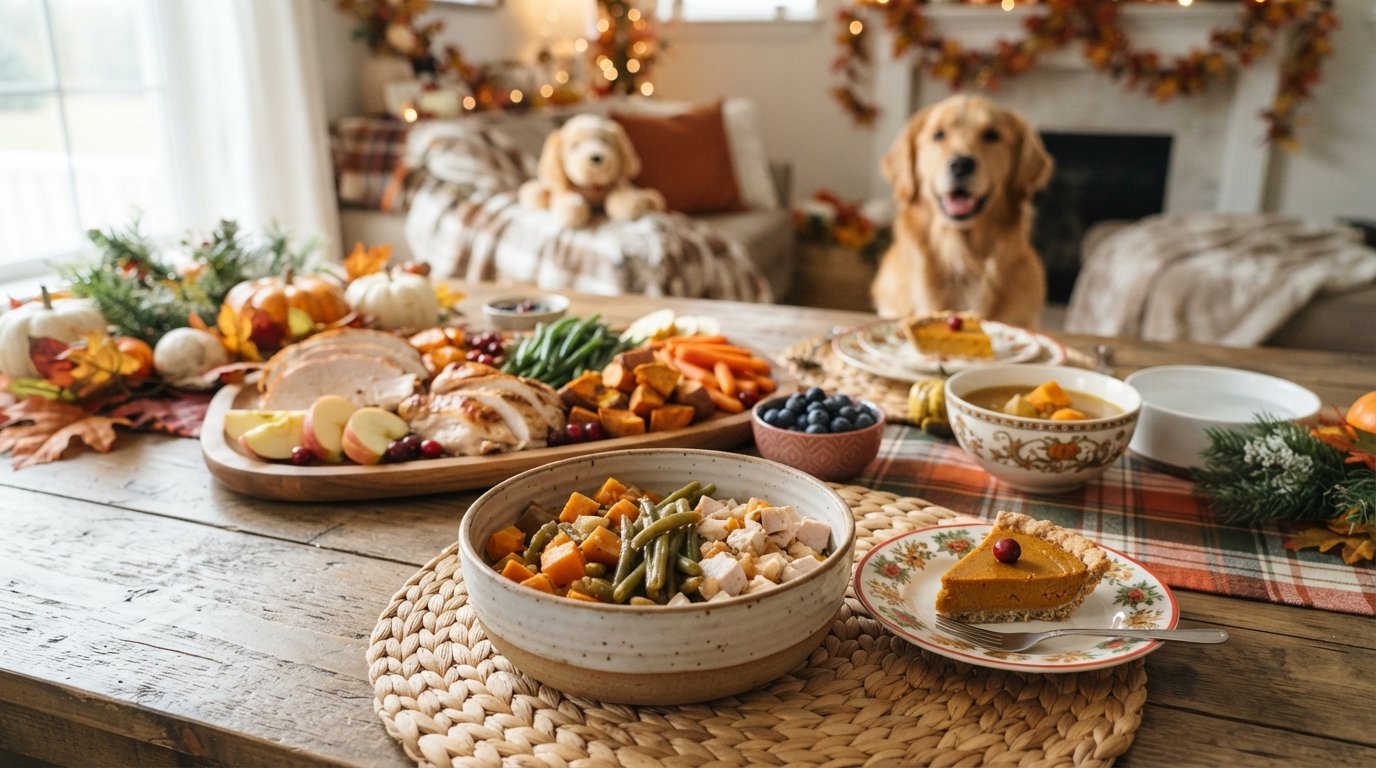
Every November, my dog Luna waits under the table, her nose twitching at each passing dish. Your pup may do so.
The holiday table holds tempting smells and dishes: turkey, mashed potatoes, gravy, and pie. This feast suits humans, not canine stomachs.
This year, I wanted real answers instead of guesses, so I created this guide. It explains which thanksgiving foods for dogs are safe.
I wanted a clear, vet-reviewed resource. It shows what you can share safely, what stays off-limits, and what is safe but better skipped.
Inside, you’ll find quick answers, turkey details, and easy tables of safe and toxic foods. You’ll also learn how to build a plate step by step, spot warning signs, and use veterinary advice.
My goal is simple: help you host a joyful, worry-free holiday. Then every family member, including four-legged ones, can stay happy and healthy.
Key Takeaways
- Plain, unseasoned turkey and pumpkin are generally safe treats in small amounts.
- Onions, garlic, grapes, and chocolate are toxic and should never reach your pup’s bowl.
- Fatty, salty, or heavily seasoned dishes aren’t toxic but can still cause stomach upset or pancreatitis.
- Prepping a separate, safe plate ahead of time keeps your dog satisfied without added risk.
- Watching for vomiting, lethargy, or diarrhea helps you catch trouble early.
- Vet-reviewed guidance takes the guesswork out of holiday feeding decisions.
Quick Answer: What You Need to Know Before Thanksgiving Dinner
Thanksgiving pet safety tips can help before you open the oven door on a hectic Thanksgiving morning.
A small serving of plain, boneless, skinless turkey is safe for most healthy dogs. Plain green beans, pumpkin puree, and plain sweet potato are safe extras without butter, sugar, or seasoning.
Turkey bones, skin, and greasy drippings are off the table. They can cause choking, an upset stomach, or worse. Stuffing heavy in onion or garlic, grapes, raisins, chocolate desserts, xylitol, or alcohol are genuinely toxic to dogs.
Even safe foods need small portions. Too much can still cause vomiting or diarrhea, especially in smaller breeds.
Here’s the cheat sheet I keep taped inside my kitchen cabinet every November:
| Food Item | Safe for Dogs? | Why It Matters |
|---|---|---|
| Plain turkey (no skin or bones) | Yes, in small amounts | Lean protein, but rich food can upset the stomach |
| Plain green beans, pumpkin, sweet potato | Yes, unseasoned | Fiber-rich and gentle on digestion |
| Turkey skin, fat, and bones | No | Choking hazard and pancreatitis risk |
| Onion, garlic, and stuffing mixes | No | Damages red blood cells, can be toxic |
| Grapes, raisins, chocolate, xylitol, alcohol | No | Can cause organ failure or be fatal |
That’s the short version. Read on for turkey portions, hidden toxic ingredients, foods to skip, and warning signs that require a vet call. These thanksgiving pet safety tips give you a complete game plan before the feast begins.
Can Dogs Eat Thanksgiving Turkey?
Turkey itself is not the problem on Thanksgiving; toppings cause most problems. Can dogs eat turkey? The short answer is yes, with a few important caveats. This guide explains what is safe, risky, and too much.
Plain Turkey Meat vs. Seasoned Turkey
So, can dogs eat turkey? Yes—plain cooked turkey for dogs makes a great occasional treat. Choose white meat over dark meat because it has less fat and is easier on a dog’s stomach.
Seasoning usually causes trouble, not the turkey itself. Butter-basted skin, garlic and onion rubs, or heavy herb blends can make safe protein dangerous. Garlic and onion are toxic to dogs even in small amounts.
My rule is simple: share a bite if it is plain, skinless, and boneless. Skip turkey covered in gravy or seasoning.
Turkey Skin, Fat, and Bones: Why They’re Risky
Turkey skin looks irresistible, but its fat can trigger pancreatitis. This painful, sometimes life-threatening condition inflames the pancreas. Even a small piece of fatty skin can cause symptoms within hours.
Bones create an even bigger concern. Cooked turkey bones become brittle and splinter easily, unlike raw bones. Sharp fragments can scratch the throat, lodge in the esophagus, or puncture the intestines.
Veterinarian Dr. Carly Fox puts it bluntly:
“Bones can break teeth, become lodged in the esophagus, or cause other injuries to the GI tract that may require specialty care to fix.”
That risk is not worth a few extra bites of meat. Always remove skin and bones completely before offering turkey to your dog.
How Much Turkey Is Too Much?
Even safe, plain turkey has limits. Dr. Fox recommends limiting any new food to about a spoonful, and that guidance applies here.
A dog’s regular diet is balanced for their needs. Too much turkey, even lean turkey, can upset that balance and cause stomach trouble or diarrhea. Think of turkey as a topping, not a meal.
Here’s a simple way to think about portions:
- Small dogs (under 20 lbs): one small spoonful
- Medium dogs (20–50 lbs): one to two spoonfuls
- Large dogs (over 50 lbs): two to three spoonfuls
Treats, including turkey, should provide no more than 10% of your dog’s daily calories. More isn’t better, even when the food itself is safe.
Safe Thanksgiving Foods for Dogs
Beyond turkey, many Thanksgiving staples are safe for dogs. Several table sides work well when served correctly. This guide shows what belongs on your dog’s special “dog plate.”
Plain Cooked Turkey
Plain turkey can anchor a dog-safe Thanksgiving plate. Choose boneless, skinless white or dark meat without seasoning, butter, or gravy.
A few small bites make a good treat for most dogs. Serve turkey as a topping, not a meal replacement. Keep portions modest and watch for stomach upset.
Green Beans (Plain, No Butter or Almonds)
Green beans for dogs are an easy, low-calorie holiday side. Steamed, boiled, or raw green beans offer fiber, vitamins, and a crunchy snack.
Skip green bean casserole. Its creamy, salty sauce may contain onions, butter, crispy fried toppings, or slivered almonds. These ingredients do not belong in your dog’s bowl.
Plain is always the safest word to remember here.
Plain Pumpkin Puree
Plain pumpkin puree for dogs is a favorite Thanksgiving addition. It provides fiber and may help settle an upset canine stomach after a rich holiday meal. Many vets recommend a small spoonful for this reason.
Choose 100% pure pumpkin, not pie filling. Canned pie filling contains added sugar and spices like nutmeg. These ingredients may irritate your dog’s digestive system.
A tablespoon or two mixed into regular food suits most dogs.
Sweet Potatoes (Plain, No Marshmallows)
Sweet potatoes for dogs make a tasty, nutrient-rich treat when served plain. Cooked, mashed, or cubed sweet potato without butter, sugar, or salt provides beta-carotene and fiber.
Never share the marshmallow-topped casserole served at most Thanksgiving dinners. The sugary topping and added butter can cause a stomach ache.
Keep servings small because too much of any starchy vegetable adds unwanted calories.
Portion Guide: Safe Serving Sizes by Dog Weight
Safe foods still need proper portions. A tiny dog and a large dog need different amounts of turkey or pumpkin. Here is a quick weight-based reference table.
| Dog Weight | Plain Turkey | Green Beans | Pumpkin or Sweet Potato |
|---|---|---|---|
| Under 20 lbs | 1 teaspoon | 1-2 beans | 1 teaspoon |
| 20-50 lbs | 1 tablespoon | 3-4 beans | 1-2 tablespoons |
| 50+ lbs | 2 tablespoons | 5-6 beans | 2-3 tablespoons |
These amounts are toppers, not full meals. Your dog should still eat regular food first. For more safe and unsafe holiday foods, check out my guide, 27 Human Foods Dogs Can and Cannot Eat.
Toxic Thanksgiving Foods for Dogs
Some foods on your Thanksgiving table can put your dog’s life at risk.
Unlike foods I will call “skip it to be safe,” these are genuinely toxic Thanksgiving foods. They belong on every pet owner’s no-list. Knowing foods dogs should avoid on Thanksgiving can separate a normal holiday from an emergency vet trip.
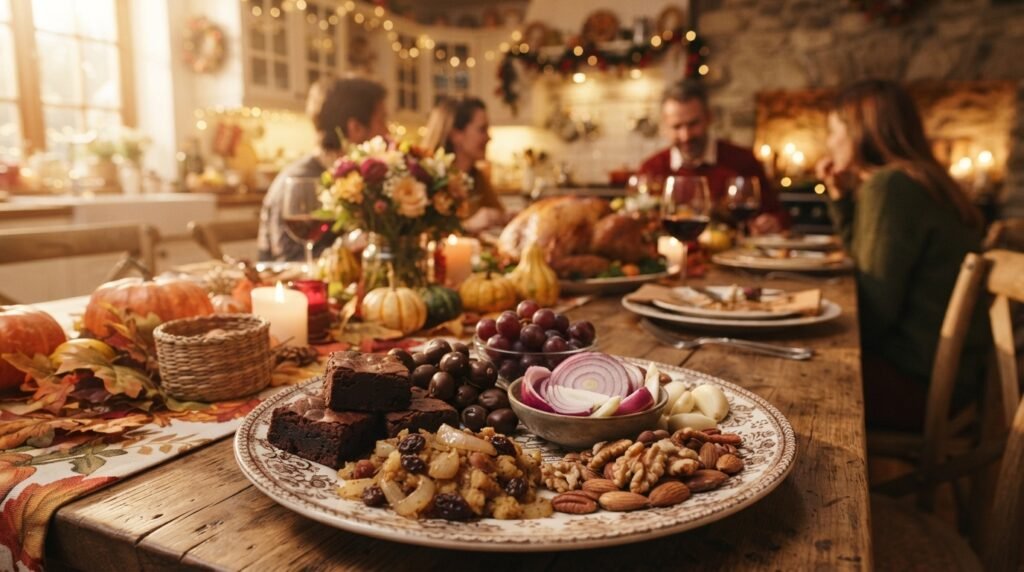
Onions and Garlic
Onions, garlic, chives, scallions, and leeks contain thiosulfates. These compounds damage a dog’s red blood cells. This damage can cause hemolytic anemia, which happens when the body destroys red blood cells faster than it replaces them.
The tricky part is that onion and garlic powder hide in gravies, stuffing, and casseroles. Your dog need not eat a whole onion to get sick. Even small, repeated amounts in seasoned dishes add up over time.
Grapes and Raisins
Grapes, raisins, and currants are dangerous for dogs, though vets still do not fully understand why. These fruits can trigger acute kidney failure, even in tiny amounts.
Dr. Carly Fox treated a dog whose kidneys shut down after it ate a currant roll from a holiday table. The dog needed dialysis to survive. Keep fruitcake, cranberry-raisin stuffing, and grape salad far out of paw’s reach.
For a full breakdown of symptoms and treatment, read Can Dogs Eat Grapes.
Xylitol in Desserts and “Sugar-Free” Dishes
Xylitol is a sugar substitute found in “sugar-free” pies, gum, and some peanut butter brands used in holiday baking. In dogs, xylitol triggers a rapid insulin release that causes dangerous hypoglycemia.
This blood sugar crash can happen within 30 minutes of eating it and may also lead to liver failure. Even a small taste of a xylitol-sweetened dessert can be deadly, so check ingredient labels before sharing anything sweet.
Chocolate Desserts
Chocolate pies, brownies, and cocoa-dusted desserts contain theobromine, a compound dogs cannot metabolize well. Symptoms include vomiting, a racing heartbeat, tremors, and, in severe cases, seizures.
Darker chocolate has more theobromine than milk chocolate, making baking chocolate and dark chocolate desserts especially dangerous. This toxicity can also contribute to pancreatitis, so keep every dessert plate out of reach during dinner and cleanup.
Cooked Bones and Carcasses
Cooked turkey bones and leftover carcasses may seem like natural treats, but cooking makes bones brittle and easy to splinter. Sharp fragments can injure the mouth, throat, or digestive tract as they pass through.
Besides injury, cooked bones can cause choking or an intestinal blockage requiring emergency surgery. This danger applies to every cooked bone, not just turkey. Toss carcasses into a secured trash can right away.
Risk-Level Table: How Dangerous Is Each Food?
Here’s a quick guide to foods dogs should avoid on Thanksgiving, ranked by symptom speed and severity. Keep it handy when hosting and deciding what can stay near your dog’s reach.
| Food | Risk Level | Main Danger | Onset of Symptoms |
|---|---|---|---|
| Onions and Garlic | Moderate to Severe | Hemolytic anemia | Hours to days |
| Grapes and Raisins | Severe | Acute kidney failure | Hours to 48 hours |
| Xylitol | Severe | Hypoglycemia, liver failure | 30 minutes to hours |
| Chocolate | Moderate to Severe | Theobromine toxicity, pancreatitis | Hours |
| Cooked Bones | Moderate | Choking, intestinal blockage | Immediate to days |
Thanksgiving Foods to Skip Even Though They’re Not Toxic
These foods belong in the gray zone of pet-friendly holiday meals. They are not toxic like onions or chocolate, but they still do not belong in your dog’s bowl. A happy holiday starts with knowing where to draw the line.
Stuffing and Bread-Based Sides
Stuffing looks harmless, but it is rarely just bread. Most recipes contain onions, garlic, or raisins, which can be dangerous for dogs in meaningful amounts. Bread is not toxic, but a large serving can cause bloating or discomfort.
I would rather let my dog skip stuffing than pick out each questionable ingredient. When in doubt, leave it off the dog-friendly list.
Gravy and Buttery Mashed Potatoes
Gravy tastes great, but it is mostly liquid fat and salt, often with onion or garlic powder. This mix can quickly upset a dog’s stomach and sometimes trigger pancreatitis.
Buttery mashed potatoes are not much better. Butter, cream, and seasoning make a rich dish that can strain a dog’s digestive system, although plain potatoes are fine.
Casseroles With Dairy or Cream Soups
Green bean casserole and similar dishes often use cream soups packed with fat, salt, and dairy. These ingredients are not toxic, but they can cause vomiting or diarrhea in dogs unused to rich food.
Sweet potato casserole brings another trap, with butter, brown sugar, and marshmallows on top. Serve plain sweet potato instead of risking a sugar-and-fat overload.
Pies, Cakes, and Other Desserts
Pumpkin pie may seem safe because plain pumpkin is good for dogs. However, its filling often contains sugar and nutmeg, which can be toxic in large doses. Pecan pie adds another risk because pecans are unsafe for dogs.
Cakes and frosted desserts contain sugar and dairy that dogs do not need. Skipping dessert is one of the easiest ways to keep the night simple.
- Stuffing: hidden onion, garlic, or raisins
- Gravy and buttery potatoes: excess fat and salt
- Cream-based casseroles: dairy overload and GI upset
- Pies and cakes: sugar, nutmeg, and unsafe nuts
The good news is that plenty of pet-friendly holiday meals exist, so your dog can still join the celebration without these risks.
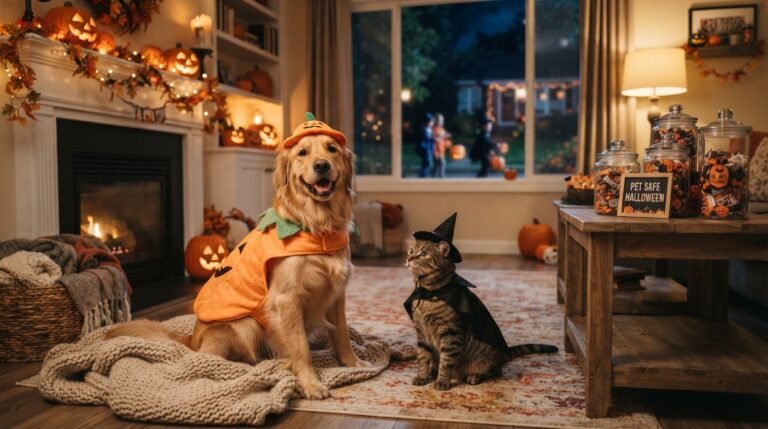
Cats and Guests: Table-Scrap Rules for Visitors
Thanksgiving dinner brings guests and many hands ready to slip food under the table.
For me, thanksgiving pet safety tips begin before anyone sits down to eat. Planning helps pets and guests enjoy the holiday without an emergency vet visit.
Setting Ground Rules Before Guests Arrive
Before the doorbell rings, I set simple rules with everyone coming over. I ask guests, especially kids, not to share food with my dog, despite those puppy eyes.
I also check the living room for unattended plates on coffee tables. Dogs move fast, and a few unsupervised minutes can cause trouble.
Dr. Stephanie Liff shares a memorable example. Her labradoodle, Kyrie, once snatched an entire turkey leg from the counter while guests distracted her. This shows that even watchful hosts can be caught off guard.
Keep dangerous foods off low tables and secure trash bins with tight lids. These steps close two easy paths to trouble.
Keeping Cats Safe From Thanksgiving Scraps Too
Dogs often get most holiday attention, but cats face the same food risks. Onions, garlic, chocolate, xylitol, and grapes are toxic to cats and dogs.
Fatty turkey skin and rich gravy can upset a cat’s stomach, too. Cats are quiet, curious, and skilled at reaching counters or unattended plates during conversations.
The same ground rules protect both dogs and cats. Dr. Carly Fox recommends confining pets to a safe, quiet room during the meal. Watch closely for dropped food around children, and tell guests what not to feed the family cat or dog.
Take the garbage out on the holiday instead of letting it sit. This removes one more temptation entirely.
| Ground Rule | Who It Protects | Why It Matters |
|---|---|---|
| Ask guests not to share table scraps | Dogs and cats | Prevents accidental ingestion of toxic foods like onions or chocolate |
| Keep trash bins tightly covered | Dogs and cats | Stops pets from digging out bones, wrappers, or spoiled food |
| Watch children around food | Dogs and cats | Kids often drop or hand over food without realizing the risk |
| Clean spills and crumbs right away | Dogs and cats | Reduces easy, unsupervised snacking opportunities |
| Confine pets during the meal | Dogs and cats | Removes temptation and lowers stress from a crowded room |
How to Build a Dog-Safe Thanksgiving Plate
I treat this as one of my favorite dog-safe thanksgiving recipes, something I prepare beside the big meal. Four simple steps turn plain ingredients into a plate my dog truly enjoys.
Step 1: Choose the Right Base
I start with plain food, such as cooked white rice or small chunks of boiled potato. This gentle base has no butter, cream, or hidden seasoning.
Skip stuffing, rolls, and biscuits because bread-based sides may hide garlic, onion, or extra salt. Plain rice digests easily and supports the other ingredients.
A spoonful of plain mashed potato works too, without butter, milk, or salt. Keep it small because it forms the foundation, not the whole meal.
Step 2: Add Safe Veggies and Protein
Once the base is ready, I add safe staples, such as plain green beans, pumpkin puree, or cooked sweet potato. A little shredded plain turkey breast adds protein, without skin, fat, or seasoning.
Frozen blueberries or apple slices, with seeds and core removed, make a cool topping many dogs love. Carrots, peas, or plain cooked broccoli add color and nutrients too.
I choose two or three add-ins instead of piling everything on. Small amounts of variety sit easier on a dog’s stomach. These are the exact building blocks I use for dog-safe thanksgiving recipes every year.
Step 3: Skip Seasonings, Butter, and Salt
Before serving, I check every ingredient for hidden extras. Garlic powder, onion powder, butter, and salt can hide in harmless-looking dishes.
Even a sweet potato casserole with marshmallows, or green beans in cream soup, can turn a healthy vegetable into trouble. I prepare each ingredient separately instead of scooping from family serving dishes, since those often contain butter or gravy.
Moderation is the single most important rule when sharing human food with pets, no matter how safe an ingredient seems in small amounts.
A plain, unseasoned version of each food keeps the plate safe. When something seems questionable, I leave it off rather than guess.
Step 4: Portion It Out Properly
This plate is a small treat, not a second dinner. For smaller dogs, I give a few spoonfuls; larger breeds get a bit more. That matches the serving guide I use throughout the holiday.
Overloading the plate, even with safe foods, can lead to an upset stomach or worse. It is a holiday garnish, not a full meal. This lets my dog join the celebration without the aftermath.
Modest portions keep tails wagging and emergency vet visits off the holiday calendar.
Signs of Food Trouble and When to Call the Vet
No matter how carefully I plan my Thanksgiving spread, my dog may still sneak unsafe food. I keep warning signs in mind, so I can spot a mild tummy ache or an emergency.
Knowing the foods dogs should avoid on Thanksgiving is only half the battle. I must also spot trouble early, before a small problem becomes serious.
Mild Symptoms to Watch For
A dog’s stomach may become upset after eating table scraps. These mild symptoms usually do not require an emergency visit, but they need close attention.
- Occasional vomiting (once or twice, then stops)
- Soft or slightly loose stool
- Mild lethargy or less interest in playing
- Slight decrease in appetite at the next meal
I offer my dog fresh water and watch him closely for several hours. If symptoms fade by the next meal, he is usually fine.
If the upset stomach lasts beyond 24 hours, I call my vet to be safe.
Emergency Signs That Need Immediate Care
Some symptoms mean it is time to act instead of waiting. These are not “wait and see” situations.
- Repeated vomiting that won’t stop
- Diarrhea with visible blood
- Abdominal pain or a swollen, bloated belly
- Severe lethargy or sudden weakness
- Tremors or shaking
- Loss of coordination or stumbling
- Trouble breathing or heavy, labored panting
Any of these signs requires a trip to an AAHA-accredited veterinarian or the nearest emergency animal hospital. I have learned that quick action, rather than hesitation, can protect a dog’s life.
What to Do If Your Dog Eats Something Toxic
If I suspect my dog ate something dangerous, I immediately call my vet or the ASPCA Poison Control hotline at (888) 426-4435. I never try home remedies, such as inducing vomiting, by myself.
Sick pets often need fast decontamination. Vets may induce vomiting with special medication or use activated charcoal to bind toxins, and owners should never try to treat their pet at home, since inducing vomiting incorrectly can do more harm than good.
One story stayed with me: a dog’s kidneys began shutting down after eating a currant roll. He made a full recovery after quick veterinary treatment, including dialysis.
When I call for help, I describe what my dog ate and roughly how much. That information guides the treatment plan.
Vet-Reviewed Advice and Trusted Resources
Every tip here draws on real veterinary expertise, not internet guesswork. I shaped this advice with Dr. Carly Fox, an emergency veterinarian at Schwarzman Animal Medical Center in New York City.
It also draws on Dr. Stephanie Liff, medical director at Pure Paws Veterinary Care of New York.
Their firsthand experience treating holiday-related emergencies shaped much of this guide. Thanksgiving sends plenty of dogs to the ER each year, usually for the same preventable reasons.
“Thanksgiving is one of the busiest days of the year in our emergency room, and it’s almost always because a dog got into something rich, fatty, or toxic left on the table.”
Even with the best intentions, every dog is different. Size, breed, age, and health history affect what’s safe for your pet.
When something feels off, don’t rely on general articles alone. Call your own AAHA-accredited veterinarian or a trusted emergency hospital right away.
Keep the ASPCA Animal Poison Control Center number saved in your phone. My goal is simple: help you plan pet-friendly holiday meals with confidence.
Leave the final word to professionals who know your dog best.
Conclusion
The biggest takeaway is simple: Thanksgiving need not stress you or your dog. Most danger comes from fatty, heavily seasoned, or toxic ingredients, not the holiday itself.
When I set aside plain turkey, pumpkin, green beans, and sweet potato, my dog can safely join the celebration. Keeping onions, garlic, grapes, chocolate, and xylitol locked away and off the counter removes most risks before they begin.
Talk with guests about not slipping scraps under the table. Most people will follow a simple house rule when they understand why it matters.
Bookmark this guide on thanksgiving foods for dogs, and keep it handy while cooking and serving. Trust your gut if your dog seems unwell after dinner, and call your vet or an emergency animal hospital. A few cautious minutes can turn a scary moment into a normal, happy holiday for everyone, paws included.
FAQ
Can dogs eat turkey on Thanksgiving?
Yes, dogs can eat turkey if it is plain, boneless, and skinless. I always set aside a small piece of plain cooked turkey for my own dog before butter, garlic, or seasoning touches it. Skip the skin, fat, and any basted or herb-rubbed portions because they’re most likely to cause stomach upset or worse.
What are the best dog-safe Thanksgiving recipes or foods to serve my dog?
My go-to dog-safe Thanksgiving recipe is simple: plain cooked turkey, green beans, pumpkin puree, and sweet potato, all without butter, salt, or seasoning. This pet-friendly holiday meal lets your dog enjoy Thanksgiving without risky ingredients in traditional side dishes.
Are sweet potatoes for dogs safe to serve on Thanksgiving?
Plain, cooked sweet potatoes are among the safest and most nutritious Thanksgiving foods for dogs. Keep them free of butter, brown sugar, cinnamon, or marshmallow topping because traditional casserole has more sugar than dogs need. A few small cubes, mashed or cut up, are enough for most dogs.
Is pumpkin puree for dogs actually good for them?
Absolutely, and it is one of my favorite additions to a dog’s holiday plate. Plain canned pumpkin puree, not pumpkin pie filling, is gentle on digestion and may settle an upset stomach. Check the label for added sugar, nutmeg, or spice blends; pie filling differs completely from plain puree.
Can I give green beans for dogs during the holiday meal?
Yes, plain green beans are a great low-calorie vegetable to share with your dog on Thanksgiving. Serve them without butter, salt, or slivered almonds from holiday casseroles; almonds and heavy seasoning can upset digestion.
What foods should dogs avoid on Thanksgiving?
Foods dogs should avoid include onions, garlic, grapes, raisins, chocolate, xylitol-sweetened desserts, and cooked bones. Avoid heavily seasoned, buttered, or salted foods like stuffing and gravy. These foods can cause mild upset or life-threatening harm, so keep them out of paw’s reach.
Can dogs eat sugar-free desserts or anything containing xylitol?
No, and this is one of the most important warnings I share every Thanksgiving. Xylitol is a sugar substitute hidden in “sugar-free” pies, gums, and some peanut butter brands. It can cause a dangerous blood sugar crash and possible liver failure in dogs. Always check ingredient labels before letting your dog near any sugar-free treat.
What’s the safest way to build a plate for my dog during Thanksgiving dinner?
Start with a plain base, such as rice or plain potato. Then add small amounts of safe foods after checking for butter, salt, or seasoning. Choose only a few spoonfuls based on your dog’s size, as a side treat rather than a second meal.
What are the most important Thanksgiving pet safety tips to keep in mind?
My top tips are simple: set guest rules before arrival, so nobody feeds the dog from a plate. Keep unattended food off low tables and counters, and know which foods are toxic or not worth the risk. Save the ASPCA Poison Control number, (888) 426-4435, in your phone for emergencies.
What should I do if my dog eats something toxic on Thanksgiving?
Stay calm, but act quickly. Call your vet or ASPCA Poison Control immediately, and describe what your dog ate and how much, especially grapes or chocolate. Do not try home remedies, such as inducing vomiting, without guidance; fast care can make all the difference.