What if the most valuable skill your pup ever learns has nothing to do with sitting pretty or shaking paws?
I’ve trained several dogs over the years, and one lesson stands above every other cue: reliable recall. That split-second response can separate a joyful game of fetch from a frantic sprint toward traffic.
This guide shares my exact, step-by-step plan for every new puppy or rescue that walks through my door. It explains how to teach your dog to come when called with a fast method for building a rock-solid response. It covers why dogs tune out their owners and must-have gear for success.
I’ve included a realistic two-week schedule, common training mistakes to avoid, and tips for safely adding real-world distractions. These include squirrels and strangers, with separate pointers for puppies and adult rescues.
Grab a leash and some high-value treats. Let’s turn selective hearing into instant, tail-wagging obedience.
Key Takeaways
- A strong recall can be lifesaving, keeping pets safe near roads, wildlife, or crowded parks.
- Consistency and positive reinforcement matter more than any single training trick.
- A two-week, structured schedule builds reliable responses faster than random practice sessions.
- Puppies, adult dogs, and rescues each benefit from slightly different training approaches.
- Avoiding common mistakes, like scolding a slow return, speeds up overall progress.
- Gradually introducing distractions prepares pets for real-world temptations like squirrels or strangers.
How to Teach Your Dog to Come When Called: The Quick Answer
Need a fast answer before you grab the leash and treats? I’ve got you covered. Here’s a cheat sheet for building a reliable recall for dogs without reading the whole guide right now.
Building a reliable recall for dogs needs no fancy tricks. Follow the steps in order, and stay patient throughout training.
- Pick one special recall word your dog doesn’t hear in everyday life, like “here” or “front.”
- Pair that word with high-value treats your dog can’t resist, such as chicken or cheese.
- Practice at very short distances inside a quiet, distraction-free room first.
- Slowly increase distance and distractions over roughly two weeks.
- Never scold your dog for coming back slowly or reluctantly.
Think of this as the shortcut version of the full plan below. A reliable recall for dogs grows through trust, excitement, and consistency, not fear or force.
Each time your dog comes to you, something good should happen. Use treats, praise, or play—whatever makes your dog’s tail wag hardest. Keep that promise, and recall training becomes much easier.
Why Dogs Ignore the Recall Command
I once thought my dog was stubborn. Most dogs ignore the come command for dogs for simple, fixable reasons. It is rarely defiance; it is often a communication problem.
Before training, let’s examine the real causes of poor recall. Once you know the problem, fixing it becomes much easier.
Lack of Value in the Reward
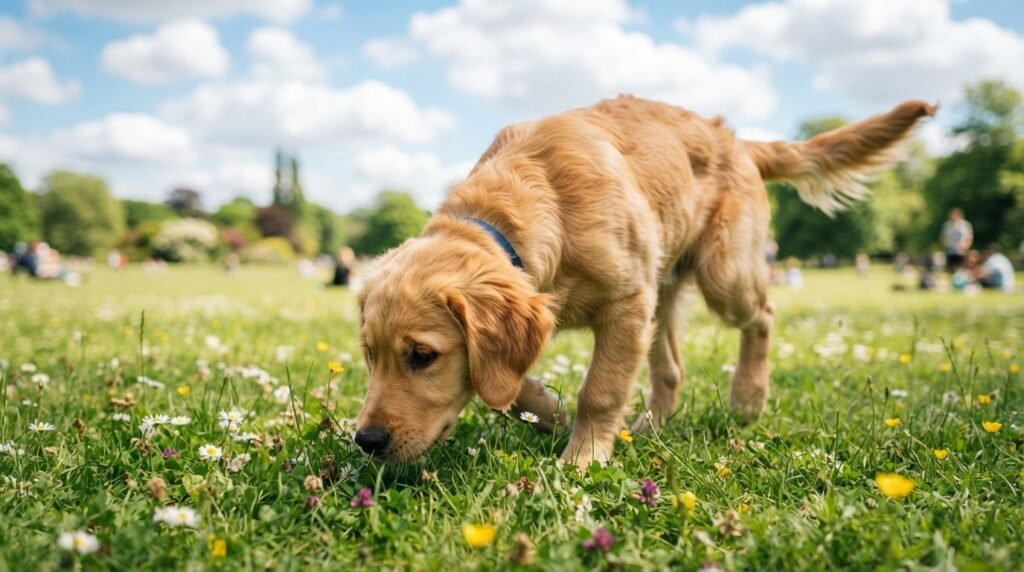
Let’s be honest: stale kibble cannot compete with the smell of a dead squirrel. If the environment seems more interesting, your dog will choose the squirrel.
This is not a training failure. It is basic math. Your reward must outweigh the distraction, or your dog has no reason to turn around.
| Reward Value | Example | Dog’s Likely Response |
|---|---|---|
| Low | Dry kibble, stale biscuits | Ignores recall, stays distracted |
| Medium | Store-bought training treats | Responds sometimes, depends on distraction level |
| High | Chicken, hot dog, cheese | Responds reliably in most settings |
| Jackpot | Handful of favorite treats plus praise | Comes running even with heavy distractions nearby |
Recall Only Means “Fun Is Over”
Here is a mistake I made early on. I called my dog at the park, clipped on the leash, and went straight home. After several repeats, my dog quickly learned the pattern.
Coming to me meant playtime ended. Why would any dog want to do that?
“Dogs learn through association, not logic. If recall consistently predicts something unpleasant, they’ll avoid it no matter how well they technically know the cue.”
Now, coming to me sometimes leads to more fun. My dog gets a treat, plays briefly, and then returns to playing.
This keeps the recall command valuable instead of making it something to dread.
Too Much Distance Too Soon
Another classic mistake is expecting a 50-foot recall before your dog masters a 5-foot recall. I have seen owners try off-leash park practice and wonder why nothing works.
Dogs build reliability in layers. Distance is one of the hardest variables, along with distractions and duration. Skip the groundwork, and the whole process falls apart.
Short distances with heavy reinforcement build the foundation. Increase distance only after that foundation is strong.
Inconsistent Cues or Mixed Signals
Purina notes that dogs may ignore recall because they do not know their name well. They may also lack full command training or find the environment too exciting.
Mixed signals make this worse. I have repeated “come, come, COME!” in three different tones within five seconds.
To a dog, that sounds like three requests, not one urgent request.
Using your dog’s name interchangeably with “come” also causes confusion. If the name means “look at me” sometimes and “come here” other times, your dog cannot know which response you want.
Keep the come command for dogs separate from your dog’s name, and say it once per request. Clear, consistent cues help your dog succeed every time.
What You Need Before You Start
Training loses momentum when I search for treats, so I prepare my high-value dog treats and supplies first. Ready supplies keep each session smooth and free from distractions. A little preparation now prevents frustration later.
Here’s what I gather before every recall session.
High-Value Treats That Beat Distractions
Your dog needs a reason to choose you over a squirrel, jogger, or another dog. That reason is the reward in your hand.
I always use high-value dog treats, like small pieces of chicken, cheese, or freeze-dried liver. They differ from the biscuits in your pantry. I reserve them for recall practice, so each treat feels like a jackpot.
Some dogs prefer a favorite toy to food. If your dog loves tug, bring a toy too. Whatever you offer must beat competing distractions.
A Long Line for Safe Practice
A long line gives your dog room to roam while you keep control. I recommend a 15 to 30-foot line for outdoor sessions.
This length lets your dog explore and sniff like a normal walk. It limits freedom until recall is solid and helps prevent bolts toward traffic or another dog.
A Quiet, Low-Distraction Space
Early recall training works best in a boring setting. I start in a hallway or empty living room, away from toys, smells, and other pets.
A quiet space builds the habit before distractions test it. Once your dog masters indoor recall, you can build on that strong foundation outside.
Helpful Tools to Speed Up Training
A few extra tools can make recall training faster and more consistent. I use a clicker to mark the moment my dog moves toward me. This shows him which action earned the reward.
A treat pouch clipped to my waist keeps high-value dog treats within reach, so I never fumble during training. Some owners also like apps that track sessions and progress over time.
For a deeper gear breakdown, I put together a full guide on Positive Reinforcement Training Tools. It covers clickers to treat dispensers in more detail.
Step-by-Step Recall Training Plan
With your supplies ready, the real work and fun begin. This six-step dog recall training plan starts indoors without distractions and builds toward real-world situations. Take your time, and move ahead only when your dog succeeds at the current level.
Step 1: Choose and Charge Your Recall Word
Pick a word you rarely use, such as “here” or “come.” Avoid using your dog’s name alone because it gets attention but gives no direction.
To “charge” the word, say it happily and immediately give a treat. Repeat this twenty or thirty times daily without asking your dog to respond.
This builds an association: the word means something amazing is coming. A clicker can mark the exact moment before the treat appears.
Step 2: Practice in a Distraction-Free Room
Choose a quiet room without toys, noise, or other pets. Stand a few feet away, say the word once, then mark and reward your dog immediately when he moves toward you.
Keep sessions short; five minutes is enough. Three or four brief sessions daily work better than one long, boring session.
Step 3: Add Distance Indoors
After your dog succeeds nearby, let him wander farther before calling. Try calling from another room so he must search for you.
This shows him the recall word works anywhere in the house. Celebrate each success with praise and a high-value treat.
Step 4: Move Practice to the Backyard
Your backyard adds fresh air, new smells, and mild distractions for the next stage of dog recall training. Start with a regular leash so you can guide your dog gently.
Call his name, then say the recall word. Reward him enthusiastically when he arrives. If he struggles, shorten the distance until he feels confident again.
Step 5: Introduce the Long Line Outdoors
This is where long line training for dogs really helps. Clip on a 15 to 30-foot line, and let your dog explore while you remain relaxed and watchful.
Call the recall word. If he hesitates, gently tug the line, never jerk it, to guide him toward you. The line provides safety while giving your dog freedom.
Step 6: Practice Random Real-Life Recalls
Now add recalls to daily life, not only “training time.” Call your dog from the yard, briefly interrupt play, or play hide-and-seek using his nose and ears.
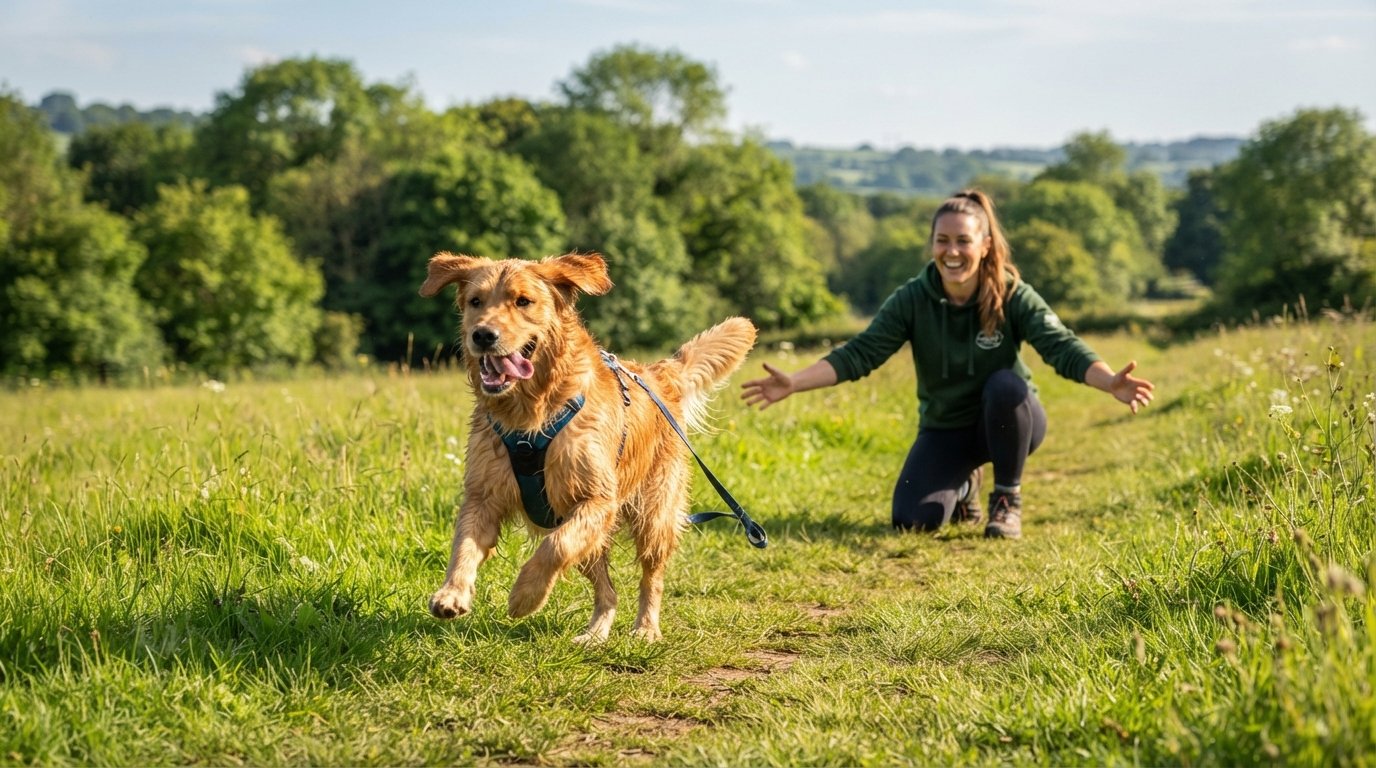
The “chase me” game works too. Run a few steps away, encourage him to catch up, and reward him when he does. These playful moments make dog recall training a lifelong habit.
“A recall that only works in training sessions isn’t a real recall—it has to hold up in the backyard, at the park, and everywhere in between.”
Your 2-Week Recall Training Schedule
These two simple tables show what to practice each day. Week 1 builds an indoor foundation, while Week 2 adds distance, the long line, and light distractions.
Week 1: Building the Foundation
| Days | Focus | Sample Exercise | Session Length |
|---|---|---|---|
| Days 1–2 | Charge the Recall Word | Say “come,” then instantly reward—no distance yet | 5 minutes, 3x daily |
| Days 3–4 | First Indoor Recalls | Call from 3–5 feet away in the same room | 5 minutes, 2x daily |
| Day 5 | Add a Second Room | Call your dog from another room so he has to find you | 7 minutes, 2x daily |
| Day 6 | Family Recall Relay | Two people call back and forth for treats | 7 minutes, 1x daily |
| Day 7 | Review and Reinforce | Repeat easiest exercises to build confidence | 10 minutes, 1x daily |
Week 2: Adding Distance and Distractions
| Days | Focus | Sample Exercise | Session Length |
|---|---|---|---|
| Days 8–9 | Backyard Basics | Practice recall in a fenced yard on a regular leash | 5–7 minutes, 2x daily |
| Days 10–11 | Long Line Outdoors | Use a 15–30 ft line and call from increasing distances | 10 minutes, 2x daily |
| Day 12 | Mild Distractions | Practice near a toy or low-key household noise | 10 minutes, 1x daily |
| Day 13 | Real-Life Recalls | Call randomly throughout the day for a jackpot reward | Spread throughout the day |
| Day 14 | Full Test Run | Combine distance, mild distractions, and the long line | 10–15 minutes |
Common Recall Mistakes
I wondered why my dog’s recall kept failing until I noticed five habits in my routine. None requires a training overhaul. They need awareness and better timing.
Almost every dog owner makes at least one of these mistakes without noticing. Finding them early can prevent months of frustration.
Calling Your Dog for Something Unpleasant
I once called my dog for a bath, and repairing the damage took weeks. Using “come” before nail trims, baths, or leaving the dog park teaches your dog that word predicts something unpleasant.
Dogs are smart. If coming to you ends the fun or causes discomfort, they may avoid the cue altogether.
Instead, walk over and gently collect your dog for unpleasant tasks. Save the recall word for things your dog enjoys.
Repeating the Command Over and Over
Saying “come, come, come, COME” may feel natural when you feel anxious, but it backfires. Each repeated call teaches your dog that earlier calls are optional.
Your dog may wait for the fifth or sixth repetition before responding. That is a habit you do not want to build.
Say the word once. If your dog does not respond, try an exciting noise, clap, or run backward several steps.
Punishing a Late Return
This is tough when your dog returns after ignoring you for ten frustrating minutes. Any correction after arrival, even a disappointed tone, erases the positive reinforcement dog training progress you worked hard to build.
Whatever happens before your dog reaches you, the moment they arrive is the only moment that matters.
Your dog links your reaction to the action happening then: coming to you. Scolding then teaches them that returning is risky, not safe.
Always greet your dog’s arrival warmly, even when the journey was far from perfect.
Skipping the Long Line Too Soon
I understand the temptation to drop the leash early. Watching your dog run free feels like the whole point of training.
Rushing off-leash freedom before your dog masters recall on a long line sets you up for failure. One bad experience, like a dog bolting toward a busy street, can set training back significantly.
Keep using the long line until your dog responds reliably around real distractions. Extra patience brings a safer, more dependable recall.
Using Low-Value Treats
A handful of dry kibble cannot compete with exciting scents, squirrels, or other dogs. Without exciting treats, your dog will choose the environment every time.
This is a core principle of positive reinforcement dog training: the reward must be worth more than the distraction. Save special treats, like small pieces of chicken, cheese, or hot dog, exclusively for recall practice.
When your favorite reward appears only after coming when called, that cue becomes worth racing back for.
Adding Distractions and Off-Leash Safety
Many dogs come running every time in a quiet yard. Then they ignore their owners as soon as they reach the park.
Moving from backyard recall to real-world off-leash dog training can feel huge for most dogs. Build the bridge slowly, so excitement does not overwhelm your dog.
How to Layer in Distractions Gradually
Treat distractions like weight on a barbell. You would not load 200 pounds before mastering 20, and your dog needs gradual progress. Start with a calm stranger before asking your dog to ignore a running squirrel.
Start small with a person walking by, a car door closing, or normal yard noise. When your dog recalls without hesitation, raise the challenge slightly.
Ask a friend to create real-life distractions on purpose. They can walk a few feet away, hold a toy, or let their leashed dog sniff nearby.
| Distraction Level | Example Distractions | Practice Location | Training Goal |
|---|---|---|---|
| Low | Person walking by, car door closing | Backyard, quiet street | Dog glances, then returns immediately |
| Medium | Jogger, bike rider, squirrel at a distance | Park edge, trailhead | Dog breaks away within three seconds |
| High | Dog playing nearby, food smells | Dog park gate, picnic area | Dog recalls despite excitement |
| Extreme | Off-leash dog running up, wildlife | Open field, trail | Dog recalls instantly, no hesitation |
Testing Recall Around Other Dogs and People
Before trying a crowded dog park, practice with one leashed friend. Ask them to stand still, then walk slowly while you call your dog from nearby.
Quiet trailheads work well, too. They offer light foot traffic without a busy park’s chaos, helping your dog succeed before facing bigger challenges.
Keep the long line attached during every session. It provides a safety net and helps your dog succeed instead of relying on luck.
When (and If) to Go Off-Leash
Off-leash freedom belongs only in safe, legal, enclosed spaces, such as a fenced dog park or private fenced yard. Public trails and open streets are never safe testing grounds, regardless of your confidence.
Your dog needs weeks of consistent long-line success before you drop the leash. Your dog must recall instantly through medium and high-level distractions every time.
“A reliable recall isn’t about one perfect day. It’s about hundreds of boring, successful repetitions that add up to trust.”
I’ll be honest: some dogs, especially scent hounds or high-prey-drive breeds, may never reach 100% off-leash reliability. That is okay. A strong long-line routine can still provide freedom and safe exercise.
Managing Reactivity During Recall Practice
Some dogs ignore recall because they react to other dogs or people. Fear, frustration, or over-excitement can keep them from focusing on you.
If this sounds familiar, immediately move farther from triggers and reward calm behavior before practicing recall. Moving too close too quickly will set back your training.
For dogs that lunge, bark, or stiffen around other dogs, I recommend a dedicated Leash Reactivity Training plan first. Recall becomes easier once you control the reactivity.
Recall for Puppies vs Adult and Rescue Dogs
Every dog begins puppy recall training with a different history, which affects how quickly lessons click. I have trained lively puppies, stubborn adults, and timid rescues, and each needs a flexible pace. The core method stays consistent, but the starting point and patience must fit each dog.
Knowing your dog’s background helps you set fair expectations. A puppy fresh from a breeder learns differently from a five-year-old dog that has ignored “come” for years. Here is how I adjust my approach for each dog.
Recall Training for Puppies
I like to start puppy recall training as early as 8 weeks old. Young puppies naturally follow their people, so you work with their instincts instead of against them.
Keep puppy recall training sessions short and upbeat. Five minutes of play-based practice beats a twenty-minute drill because puppies lose focus quickly.
Name games build a strong foundation for puppy recall training. Say your puppy’s name, reward quick eye contact, and repeat the game in different rooms.
Praise matters greatly at this stage. A puppy that learns coming to you always feels great will carry that enthusiasm into adulthood.
Recall Training for Adult Dogs
Adult dogs sometimes arrive with baggage. If a dog heard “come” shouted in frustration or ignored it a hundred times without consequence, the word may lose meaning.
Trainers call this a poisoned cue. Purina notes that negative words are often easier to retire than repair. Choose a new, upbeat recall word your dog has never heard, such as “here” or “close.”
Start puppy recall training from scratch, as you would with a puppy. Charge the new word indoors, build distance slowly, and resist using the old command from habit.
Consistency matters even more with adult dogs. They have practiced ignoring you longer, so you need more repetitions for a reliable new response.
Recall Training for Rescue Dogs
Rescue dogs often need trust before training. A dog from multiple homes or a shelter may not believe coming to you leads to something good.
I slow puppy recall training with a nervous rescue. Spend the first week or two building a bond through calm feeding, gentle play, and quiet time before formal recall work.
The “gotcha” game builds safety around handling. Gently grab the collar, give a treat, and release it. This teaches your dog that a hand reaching for the collar is not scary or final.
Add distractions more slowly than you would with any other dog. A rescue dog’s trust can be fragile, and rushing outdoor practice can delay training for weeks.
| Dog Type | Best Starting Age | Main Challenge | Key Focus |
|---|---|---|---|
| Puppies | 8 weeks and up | Short attention span | Name games, short sessions |
| Adult Dogs | Any age | Poisoned recall cue | New word, rebuild from scratch |
| Rescue Dogs | Any age | Fear and low trust | Bonding before formal training |
Troubleshooting a Dog Who Won’t Come
Every dog faces recall problems. These four scenarios are common among frustrated owners, but each has a clear cause and fix. Let’s see what went wrong and how to teach recall command skills.
My Dog Looks at Me but Doesn’t Move
Your dog heard you but lacked enough motivation to move. This response often shows low reward value or confusion about the cue.
Raise the reward value at once. Use a rare treat and shorten the distance between you. Crouch, clap, or jog backward to become more exciting than nearby distractions.
My Dog Runs the Other Way
A dog who bolts may have learned that recall predicts something unpleasant, such as a bath, nail trim, or scolding. This common mistake takes patience to undo.
Stop calling your dog for anything negative. Rebuild trust with short, upbeat sessions that lead to treats, play, or freedom. With time, this pattern can reverse.
My Dog Comes Only for Treats, Not Praise
This is a normal training stage, not a failure. Your dog has not learned that returning feels rewarding by itself.
Fade treats slowly while keeping rewards unpredictable. Mix praise, a quick tug game, or an occasional treat jackpot. This unpredictability helps teach recall command behavior that lasts without constant bribery.
My Dog Ignores Me Outdoors Completely
Outdoor spaces contain smells, sounds, and movement that can overpower your cue. If your dog succeeds indoors but ignores you outside, you moved too fast.
Return to the long line, shorten the distance, and lower distractions for several sessions. Short, daily five-minute practices rebuild the habit faster than occasional long outings.
- Reduce distance before adding distractions again
- Reattach the long line for a few sessions
- Raise reward value in high-distraction settings
- Keep practice sessions short and frequent
If progress stalls after weeks of steady effort, seek outside help without shame. A certified trainer or structured obedience class can spot timing issues you may miss.
| Problem | Likely Cause | Quick Fix |
|---|---|---|
| Dog looks but doesn’t move | Low motivation or unclear cue | Boost reward value, shorten distance |
| Dog runs away | Negative association with recall | Only call for positive outcomes |
| Dog needs treats every time | Reinforcement not yet unpredictable | Fade treats, add praise and play |
| Dog ignores cue outdoors | Too much distance or distraction too soon | Return to long line, lower difficulty |
Setbacks are normal when teaching your dog to come when called. Stay consistent, keep sessions positive, and your dog’s recall will improve.
Conclusion
I never consider recall “finished” with any dog I train. Years after our first kitchen sessions, I still reward my dogs when they check in. I use random treats and happy praise, keeping the behavior strong for life.
Remember this guide’s main lesson: generous rewards and patience beat pressure every time. Start in quiet rooms, build distance slowly, and try busy trails only when your dog is ready. Never punish a return, even a slow one; this rule protects your growing trust.
This is the heart of positive reinforcement dog training. It does not force obedience. It makes returning to you the most rewarding choice your dog can make every time.
The payoff matters: off-leash hikes without fear, relaxed park trips, and real freedom and trust between you and your dog. Your dog hears their name and comes running, tail wagging, because you are the best part of their day. Stick with the process, stay patient through setbacks, and celebrate every return.
FAQ
What’s the fastest way to teach my dog to come when called?
In my experience, choose one special recall word, pair it with high-value dog treats indoors, and practice short sessions. I tell friends that dog recall training works fastest when you first succeed at five feet indoors.
Why does my dog ignore the come command for dogs even though I’m sure they know it?
Usually, four problems cause this: weak rewards, ending fun, too much distance, or mixing the name with its cue. Once I identify the problem, fixing the come command for dogs becomes easier.
What are the best high-value dog treats for recall training?
I choose treats my dog gets at no other time, such as small pieces of cooked chicken, cheese, or freeze-dried liver. They must beat a squirrel, a scent trail, or another dog at the park, so stale kibble will not work.
How long does it take to get a reliable recall for dogs?
Most of my dogs improved within about two weeks of short daily sessions, but heavy distractions can take longer. A reliable recall for dogs needs regular reinforcement for years through random rewards and praise.
What’s the best word to use when I teach recall command to my dog?
Choose a short, upbeat word, such as “come” or “here,” that you have not overused or linked to anything negative. If your dog tunes out “come,” a fresh word can make it easier to teach recall command.
How do I use long line training for dogs without risking a bolt into traffic?
Before outdoor practice, clip on a 15- to 30-foot line. Your dog feels free, while you keep a safety net in hand. Long line training for dogs bridges backyard drills and true off-leash dog training, so I never skip it.
When can I start puppy recall training?
I start as early as 8 weeks old because puppies naturally follow their people. Puppy recall training at this age uses short, cheerful sessions and praise; early practice makes later work smoother.
Is off-leash dog training realistic for every dog?
Honestly, not every dog will be 100% reliable off-leash, and that is okay. I consider off-leash dog training only in safe, legal, enclosed spaces. I begin after consistent long-line success because rushing is a major mistake.
My dog only comes back for treats — will they ever listen without one?
This is common and reflects positive reinforcement dog training principles. I gradually stop giving treats after every recall but keep rewards unpredictable, from chicken jackpots to enthusiastic praise. This keeps the behavior strong after the treat pouch comes off.
What if my rescue dog is too scared or unsure to practice recall?
With rescue dogs, I slow down and build trust before adding distance or distractions. The “gotcha” collar-grab game and patient, low-pressure positive reinforcement dog training can help a nervous rescue feel safe returning.
Can I still fix recall in an adult dog who’s learned to ignore me?
Absolutely—I have done it myself. Adult dogs that treat “come” as optional often need a brand-new recall word to avoid old baggage. Then return to indoor basics before rebuilding toward real-world distractions.