
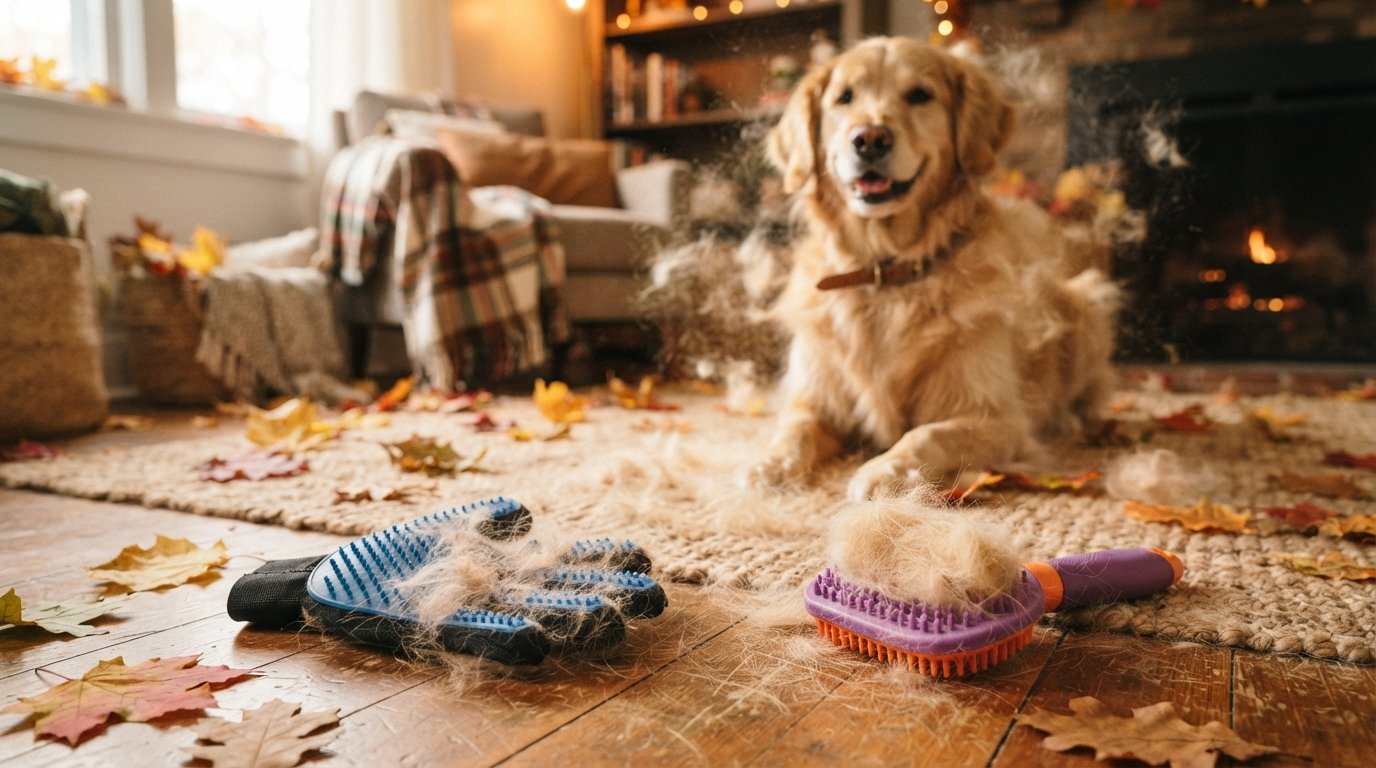
Why does my couch look like it is wearing a sweater every September?
When fall arrives, tufts of my Lab’s undercoat cover every living room cushion. Even after years of regular brushing, this year’s shedding felt relentless.
I sweep and vacuum, yet more fur appears by dinnertime. I tested two affordable tools side by side to see which controlled shedding season better.
I tested a Pet Grooming Glove ($14.99) and a Silicone Pet Bath Brush ($13.99) with my shedding pup. The dog deshedding glove offers gentle, hands-on contact. The other promises faster results with less effort.
After weeks of testing, I found a clear winner for each coat type. I also learned useful tips about technique and frequency.
Watch for signs that shedding may mean more than a changing season. Whether your pet has a short, sleek coat or thick double coat, these tips offer practical answers.
Key Takeaways
- A grooming mitt often works best for pets with short, dense coats and sensitive skin.
- Silicone brushes tend to pull more loose fur from thick or double coats in less time.
- Technique and frequency matter just as much as which tool you pick.
- Both options cost under $15, making them budget-friendly for fall grooming routines.
- Excessive shedding outside of seasonal changes can signal an underlying health issue for your pet.
Quick Answer: The Winner by Coat Type
Short on time? Here is the winner for your dog’s coat, based on what worked for me and my own pack.
For short-coated breeds like a Boxer, Beagle, or Staffie, a dog deshedding glove is the right choice. I use mine two or three times a week, and it removes loose hair without extra tools or fuss.
Double-coated dogs need a different approach. My Lab, plus Huskies and German Shepherds, needs a proper undercoat rake first. The rake breaks through the thick layer. Then, a glove or shedding brush for dogs works best as a finishing step, not alone.
“Short coats: a glove is genuinely the right tool. Double coats: a rake first, glove afterwards… Best single use is working shampoo in during a bath.”
For pups with sensitive skin, I choose the glove almost every time. Its soft rubber tips feel like a gentle massage, not a scrub. Most anxious or itchy dogs tolerate it better than a firmer brush.
Why Dogs Shed More in Fall
Nature helps dogs stay comfortable in winter. Fall shedding plays a major role in that system.
As daylight hours shrink, tiny light receptors in my dog’s body sense the change. This shift triggers hormones that tell the skin to release its lighter summer coat and grow a thicker winter layer.
I picture this process as nature swapping a summer wardrobe for a warmer one.
Double-coated breeds feel this shift most. Labs, Huskies, and Golden Retrievers shed their entire undercoat in thick, cottony clumps. These clumps cling to furniture, clothes, and carpets for weeks.
Single-coated dogs have a milder version because they lack that dense undercoat.
This biology explains why dog shedding control matters more in autumn. A summer grooming routine often cannot manage the sudden flood of loose fur.
Here is a quick look at how coat types usually react to fall:
| Coat Type | Fall Shedding Level | Why It Happens |
|---|---|---|
| Double-Coated (Labs, Huskies, Goldens) | Heavy | Entire undercoat releases in thick clumps |
| Single-Coated (Greyhounds, Boxers) | Light to Moderate | Minimal undercoat means a gentler transition |
| Wire or Curly-Coated (Terriers, Poodles) | Moderate | Coat renews gradually instead of all at once |
How a Dog Deshedding Glove Works
The first time I tried a dog deshedding glove on my Lab, it felt different from stiff brushes he avoided. The design is simple but clever. Soft silicone tips cover a fabric mitt that fits snugly over your palm and fingers.
As you stroke your dog’s coat, the tips catch loose hair like your fingers during a belly rub. It causes no scraping or pinching, only gentle contact that feels like petting. That is why many dogs tolerate a gentle dog grooming mitt when they squirm away from metal-pin brushes.
Dry Brushing Benefits
A few minutes of dry use each day, or several times weekly, lifts surface shedding before it reaches your couch. I run the glove over my dog’s back and sides in short strokes, and loose fur gathers on the nodules.
Dogs that flinch at a rigid dog deshedding glove alternative often accept this softer version. It feels less like a grooming tool and more like attention, which matters for anxious or older dogs.
Using It During Bath Time
Firmer-nodule gloves work best once shampoo enters the picture. During a bath, move the glove in circles to push suds toward the skin and loosen dead fur.
This pairing turns an ordinary wash into a full deshedding session. The HANDSON glove is built for repeated soaking, which helps it hold up over time.
“Scrubbing nodules work to stimulate circulation and distribute natural oils.”
The Bonus Massage Benefit
I did not expect the scrubbing motion to stimulate circulation and spread natural skin oils across the coat. It makes grooming feel more like a spa moment than a chore.
My Lab now leans into the glove instead of pulling away, with his tail wagging the whole time. That change alone made switching tools worthwhile.
| Feature | Dry Use | Bath-Time Use |
|---|---|---|
| Main Purpose | Lift surface shedding daily | Work shampoo deep into coat |
| Best Nodule Type | Soft, flexible tips | Firmer, textured nodules |
| Recommended Frequency | 3–5 times weekly | Every bath session |
| Added Benefit | Reduces loose hair around the house | Boosts circulation and shine |
Meet the Pet Grooming Glove ($14.99)
At $14.99, this dog hair remover glove looked too simple to work—until I tried it on my dog.
I tested it side by side with popular picks like H HANDSON, DELOMO, GJEASE, and Otis & Claude. This budget option uses the same core design as those brands, but costs less. That made it a solid baseline for comparing what you get at each price point.
- Five-finger design with silicone nubs covering every finger and the palm for full hand coverage
- Adjustable wrist strap that keeps the pet grooming glove snug during active sessions
- Breathable mesh backing that keeps your hand cool through longer brushing stretches
- Dual wet and dry use, so it works during baths and regular brushing alike
Pros
This glove felt gentle enough for sensitive skin, and my dog barely reacted during her first session. It also works as a bath tool, so I skipped a separate brush for shampoo time. Cleanup takes seconds because I rinse the silicone tips under running water, making its $14.99 value tough to argue with.
Cons
I won’t pretend this glove handles everything a thick coat throws at it. The silicone nubs don’t dig deep enough to break up a packed double-coat undercoat.
If I rinse too quickly, shampoo residue may stay between the tips. A dedicated rake pulled out noticeably more loose fur than this glove managed during peak fall shedding.
How a Silicone Bath Brush Works
A silicone bath brush replaces the glove-and-wear style with a tool you hold in your hand. Its head has soft rubber bristles or nubs that scrub fur instead of sliding across it like a mitt.
That shape matters. It replaces tiny teeth with a flexible tool like a traditional shedding brush for dogs, with a skin-friendly twist.
Bath-Time Deep Clean
The firmer bristles push shampoo into a soaked coat, reaching past the top layer of fur to the skin underneath.
I use mine every time I bathe my Lab in fall, and it feels oddly satisfying. The bristles loosen dead fur and massage her skin, so clumps of undercoat fill the tub instead of staying trapped.
Can You Use It Dry?
Here is the honest part. Most silicone bath brushes are not made for dry coats.
Rubber nubs grip wet fur better, while water and shampoo help them glide smoothly. On dry fur, they catch or bounce instead of pulling loose hair free.
For daily dry brushing, a glove or dedicated pet fur removal tool will work better. I keep mine strictly for bath days and use other tools the rest of the week.
Meet the Silicone Pet Bath Brush ($13.99)
After one bath with my shedding Lab, this silicone brush earned a permanent place beside my shampoo bottle. For under fourteen dollars, it made a messy bath smoother and worked as a loose fur remover for pets.
I expected basic results, but the brush worked like a magnet for loose hair. Water and suds helped it lift fur from my dog’s coat.
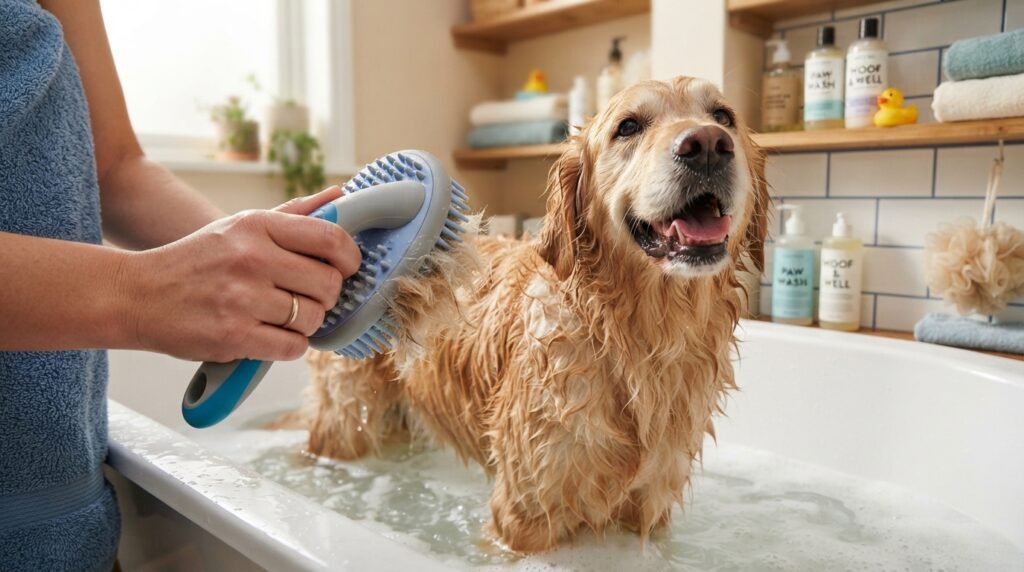
- Ergonomic, non-slip handle that stays steady even when your dog squirms mid-bath
- Soft yet firm silicone bristles that massage the skin while lifting loose fur
- Built-in hanging loop for quick drip-drying between uses
- Shampoo-friendly design that works suds evenly through the coat
Pros
- Works as a dependable loose fur remover for pets right in the tub
- Rinses clean in seconds under running water
- Traps hair in the bristle base, which cuts down on drain clogs
Cons
- Takes up more storage space than a compact glove
- Not ideal for quick, dry-coat touch-ups between baths
- Misses the hand-to-dog bonding feel you get with glove brushing
My Lab tolerates bath time about as well as most dogs do—not much. Still, this brush made the routine faster. I spent far less time picking hair from the drain afterward.
Glove vs. Brush Comparison Table
Choosing between a dog deshedding glove and a shedding brush for dogs becomes easier when you compare them side by side.
I put the Pet Grooming Glove and the Silicone Pet Bath Brush through the same five tests. The tests covered coat type, bath use, effort, cleanup, and price for a dog deshedding glove and shedding brush for dogs.
| Criteria | Pet Grooming Glove ($14.99) | Silicone Pet Bath Brush ($13.99) |
|---|---|---|
| Coat Type | Best for short coats and loose surface fur | Better suited for deep undercoat grooming on thicker coats |
| Bath Use | Works when wet but rinses slowly | Excels at bath-time detangling and lathering |
| Effort | Low effort, feels like a gentle massage | Moderate effort, firmer bristle pressure |
| Cleanup | Fur sticks to rubber tips and needs peeling off | Fur rinses away easily with less hands-on cleanup |
| Price | $14.99 | $13.99 |
What the Table Really Tells You
Neither tool fully solves grooming a stubborn double coat.
The glove works best for nervous dogs that flinch at traditional brushes. It feels like a calming massage instead of a harsh scrape.
It reaches hard-to-reach areas, such as the chest and legs, with little fuss. That makes it useful for quick, everyday grooming sessions.
The brush works better for deeper detangling during baths, especially on dogs with heavy loose undercoats.
I find these tools work best as teammates, not rivals.
Your dog’s temperament usually guides the choice. Does he tolerate the glove’s gentle, hand-shaped pressure, or does his coat need firmer bristles to cut through fluff?
“The best grooming tool is the one your dog actually lets you use consistently.”
Because of this, I keep both tools in my grooming kit. I switch between them based on the day, my dog’s mood, and how intense shedding season has become.
Winner by Dog Type
The real answer to “glove or brush” depends on the coat you are grooming.
This fall, I tested both tools on three different coats.
They included a short-haired Beagle, my own double-coated Lab, and a rescue with sensitive skin. Each dog told a different story, and the winner changed every time.
My testing confirmed what coat specialists already know: the right pick is not universal.
Short-Coat Dogs
For breeds like Boxers, Beagles, or Pit Bulls, the glove wins without much competition.
No dense undercoat needs digging, so rubber tips glide over the surface and lift loose hair fast. The silicone brush works fine too, but I reached for the glove more often.
It feels gentler and takes less time per session. These breeds rarely develop mats, so a quick two-minute pass each week controls shedding.
Double-Coat Dogs
Here is the honest answer: neither tool alone handles a heavy fall blowout.
Double-coat dog grooming requires more pulling power first. I now run a dedicated undercoat rake or a furminator deshedding tool through my Lab’s coat. This clears the dense underlayer.
I then finish with the glove or silicone brush for a smooth, shiny topcoat. Skipping the rake only pushes loose fur around instead of removing it. This two-step routine takes longer, but it is the only method that kept my floors fur-free through October.
Dogs with Sensitive Skin
For dogs with thin or reactive skin, I always reach for the glove over the brush.
The glove’s petting-like motion feels gentler than firm brush bristles. This matters for dogs who flinch during grooming. If you notice red patches, bumps, or irritated skin, stop brushing and call your vet.
I would rather spend an extra minute using the glove slowly than scare a nervous dog away from grooming.
Here is a quick snapshot of the winner for each coat type:
| Dog Type | Best Tool | Why It Works |
|---|---|---|
| Short-Coat | Deshedding Glove | Light coat needs gentle lifting, not heavy pulling power |
| Double-Coat | Rake or Furminator, then Glove | Dense undercoat needs deep removal before a surface polish |
| Sensitive Skin | Deshedding Glove | Softer contact reduces irritation and keeps nervous dogs calm |
How to Brush Without Irritating Skin
I learned the hard way that a gentle dog grooming mitt has a right and wrong use. My first sessions ended with my dog wriggling away before I reached his shoulders. After I slowed down and followed a simple routine, he began leaning into brushing.
The tool itself is not the trick. Patience during introduction and close attention to your dog’s reactions matter most.
Step-by-Step Brushing Technique
I follow the same sequence each time, which helps my dog stay relaxed from start to finish:
- Choose a calm time, ideally after a walk or playtime when your dog feels settled.
- Let your dog sniff the glove or pet fur removal tool before you start brushing.
- Begin with gentle strokes along the back and sides, where the skin is less sensitive.
- Move gradually toward the belly, legs, and neck once your dog seems comfortable.
- Pause often to remove collected fur from the glove so it keeps working efficiently.
- Stop immediately if your dog shows signs of discomfort, like pulling away or growling.
- Clean and dry the glove after each session to keep it ready for next time.
“A calm dog makes for a calm groomer, and a calm groomer always gets better results.”
This order prevents a startled reaction when the tool reaches sensitive areas too soon. It also builds trust, helping your dog connect the gentle dog grooming mitt with comfort instead of stress.
How Often You Should Brush in Fall
I aim for two to three short sessions each week during normal shedding months. This schedule controls loose fur without overworking the skin.
When peak fall shedding begins, I increase brushing to nearly daily short sessions. Heavy shedders, especially double-coated breeds, often need this extra care to stay comfortable.
I still let my dog’s coat and skin guide the schedule. Redness, flaking, or excessive scratching means it is time to brush less, regardless of the calendar.
Completing Your Fall Grooming Routine
Building a fall grooming routine means using more than one tool. A deshedding glove or silicone brush can serve as a loose fur remover for pets. Pairing either tool with simple habits keeps your dog’s coat healthy all season.
I treat fall grooming as a weekly cycle, not one chore. Here’s my routine:
- Bath time: I use a silicone bath brush to loosen dead fur and massage the skin while shampooing.
- Dry sessions: A deshedding glove works great as a quick loose fur remover for pets between baths, especially on heavy-shedding days.
- Nail checks: I trim nails every two to three weeks since cooler weather means less natural wear from sidewalk walks.
- Coat inspections: Running my hands over my dog’s body helps me catch mats, dry patches, or skin irritation early.
This routine controls shedding without overwhelming your dog or your schedule. Each step supports the next, so skipping one can leave more loose fur on furniture.
Picking the Right Towel: Chenille vs Microfiber Pet Towel
Drying your dog well matters as much as brushing. A wet coat traps loose hair and can leave a musty wet-dog smell in your house.
Chenille towels feel soft and plush, making them gentle for dogs with sensitive skin. Microfiber towels absorb water faster and dry sooner between uses, helping with frequent baths during shedding season.
Both options work, but your choice depends on your dog’s coat type and how quickly you need the towel ready. For a closer look at absorbency, texture, and durability, review this comparison. Check the Chenille vs Microfiber Pet Towel comparison before adding one to your fall grooming kit.
When Shedding Signals a Health Problem
Normal fall shedding differs from problems needing a vet’s attention. My deshedding glove and silicone brush handle seasonal fur loss, but they cannot treat skin problems. Good dog shedding control starts with knowing when brushing helps and when it does not.
I tell fellow dog owners that tools can support healthy skin, but they cannot fix an underlying issue. If your dog’s coat or skin feels wrong, look closely before using a brush.
Warning Signs to Watch For
Fall shedding should look even and manageable, though it may release much fur at once. These signs point to something beyond normal coat changes:
- Bald patches or thinning spots that don’t match typical shedding patterns
- Excessive scratching, licking, or chewing at the skin
- Flaky, red, or visibly irritated skin
- Open sores, scabs, or bumps
- Shedding that seems disproportionate, even accounting for seasonal fur loss
When to Call Your Vet
If you notice these signs, skip extra brushing and book a vet visit instead. Grooming irritated or infected skin can make the problem worse.
“Skin that is red, painful, inflamed, infected, or unusually irritated should not simply be groomed over… speak with a veterinarian for appropriate advice.”
Persistent irritation, sudden hair loss, or infection signs deserve a professional opinion, not more at-home dog shedding control efforts. Your glove and brush are maintenance tools, not treatments. When something looks wrong, trust your gut and let your vet take it from there.
Conclusion
After months of testing during peak shedding season, I learned one clear lesson: match the tool to your dog. My Lab’s double coat needs extra help, so the pet grooming glove earns its place every day.
At $14.99, the dog deshedding glove is my quick choice for daily couch or porch sessions. It feels gentle and fast, and my dog enjoys its massage-like touch. At bath time, the $13.99 silicone brush removes loose fur and grime better than dry tools.
For double-coated breeds, I use both tools with an undercoat rake during the heaviest shedding weeks. Short-coated dogs usually need only the glove. Dogs with sensitive skin often prefer the silicone bristles’ lighter touch.
Whichever tool you choose, regular use matters more than brand loyalty. A few minutes each day works better than one long weekly session. Try both tools, watch which one your dog prefers, and build your fall grooming routine around it.
Still have questions about choosing a dog deshedding glove or silicone brush? The FAQ section below answers common questions from fellow dog owners.
FAQ
Should I use a dog deshedding glove or a silicone bath brush first?
In my experience, choose based on whether your dog is wet or dry. I use the silicone bath brush during baths because it works shampoo deep into the coat and lifts loose fur. I use the dog deshedding glove between baths for quick, dry touch-ups that keep fur off the couch.
Can I use a dog hair remover glove on a puppy?
Yes, I recommend it. A dog hair remover glove gently introduces puppies to grooming because it feels like petting, not brushing. Keep early sessions short—just a minute or two—so your puppy builds a positive association. Later, introduce firmer tools, such as a rake or a shedding brush for dogs.
How often should I brush my dog during fall shedding season?
I aim for two to three sessions a week as a baseline. During my Lab’s peak fall blowout, I increased brushing to short daily sessions. Watch your dog’s coat, not the calendar; clumps after a few days mean it’s time to brush again.
Is a silicone bath brush effective on a dry coat?
Not really. I tested it: firmer bristles glide over dry fur instead of catching loose undercoat like a pet fur removal tool. Save the silicone brush for wet, soapy sessions, and use a glove or rake for dry-coat maintenance.
Will a dog deshedding glove work on my Husky or Lab’s double coat?
Unfortunately, not on its own. Double-coat dog grooming needs an undercoat rake or a furminator deshedding tool to reach the dense, packed layer first. I use the glove afterward only as a finishing step to smooth the topcoat and collect remaining loose hairs.
My dog has sensitive skin—which tool is safer?
I’d lean toward the glove. Its soft silicone tips create gentler, massage-like movement than most silicone bath brushes’ firmer bristles. If your dog shows redness, flaking, or irritation, pause grooming and check with your vet before resuming.
Can a gentle dog grooming mitt replace regular brushing tools entirely?
For short-coated breeds like Boxers or Beagles, yes; a gentle dog grooming mitt can control most shedding. Use it a few times a week. For double-coated dogs, use it with a rake rather than as a full replacement.
How do I clean my pet grooming glove and silicone bath brush after use?
Both are refreshingly low-maintenance. Rinse the glove with warm water, then air-dry it on the breathable mesh backing. Keep shampoo residue from getting trapped between the silicone tips. Rinse and shake the bath brush, then use its hanging loop to drip-dry.
What’s the difference between a shedding brush for dogs and a deshedding glove?
A traditional shedding brush for dogs usually has metal pins or a rake-style head for pulling out dense undercoat. A deshedding glove uses soft silicone tips over your hand for gentler, bonding-focused grooming. I use the rake for heavy fall shedding, and the glove for everyday maintenance and comfort.
How do I know if my dog’s shedding is normal or a sign of a health issue?
Normal fall shedding causes even hair loss across the coat, without skin changes underneath. Call the vet if you see bald patches, excessive scratching, redness, sores, or shedding far beyond typical seasonal loss. Do not reach for another grooming tool first.