Let me give you a straight answer: do indestructible dog toys actually work? Not exactly. I’ve learned through experience that no toy is completely invincible, despite what flashy packaging promises.
Durability depends far more on your pet’s chewing power than any marketing claim. Some power chewers can demolish even ultra-tough products within minutes. Others might use that same item for years.
I know this might sound frustrating if you’ve been searching for are indestructible dog toys real. But understanding this reality actually helps you make smarter choices.
Rather than believing any “unbreakable” label, I’ve found success by matching products to my pet’s specific chewing style and habits. Some materials and designs genuinely last longer than others.
What matters most isn’t finding a mythical invincible product. It’s learning which durable options work best for your unique companion. That’s what I’ll help you figure out.
Key Takeaways
- No toy is completely unbreakable regardless of marketing claims
- Durability depends on your individual pet’s chewing strength and habits
- Some heavy-duty materials last significantly longer than standard options
- Matching products to your pet’s chewing style matters more than labels
- Understanding realistic expectations helps you find better long-lasting choices
1. Let Me Give You the Straight Answer First
I’m here to save you money and frustration. The truth about indestructible dog toys is simple: they’re not truly indestructible. But don’t worry, some toys last a lot longer than others. Finding the right one for your dog is definitely doable.
Whether indestructible dog toys really last depends on a few things. Your dog’s bite force, how they chew, and how you use the toy all play a part. These factors decide how long a toy will last.
Let’s talk about chewing style. A dog with strong jaws might not chew toys hard. I’ve seen Pit Bulls carry their toys gently. But, I’ve also seen smaller dogs like Terriers tear apart toys in hours.
How you use the toy is just as important as your dog’s jaw strength. Toys last much longer when used during playtime. Leaving them alone for hours shortens their life a lot.
My friend’s Labrador has the same Kong for three years. She uses it for short play sessions and treats. But, my neighbor’s Pit Bull destroyed a “indestructible” toy in four months of constant chewing.
| Factor | High Durability Scenario | Low Durability Scenario |
|---|---|---|
| Bite Force | Gentle to moderate pressure during play | Aggressive, focused destruction attempts |
| Chewing Style | Carrying, gentle mouthing, occasional chewing | Obsessive, continuous tearing and grinding |
| Usage Pattern | Supervised play, 15-30 minute sessions | Unsupervised access for hours daily |
| Expected Lifespan | Months to years with quality toys | Days to weeks even with premium options |
“Indestructible” is just a durability rating, not a promise. It’s like “water-resistant” watches. They can handle splashes, but not scuba diving. Durable dog chew toys are similar—they last longer than regular toys, but not forever.
If your dog destroys “indestructible” toys, you’re not alone. Many pet parents face this issue. They say things like “My dog destroys everything” or “He shredded this in 10 minutes.” It’s common, mainly for power chewers.
The goal isn’t to find a toy that lasts forever. It’s to find ones that last weeks or months. This change in thinking will save you money and reduce frustration.
In the rest of this article, I’ll show you how to match toy durability to your dog’s needs. You’ll learn which materials last, which designs fail fast, and how to spot danger signs. This knowledge will change how you shop for dog toys.
2. Why “Indestructible” Is Marketing Language, Not a Promise
I’ve spent years reading dog toy packages. I’ve learned something important about the “indestructible” label. It sounds like a promise your dog won’t destroy the toy. But, companies use “indestructible” as a marketing trick, not a promise.
When you wonder what makes dog toys indestructible, start with the business side. The pet toy industry has few rules about durability claims. This lets brands put “indestructible” on packaging without proof.
The Legal Loophole Behind the Label
“Indestructible” isn’t like “organic” or “hypoallergenic,” which have clear rules. The Federal Trade Commission doesn’t require pet toy companies to prove durability before using “indestructible.”
This creates a big loophole. One company’s “indestructible” toy might last months. Another might break in just fifteen minutes with the same dog.
I always check the back of the package. That’s where you find the fine print that changes everything. You’ll see phrases like:
- “Indestructible under normal use conditions”
- “Designed for most dogs”
- “Supervision recommended at all times”
- “No toy is completely indestructible”
These disclaimers say the opposite of what’s on the front. Companies protect themselves legally while making bold claims. If your dog breaks their “indestructible” toy, they can blame the fine print.
So, are indestructible dog toys really indestructible? The answer is no, thanks to no legal definition. Some states have laws that might help, but I’ve seen little enforcement in the pet toy world.
What Companies Actually Mean When They Say “Indestructible”
After talking with manufacturers and testing many products, I’ve learned to understand their marketing. When they say “indestructible,” they usually mean:
- “More durable than standard plush toys”
- “Designed for heavy chewers”
- “Made with tougher materials than our competitors”
- “Might last longer than you expect”
Notice how these translations are different from “impossible to destroy.” Good brands are now using more honest terms. You’ll see “extra durable,” “heavy duty,” or “for aggressive chewers” instead of making big promises.
These companies know pet owners are smart. They’re building trust by setting realistic expectations, not making false promises.
Here’s a comparison table that shows what marketing language really means:
| Marketing Claim | What It Actually Means | Realistic Expectation |
|---|---|---|
| Indestructible | More durable than average toys | May last weeks to months depending on your dog |
| Guaranteed Tough | Designed with stronger materials | Better than cheap toys, but can be broken |
| Built for Power Chewers | Tested with aggressive chewing dogs | Your best option, but watch for wear |
| Lifetime Warranty | Replacement policy with conditions | Read fine print about what voids coverage |
I’ve also noticed that price doesn’t always mean honesty. Some cheap brands are honest about their toys’ limits. The expensive toy might break faster than the cheaper one with honest marketing.
The pet industry made over $136 billion in 2022, with toys a big part. Companies use big words because they sell, not because they’re true.
So, when looking for indestructible dog toys, ignore the word “indestructible.” Look at materials, how they’re made, and what other owners say. Read the fine print to see what the company really stands behind.
The marketing language is just to grab your attention. Your job is to look beyond the hype and find toys that fit your dog’s needs. That’s how you know if a toy will last for your dog.
In the next section, I’ll explain why your dog’s unique needs matter more than any label when predicting toy durability.
3. Your Dog’s Chewing Power Matters More Than Any Toy Label
I’ve seen the same toy last months with one dog but just minutes with another. It shows that no toy maker can guess how long a toy will last with your dog. Your dog’s jaw strength, chewing style, and dental health are more important than any label.
Before buying heavy duty dog toys for power chewers, know your dog’s chewing habits. Here are the three key factors to consider.
Bite Force Varies Dramatically Across Breeds
Different breeds have very different jaw strength. This means “durable” can mean many things. A Mastiff can bite with over 500 PSI, while a Chihuahua might be under 100 PSI.
Some breeds, like Pit Bulls and Rottweilers, have very strong jaws. Large breeds like Labradors and Golden Retrievers also tend to chew a lot, even if they’re not aggressive.
A toy might last forever with a small Terrier but be destroyed in an hour by a big Rottweiler. It’s not the toy’s fault—it just wasn’t right for the dog.
| Breed Size/Type | Approximate Bite Force | Chewing Impact |
|---|---|---|
| Small Breeds (under 25 lbs) | 80-150 PSI | Lower pressure, most toys hold up well |
| Medium Breeds (25-60 lbs) | 150-300 PSI | Moderate pressure, need quality construction |
| Large Power Breeds (60+ lbs) | 300-550+ PSI | Extreme pressure, require specialized materials |
Individual Chewing Styles Make All the Difference
Dogs of the same breed can chew in very different ways. I’ve seen two Pit Bulls with completely different chewing habits. Zena was a destroyer who focused on one spot until she broke through, while Chase was more interested in play than destruction.
The concept of “focused molar chewing” is critical to understand. This is when a dog locks onto one weak point and systematically works it with their back teeth—the most powerful part of their mouth. Dogs who do this will destroy toys much faster than dogs who mouth toys gently or simply carry them around.
Some dogs are what I call “surgical” destroyers. They’ll methodically find the weakest seam, the most vulnerable spot, or the protruding feature and concentrate all their effort there. Others are generally rough but not methodical—they’ll chew vigorously but don’t strategically attack weak points.
When you’re shopping for the best dog toys for aggressive chewers, you need to honestly assess which category your dog falls into. A methodical destroyer needs seamless, feature-free toys, while a rough-but-random chewer might do fine with a wider variety.
Age and Dental Health Play a Role Too
Puppies going through teething have different needs than adult dogs. They need softer materials to relieve discomfort. What works for a teething puppy won’t challenge an adult power chewer.
Senior dogs present the opposite challenge. As dogs age, their teeth can weaken, become sensitive, or develop dental disease. I worked with a dog named Cece who had significant dental sensitivity—she needed much softer toys than her jaw strength would suggest. Hard rubber toys that would normally be appropriate for her size caused her discomfort.
A Lab/Mastiff mix named Rofus is a perfect example of a heavy chewer who isn’t obsessive. He enjoys chewing and has the jaw power to destroy most toys, but he doesn’t fixate on destruction. His age and more relaxed approach mean that moderately durable toys last longer with him than they would with a younger, more obsessive chewer of the same size.
The reality is that dental health impacts what’s safe and comfortable for your dog to chew, regardless of what the toy label promises.
Before you invest in expensive “indestructible” toys, take an honest inventory of your dog’s specific characteristics:
- What’s their breed and approximate bite force capability?
- Are they methodical destroyers or casual chewers?
- Do they use focused molar pressure or mouth toys gently?
- What’s their age and current dental health status?
- Do they tend to swallow pieces or just dismantle toys?
These questions matter infinitely more than any label claiming a toy is indestructible. Once you understand your dog’s individual profile, you can make much smarter purchasing decisions and set realistic expectations for how long any toy will actually last.
4. The Materials That Actually Make a Dog Toy More Durable
I used to grab any toy labeled “tough,” but learning about materials changed how I shop for my aggressive chewer. Understanding what makes dog toys truly indestructible comes down to material science, not clever marketing.
The construction materials determine whether your toy survives months of chewing or falls apart in days. I’ve learned that knowing the difference between material types helps me predict which durable dog chew toys will actually hold up.
Let me break down the materials that separate long-lasting toys from expensive disappointments.
Solid Rubber vs. Hollow Plastic: The Real Difference
Solid rubber toys outperform hollow plastic options by a massive margin. The reason is simple: solid rubber distributes bite pressure evenly across the entire toy, while hollow plastic has thin walls that create weak points.
When a dog’s tooth punctures hollow plastic, that small hole becomes the starting point for destruction. Dogs can grip the edges of the tear and rip the toy apart within minutes. I’ve watched this happen with dozens of supposedly tough toys.
Solid rubber works differently. Brands like Kong Extreme and Goughnuts use compressed rubber that gives slightly under pressure but doesn’t create puncture points. This flexibility also makes these toys safer for teeth than rigid materials that don’t absorb any force.
Density and Durometer Ratings Explained Simply
Two technical terms matter when choosing durable dog chew toys: density and durometer. Don’t let the jargon scare you—these concepts are easier than they sound.
Density refers to how compact the material is. Denser materials resist compression and tearing better. Think of the difference between a foam ball and a rubber ball—the rubber ball is denser and much harder to damage.
Durometer measures hardness on a numerical scale. Higher numbers mean harder materials. For heavy duty dog toys for power chewers, you want a durometer rating between 70 and 90.
| Durometer Range | Material Feel | Best For | Example Brands |
|---|---|---|---|
| 50-60 | Soft, very flexible | Gentle chewers, puppies | Standard Kong (red) |
| 70-80 | Firm but some give | Moderate to aggressive chewers | West Paw Tux, Rumpus |
| 85-95 | Very hard, minimal flex | Extreme power chewers | Goughnuts, Kong Extreme |
Toys below 70 durometer get destroyed quickly by strong chewers. Toys above 95 can pose dental risks because they’re too rigid. The sweet spot balances durability with tooth safety.
Goughnuts compresses their natural rubber at high PSI levels to achieve optimal density and durometer ratings. This manufacturing process creates toys that resist even the most determined chewers.
Why Natural Rubber Outperforms Synthetic Materials
Natural rubber has properties that synthetic alternatives struggle to match. I’ve tested both extensively, and the performance difference is noticeable with heavy duty dog toys for power chewers.
Natural rubber is more elastic, meaning it recovers from compression better than synthetic rubber. When a dog bites down, natural rubber springs back to its original shape instead of developing permanent indentations that become weak spots.
Natural rubber also resists becoming brittle over time. Synthetic materials often harden after exposure to weather, sunlight, and repeated chewing. This brittleness leads to cracking and breaking.
Brands like Ruff Dawg use natural rubber that lacks the strong chemical smell of some synthetic toys. Many dogs actually prefer natural rubber because of this. I’ve noticed my own dog gravitates toward natural rubber toys first.
West Paw offers a middle ground with their Tux and Rumpus toys—durable enough for most power chewers while remaining softer than ultra-hard options like Goughnuts. For dogs who need something tough but not rock-hard, these work beautifully.
Other materials have their place too. SodaPup makes excellent nylon options for dogs who prefer harder textures. Nylon rates high on the durometer scale and resists tearing, though it’s less forgiving on teeth than rubber.
Some manufacturers use reinforced fabrics with Kevlar threading. These work well for tug toys and plush alternatives, though they’ll never match solid rubber for pure chewing durability.
The bottom line? Natural rubber in the 70-90 durometer range gives you the best combination of chewing resistance and dental safety. That’s what I look for first when shopping for my power chewer.
5. Shape and Design Impact Durability More Than You’d Think
I’ve seen how different shapes can affect a toy’s durability. People often overlook this. The design of a toy can greatly impact how long it lasts.
Dogs chew in certain ways based on a toy’s shape. This is why some toys last longer than others, even if they’re made of the same material.
Learning about design helped me stop buying toys that looked good but didn’t last. Now, I make better choices.
Seamless Construction vs. Glued or Stitched Parts
Toys without seams are much more durable than those with them. Seams, stitches, or glue points are weak spots for dogs to chew on.
Once a dog finds a seam, they can easily tear the toy apart. Even tough-looking plush toys can’t withstand this.
That’s why rubber toys are best for dogs that chew a lot. They’re made in one piece, without any weak spots. Always check how a toy is made before buying.
Why Round Toys Last Longer Than Irregular Shapes
Round toys are better because they spread out the pressure evenly. This makes them less likely to break.
But toys with corners or flat sides are easier for dogs to chew on. Dogs can chew in a way that puts a lot of pressure on one spot.
Bigger toys also last longer because they’re harder to chew on. If a toy is too big, dogs can’t chew on it as hard.
Ball-shaped toys are great because of their design. They’re tough and last a long time.
The Problem with Protruding Features
Features like ears and tails make toys cute. But they also make them easy for dogs to chew on.
Small parts are perfect for dogs to chew on with their molars. Dogs focus on these parts, chewing them down until they’re gone.
Once a part is gone, the toy is more likely to break. This can happen fast.
I look for toys without these weak points. The Squeaky Rubber Football Dog Toy is a good example. It’s shaped like a football but doesn’t have any easy-to-chew parts.
Understanding how shape affects durability helps you make better choices. This can save you money in the long run.
6. The Honest Truth About Indestructible Dog Toys: What Actually Holds Up
I’ve seen many toys get destroyed quickly. This has taught me which ones are worth the money. After years of testing and talking with other dog owners, I know some products stand out.
It’s important to know what to look for and set the right expectations.
Toys That Come Closest to the “Indestructible” Claim
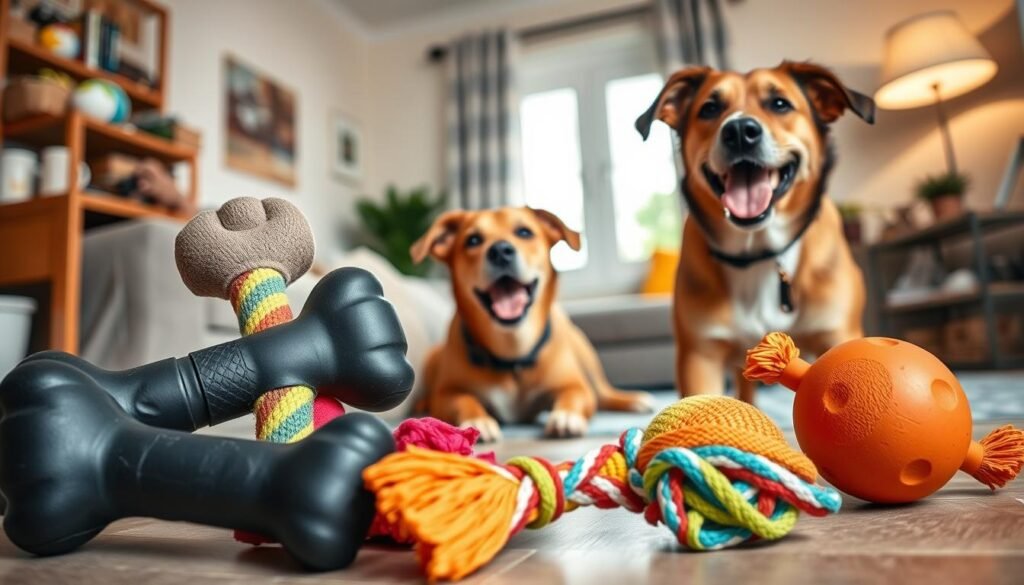
When asked about best indestructible dog toys for aggressive chewers, I recommend Goughnuts. They are made with extremely high PSI, making them very durable.
They are tough but have some give to protect your dog’s teeth. Their safety indicator system is also great. If your dog chews through to the red inner layer, you can return it.
Ruff Dawg toys are my second choice. They are almost as durable as Goughnuts but don’t smell as strongly. Many owners prefer these because their dogs like playing with them more.
Kong Extreme toys are a reliable choice. They are made of black rubber for powerful chewers. You can stuff them with treats for mental stimulation. They last years with moderate chewers and months with aggressive ones.
For nylon options, here are the toughest dog toys that last in my experience:
- Benebone Wishbone – Super-strong nylon with real flavors that dogs love
- SodaPup nylon toys – Not heavily flavored, which prevents obsessive chewing and makes them last longer
- Nylabone DuraChew – A budget-friendly option that holds up well for many aggressive chewers
West Paw products like the Tux and Rumpus offer good durability. They are softer than the hardest options but last well for heavy chewers. West Paw also offers a one-time replacement guarantee, showing they stand behind their products.
For interactive play with a squeaker, solid rubber options like the Squeaky Rubber Football Dog Toy work well. The key is supervision—these are designed for fetch and play sessions, not solo chewing marathons.
If your dog loves plush toys, Tuffy’s Mega Series is the only option I recommend. They feature multiple fabric layers stitched together for serious durability. Just remember these are for supervised play only, never leave them for unsupervised chewing.
Setting Realistic Expectations for Power Chewers
Here’s the honest truth about indestructible dog toys: what “holding up” means depends on your dog’s chewing intensity. I learned this the hard way with my friend’s Pit Bull, who could demolish most toys in under an hour.
For extreme chewers, if a toy lasts 4-6 months, that’s a genuine success. You’re looking at pennies per day of entertainment, which is actually excellent value compared to replacing cheaper toys weekly.
Moderate chewers might get years from the same toys that power chewers destroy in months. This doesn’t mean the toy failed—it means you’ve found something that matches your dog’s ability level.
I measure success differently now. If you’re replacing toys every few months instead of every few days, you’ve found the right durability level for your dog. That’s the realistic standard to aim for.
Power chewers need these realistic timelines:
- Top-tier rubber toys (Goughnuts, Ruff Dawg): 4-8 months with daily use
- Premium nylon bones (Benebone, Nylabone): 2-6 months depending on chewing intensity
- Kong Extreme products: 6-12 months with supervised stuffing and play
- Reinforced plush toys: Days to weeks for supervised play sessions only
The toughest dog toys that last are the ones that match your specific dog’s needs. A Chihuahua and a German Shepherd have completely different requirements, even if both are aggressive chewers.
I also rotate toys every few days to prevent obsessive chewing on a single item. This extends toy longevity significantly because your dog doesn’t fixate on destroying one particular toy.
Remember that even the best indestructible dog toys for aggressive chewers will eventually show wear. The goal isn’t finding something that lasts forever—it’s finding what gives you the best value and keeps your dog safely entertained for a reasonable timeframe.
7. Warning Signs Your “Indestructible” Toy Has Become Dangerous
Spotting danger signs early is key to safe play. No matter how tough a toy seems, it will eventually show wear. Knowing when this wear becomes hazardous is the trick.
Your dog relies on you to make these safety calls. Inspect toys before play now, and encourage others to do the same.
When to Immediately Remove a Toy from Rotation
Some situations demand instant action. If your dog has removed any piece of the toy, it’s time to throw it away.
Even a tiny chunk is a sign of trouble. Once a toy starts coming apart, it can happen fast.
Here are my non-negotiable removal triggers:
- The toy now fits entirely in your dog’s mouth when it didn’t before
- You’ve found pieces of the toy in your yard or on the floor
- Your dog is attempting to swallow chunks
- Sharp edges or pointed sections have appeared
- The toy has broken into multiple separate pieces
Some owners think there’s enough toy left. But the transition from safe to dangerous can happen quickly.
Toys that are partially destroyed or in small pieces should immediately be removed from your dog’s access.
Small Pieces and Choking Hazards to Watch For
Choking hazards can look harmless at first. I’ve seen durable dog chew toys that seemed fine until I looked closely.
Watch for these warning signs:
- Chunks that have been gnawed off the main toy
- Pieces that could lodge in your dog’s throat
- Sections that have separated from the original construction
- Any component small enough to swallow whole
Some dogs are “destroyers” while others are “consumers.” If your dog swallows what they remove, be extra careful. I’ve worked with dogs like this, and their owners remove toys at the first sign of damage.
Finding toy pieces around your home is a clear sign. It means pieces are being removed, and some might be getting swallowed.
Exposed Squeakers and Internal Components
Once your dog breaches the outer layer of a toy, everything changes. Squeakers become a serious choking hazard once they’re accessible.
I’ve rushed dogs to emergency vets because of swallowed squeakers. It’s not worth the risk, even if the toy was expensive.
Look for these danger signs with the best indestructible dog toys for aggressive chewers:
- Visible stuffing poking through tears or holes
- Squeakers you can see or easily access with your fingers
- Internal structural components becoming exposed
- Multiple layers of material separating from each other
The moment you can see or feel a squeaker, the toy is done. No exceptions. These small plastic components can obstruct airways or cause intestinal blockages.
Some toys have reinforced squeaker pockets, but even these eventually fail under determined chewing.
Cracks, Tears, and Other Signs of Compromise
Subtle damage often signals bigger problems brewing beneath the surface. Cracks in rubber toys create new weak points that accelerate destruction exponentially.
I check for these structural compromises during every inspection:
| Damage Type | What to Look For | Action Required |
|---|---|---|
| Surface Cracks | Fine lines in rubber or plastic that weren’t there before | Monitor closely; remove if cracks deepen |
| Fabric Tears | Any rip in seams or material, with exposed edges | Remove immediately if stuffing is visible |
| Missing Chunks | Sections clearly bitten away from the original shape | Remove and discard immediately |
| Loose Threads | Strings longer than one inch or multiple fraying areas | Trim short threads; remove if extensive |
Cracking sounds while your dog chews are a double warning. The toy might be too hard and could damage teeth, plus it’s actively breaking down.
Small tears in fabric toys can sometimes be managed by trimming loose threads with scissors. But if the tear keeps growing or exposes internal materials, retire that toy.
Sharp edges deserve special attention. Run your hands over the entire surface of rubber toys regularly. If you feel anything that could cut or scrape, that toy has become a hazard.
I’ve learned that being conservative with toy safety saves money in the long run. One emergency vet visit costs more than replacing twenty toys.
Your dog can’t tell you when a toy becomes dangerous. That responsibility falls entirely on you, and it’s one of the most important parts of being a dog owner.
8. How I Match Toy Durability to My Dog’s Chewing Style
Not every dog needs the most expensive, heavy-duty toys. Figuring out your dog’s chewing style helps save money and keeps them safe. I’ve learned that matching durability to actual behavior is key.
Your dog’s chewing style matters more than breed stereotypes. I’ve seen Labradors gently carry plush toys and terriers destroy “indestructible” products. Knowing your dog’s habits helps you choose the right toys.
Here’s how I break down the three main categories and what actually works for each one.
Gentle Chewers: What They Actually Need
Gentle chewers treat toys with respect. They carry stuffed animals like babies and squeak toys occasionally. Dogs like Chase, who loved games more than destruction, fall into this category.
For these dogs, you don’t need to spend a lot on extreme-duty products. Standard rubber toys, moderate-quality plush toys, and rope toys are fine. Many senior dogs naturally fall into this category as their energy decreases.
Small breeds often qualify as gentle chewers too, though not always. I’ve learned that gentle chewers can safely enjoy a wider variety of toy types. Interactive toys and enrichment puzzles work well because these dogs engage mentally.
The biggest mistake with gentle chewers is wasting money on industrial-strength toys they don’t need. Save that budget for other pet care priorities.
Moderate Chewers: Finding the Sweet Spot
Most dogs fall into this middle category. They chew regularly and can damage cheap toys, but they’re not obsessed with destruction. Moderate chewers need durable dog chew toys that can withstand regular use without being the absolute toughest materials available.
I think of Rofus when I picture moderate chewers. He’s a heavy chewer who goes through his toys over time, but he’s not trying to destroy everything he touches. For dogs like this, quality rubber toys like standard Kong products work well.
Reinforced interactive toys are excellent choices for moderate chewers. The Squeaky Rubber Football Dog Toy fits this category perfectly because it offers solid rubber construction for chewing sessions plus fetch play functionality. It’s tougher than basic toys but doesn’t require the extreme-duty price point.
Durable nylon bones also work well for moderate chewers. These dogs benefit from toy rotation to keep them interested and prevent obsessive focus on destroying one particular item. I’ve found that fetch toys and chew toys serve different purposes for this group.
Certain situations can push dogs into needing moderate-to-heavy durability even if they’re naturally gentler. Puppies going through teething stages, high-energy breeds without sufficient exercise, and rescue dogs working through stress all need tougher options temporarily.
Aggressive Chewers: Your Most Realistic Options
Power chewers need the absolute toughest products on the market. I’m talking about dogs like Zena, who represents that top 1% that destroys even lifetime-guaranteed toys. For aggressive chewers, you need the best dog toys for aggressive chewers.
Large breeds with strong jaw pressure, breeds like Pit Bulls and Rottweilers, and dogs left alone for extended periods often become power chewers. These dogs require heavy duty dog toys for power chewers like Kong Extreme (the black ones), Goughnuts, West Paw Tux, and Benebone products.
I’ve learned to set realistic expectations with aggressive chewers. Success means toys lasting months instead of minutes, not truly lasting forever. Even the toughest products will eventually show wear with determined power chewers.
Natural options like Himalayan yak chews work well because they’re digestible and extremely hard. I never recommend plush toys for aggressive chewers, even reinforced ones, due to the serious risk of swallowing fabric and stuffing that can cause intestinal blockages.
Dogs with separation anxiety often develop aggressive chewing patterns. The chewing becomes a coping mechanism for stress. For these dogs, working with a trainer while providing appropriate outlets is essential.
| Chewing Style | Toy Durability Needed | Best Toy Types | What to Avoid |
|---|---|---|---|
| Gentle Chewers | Standard to Moderate | Plush toys, rope toys, standard rubber, interactive puzzles | Wasting money on extreme-duty products |
| Moderate Chewers | Moderate to Heavy Duty | Quality rubber (Kong Classic), reinforced toys, durable nylon, fetch toys with solid construction | Cheap toys that break quickly, unsupervised play with borderline items |
| Aggressive Chewers | Extreme Duty Only | Kong Extreme, Goughnuts, West Paw Tux, Benebone, Himalayan yak chews | Any plush toys, thin rubber, rope toys, toys with protruding parts |
| Special Categories | Varies by Situation | Teething puppies: moderate-heavy; Rescue dogs: moderate-heavy; High energy: moderate | Leaving inappropriate toys available unsupervised |
The key insight I’ve gained is that chewing style can change over time. Puppies become less destructive after teething. Senior dogs mellow out. Reassessing your dog’s needs every few months prevents overspending on durability you no longer need.
I also distinguish between different toy purposes. Chew toys are for prolonged gnawing sessions. Interactive toys are for engagement and mental stimulation. Fetch toys are for retrieving games. Understanding these categories helps you choose appropriate durability for each function.
9. Mistakes I See People Make That Destroy “Indestructible” Toys Faster
Many people don’t realize that mistakes can damage dog toys more than chewing. Owners often unknowingly harm even the toughest toys through preventable errors.
Knowing these mistakes can help fix them easily. Let’s look at the three biggest errors and how they affect toy durability.
Weather Exposure Breaks Down Materials Faster Than You Think
Leaving toys outside for weeks is a common mistake. This habit can cut a toy’s life in half.
UV rays from direct sunlight are brutal on rubber toys. Sunlight causes them to become brittle and crack. What was once a flexible toy becomes stiff and breakable.
Extreme temperatures also harm toys. Freezing makes rubber lose its shape, while heat causes it to expand and soften. This makes toys easier to tear apart.
Rain and moisture are another problem. Toys with hollow centers or stuffing can trap water, leading to mold and bacteria. I’ve seen toys look fine outside but be disgusting inside.
My advice is simple: keep toys inside after play. Store them in a cool, dry place away from windows. This will greatly extend their life.
One Favorite Toy Gets Destroyed Through Obsessive Focus
Dogs often focus on one toy, leading to focused destruction. I’ve seen dogs chew the same ball for hours.
Rotating your dog’s toys prevents this destructive fixation. Store some toys and bring out new ones regularly. This keeps toys interesting and prevents obsession.
Rotation also lets toys recover their shape. High-quality rubber can bounce back after a break. A toy that seems dented might regain its shape after a few days.
I keep three to four toys in rotation and swap them weekly. This has extended the life of my toys by months.
Some dogs will always focus on one toy. In these cases, rotation helps manage wear and tear.
Ignoring Supervision Guidelines Creates Unnecessary Risks
Many toys have a “supervised play only” label. But owners often ignore this warning. They think it’s just about liability, not safety.
Understanding toy categories helps you use them correctly. Chew toys are for solo chewing, interactive toys for play with you, and enrichment toys for puzzles. Using the wrong toy unsupervised can lead to quick damage.
Supervision doesn’t mean constant watching. It means checking in regularly and removing toys when you can’t watch. I check on my dog every 15-20 minutes and remove damaged toys.
I also remove all toys when I leave, except for safe chew toys. This has prevented choking and saved me from replacing toys.
These mistakes are common, and I’ve made them too. Recognizing them and changing your habits can make toys last longer and keep your dog safer.
10. What I’ve Learned After Testing Dozens of “Indestructible” Dog Toys
My journey started with one aggressive chewer and grew to include many dogs. I was on a quest to find toys that last more than a week. This turned into a big testing project that changed how I pick and recommend products.
I’ve watched hundreds of hours of chewing, tracked toy lifespans, and spent a lot of money on “indestructible” toys. Some were great, but many weren’t. This taught me the difference between marketing and real durability.
How I Actually Test These Toys
Testing indestructible dog toys is more than just buying and giving them to my dog. I have a detailed method to see how they do in real life.
I test each toy with dogs of different chewing levels. This includes gentle chewers, moderate chewers, and aggressive chewers. Each type shows how the toy holds up.
My testing protocol includes these specific observations:
- Documenting how long each toy lasts with different chewer types
- Identifying which parts fail first (seams, attachment points, material weaknesses)
- Noting whether dogs actually engage with the toy or ignore it completely
- Checking for safety issues like sharp edges, released pieces, or exposed components
- Comparing actual performance against manufacturer claims and price points
- Testing toys in various conditions (indoor, outdoor, different weather)
Real dogs don’t follow scripts. They find creative ways to destroy things that manufacturers never anticipated. That’s why laboratory testing alone doesn’t tell the full story.
I’ve learned that watching dogs closely reveals patterns you’d never notice. Some dogs attack the same spot repeatedly. Others work methodically around edges. Understanding these patterns helps predict which toys will survive.
Brands That Have Earned My Trust
After testing countless products, some manufacturers consistently deliver on their durability claims. These brands don’t just make promises—they back them up with real performance.
Goughnuts tops my list for extreme durability. Their color-warning system provides a built-in safety feature that tells you when a toy has been compromised. I’ve had Goughnuts toys last months with power chewers who destroy standard toys in minutes.
Kong remains reliable across their product line. While not every Kong toy works for every dog, their classic rubber toys consistently deliver on durability promises. The brand’s wide availability and variety make them accessible for most dog owners.
West Paw surprises me with how well they balance durability and safety. Their Zogoflex material holds up remarkably well, and they back products with a guarantee. They also prioritize dog-safe materials, which matters for heavy chewers who ingest small particles.
Ruff Dawg offers excellent rubber options without the strong smell some toys have. Their products consistently outlast budget alternatives when tested with aggressive chewers.
Tuffy makes the best indestructible dog toys for aggressive chewers who prefer plush toys. While no plush toy truly survives an aggressive chewer indefinitely, Tuffy toys last significantly longer than standard stuffed toys during supervised play sessions.
No brand is perfect for every dog. But these companies consistently deliver products that match their durability claims better than most competitors in the market.
Unexpected Discoveries That Changed My Approach
Testing has revealed surprising truths that completely shifted my recommendations and understanding of dog toy durability.
Some dogs actually prefer less durable toys. This shocked me initially. I discovered that certain dogs become frustrated with toys they can’t “win” against. They need the satisfaction of destroying something. For these dogs, providing appropriate destructible toys (under supervision) offers better mental stimulation than frustration with indestructible options.
Toy size matters more than I expected. Larger toys are simply harder to destroy regardless of material. A dog that demolishes a small rubber ball in minutes might take weeks to damage a larger version of the same material.
Natural rubber consistently outperforms synthetic materials in long-term durability tests. While synthetic rubber might feel similar initially, natural rubber maintains its integrity longer when subjected to repeated chewing sessions.
Here are findings that surprised me most:
- Unflavored nylon toys often outlast heavily flavored versions because they don’t trigger obsessive chewing behavior
- Some expensive “indestructible” toys fail faster than mid-priced options from proven brands
- Dogs’ toy preferences can be completely unpredictable—some ignore expensive toys but obsess over simple rubber balls
- Toy rotation significantly extends lifespan by preventing fixation on destroying one specific item
- Temperature extremes dramatically affect durability—toys left outside in heat or cold become brittle and fail faster
The most valuable lesson from testing best indestructible dog toys for aggressive chewers? Match the toy to your dog’s needs, not just their chewing power. A dog who loves fetch needs different durability features than a dog who enjoys solo chewing sessions.
I’ve also learned that manufacturer reputation matters significantly. Companies that stand behind their products with guarantees or replacement programs demonstrate confidence in their durability claims. Those without such backing often fail to deliver on promises.
These real-world findings have made me more skeptical of marketing claims and more focused on actual performance data. Testing methodology matters just as much as the results themselves when evaluating product recommendations.
11. How Much You Should Actually Spend on Durable Dog Toys
The cost of a dog toy doesn’t tell the whole story. I learned this the hard way with cheap toys that didn’t last a day. The real question is how much you spend over time, not just the initial cost.
Thinking about toy expenses differently can save you a lot of money. Instead of looking at the price, I calculate the monthly cost based on how long each toy lasts. This simple change has made a big difference in how I buy durable dog chew toys for my power chewer.
The Real Math: Price vs. Longevity
Let me show you the cost comparison that opened my eyes. A $3 toy that lasts one day costs $90 per month to replace. That’s not affordable for most families.
On the other hand, a $15 toy that lasts six months costs only $2.50 per month. The math gets even better with higher-end options that last longer.
I use a simple formula to evaluate every toy purchase: Total Cost ÷ Months Lasted = Monthly Cost. This formula shows the true value of any toy, no matter its initial price. For example, a $25 toy that lasts six months costs only $4.16 per month, while a $5 toy that lasts two days costs $75 monthly.
| Toy Type | Initial Cost | Lifespan | Monthly Cost |
|---|---|---|---|
| Budget Toy | $3 | 1 day | $90 |
| Mid-Range Toy | $15 | 6 months | $2.50 |
| Premium Toy | $25 | 6 months | $4.16 |
| Cheap Alternative | $5 | 2 days | $75 |
Even toys with lifetime guarantees that last 4-6 months with extreme chewers are a good value. A $20 toy lasting four months costs $5 per month, which is cheaper than constantly replacing cheaper options.
When Budget Options Actually Work Fine
Not all dogs need expensive toys. Gentle chewers who don’t destroy toys can get by with basic rubber balls for years. Spending $30 on a toy when $8 works just as well is unnecessary.
Dogs who prefer interactive play over chewing alone also don’t need the most durable toys. A simple ball can be enough for fetch games with your dog. The activity is more important than the toy’s construction.
Here are other scenarios where budget toys make sense:
- Households with multiple dogs where toys get shared and used differently
- Fetch-focused dogs who care more about the chase than chewing
- Puppies who are learning to play properly
- Dogs who lose interest in toys quickly and need variety
A simple Kong toy or standard rubber ball often satisfies moderate chewers without breaking the bank. I keep some budget options on hand for variety and rotation, even though my main toys are premium choices.
When It’s Worth Investing in Premium Toys
Certain situations justify spending more on the best indestructible dog toys for aggressive chewers. I consider premium toys an investment in these cases.
Aggressive chewers who destroy everything else make premium toys the only budget option. When cheaper alternatives last hours instead of days, you’re spending too much. Spending $30 on a toy that survives months is more cost-effective.
Dogs who swallow toy pieces pose serious medical risks that make durable toys essential. I’ve seen vet bills for intestinal blockages run into thousands of dollars. A $40 toy that prevents one emergency surgery pays for itself many times over.
Single-toy-obsessed dogs who fixate on one favorite toy also warrant premium investments. When your dog bonds with a specific toy and carries it everywhere, you want that toy to last. Replacing a beloved destroyed toy often leads to behavioral issues and disappointment.
I also invest in premium options when toy failure creates other problems. Dogs experiencing anxiety, boredom, or destructive behavior need reliable outlets. A destroyed toy can trigger furniture chewing or other unwanted behaviors that cost far more to address.
For extreme power chewers, even expensive toys lasting 4-6 months represent success. That timeframe beats the alternative of daily replacements by a massive margin. I measure success differently for these dogs, focusing on safety and reasonable longevity.
The bottom line is simple: evaluate your specific situation honestly. Calculate the real monthly costs based on how long toys actually survive with your dog. For many aggressive chewers, premium toys are genuinely cheaper in the long run, despite their higher upfront prices.
12. Shop This Post
After putting “indestructible” toys to the test, here’s one that’s actually built to survive an enthusiastic chewer.
The Squeaky Rubber Football Dog Toy is a solid choice if you’re tired of replacing shredded toys every few weeks. It’s made from durable rubber rather than stuffed fabric, so there’s no stuffing to explode across your living room floor. The built-in squeaker keeps dogs engaged for fetch and chew sessions, and the football shape gives it an irregular bounce that makes fetch more fun and less predictable.
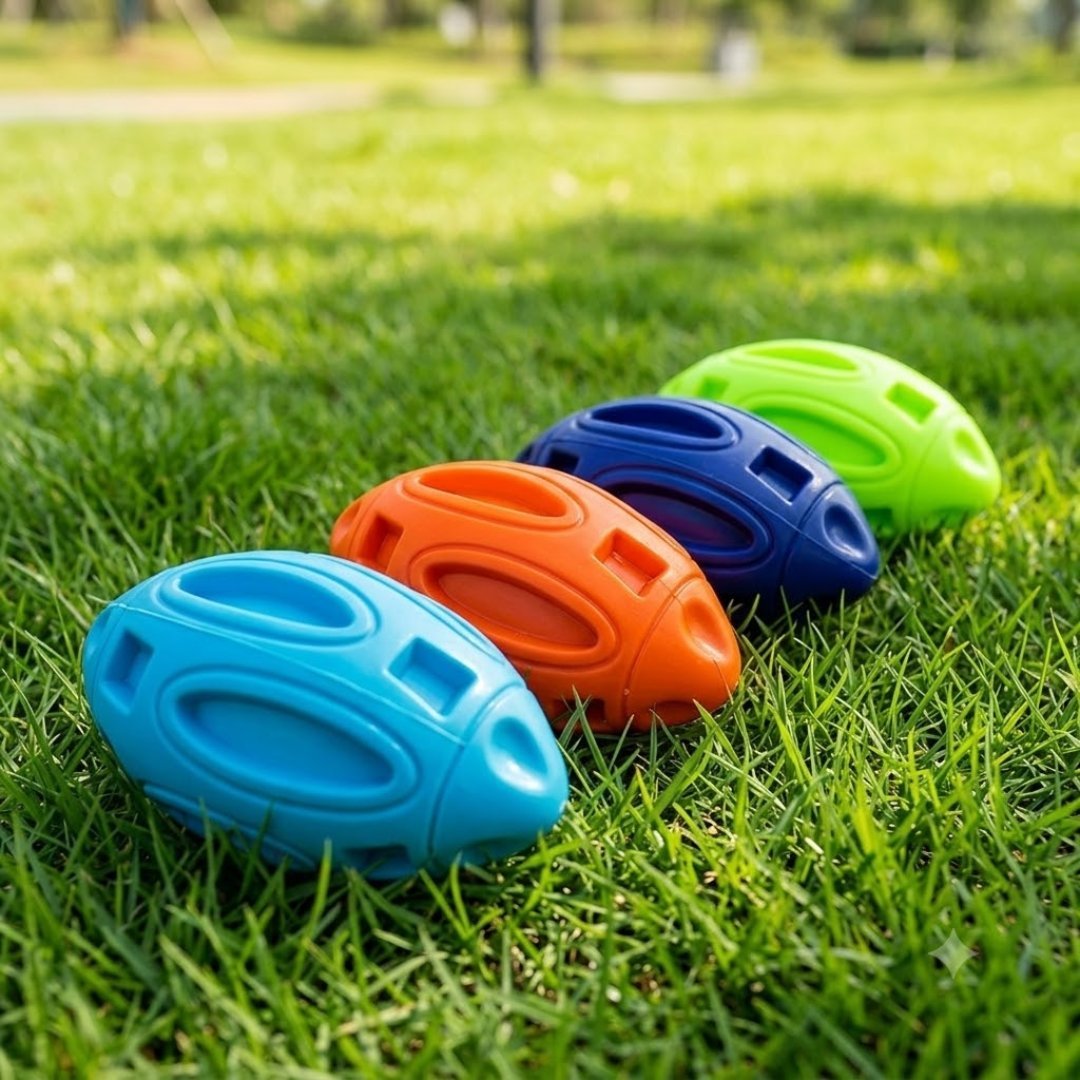
It’s designed for medium and large dogs with strong jaws, and comes in four colors — orange, green, blue, and dark blue — so you can grab one that matches your dog’s personality (or just replace it easily when it inevitably ends up under the couch).
Key features:
- Solid rubber construction built to withstand aggressive chewers
- Built-in squeaker for extra engagement during play and fetch
- Irregular football shape adds unpredictability to fetch games
- Available in 4 colors
- Best suited for medium to large dog breeds
If your dog has a track record of destroying every toy within the hour, this is worth adding to the rotation.
Conclusion
So, the honest truth about indestructible dog toys is they don’t exist. This might sound bad, but it’s actually freeing once you get it.
The real question is not “do indestructible dog toys actually work?” but “which durable toys work best for my dog?” This change in thinking is key.
Your dog’s bite force, chewing style, and play habits are more important than any label. A solid rubber toy with no seams will last longer than most. But, even the toughest toy needs regular checks for safety. Cracks and wear are just part of life.
What I’ve learned from all the destroyed toys is simple. Match the toy to your dog, not the ads. Choose materials that last. Know when to replace toys before they’re dangerous. Rotate toys to stop obsessive chewing.
By making smart choices, you’ll save money fast. You’ll need fewer replacements when you pick the right toys from the start.
Your dog deserves safe, fun toys that fit their needs. Now you know how to find them. No need for magic promises.
FAQ
Are indestructible dog toys really indestructible?
No, truly indestructible dog toys don’t exist. Every dog toy can be damaged or destroyed. The term “indestructible” means “more durable than average toys.” Some dogs can destroy even the toughest toys in minutes.
Others may use the same toy for years. The key is finding toys that last longer for your dog.
What makes some dog toys more durable than others?
Material quality and construction method are key. Solid rubber toys last longer than hollow plastic ones. Seamless, single-piece molded toys are more durable than those with stitching or glued parts.
Design features like smooth shapes help distribute bite pressure. Density and hardness also matter. Heavy-duty dog toys usually have a durometer rating of 70-90.
What are the best indestructible dog toys for aggressive chewers?
For aggressive chewers, try Goughnuts, Kong Extreme, West Paw Tux, Ruff Dawg, and high-quality nylon bones. The Squeaky Rubber Football Dog Toy is also good for moderate to heavy chewers.
Even these premium options may only last 4-6 months for extreme chewers. Avoid plush toys for aggressive chewers due to swallowing risks.
Do indestructible dog toys actually work for power chewers?
Yes and no. They don’t last forever, but they can last months. The durability depends on your dog’s bite force and chewing style.
Some dogs can destroy even the toughest toys in minutes. Others may use the same toy for years. Premium options provide better value than constantly replacing cheap toys.
How can I tell if my dog is an aggressive chewer?
Aggressive chewers destroy toys in hours or days. They use focused molar chewing and are motivated to destroy toys. They may swallow pieces they remove.
They often have strong bite force. In contrast, gentle chewers carry toys around and squeak them occasionally. Moderate chewers can damage cheap toys but aren’t obsessively destructive.
Why does my dog destroy every toy I buy, even the expensive ones?
Several factors could be at play. Your dog might have exceptionally strong bite force and a destructive chewing style. You might be buying toys with design flaws.
The toys might be hollow plastic or have seams and stitching. You might be leaving your dog alone with interactive toys. Some dogs destroy toys due to boredom, anxiety, or insufficient exercise.
What is the toughest dog toy that actually lasts?
Goughnuts and Kong Extreme are top performers. Ruff Dawg offers comparable toughness without a strong rubber smell. High-quality nylon bones can also last exceptionally long.
Remember, even these options will eventually show wear with extreme power chewers.
Are there any truly indestructible squeaky dog toys?
No squeaky toy is truly indestructible. The squeaker mechanism creates a vulnerability. Some squeaky toys are more durable than others.
The Squeaky Rubber Football Dog Toy combines solid rubber construction with an internal squeaker. For the most aggressive chewers, choose durable silent toys for solo chewing or squeaky toys for supervised play.
How long should an indestructible dog toy last?
This depends on your dog’s chewing intensity. For gentle chewers, even moderate-quality toys can last years. For moderate chewers, quality rubber toys might last 6-12 months or longer.
For aggressive chewers, premium “indestructible” toys lasting 3-6 months represent success. For extreme power chewers, even the toughest toys might only last a few months.
When should I throw away a damaged dog toy?
Remove a toy immediately if: your dog has removed any piece; the toy has developed sharp edges or points; it’s become small enough to fit entirely in your dog’s mouth and poses a choking risk.
If internal components like squeakers or stuffing are exposed or accessible, or if you notice cracks in rubber or significant tears in fabric, throw it out. If your dog is attempting to swallow pieces, or if you find pieces of the toy in your yard or home, it’s time to replace it.
Why does my dog ignore expensive indestructible toys but love cheap ones?
Dogs’ toy preferences can be unpredictable. Some dogs prefer softer toys they can “win against” by destroying. Texture preferences matter—some dogs dislike the smell or feel of certain rubber compounds.
Shape and size affect play style. Dogs who love fetch might prefer lightweight balls over heavy-duty chew toys. Some dogs are motivated by squeakers and novelty, which expensive durable toys might lack.
Are there indestructible plush dog toys for aggressive chewers?
Realistically, no plush toy is truly indestructible for aggressive chewers. Tuffy’s Mega Series comes closest by using multiple layers of fabric with reinforced stitching and protective webbing.
These are designed for supervised interactive play. Even Tuffy toys will eventually fail if left alone with a determined power chewer. For aggressive chewers, accept that plush toys should be play-only items that you bring out for interactive games and then put away.
How do I know what durometer rating my dog needs in a toy?
Durometer measures hardness on a scale where higher numbers mean harder materials. Heavy-duty dog toys typically fall in the 70-90 durometer range. For gentle chewers, toys in the 60-70 range work fine and are easier on teeth.
For moderate chewers, the 70-80 range offers good durability with safety. For aggressive power chewers, toys in the 80-90+ range provide maximum durability. Most manufacturers don’t list durometer ratings, but premium brands targeting power chewers typically use higher-durometer materials.