Have you ever noticed your dog acting defensively or aggressively around their food bowl? If so, you might be dealing with a behavior known as food guarding. This can be a challenging issue for dog owners because it’s important to ensure your dog’s meals are a safe and calm experience for both them and anyone else in the home. In this guide, we’ll explore practical steps to help you understand and correct a dog that guards its food. By the end, you’ll have a clearer grasp of how to manage this behavior, allowing you and your furry friend to enjoy mealtime blissfully.
Understanding Food Guarding
What Is Food Guarding?
Food guarding is when a dog behaves aggressively or protectively over their food. This could include growling, snapping, or even biting if someone approaches their food bowl. It’s a natural instinct for many animals, born from a need to protect resources vital for survival. In a domestic setting, though, food guarding can create tension and danger if not addressed.
Why Do Dogs Guard Their Food?
Understanding why dogs guard their food is crucial in addressing the behavior. Several factors contribute to food guarding, including:
- Instinct: This behavior can stem from a natural survival instinct, where food is seen as a limited resource.
- Past Experiences: If a dog has experienced scarcity or competition over food in the past, they may guard their food out of fear of losing it again.
- Anxiety: Stress or a feeling of insecurity can also lead to guarding behavior.
Knowing the root cause or causes of your dog’s food guarding can help tailor the right approach to modify this behavior effectively.
Signs of Food Guarding
Recognizing Guarding Behavior
Identifying food guarding involves observing your dog’s behavior around mealtimes. Here are some common signs:
- Body Stiffening: A guarded stance with a tight body.
- Growling or Snarling: Audible warnings that signal distress.
- Lip Lifting or Snapping: More severe warnings that should never be ignored.
- Eating Quickly: Hastiness to consume food to prevent it from being taken away.
Assessing the Severity
Not all food guarding is the same, and the severity can range widely. It’s useful to assess how serious your dog’s behavior is to tackle the problem effectively. Consider if the aggression occurs every time they eat, only with certain people, or fluctuates based on the environment.
Strategies to Correct Food Guarding
Creating a Safe Environment
The first step in managing food guarding is to establish an environment where your dog feels secure while eating.
- Separate Feeding Area: Ensure your dog has their own quiet, uninterrupted space where they can eat without feeling threatened.
- Regular Mealtimes: Consistency helps mitigate anxiety. Feed your dog at the same times every day to establish a predictable routine.
- Limited Access to Food: Only serve meals at designated times so your dog doesn’t feel the need to guard food left out.
Training Your Dog
Training can help diminish food guarding over time through desensitization and counter-conditioning. It’s about changing the dog’s emotional response from negative to positive in certain situations.
Desensitization
This involves gradually getting your dog used to the presence of others around their food by starting from a safe distance and slowly decreasing it over time.
Counter-Conditioning
Pairing the presence of others near the food with positive outcomes (like treats or praise) can shift your dog’s perception of a threat to a positive occurrence.
Step-by-step Training Process
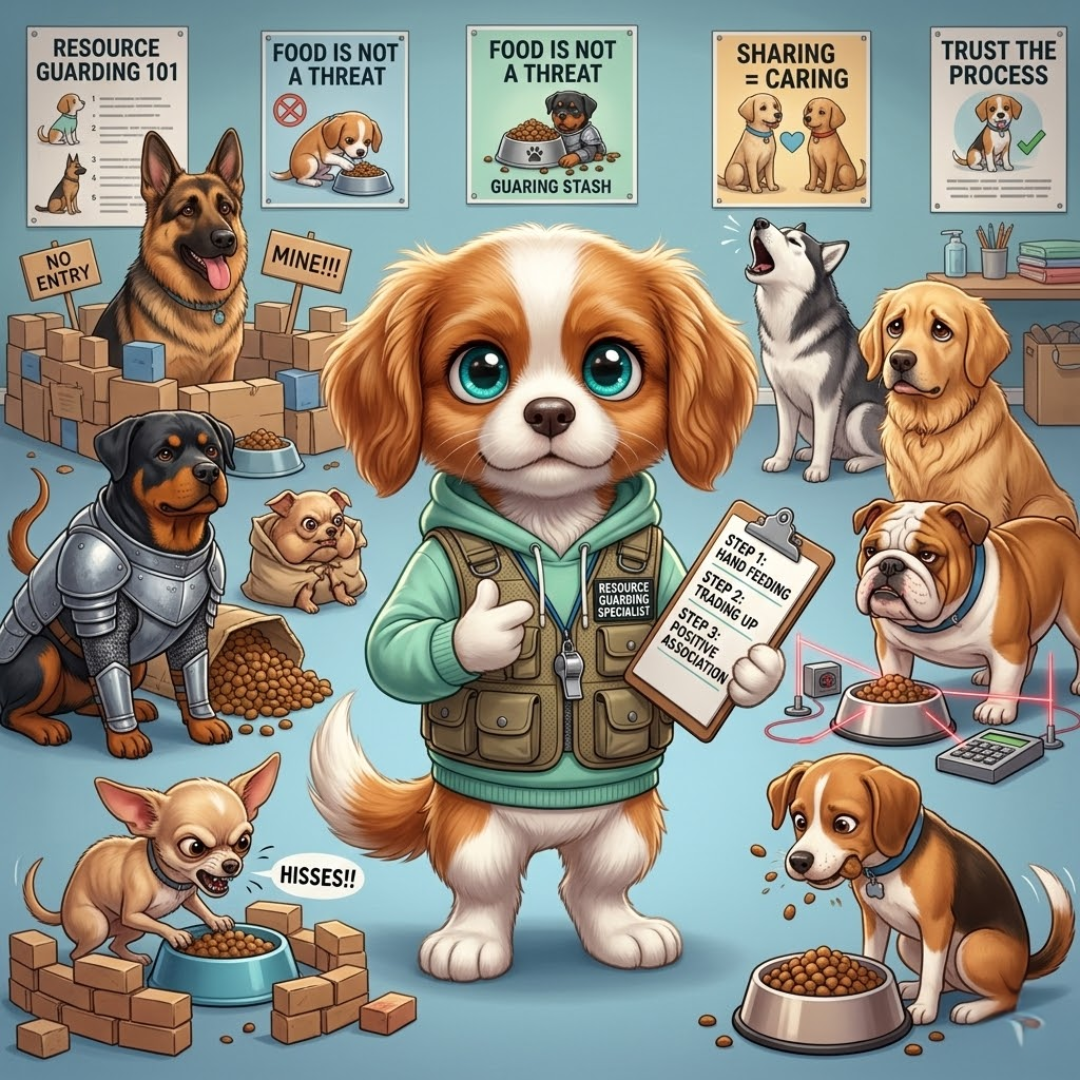
- Start with Distance: Stand at a comfortable distance from your dog while they eat. Reward quiet, non-aggressive behavior with treats thrown from afar.
- Gradual Approach: Gradually decrease the distance to your dog as they grow tolerant of your presence. Each successful interaction should be met with praise and treats.
- Hands-on Training: Once your dog feels comfortable with your proximity, introduce new actions like gently placing a treat in their bowl while they eat to associate your approach with a rewarding experience.
- Consistency is Key: Repeat these exercises regularly and patiently. Never move on to the next step until your dog is entirely comfortable with the current one.
Tools and Products That Can Help
Specialized Feeders
There are products designed to alleviate food guarding tendencies:
- Slow Feed Bowls: These encourage slower eating and can reduce anxiety-driven haste.
- Automatic Feeders: Offering meals at precise times can reduce tension by predicting feeding.
Professional Help
Sometimes, even with the best intentions and efforts, professional intervention may be necessary. Dog trainers or animal behaviorists can offer personalized strategies and support based on extensive experience.
Should You Seek Professional Help?
Consider professional assistance if:
- Your dog has bitten someone due to food guarding.
- The efforts to desensitize and counter-condition are unsuccessful.
- Your dog’s food guarding behavior is worsening.
Prevention Tips
Early Training
Setting boundaries and training from an early age can prevent food guarding from developing.
- From Puppy’s First Days: Incorporate handling during mealtimes so that puppies associate human touch with positive experiences.
Reinforcing Positive Behavior
Whenever you see your dog displaying neutral or positive behavior around their food, reward them! Reinforcement teaches them that staying calm yields rewards.
Common Mistakes to Avoid
Punishment
Punishing a dog for guarding can reinforce their fear and escalate aggression. Instead, focus on reinforcing positive behavior and redirecting negative actions.
Inconsistency
Be consistent with your approach. Mixed signals can confuse dogs and hinder behavioral improvement.
Ignoring the Issue
Hoping your dog’s food guarding will resolve itself is not a solution. Addressing the behavior actively is essential for safety.
Measuring Success
Signs of Improvement
- Relaxed Behavior: Your dog shows more relaxation and comfort during meals.
- Decreased Growling: Fewer aggressive vocalizations or warnings.
- Willingness to Share Possible: If your dog willingly allows someone to approach their food.
Keeping a Progress Journal
Keeping notes of your dog’s behavior changes can help identify what works and what needs tweaking. Track the following:
- Daily Observations: Note behaviors and responses during training.
- Achievements: Record successful rounds of training and when you progress to the next stage.
Understanding the Long-Term Commitment
Training away from food guarding is not an overnight fix. The enduring change requires commitment, patience, and understanding. Your steadfastness in this journey not only helps in conquering food guarding but also strengthens the bond between you and your dog.
Conclusion
Addressing food guarding in dogs requires patience, understanding, and a strategic approach. By recognizing the signs, understanding underlying causes, and implementing effective strategies, you can successfully guide your dog away from guarding tendencies. Remember, the journey might be slow, but every small step forward is a victory toward a safer and more harmonious mealtime experience.