
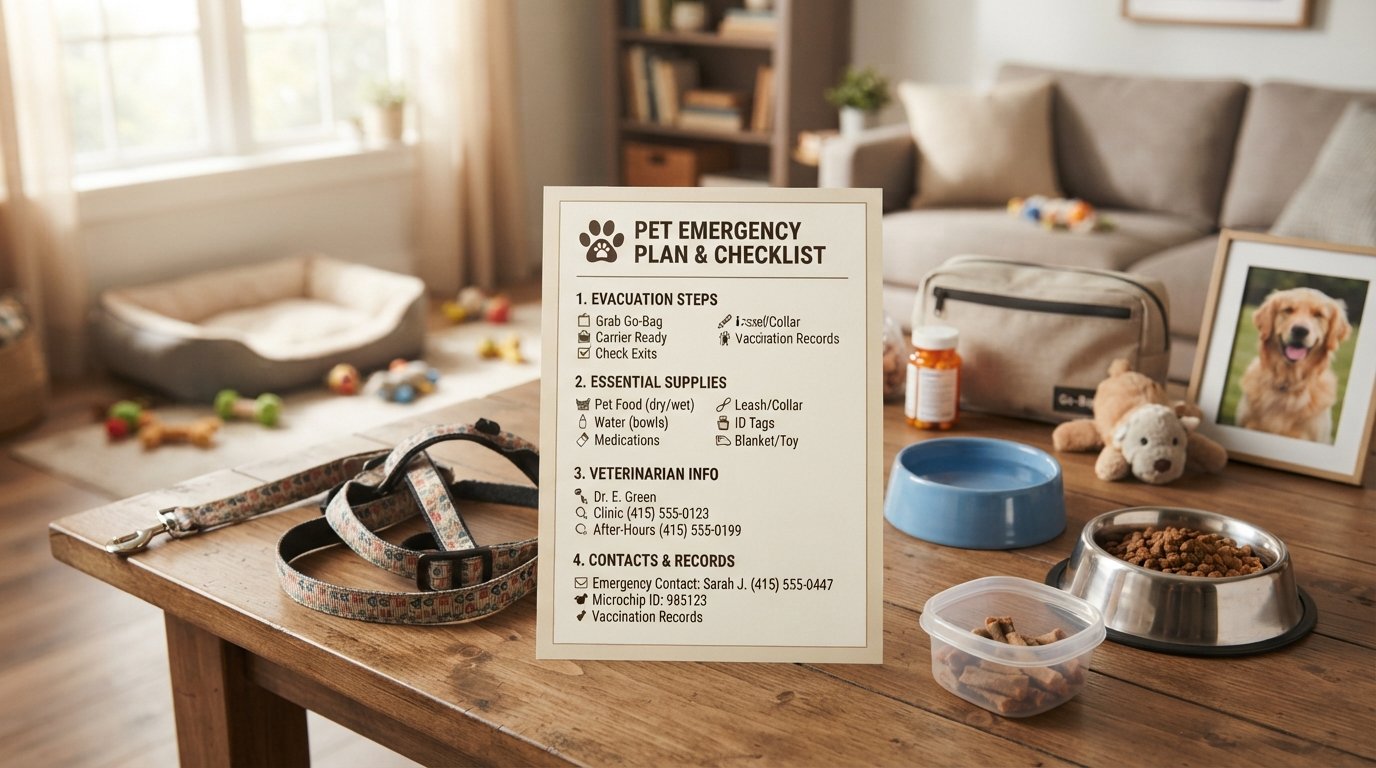
What would you grab if a wildfire or flood gave you ten minutes to leave with your dog or cat?
A pet emergency plan needs four things: a packed go-bag, visible ID, a safe place, and reachable contacts.
I built my pet emergency plan after seeing how unprepared my household was.
That wake-up call seemed small until I saw the numbers. The ASPCA’s 2024 Hurricane Helene response reached more than 25,000 animals across the Southeast. In North Carolina alone, over 5,400 animals received help through search and rescue, evacuations, and shelter support.
Team Rubicon reports that 83% of animal owners live in disaster-prone areas. Most of us could need this information after one storm.
This pet emergency plan guide covers evacuation steps, supplies, key contacts, shelter options, microchips, and disaster-specific advice. It also includes a free printable checklist for your dog or cat, based on what worked for mine.
Key Takeaways
- A solid readiness strategy includes four core elements: a go-bag, ID, a safe destination, and a contact list.
- More than 25,000 animals were impacted during Hurricane Helene in 2024, with over 5,400 helped in North Carolina alone.
- About 83% of animal owners live in areas prone to natural disasters.
- FEMA’s Ready.gov framework encourages making a readiness strategy, building a kit, and staying informed—steps that apply to animal owners too.
- This guide covers evacuation steps, key contacts, shelters, microchips, and disaster-specific strategies.
- A free printable checklist helps you prepare quickly for your dog or cat.
Why Every Pet Owner Needs a Pet Emergency Plan
I once thought emergency plans were for other families, not mine. Then I learned how quickly a normal day can become a crisis for pet owners. That changed my view of pet disaster preparedness, which I no longer see as optional.
A solid plan protects my pets and my peace of mind when everything else feels out of control.
Disasters Don’t Wait for a Perfect Time
Wildfires spread in hours, not days. Floodwaters rise overnight. Hurricanes can shift course without warning, and winter storms can cut power while you sleep.
These events do not check your calendar first. They can strike at 2 a.m., during work, or on an ordinary Tuesday afternoon.
According to Team Rubicon, 83% of pet owners live in disaster-prone areas. That figure includes more than hurricane coastlines or wildfire zones. It includes:
- Tornado corridors across the Midwest and South
- Flood zones near rivers and coastlines
- Regions prone to severe winter storms and extended power outages
- Areas with rising wildfire risk, even outside traditional fire country
If you own a pet in the United States, you likely live somewhere on that list. That is why pet disaster preparedness matters for nearly every household, not just a few.
What Happens to Pets Left Behind
Here is what pushed me to stop procrastinating. FEMA puts it plainly:
“If you leave your pets behind, they may end up lost, injured or worse.”
Those words are hard to read, but they are honest. Pets left behind during a disaster cannot make evacuation decisions. They depend entirely on us.
In 2024, the ASPCA’s Hurricane Helene relief effort helped more than 25,000 animals. This included over 5,400 in North Carolina through search and rescue, evacuation, and emergency sheltering.
Every one of those animals had an owner who loved them. Many simply lacked a plan when disaster hit.
I am not sharing these numbers to scare you. I am sharing them because they show why pet disaster preparedness cannot wait for a storm warning. Planning now means fewer heartbreaking outcomes later.
What to Pack in a Pet Emergency Kit
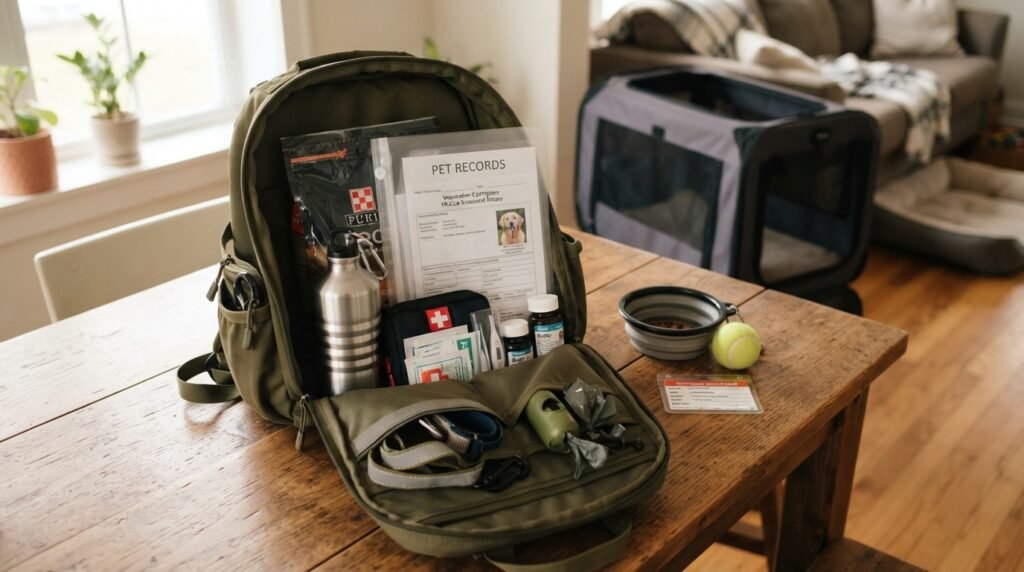
When I built my first pet emergency kit, I learned that a leash and kibble were not enough. A useful kit needs food, water, medicine, paperwork, and comfort items your pet recognizes. I follow guidance from FEMA’s Ready.gov and the ASPCA, and keep everything in one grab-and-go bag by my front door.
Here is what goes into my pet emergency kit, organized by category so you can build yours in an afternoon.
Food, Water and Medications Checklist
Every pet emergency kit needs at least three days of food and water per pet. FEMA recommends storing food in an airtight, waterproof container so it stays fresh during an emergency.
Water matters as much as food. I pack enough bottled water for my dog for several days, plus a travel bowl.
Medications need special care. I keep extra daily medicine in a waterproof container, labeled with the dosage and my vet’s phone number.
- Three days of dry or canned food, sealed in a waterproof bag
- Bottled water, at least one gallon per pet
- A manual can opener if you pack wet food
- A week’s supply of any prescription medication
- Dosage instructions taped to the medicine container
Medical Records and Identification Documents
Paperwork is often forgotten, but shelters and vets ask for it first. I keep laminated vaccination records, registration papers, and my vet’s contact information in a plastic bag.
Pet medical records show that your animal is current on rabies and other shots. Many emergency shelters and boarding facilities require this proof before admitting your pet.
I also pack a recent photo of myself with my pet. If we become separated, it proves ownership and helps rescuers reunite us faster.
I keep a second digital copy of every document on my phone and in a cloud folder. This protects the information if physical papers are damaged.
Carrier, Leash, Bowls and Comfort Items
After covering food, water, and paperwork, I focus on gear. A sturdy carrier or crate is essential, even for pets that usually ride loose in the car.
I pack a backup leash and collar with an ID tag. A daily collar can snap or slip off during a stressful evacuation.
- Collapsible travel bowls for food and water
- Grooming supplies like a brush and nail clippers
- Sanitation items such as waste bags, litter, and a small litter box
- A favorite toy or blanket that smells like home
I keep a vet-recommended pet first aid kit in my bag, stocked with gauze, antiseptic wipes, and tweezers. My Dog First Aid Kit guide explains every item I pack for my own dog.
Printable Pet Emergency Kit Checklist Table
I print this table and tape it inside my supply closet. It keeps every category together, so I do not forget important items when packing quickly.
| Category | Items to Pack | Minimum Quantity |
|---|---|---|
| Food & Water | Dry/canned food, bottled water, bowls, can opener | 3-day supply per pet |
| Medications | Prescription meds, dosage card, pet first aid kit | 7-day supply plus basics |
| Medical Records & ID | Vaccination papers, registration, owner-pet photo | 1 laminated + 1 digital copy |
| Carrier & Leash | Crate or carrier, backup leash, spare collar with ID tag | 1 set per pet |
| Comfort & Sanitation | Toy or blanket, waste bags, grooming supplies | As needed |
Once your pet emergency kit is packed and labeled, store it somewhere easy to reach, like a garage shelf or hall closet. A little organization now saves precious minutes when every second counts and you need to get your pet out safely.
How to Evacuate With Dogs, Cats and Birds
When sirens blare or smoke fills the air, my dog runs outside, while my cat hides under the bed.
Pets do not panic alike, so my pet evacuation checklist must address each one. Dogs, cats, and birds need different gear, handling, and calming methods for a safe escape.
Evacuating with Dogs
Dogs are often easiest to move, especially when they already feel comfortable on a leash. I keep a leash and harness by my front door year-round, so I never waste time searching during an emergency.
Crate training also helps during an evacuation. A dog familiar with its crate settles faster during a stressful evacuation than a dog unfamiliar with one.
- Keep a sturdy leash and harness within arm’s reach at all times.
- Practice short crate sessions so the crate feels familiar, not scary.
- Pack a favorite toy or blanket to help your dog settle in an unfamiliar shelter.
- Bring three days of food, water, and any medications your dog needs.
Shelters and hotel lobbies can overwhelm even a well-trained dog. My calm, confident voice helps my dog relax, so staying steady is part of my plan.
Evacuating with Cats
Cats need a different approach. Mine disappears when she senses trouble, so FEMA’s carrier-acclimation advice changed my plan.
I leave her carrier open in the living room year-round, making it furniture, not a trap for vet visits.
- Leave the carrier out and open in a room your cat visits often.
- Drop treats inside the carrier so she walks in willingly.
- Add a blanket that smells like home to ease her anxiety.
- Note her favorite hiding spots so you can find her fast if she bolts.
These habits keep me from chasing a terrified cat when every minute matters. Early preparation saves stress later.
Evacuating with Birds and Small Pets
Birds, rabbits, and reptiles need gentle handling and protection from temperature swings during transport. Each needs a secure, well-ventilated carrier.
Draping a calming blanket over a bird cage or small-animal carrier reduces stress and shields them from drafts or sunlight during travel.
- Use a travel cage or carrier sized properly for the animal.
- Cover the cage loosely with a breathable blanket to reduce panic.
- Pack extra bedding and a few days of species-specific food.
- Keep carriers away from direct heat or cold during the drive.
Whatever pets you care for, a species-aware pet evacuation checklist turns chaos into a routine you can follow under pressure.
Building Your Pet Emergency Contact List
A pet emergency plan works only as well as its contact list. You can pack a perfect go-bag but still struggle when power fails and roads close.
FEMA’s Ready.gov program recommends a buddy system with neighbors, friends, or relatives before disaster strikes. Then you will not scramble for help as storms arrive or wildfire smoke fills the sky.
Who Belongs on Your List
My contact list follows a simple plan: vet, backup caretaker, out-of-area contact, and local animal services. Each contact has a different job, covering nearly every situation I may face.
- Your regular veterinarian — they already have your pet’s full medical history on file.
- A 24-hour emergency animal hospital — for the moments your regular vet’s office is closed.
- A trusted neighbor or friend with a spare key who knows exactly where your pet’s go-bag is stored.
- An out-of-area contact everyone in the family can call or text when local lines are jammed.
- Local animal control or emergency management office for guidance during large-scale evacuations.
I make sure my backup caretaker can enter my home, calm my dog or cat, and find the emergency kit. Team Rubicon and the ASPCA say this preparation helps turn a chaotic rescue into a smooth one.
Here’s a quick template I use to keep everything organized:
| Contact Type | Example | Key Info to Record | Backup Access Needed? |
|---|---|---|---|
| Regular Veterinarian | Local clinic | Phone, address, pet’s chart number | No |
| Emergency Vet Hospital | 24-hour animal ER | Phone, hours, directions | No |
| Backup Caretaker | Neighbor or friend | Home address, key location, pet instructions | Yes |
| Out-of-Area Contact | Relative in another state | Phone, email | No |
I keep a printed copy taped inside my emergency kit. Cell towers can fail during major disasters, so relying only on your phone is risky.
Finding Emergency Veterinary Care Fast
Nobody wants to search “emergency vet near me” while a pet is suffering. I found my nearest 24-hour emergency veterinary care facility months before needing it.
I checked with my local veterinary association and trusted pet apps for hours, address, and disaster walk-in policies. Some clinics post real-time updates on social media when storms or wildfires disrupt normal operations.
Saving these details ahead of time means I never have to guess where to turn. When minutes matter, quick access to emergency veterinary care can make all the difference for your pet’s safety.
Pet-Friendly Shelter and Lodging: Plan Ahead
Most public shelters and hotels do not accept pets, so I research pet-friendly shelters before disaster strikes. FEMA and Ready.gov warn that many emergency shelters turn pets away, forcing owners into a painful choice. I never want to wait too long, then end up with my dog in a parking lot.
I make pet-friendly lodging research part of my regular emergency preparation, not something I handle during evacuation. A little homework now saves a lot of panic later.
Researching Pet-Friendly Hotels Before Disaster Strikes
I keep a list of pet-friendly hotel chains and motels along my likely evacuation routes. I build it before hurricane season or wildfire warnings appear on the news. Waiting for an evacuation order almost guarantees nearby pet-friendly rooms will book quickly.
I call hotels to confirm current pet policies because rules change and websites may not be updated. I save backup options in different directions if one route becomes unsafe or overcrowded. BringFido and AAA’s PetBook make research quick and offer trusted reviews from real travelers.
“Identify pet-friendly hotels, friends or family who can host you and your pet, and a boarding facility as backup — don’t wait until an evacuation order to find out if a shelter takes animals.”
Red Cross, Local Shelters and Boarding Backup Plans
Red Cross shelters usually exclude pets, but many connect with nearby pet facilities or create co-located animal shelters. I check with my local Red Cross chapter ahead of time to understand how this works in my area. I also keep contact information for local emergency animal shelters that might open during a widespread disaster.
As a backup, I keep a boarding facility on my contact list. If my preferred pet-friendly hotel or shelter falls through, I need another choice ready without scrambling.
| Lodging Option | Pet Policy | How to Prepare | Best For |
|---|---|---|---|
| Pet-friendly hotel chains | Allows pets with advance booking or small fee | Call ahead, confirm policy yearly | Short-term evacuations |
| Red Cross shelters | Pets usually not allowed inside main shelter | Ask about co-located pet facilities | Human lodging with nearby pet support |
| Local emergency animal shelters | Designed specifically for displaced pets | Save contact numbers in advance | Pet-only sheltering during large disasters |
| Boarding facilities | Accepts pets for a daily fee | Keep vaccination records updated | Backup when other options are full |
Planning pet-friendly shelters and lodging months ahead gives me peace of mind. During an emergency, I do not want to make calls while a storm rolls in. Preparing now means we will always have a safe, welcoming place.
Records, Microchips and ID Tags
A collar can fall off, but a microchip stays with my pet during an emergency. I use microchips, ID tags, and photo proof of ownership as backup protection. If disaster separates us, these three tools can help bring us back together.
FEMA and Ready.gov recommend microchipping pets, updating registration details, and naming a contact outside the disaster area. I follow this advice and check my setup every year to catch any problems.
Microchip Registration Tips
Most vet clinics can microchip a pet within a few minutes, and the chip lasts a lifetime. The hard part is keeping the pet microchip registration information accurate.
I check my pet’s microchip registration yearly with my vet or the American Animal Hospital Association’s free lookup tool. This search confirms my contact details and shows which registry stores my information.
I also list someone outside my immediate area as an emergency contact. Disasters can damage phone lines or flood my neighborhood. Then, a shelter or vet across the state can contact my backup person.
ID Tags and Photo Proof of Ownership
My pet wears a collar with current ID tags every day, not only before storms. Even calm animals may bolt when frightened, and untagged pets are harder to identify.
Shelters and veterinary facilities routinely scan incoming animals for microchips, so updated pet microchip registration matters. Dr. Jerry Klein, Chief Veterinary Officer for the American Kennel Club, has noted the value of this backup system:
“A microchip is only as good as the registration behind it. Tags and microchips work best together, giving rescuers two reliable ways to identify a lost pet.”
I keep a recent, clear photo of myself with my pet in my wallet and emergency kit. This photo proves ownership, which shelters and rescue workers may request when reuniting families during a hectic evacuation.
| Identification Method | Best For | Key Reminder |
|---|---|---|
| Microchip | Permanent identification that can’t fall off | Update registration annually |
| ID Tag on Collar | Quick visual identification by anyone who finds the pet | Wear at all times, not just emergencies |
| Photo with Owner | Proving ownership at a shelter or vet clinic | Keep a recent copy in wallet and emergency kit |
Together, these three layers give me peace of mind. A microchip, collar tag, and photo require little time or money, but they can reunite us when every minute counts.
Plans for Fire, Flood, Storm and Power Cuts
Fires spread fast, floods rise slowly, and winter storms may cut power for days. Each threat needs a different plan to keep pets safe.
I keep separate plans for wildfire, hurricane, and deep-freeze seasons. The ASPCA’s disaster safety tips help me match each plan to its hazard.
Fire Evacuation Plan for Pets
Wildfires offer little warning, so I check my go-bags on every Red Flag Warning day. I also know the difference between an evacuation warning and an evacuation order.
A warning means I should prepare to leave soon. An order means I must leave now, without time to find a leash or carrier.
During fire season, I stage carriers, leashes, and go-bags near my front door. Each bag holds three days of food and water, needed medicines, a favorite toy, and vaccination records.
- Watch for smoke, ash, or sudden wind shifts as early local warning signs.
- Keep your vehicle fueled and parked facing an exit route.
- Practice loading pets into carriers quickly, before a real emergency hits.
Recent disaster responses show why quick action matters. During the 2024 Hurricane Helene relief effort, Team Rubicon and the ASPCA helped more than 25,000 animals. They helped over 5,400 animals in North Carolina alone through search and rescue, evacuation, sheltering, and food distribution.
Flood and Hurricane Preparedness
Hurricanes and floods often provide more warning, but roads can flood quickly. I track forecasts and leave before my street becomes impassable.
I pack my pets’ medical records and medications in a sealed, waterproof bag. Water can ruin paper documents within minutes, so I never delay this step.
I map pet-friendly evacuation routes before hurricane season. Many coastal shelters fill quickly after storm warnings, so a backup plan matters.
Winter Storms and Power Outages
Freezing temperatures and long power outages create serious risks. I bring my pets indoors at the first sign of a winter storm. Frostbite and hypothermia can develop faster than many owners expect.
Before the first winter storm warning, I store extra blankets, a battery-powered heater, and several days of pet food. Fresh water matters because outdoor bowls can freeze solid within hours during a hard freeze.
For more cold-weather guidance, I use my Winter Pets Safety guide. It covers frostbite warning signs and safe indoor heating setups.
I follow wireless emergency alerts and the FEMA app for real-time updates during fires, floods, and winter storms. These ASPCA disaster safety tips and official alerts show me when to act. They help protect my pets during any disaster.
Free Printable Pet Emergency Plan Checklist
Nobody wants to read eight sections while smoke fills the hallway or floodwater reaches the porch. That is why I condensed this guide into one page for your pet’s go-bag. You can print, fold, and tuck it into your pet’s go-bag.
I built this pet emergency plan checklist for real crises: short, clear, and free of fluff. No searching through old blog posts or remembering which vet you bookmarked three years ago. One sheet keeps everything in front of you.
Enter your email, and I’ll send the printable PDF straight to your inbox. Stick it on the fridge, place it in a binder, or laminate it for your pet’s carrier. Wherever it goes, you will know where to look when every second counts.
Here is a quick preview of the checklist, based on the fire evacuation framework discussed earlier:
- Decide your evacuation triggers in advance, so you’re not guessing under pressure
- Stage your pet’s go-bag by the nearest exit
- Gather medical records, ID papers, and proof of ownership
- Prepare your vehicle with carriers, leashes, and secured crates
- Know at least two evacuation routes out of your neighborhood
- Choose a family meeting point and an out-of-area contact
- Pack food, water, and medications for every pet in the house
- Photograph your home and pets if time allows
- Leave the moment evacuation orders are issued—don’t wait for a second warning
I also included guidance from FEMA’s Ready.gov kit-building recommendations. This checklist is grounded in advice disaster response experts give families every year, not just personal opinion.
“Create a family disaster plan now and know what to do, where to go, and what you will need to protect yourselves from the effects of a disaster.”
Beyond supplies, the checklist includes a shorter emergency contact sheet and pet-friendly lodging reminders. It also has species-specific evacuation notes for dogs, cats, and birds. I wanted one page that answers “What do I do right now?” during a crisis.
Download it once, and your pet emergency plan stays ready for what comes next. That could mean a wildfire warning, a flash flood alert, or peace of mind from being prepared.
Conclusion
When I started building my pet emergency plan, I did not expect it to take one afternoon. A go-bag for my dog and cat, updated ID tags, and medical records helped me feel ready, not panicked. I also made a short list of pet-friendly hotels.
Your kit needs food, water, medication, and comfort items for at least a week. Cats generally do better in a secure carrier throughout the trip, while dogs can take leash breaks.
Pet-friendly shelters and hotels fill up fast, so call ahead and keep a backup list. Check your pet’s microchip registration once a year to confirm your contact information is current.
Team Rubicon and the ASPCA report that billion-dollar disasters are becoming more common. A solid emergency plan for every family member, including four-legged ones, is no longer optional.
Grab the printable checklist from the earlier section, pack your supplies, and practice your evacuation route with your pet. Do this before you need it. A little practice now means less fear and faster action when a real emergency reaches your door.
FAQ
What exactly should I pack in a pet emergency kit?
My pet emergency kit includes at least three days’ worth of food and water in airtight, waterproof containers. It also includes needed medications, a sturdy carrier, backup leash and collar, travel bowls, sanitation supplies, and a comfort item. I add copies of pet medical records and a recent photo of myself with my pet for proof of ownership.
My pet first aid guide covers the medical side and minor injuries too.
How is evacuating a cat different from evacuating a dog?
Dogs usually do fine with a leash and harness by the door, plus crate-training practice for calm shelter behavior. Cats are trickier, so I leave the carrier out year-round with treats and a familiar blanket inside. This keeps mine from bolting or hiding when she senses trouble.
Knowing her usual hiding spots has saved me precious minutes more than once.
Where can I find pet-friendly shelters during a disaster?
I researched pet-friendly shelters, hotel chains, and boarding options along my evacuation routes months before hurricane or wildfire season. Many shelters still turn pets away, so Red Cross shelters often partner with nearby pet-friendly facilities. I keep boarding as a backup if my first choice is full.
How often should I verify my pet’s microchip registration?
I check and update my pet microchip registration every year, plus whenever I move or change my phone number. I use my vet’s office or the American Animal Hospital Association’s lookup tool to confirm current details. I also list an out-of-area emergency contact because local numbers may fail during a crisis.
Why do I need a pet emergency plan if I don’t live in a hurricane or wildfire zone?
Because 83% of pet owners already live in a disaster-prone area. Floods, wildfires, and winter storms rarely wait for a convenient time. The ASPCA’s 2024 Hurricane Helene response impacted more than 25,000 animals, including over 5,400 helped in North Carolina.
That scale convinced me to build a real plan for my dog and cat. I no longer treat pet disaster preparedness as optional.
What’s the fastest way to create a pet evacuation checklist?
Start with a packed go-bag, visible pet ID, a set destination, and a written contact list. Add carriers by the door, medical records in a waterproof bag, and emergency vet information on paper, not just your phone. My free printable checklist puts these steps on one page for real emergencies.
How do I find emergency veterinary care quickly during a disaster?
I identify the nearest 24-hour emergency vet clinic before disaster strikes, avoiding frantic “emergency vet near me” searches during a crisis. Local veterinary associations and emergency-vet locator apps make this easy within minutes. I write that information on my physical contact list beside my regular vet’s details.
Where can I find trustworthy ASPCA disaster safety tips?
The ASPCA’s official disaster preparedness resources helped motivate my own plan. Their guidance covers kit essentials, evacuation timing, and animal rescue efforts, including their 2024 Hurricane Helene response. It closely matches what I recommend throughout this guide, making it a reliable source for pet-specific emergency planning.