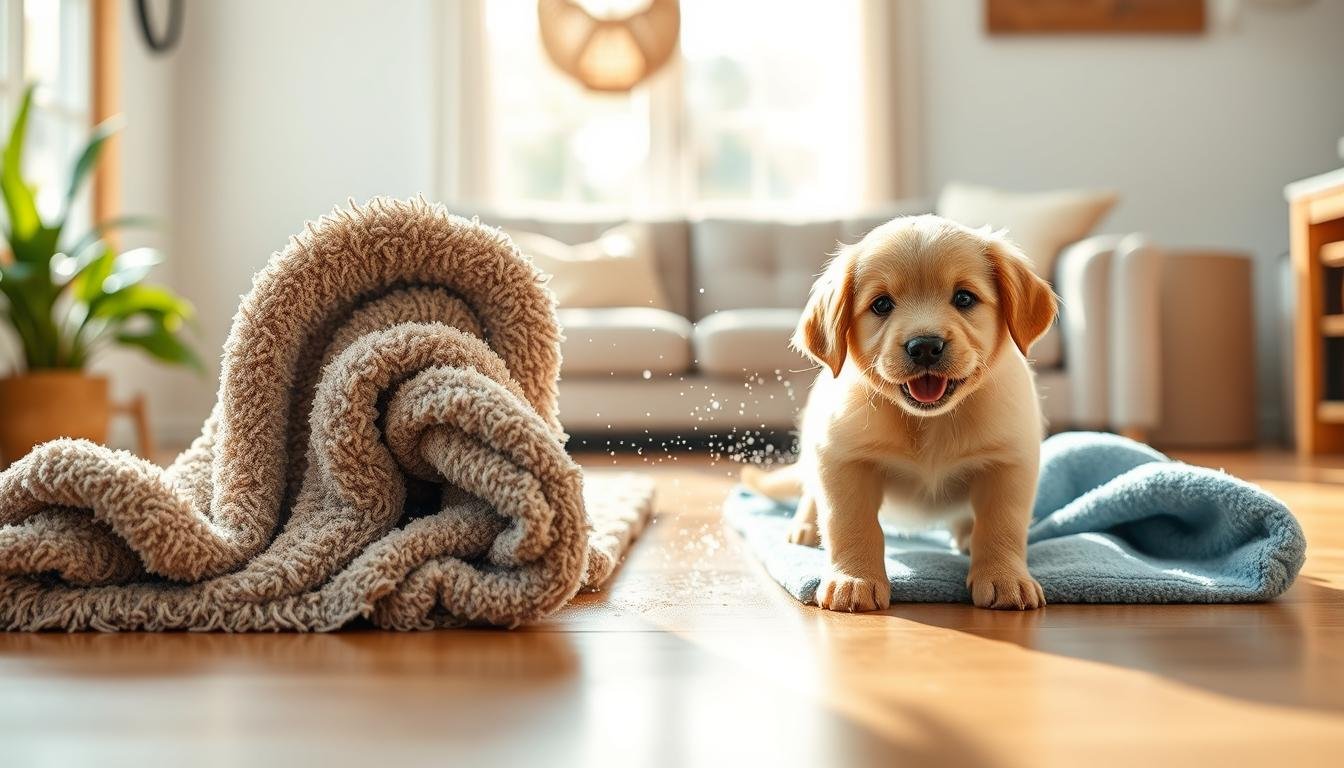
Can the right dog towel cut drying time in half after a bath or muddy walk?
A large, dense microfiber towel is usually the faster choice for full-body drying. It pulls water from a wet coat after baths, swims, and rainy outdoor trips. Chenille works best for muddy paws, legs, bellies, and quick spot cleaning because its soft pile gives me a secure grip.
This chenille vs microfiber pet towel choice is about towel construction, not one perfect fabric for every dog. Wet fur can make floors slick, dampen furniture, dirty car seats, and leave that familiar wet-dog smell behind.
In my dog grooming towel comparison, standard cotton bath towels often spread moisture around the coat. That can be a real problem for thick, double-coated dogs. Super absorbent dog towels are designed to grab water faster, helping me get a dog dry with less rubbing.
I will compare absorbency, drying speed, towel size, hand pockets, coat type, comfort, and washing needs. I will also explain my preferred two-towel setup. Results can vary by GSM, fabric blend, towel size, and how wet the towel becomes during use.
Key Takeaways
- I find dense microfiber best for fast, full-body drying.
- Chenille is useful for paws, legs, bellies, and mud.
- Thick coats often need more than a cotton bath towel.
- Towel size and saturation affect drying speed.
- Hand pockets can make targeted cleaning easier.
- A two-towel routine can handle both wet coats and dirty paws.
What’s the Difference Between Chenille and Microfiber?
Microfiber is made from very fine fibers, often a mix of polyester, polyamide, or nylon. Chenille refers to a soft, looped surface. So, a pet bath towel can be both chenille and microfiber.
Microfiber’s tiny fibers catch water well, thanks to their large surface area. This makes microfiber towels great at absorbing water and drying quickly between baths.
I find microfiber towels smooth and easy to use on a dog’s body. They come in larger sizes, perfect for drying a soaked coat.
Chenille towels have thick, noodle-like loops for grip and texture. They’re softer for puppies and sensitive dogs, but can snag or flatten over time.
Choosing the best pet drying towel depends on its purpose and feel. Microfiber is great for heavy moisture, while chenille is better for holding onto paws, legs, and dirt.
Chenille vs Microfiber Pet Towel: Side-by-Side Comparison
In my review, I focus on what matters after a bath, swim, or rainy walk. Both chenille and microfiber pet towels help manage wet fur. But, their texture and design are suited for different needs.
| Feature | Chenille Pet Towel | Microfiber Pet Towel |
|---|---|---|
| Absorbency | Thick noodle-like fibers hold water near paws and legs. | Fine, dense fibers pull moisture from the coat surface. |
| Drying Speed | Works well for small wet areas and muddy spots. | Often suits full-body drying after baths or swims. |
| Texture | Soft, plush feel with raised chenille strands. | Smooth or lightly textured feel that glides over fur. |
| Typical Size | Often compact for paws, bellies, and smaller dogs. | Commonly available in larger wraps and bath-towel sizes. |
| Price Considerations | Price varies with hand pockets, thickness, and trim. | Price often rises with towel size, weight, and fiber density. |
| Best Use Cases | Entryways, car rides, quick paw cleanups, and light rain. | Bath time, beach trips, and dogs with larger or thicker coats. |
This comparison also depends on how I dry my dog. Chenille offers better grip for paws. Microfiber, on the other hand, covers more area with fewer strokes.
When looking for quick dry pet towels, I examine the towel’s size, weave, and care label. These factors help me choose the right towel for my dog’s coat and daily messes.
Absorbency Test: Which Towel Dries Faster?
I don’t just check how wet a towel feels after one use. The best towels have fine synthetic fibers for better absorbency. These fibers pull water from the coat, not just move it around.
To get the best results, I press the towel into the coat, lift it, and dry it elsewhere. This method is gentle and works well on all parts of the dog’s body.
Why Super Absorbent Microfiber Pet Bath Towels Pull Ahead
For a bath or swim, I use a large Super Absorbent Microfiber Pet Bath Towel. It starts with the back and goes down. Its dense weave and wide surface absorb moisture quickly, perfect for thick-coated dogs.
Special dog towels can hold up to five to eight times their weight in water. Some claim to hold even more. But remember, these are manufacturer claims, not a promise for every towel.
Affordable Grooming Shears says its AGS drying towels are great for drying dogs fast. Quality microfiber towels usually air-dry in one to two hours. But drying time can vary based on thickness, humidity, and how wet the towel is.
Where Chenille Performs Well
Chenille towels have thick loops that catch water, mud, and debris. They’re perfect for cleaning paws, legs, and the belly before dirt spreads.
Chenille towels also feel less slippery, making them easier to handle. This is especially helpful for cleaning small, delicate areas.
Chenille towels are good for textured grip and water pickup. But for full drying, a dense, high-GSM flat-weave microfiber towel is better. I use chenille for muddy paws and super absorbent dog towels for wet coats.
Ease of Use: Hand Pockets vs. Standard Towel Design
The right towel shape makes dog cleanup easier. I use a small towel for quick paw care and a big one for wet dogs.
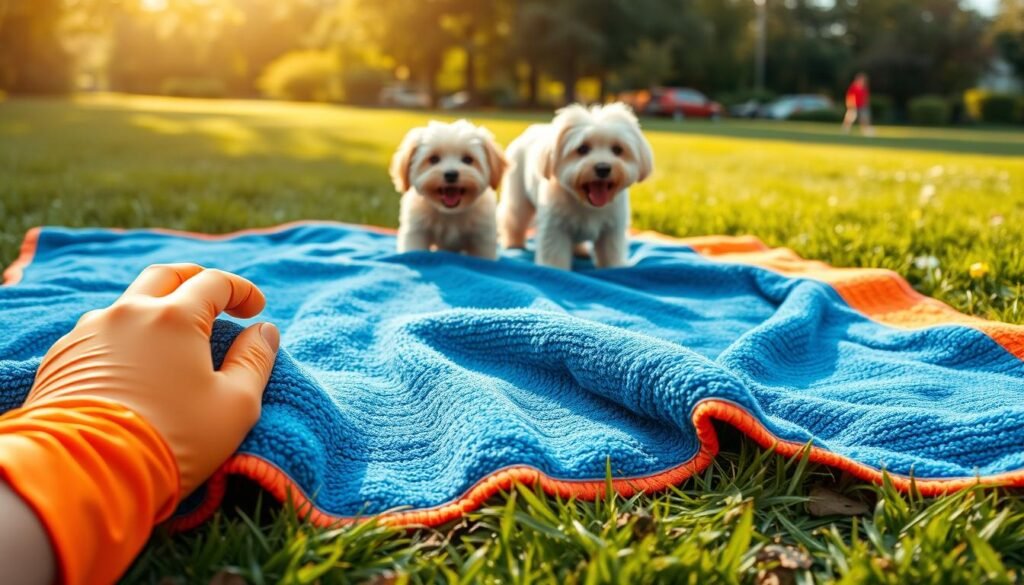
Chenille Pet Towel With Hand Pockets
A Chenille Pet Towel with Hand Pockets lets me clean my dog’s paws and legs easily. I can press and wipe without rubbing too hard.
The soft loops catch dirt around paw pads. My hands stay dry, which is great for the entryway or car.
The Original Dirty Dog Shammy is a good example. Its design makes it easy to clean legs and trap mud.
A dog drying shammy towel is handy but has its limits. I use it for quick cleanups, not for soaking a long-haired dog.
Standard Microfiber Towel Design
A big microfiber towel is better for drying after baths or swimming. It gives me room to dry my dog’s body in sections.
I wrap my dog for warmth and then dry from back to front. If it gets wet, I can wring it out and keep drying.
Large towels work well for big dogs like Labradors or German Shepherds. For dogs over 60 pounds, look for a towel around 30 by 50 inches.
Elastic straps keep a wrap in place. Bathrobe-style designs let my hands stay free. Reusable straps make it easy to roll and carry.
| Design | How I Use It | Best Cleanup Tasks | Helpful Features |
|---|---|---|---|
| Chenille Pet Towel with Hand Pockets | I slide in my hands and wipe with steady pressure. | Muddy paws, legs, bellies, and quick car cleanup. | Textured chenille loops, hand pockets, and closure straps. |
| Standard microfiber wrap towel | I drape it over my dog and press the coat in sections. | Baths, swimming, grooming days, and full-body drying. | Large coverage, wringable fabric, elastic straps, and robe-style options. |
| dog drying shammy towel | I keep it close for fast, targeted wiping. | Rainy walks, paw pads, and light surface moisture. | Compact size, easy storage, and controlled handling. |
Best Towel for Long-Haired vs. Short-Haired Dogs
I pick a towel based on a dog’s fur, not just its size. The right towel depends on how much water the fur holds and how often it needs to dry fast.
Long-Haired, Double-Coated, and Thick-Coated Dogs
For dogs with long fur and thick undercoats, I choose a large, dense microfiber towel. This type of towel has enough pile and area to pull moisture from deep layers.
I dry one area at a time with a gentle press-and-lift motion. Avoiding rough rubbing helps prevent tangles, skin irritation, and matting. For example, a Pomeranian might need a bigger towel due to its thick coat.
If the undercoat is still damp, I use a dog-safe dryer on low heat. This keeps the air moving and avoids overheating for a more comfortable dry.
| Dog and Coat Type | Helpful Towel Size | Drying Approach |
|---|---|---|
| Small, short-coated dog | 16 by 24 inches | Light presses for baths, paws, and wet spots |
| Medium-coated dog | About 20 by 30 inches | Work from the back toward the legs and belly |
| Large or thick-coated dog | About 30 by 50 inches | Dry in sections and check the undercoat |
| Long-coated dog of any size | Extra-large towel dimensions | Use more coverage to handle coat volume |
Short-Haired Dogs and Small Breeds
Lightweight quick dry pet towels are great for short-haired dogs and small breeds. They are easy to fold, pack, and use for quick cleanups.
A chenille towel is soft for a quick wipe-down or paw cleaning. For these dogs, the best towel is one that’s easy to use and dries fast.
I choose based on body size and coat density. Quick dry towels are good for sleek coats, while thick-coated dogs need broader, more absorbent towels.
Best Pet Drying Towel Material for Every Grooming Routine
I pick the best pet drying towel based on where my dog got wet and how wet it is. A single towel can do the job, but the right one makes it easier and faster.
| Grooming Routine | My Towel Choice | Why It Helps |
|---|---|---|
| After a full bath | Large, dense microfiber towel | I can wrap the body, chest, belly, and legs to pull out more water before air-drying. |
| After a rainy walk | Chenille towel with hand pockets | I can grip paws and lower legs with control, then lift away mud before it reaches my floors. |
| After swimming or beach trips | Bath-size microfiber towel | It handles a soaked coat, rinses easily, and can go into the washing machine after use. |
| For nervous dogs | Soft chenille towel | I use a gentle press-and-lift motion instead of brisk rubbing around tender skin. |
After a bath, I grab microfiber first. For drying a full body, microfiber is best because it pulls moisture from deep coats. A thin travel towel is great for quick use, but a big bath towel is better for thick, wet coats.
I have chenille towels by the door for wet paws and muddy legs. They’re soft and gentle, perfect for puppies and anxious dogs. They help me catch drips without making a mess.
In a house with many dogs, I use different colored quick dry towels. They come in various sizes for different coat types. This way, I always have a clean towel ready while another is being washed or dried.
Bathrobe-style towels are handy for drying hands-free after a bath. They’re good for when my dog settles down, but they can be pricey. They don’t clean paws as well as a pocket-style chenille towel.
Comfort and Coat Safety During Dog Drying
When drying my dog, comfort is as important as speed. I look for a soft fabric in my dog grooming towel comparison. It should lift water gently without hurting fur or skin.
How I Would Towel-Dry Without Irritating Skin
I start drying my dog right after a bath, walk, or swim. Drying early helps remove water before it settles deep in the coat or undercoat.
First, I let my dog shake off loose water. Then, I lay the towel over the back and press it gently. I lift it across the sides, then the chest, belly, armpits, legs, paw pads, and spaces between the toes.
- I press and blot instead of scrubbing.
- I use extra care around skin folds and long fur.
- I pause if my dog seems tense or uncomfortable.
I avoid harsh back-and-forth rubbing. It can irritate skin, pull long hair, and disturb the coat. It may also make a nervous dog resist drying next time.
A microfiber dog drying towel soaks up water with low friction and little lint. A chenille towel for dogs is also gentle, especially for paws or muddy legs. Both are kinder to the coat than coarse household terry cloth.
Why Thorough Drying Matters
Moisture left in the coat can lead to a wet-dog odor and make my dog feel cold or itchy. I pay close attention to thick undercoats, deep skin folds, and the fur behind the legs, where dampness can linger.
Trapped moisture against the skin can create conditions linked with bacterial or yeast growth. It may also add to irritation or hot spots. I would contact my veterinarian for ongoing odor, redness, itching, or other skin concerns.
Drying also helps protect my home and car. When I dry paws before my dog comes inside, I can reduce slick spots on smooth floors, water on furniture, and mud in the car after outdoor trips.
Durability and Washability Compared
Dense microfiber towels are made for washing over and over again. They can last a long time with proper care. Some dog towels can go through more than 500 washes, while regular towels might only make it to 200 to 300.
Things like how thick the towel is, the stitching, and how often it’s used can change how long it lasts. Chenille towels are also durable but need to be handled carefully. Their loops can catch on things, get pulled in the wash, or lose their shape over time.
I wash my pet towels in cold or warm water with a mild detergent. Using too much soap can make them less absorbent. I avoid fabric softener because it can make the towels less effective at drying.
When I can, I air dry my towels. If the label says it’s okay to use a dryer, I use low heat. This helps keep the fibers in good shape. I also make sure to store each towel dry to prevent bad smells.
Quick-drying towels are great for busy homes. I keep clean towels in easy spots like by the door, in the car, and with grooming supplies. This way, I always have one ready after a walk, bath, or when we get back from being outside.
Winner: Chenille or Microfiber?
When choosing between chenille and microfiber pet towels, each has its own strengths. The right choice depends on the situation. Do you need to dry a wet coat or just clean a few muddy spots?
My Verdict for Fastest Full-Body Drying
For quick drying, a large, dense microfiber pet bath towel is best. It’s great after baths, swims, rainy walks, and play in wet weather.
Microfiber’s fine fibers pick up water fast. Its large size covers more of the coat at once. It’s perfect for big dogs and those with long, thick coats.
My Verdict for Paws, Mud, and Easy Handling
For muddy paws, lower legs, bellies, and quick cleanups, a chenille pet towel with hand pockets is ideal. Its textured pile catches dirt and moisture well. The pockets make it easy to hold onto small areas.
Chenille is not less effective; it excels in specific tasks. It’s better for sensitive dogs or quick cleanups after a walk.
The Best Two-Towel Setup
I recommend using one large microfiber towel for full-body drying and a chenille towel with hand pockets for paws and mud. This combo is perfect for homes with multiple dogs and busy schedules.
This setup saves time too. You won’t need to soak a whole towel just to clean four dirty paws.
How to Choose Quick Dry Pet Towels Before You Buy
I check a towel’s size against my dog’s body length, chest width, and coat volume before buying. Breed weight can be misleading. A small dog with long hair might need more towel than a larger dog with a smooth coat.
For quick dry pet towels, I look for dense fibers, reinforced edges, and a machine-washable build. I also check the stated dimensions. A towel should wrap around the body or give me enough surface to dry one area at a time.
Higher-GSM microfiber is often the best material for dog towels when my dog sheds heavily or has a long, double coat. It’s also great after wet hikes, beach days, and rainy walks. Strong microfiber pet towel absorbency matters most when water reaches the undercoat.
I choose hand pockets, mitts, straps, or shammy styles when I need a firm grip. These designs make it easier for me to clean muddy paws, legs, and the belly without chasing a loose towel.
For travel, I want quick dry pet towels that fit in my car or day pack. Very compact options are handy, but they may hold less water from thick fur. I keep two towels in rotation, so one can air-dry while the other is ready.
In a multi-dog home, I use color-coded towels or several sizes. Before buying, I read the care label and compare real measurements. Broad claims alone do not explain microfiber pet towel absorbency or long-term wear.
| What I Check | Why It Matters | Best Fit |
|---|---|---|
| Body length and chest width | Helps me choose enough coverage | Dogs with deep chests or long coats |
| Dense, higher-GSM microfiber | Holds more water during full-body drying | Heavy shedders and double-coated dogs |
| Hand pockets or mitt design | Improves grip for targeted cleaning | Muddy paws and small body areas |
| Lightweight, packable fabric | Stores easily in a car or travel bag | Outdoor trips and rainy walks |
| Reinforced edges and care label | Supports repeat washing and easier upkeep | Frequent grooming routines |
Conclusion
When it comes to drying my dog, I choose microfiber towels. They dry my dog’s body fast after a bath or swim. This makes drying time quicker and more effective.
For cleaning paws and legs, I prefer chenille towels. It’s all about the towel’s quality, not just its name. Chenille towels might use microfiber, but their density and size are key.
Drying my dog quickly keeps them comfortable and odor-free. This is especially true for wet-dog smell and muddy floors. The right towel choice depends on the mess.
To keep my home tidy, I use a big microfiber towel for baths and a chenille towel for quick clean-ups. This combo makes pet care easier and less messy.
FAQ
Is chenille or microfiber better for drying a dog after a bath?
A large, dense microfiber towel is best for drying a dog’s full body. Its fine fibers pull in water well. Its size lets me dry the dog’s back, chest, belly, legs, and undercoat quickly.
Can a pet towel be both chenille and microfiber?
Yes. Microfiber is the material, often polyester blended with polyamide or nylon. Chenille is the soft, looped surface. So, many chenille pet towels are made from microfiber yarns.
Which towel is best for muddy paws and rainy walks?
For muddy paws and rainy walks, a chenille towel with hand pockets is best. The textured loops help me grip and control around toes and small muddy areas.
Does microfiber pet towel absorbency beat cotton towels?
Dense microfiber absorbs water faster than cotton towels. Specialized microfiber dog towels can hold five to eight times their weight in water. Cotton towels hold about two to three times their weight. The actual absorbency depends on GSM, towel size, and fabric quality.
What is the best material for dog towels with thick or double coats?
For dogs with thick coats, dense, high-GSM microfiber is best. A large microfiber pet bath towel allows me to press into the coat and lift water out gently.
Are chenille towels good for sensitive dogs?
Yes. Chenille towels are soft and gentle for sensitive dogs. I use a slow press-and-lift motion to dry them comfortably.
Should I choose a pet bath towel: chenille or microfiber?
I choose based on the task. For a soaked dog, I use a large microfiber towel. For quick cleanup, a chenille shammy or hand-pocket towel is better.
What size dog towel should I buy?
I match the towel to my dog’s body size and coat volume. Small dogs need a 16-by-24-inch towel. Medium dogs need about 20 by 30 inches. Large dogs need a 30 by 50-inch towel.
How do I dry my dog without causing tangles or skin irritation?
I let my dog shake first, then place the towel over the back. I press gently through the coat. I work from the sides to the chest, belly, legs, and undercoat. Avoid vigorous rubbing to prevent tangles and skin irritation.
How quickly do quick dry pet towels air-dry?
Quality microfiber towels air-dry in one to two hours under good conditions. Drying time depends on thickness, humidity, airflow, and water absorption.
Can I put microfiber and chenille dog towels in the washing machine?
I wash both types in cold or warm water with mild detergent. Avoid fabric softener to keep microfiber absorbent. Air-dry when possible, or use low heat if allowed.
Why do dog towels need to be dried completely before storage?
Storing towels dry prevents musty odors. It keeps them ready for the next use. Dry towels also make rotation easier in active homes.
Is a compact chenille shammy enough for a wet, long-haired dog?
Usually, no. A chenille shammy is great for paws and mud. But it’s not enough for a soaked, long-haired dog. I have a full-body microfiber towel for that.
What is the best two-towel setup for dog grooming?
I recommend a large microfiber towel for full-body drying and a chenille hand-pocket towel for quick cleanup. This setup helps me handle wet coats and muddy paws.
Why is thorough drying important after a bath or swim?
Thorough drying reduces wet-dog odor and discomfort. It also prevents muddy tracks and damp furniture. Pay extra attention to thick undercoats and skin folds. For ongoing issues, contact a vet.