Have you ever seen your bird destroy a $20 toy in minutes? Then, they spend hours playing with a simple cardboard box?
I went through this with my birds. I spent a lot on fancy toys, but they ignored them. Instead, they loved shredding paper towel rolls and digging through crumpled paper.
This made me realize something key. The best fun doesn’t always come from stores. Simple things from home often give our birds the mental challenge they need.
In this guide, I share 15 creative, affordable ideas I’ve tried myself. These homemade bird toys include foraging, shredding, puzzles, and more. You’ll learn about safe materials, how to switch toys, and safety tips from my experience.
Let me show you how to keep your birds happy, healthy, and entertained without spending a lot.
Key Takeaways
- Household items often provide better stimulation than expensive commercial toys
- Rotating homemade creations prevents boredom and maintains interest
- Safe materials and proper construction are essential for avian wellness
- Different categories address specific behavioral needs like foraging and shredding
- Budget-friendly options save money while promoting mental and physical health
- Personal testing ensures these ideas work for real birds in real homes
Why Your Feathered Friend Needs Enrichment Toys
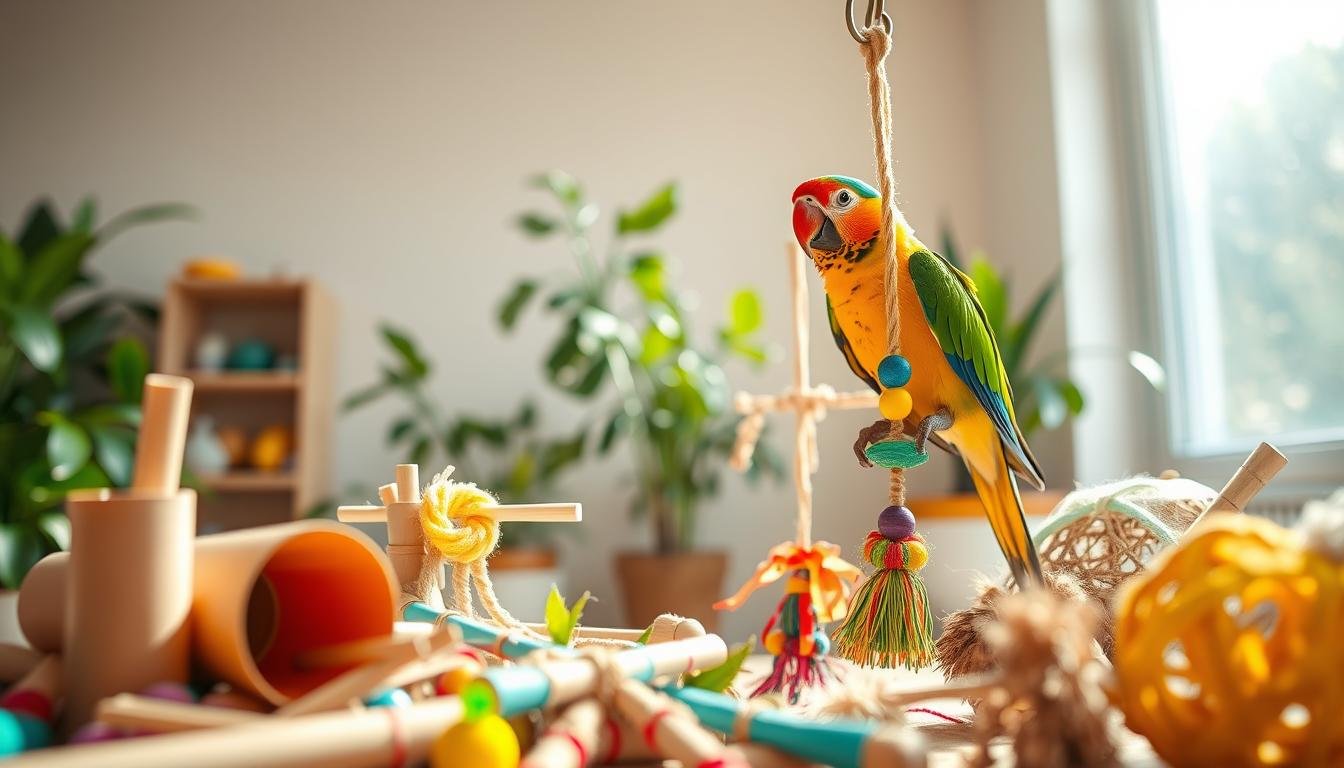
Enrichment toys are more than just decorations for your bird’s cage. They are vital for your bird’s health. My cockatiel became depressed and repetitive when I didn’t provide enough enrichment. But, introducing regular activities changed his mood and energy.
Your bird’s brain is complex and needs constant activity. Without it, even a loving home can feel like a prison.
The Mental Health Connection
In the wild, birds spend 80% of their time foraging and solving problems. When we bring them home, they miss these challenges. This can lead to serious mental health issues.
Birds can develop bad behaviors like feather plucking and screaming if they’re not stimulated. My African Grey, Luna, started plucking her feathers because she was bored. The vet said it was boredom, not a medical issue.
When I started giving Luna enrichment activities, she changed fast. In just three weeks, her plucking decreased, and she started chirping happily again.
Enrichment helps your bird’s mental health in many ways:
- Prevents bad behaviors like pacing and screaming
- Reduces anxiety and stress by giving them healthy outlets
- Combats depression and lethargy with fun challenges
- Decreases destructive behaviors by giving them something to do
- Improves cognitive function and keeps their minds sharp
The link between mental stimulation and health is strong. Birds are very smart, with some solving problems like young children.
Physical Benefits Beyond Entertainment
Enrichment toys also have physical benefits. My birds stay fit and coordinated with different activities. They climb, hang, and grip, keeping their muscles strong.
These toys help birds move naturally. Climbing and hanging keep their legs and feet strong. My budgies got stronger legs and feet from climbing toys.
Beak health is also important. Birds need to chew to keep their beaks in shape. Without this, their beaks can grow too long, needing vet care.
Here are the physical benefits I’ve seen:
| Physical Benefit | How Enrichment Helps | Observable Results |
|---|---|---|
| Muscle Development | Climbing, hanging, and manipulating toys engage wing, leg, and foot muscles | Improved grip strength, better flight control, enhanced agility |
| Beak Maintenance | Shredding and chewing activities naturally file down the beak | Proper beak length, reduced vet visits, healthier eating habits |
| Weight Management | Foraging toys increase physical activity and slow down eating | Healthy body weight, reduced obesity-related health issues |
| Coordination Skills | Puzzle toys and balance challenges improve motor skills | Better spatial awareness, fewer accidents, confident movement |
Preventing obesity is another big benefit. My conure used to eat fast and then sit idle. But with foraging toys, he stayed active and lost weight.
Foraging is key. In nature, birds work for their food, getting both mental and physical exercise. Foraging toys make mealtime fun and active.
Physical enrichment also boosts foot health and dexterity. Birds that play with different toys and textures have better foot coordination. This makes perching and food handling easier.
After years of watching my birds, I know enrichment toys are essential. They meet both mental and physical needs that cages can’t. The effort pays off with healthier, happier birds.
Safe Materials for DIY Bird Enrichment Toys
I learned a hard lesson about bird toy safety. My parrot was playing with a toy that had small pieces of colored wood chipping off. I rushed to the vet and found out the paint had zinc, which is toxic to birds. This moment made me very careful about choosing safe bird toy materials.
After that, I started researching every material before using it in my bird’s cage. Many household items can be great, safe toys if you know what to look for.
Over the years, I’ve found reliable materials for my DIY bird toys. These items have never harmed my feathered friends.
- Untreated wood: Pine, balsa, and other softwoods are perfect. I make sure they’re not stained or varnished.
- Natural fibers: Cotton rope and sisal rope are great textures without chemicals.
- Paper products: Paper bags, coffee filters, cupcake liners, and phone book pages are favorites for shredding.
- Plain cardboard: Shipping boxes and paper towel tubes offer endless possibilities for foraging toys.
- Vegetable-tanned leather: This material is safe for birds to chew, unlike chemically-treated leather.
- Stainless steel hardware: I use stainless steel chains, quick links, and wire for connecting toy parts.
- Natural wood beads: Unfinished, unpainted wooden beads add fun textures to toys.
- Popsicle sticks: After washing them thoroughly to remove any residue, these make great building blocks.
- Wine corks: Natural cork is fantastic for chewing and climbing elements.
- Wooden clothespins: The simple, bird-safe kind without metal springs work wonderfully.
These materials are the base of almost every toy I make. They’re cheap, easy to find, and most importantly, safe for my birds.
Remember, what you put in your bird’s cage can affect their health and life span. If you’re unsure, it’s best to leave it out.
What I Always Avoid
Knowing which materials to avoid is just as important as knowing what’s safe. Some common items might seem harmless but can be dangerous or even deadly to birds.
- Treated or painted wood: Stains, paints, and preservatives often contain toxic chemicals that birds can ingest.
- Toxic metals: Zinc, lead, and brass can cause heavy metal poisoning. I stick to stainless steel only.
- Brittle plastics: These can splinter into sharp pieces that may injure your bird’s mouth or digestive system.
- Synthetic ropes: Nylon and other synthetic fibers can cause crop impaction if swallowed.
- Small detachable parts: Anything tiny enough to swallow poses a serious choking hazard.
- Strong adhesives: Super glue, epoxy, and similar products release toxic fumes and can trap feathers or skin.
- Chemically-treated items: Avoid anything with fragrances, dyes, or chemical coatings.
I once used a cute ribbon on a toy, not realizing it had been treated with fabric softener. My bird showed immediate disinterest, and I’m grateful she knew better than to chew it.
The key to selecting safe bird toy materials is staying informed and being cautious. If you’re unsure about a material, research it first or skip it. Your bird’s health is worth the extra effort to ensure every toy component is completely safe.
Foraging and Food-Based Toys for Natural Instincts
Birds have a strong instinct to hunt and forage for food. In the wild, they spend 60-80% of their day doing this. This natural behavior doesn’t stop when they come home.
Bird foraging toys help keep your bird’s mind sharp. Watching my birds solve food puzzles is thrilling. They go from waiting to actively solving problems.
These DIY toys tap into your bird’s instincts, bringing joy and purpose. Here are three easy foraging toys you can make with household items.
1. Paper Cup Foraging Tower
This stacking challenge is a daily favorite. I use paper cups of different sizes to create a tower. My birds love to knock it down.
Here’s how I make it:
- Gather 3-5 paper cups in different sizes
- Place small treats like millet seeds or dried fruit pieces in each cup
- Stack the cups inside one another, largest to smallest
- Attach the tower to cage bars with bird-safe wire or vegetable-tanned leather strips
The key is matching the difficulty to your bird’s size and experience level. Smaller birds like budgies need lightweight cups. Larger parrots need sturdier cups.
My African Grey solved the first tower in three minutes. Now, I add crumpled paper for more challenge. Watching her solve it is always exciting.
2. Muffin Tin Treasure Hunt
This toy is a hit with my birds. I turn a 12-cup muffin tin into a food puzzle. It keeps them busy for hours.
Here’s how I set it up:
- Place different treats in random muffin cups (not all of them)
- Cover each cup with varied materials: crumpled paper, clean leaves, small cardboard pieces, or even other safe toys
- Set the tin on a flat surface where your bird can access it safely
- Watch the magic unfold as they investigate each covered cup
I change the difficulty based on my birds’ mood and skill. Sometimes I use tissue paper, other times cardboard.
The variety keeps the foraging experience fresh and engaging. My cockatiel loves finding pine nuts under dried corn husks. She spends twenty minutes checking every cup.
3. Cardboard Tube Treat Dispenser
This simple toy shows that bird foraging toys don’t have to be complicated. I save toilet paper and paper towel tubes for this.
It’s easy to make:
- Take a clean cardboard tube (toilet paper or paper towel)
- Add your bird’s favorite treats inside
- Fold both ends closed, creating sealed compartments
- Hang it horizontally in the cage or place it in a foraging area
You can make it easier or harder by how tightly you fold the ends. Loose folds are great for beginners. Tight creases are for the more experienced.
I sometimes cut small holes in the tube sides before filling it. This lets my birds smell the treats and increases their motivation. The rustling sound of treats inside grabs their attention.
For multi-bird households, I make several tubes at once. This prevents competition and gives each bird their own foraging opportunity. My budgies like shorter tubes, while my larger birds prefer longer ones.
These three foraging toys have made feeding time more exciting. The best part? You probably have all the materials in your recycling bin.
Shredding and Destructive Play Toys
My walls show the damage from when I didn’t give my birds enough shredding toys. They made their own fun with my wallpaper. This taught me that destructive play isn’t optional for birds; it’s essential. Shredding keeps their beaks healthy and satisfies their instincts, keeping them mentally and emotionally balanced.
Without the right toys, birds might target other things. I learned this the hard way! Now, I always have a variety of shredding toys ready. The change in my birds’ behavior is amazing.
Coffee Filter Shredding Bouquet
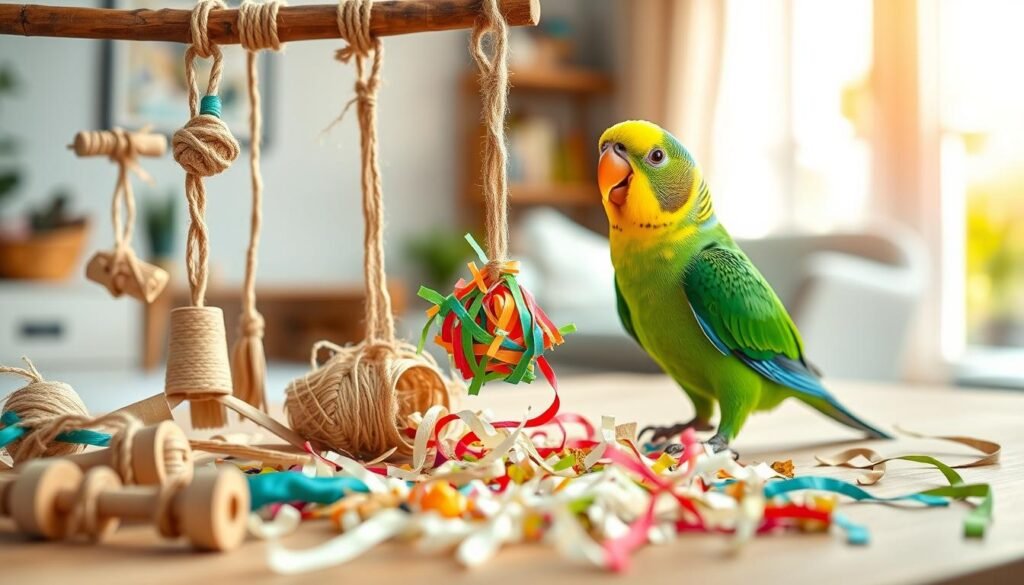
This toy is easy to make and keeps birds entertained for hours. I create a flower-like arrangement with white coffee filters. Birds love tearing it apart.
Materials needed:
- 8-10 white coffee filters (unbleached preferred)
- Bird-safe cotton string or natural sisal rope
- Wooden clothespin (unpainted)
- Stainless steel wire or zip ties for hanging
Assembly steps:
- Stack the coffee filters together, slightly offset for a fuller appearance
- Gather them at the center and secure with the clothespin
- Fluff out the filters to create a bouquet shape
- Attach hanging wire through the clothespin spring
- Hang at beak level inside the cage
Watching my birds shred these soft materials is satisfying. The filters are safe for their beaks but fun to tear. I usually make three or four at once because they disappear fast!
Phone Book Flip Toy
Old phone books are great for making bird toys. The thin pages and safe ink make them perfect for shredding, ideal for diy parakeet toys because smaller birds love them.
What you’ll need:
- Phone book section (5-10 pages)
- Hole punch
- Stainless steel book ring or bird-safe carabiner
- Optional: colorful paper cupcake liners between pages
How to make it:
- Tear or cut a small section from the phone book
- Punch a hole in the corner of all pages together
- Thread the book ring through the holes
- Add cupcake liners between pages for color variation
- Attach to cage bars where birds can flip through pages
My parakeets spend a lot of time flipping pages and tearing strips. This toy is great for diy parakeet toys because the pages are easy for small beaks to handle. I update the book ring with new pages every week to keep it interesting.
Cupcake Liner Garland
This colorful garland looks great in the cage and offers shredding fun. I string together paper cupcake liners to make a festive garland that my birds love to destroy.
Supplies required:
- 12-15 paper cupcake liners (unbleached, no metallic coating)
- Natural hemp rope or cotton string
- Blunt needle for threading
- Wooden beads (optional, for spacing)
Construction process:
- Thread your needle with approximately 18 inches of rope
- Push the needle through the center of each cupcake liner
- Add a wooden bead between every 2-3 liners for spacing
- Tie secure knots at both ends
- Hang horizontally across the cage
The garland’s colors make it appealing for both birds and owners. Yes, these toys make a mess. But the mess means the toys are working. A happy bird surrounded by shredded paper is a bird engaging in healthy behavior.
Watching my birds enjoy these toys is worth the cleanup. The mess is a sign that the toys are doing their job. It’s a small price to pay for seeing my birds happy and healthy.
Puzzle and Problem-Solving Toys
My parrot spends hours figuring out puzzles. She tilts her head and squints her eyes. It’s amazing to see her solve them. Birds are smart, and puzzles keep their minds sharp.
These toys challenge your bird’s natural problem-solving skills. They learn to solve problems and get rewards. Birds who solve puzzles are more confident and curious.
7. Wooden Clothespin Challenge
This toy is a hit in my aviary. It’s easy to make and fun for birds. Attach unfinished wooden clothespins to cage bars or perches.
Hide treats in the clothespin’s spring. Start with an easy clip for beginners. As they get better, make it harder.
Here’s how to make it harder:
- Beginner level: Clothespin loosely attached at eye level with visible treat
- Intermediate level: Firmly clipped pins at various heights requiring climbing
- Advanced level: Multiple clothespins creating a sequence puzzle where one must be removed before accessing others
African Greys and Amazon parrots love this challenge. Smaller birds might need smaller clothespins.
8. Bottle Cap Lid Stacker
This toy is a hit with my conure. It’s easy to make and costs nothing. Drill holes in plastic bottle caps or metal lids.
Attach them to a bolt or skewer in your bird’s cage. They can remove and restack the caps. This teaches them about cause-and-effect.
It also improves their fine motor skills. I use colored caps to make it more interesting. Some birds sort them by color.
Make sure the bolt is secure and the top is capped. Check the caps for sharp edges.
9. Popsicle Stick Puzzle Box
This is my most ambitious project. It’s a small box made from popsicle sticks. Design a sliding door or hinged lid for treats.
First, build the basic box frame:
- Glue popsicle sticks side-by-side to form the bottom (4×4 sticks works well)
- Build up the four walls by layering sticks log-cabin style
- Leave one wall shorter to create an opening for the door
- Create a sliding panel that fits in grooves on the sides
- Drill small holes for attaching to cage or adding handle elements
Start with an easy door for beginners. Use wooden beads as handles. For advanced versions, add more compartments or locks.
Watching my birds work on puzzles is fascinating. They concentrate hard and celebrate when they succeed. Different birds solve puzzles in their own way.
My African Grey is methodical, while my cockatoo is more forceful. Knowing how your bird solves puzzles helps you create the right toys.
Here’s a quick guide for matching puzzles to bird types:
| Bird Species | Best Puzzle Type | Difficulty Preference | Engagement Duration |
|---|---|---|---|
| African Grey | Multi-step sequences | Advanced challenges | 30-60 minutes |
| Cockatiel | Simple removal puzzles | Beginner to intermediate | 10-20 minutes |
| Amazon Parrot | Stacking and sorting | Intermediate to advanced | 20-45 minutes |
| Conure | Interactive mechanisms | Intermediate level | 15-30 minutes |
Preventing frustration is key with puzzle toys. If your bird looks stressed, it’s too hard. Show them how to solve it once or twice, then let them figure it out.
Look for signs of engagement like focused eyes and gentle beak movements. If your bird seems stressed or ignores the toy, it’s too hard.
Creating bird puzzle toys homemade lets you tailor them to your bird’s skill level. Start simple and add complexity as they get better. These toys are as important as physical exercise for their well-being.
Physical Activity and Exercise Toys
Birds are meant to move, not sit all day. In the wild, they climb, swing, and explore. Without exercise, they can get fat, weak, and act out.
These projects help your bird stay active. I’ve seen a big change in my birds’ energy and happiness with these toys. They’re easy to make and really work.
10. Toilet Paper Roll Ladder
This toy is a big hit with my cockatiels. I make it by linking toilet paper tubes on a rope or wire. It’s a ladder for climbing and something to chew on.
To make it, I thread the rope through the tubes and tie knots. For cockatiels, I space the rungs 2-3 inches apart. Bigger birds need 4-5 inches, and smaller ones 1-2 inches.
I hang it in their cage, and they love climbing. It’s made of durable materials, so it lasts 1-2 weeks before they chew it up.
The best bird toys are the ones that combine multiple forms of enrichment simultaneously, engaging both body and mind.
11. Paper Chain Swing
This toy is great for balance and coordination. I make a swing from paper chains that birds can play on. It’s fun and good exercise for their core.
I avoid using tape or staples. Instead, I use flour paste to hold the chains together. I make chains 8-12 loops long.
I attach a perch to the bottom and hang it. They love swinging and playing with it. It’s even better when they can watch outside.
The chains don’t last long, but that’s okay. The destructibility is a feature, not a bug. They’re easy to make, so I replace them often.
12. Wine Cork Climbing Wall
This project makes a climbing wall from natural wine corks. It’s fun for birds to climb and chew on. I string the corks up using wire or leather cord.
I drill holes in the corks and string them up. I make 3-4 strands and attach them to a branch. It’s a fun challenge for them to climb.
This toy works different muscles than regular perches. It’s good for their feet and encourages stretching. It’s also very durable, lasting 2-3 weeks.
These toys have made my birds much more active. I switch them out weekly to keep things interesting. Both physical and mental exercise are key to a happy bird.
Sensory and Exploratory Toys
Have you ever seen your bird tilt their head at a new sound? Or spend minutes looking at a shiny object? Birds see the world through a mix of senses. Toys that use many senses are very exciting for them.
These toys make birds hear, touch, and see things at the same time. They help birds act naturally and feel happy. My birds love these toys more than expensive ones because they feel like nature.
13. Jingle Bell Sound Toy
This toy lets your bird make noise and play with objects. I use bird-safe jingle bells and leather or rope to make a fun toy. The bells should be stainless steel and not have any harmful coatings.
One of my cockatiels loves his jingle bell toy. He throws the bells and makes a lot of noise. This is similar to what The Parrot Lady said about her parrot Brody.
To make this toy, you need:
- 3-5 stainless steel jingle bells in different sizes
- Vegetable-tanned leather strips or natural sisal rope
- Stainless steel quick links or pear links for attaching
- Optional: wooden beads between bells for more fun
Put the bells on your chosen material, leaving about two inches between each one. Tie knots to keep the bells apart. Then, attach the toy to your bird’s cage.
Be warned: your bird might wake you up early with this toy! But seeing them happy makes the noise worth it. They can play with their bell toys for up to thirty minutes.
14. Fabric Scrap Preening Station
This toy lets your bird groom and nest using different textures. I use untreated natural fabric like cotton or fleece. It’s like a toy and a blanket for them.
My smaller birds love this toy. They spend hours playing with it. It’s like a comfort blanket for them.
You’ll need:
- Organic cotton fabric or fleece scraps (avoid synthetic materials)
- Scissors to cut 1-inch wide by 6-8 inch long strips
- Natural jute twine or sisal rope as a base
- Stainless steel attachment hardware
Cut your fabric into strips and tie them to a rope. Use different fabrics for more fun. Tie both ends to your cage bars.
Change the fabric often, if it gets dirty or your bird shreds it. Fresh fabric keeps the toy interesting and clean. Some birds will destroy these toys quickly, while others will play with them for weeks.
15. Mirror and Bead Discovery Toy
This toy is fun for your bird to look at and touch. I attach a bird-safe acrylic mirror to a chain of wooden beads. It’s like a light show for them.
My budgies love this toy. They chat with their reflection and play with the beads. The colorful beads add to the fun.
You’ll need these materials:
- One small acrylic mirror designed for bird cages (avoid glass)
- 10-15 large wooden beads in assorted colors (ensure they’re untreated)
- Stainless steel chain or heavy-duty natural rope
- Quick links for secure attachment
String the beads onto your chain or rope, with the mirror in the middle. Make sure it’s all secure so the beads don’t fall off. Hang it at your bird’s chest level.
Be careful with mirrors. Some birds might get too attached to their reflection. Watch your bird’s behavior. If they seem upset without the mirror, remove it and use just the beads.
These toys are great because they use different senses. They keep your bird busy and happy. Plus, they’re very affordable to make, costing less than a dollar but providing lots of fun.
Tips for Rotating Your DIY Bird Enrichment Toys
Watching my parakeet ignore a favorite toy was a big lesson. I had made many homemade bird toys and put them all in his cage at once. Soon, he got bored with everything.
Then, I learned about toy rotation. It keeps your bird’s environment fresh and exciting by not overwhelming them with choices.
Removing a toy for a while makes it seem new again. Birds remember well, but a break from a toy makes it exciting when it comes back.
I keep only 3-4 toys available at any given time. This prevents clutter and lets each toy get attention.
I organize my toys into five categories: foraging, shredding, puzzle, physical activity, and sensory exploration.
Each week, I make sure there’s at least one toy from different categories in the cage. This week, it might be a paper cup foraging tower, a coffee filter bouquet, and a toilet paper roll ladder.
I store the rest in labeled containers in my closet. A simple shoebox system keeps everything organized and clean.
Here’s how I track my rotation:
- Keep a basic notebook or phone note with rotation dates
- Write down which toys were in the cage each week
- Note any favorites or ignored items
- Track when toys need cleaning or repairs
- Observe seasonal preferences (my birds love shredding more in spring)
In winter, my cockatiel likes puzzle toys because he’s less active. In summer, he prefers climbing toys.
Seasonal patterns help me plan rotations that match his natural rhythms. Your bird may have different preferences, so watch their behavior.
Signs It’s Time to Swap Toys
Your bird will tell you when they’re ready for something new. Look for these signs that it’s time to rotate:
- Ignoring previously loved toys – If your bird used to love that cardboard tube treat dispenser but hasn’t touched it in days, swap it out
- Decreased interaction time – Notice how long your bird engages with toys compared to last week
- Listless behavior – A bored bird often sits quietly without much activity or vocalization
- Immediate interest after rotation – When you reintroduce a stored toy and your bird rushes over, you’ve timed it perfectly
- Destructive behavior elsewhere – Chewing cage bars or perches often means enrichment toys aren’t meeting their needs
I rotate toys weekly, but some stay longer if my birds are playing with them. There’s no rigid schedule—observation is key.
The “out of sight, out of mind” principle works well with birds. A toy stored for two weeks becomes exciting again when it reappears.
Here’s my practical storage and rotation guide:
| Rotation Frequency | Toy Type | Storage Tip |
|---|---|---|
| Weekly | Foraging and puzzle toys | Clean before storing in airtight containers |
| Bi-weekly | Shredding toys | Replace destroyed items, keep fresh materials ready |
| Monthly | Physical activity toys | Inspect for wear, tighten connections |
| As needed | Comfort items | Keep one familiar favorite always available |
I always keep one familiar comfort toy in the cage during rotations. This provides stability while introducing novelty.
Balance is everything. Your bird needs the security of something familiar alongside the excitement of something new.
Remember, rotation doesn’t mean you need dozens of homemade bird toys. Six to eight quality toys rotated strategically will keep your feathered friend engaged for months.
Safety Considerations When Making Bird Toys
Keeping my birds safe is a big job, and it doesn’t stop when I finish making a toy. Choosing safe bird toy materials is key, but I also watch the toys every day. Even the best-made toys can turn bad over time.
My birds love to play and can destroy toys quickly. So, I always have to watch them closely to keep them safe.
Daily Safety Checks I Never Skip
Every morning, I check each toy in my birds’ cages. It’s like a routine, as important as filling their water bowls. I feel every surface for sharp edges or rough spots that could hurt their beaks or tongues.
I look at several important things. First, I check ropes and fabrics for fraying or loose threads. Even safe materials can be dangerous if they fray and wrap around tiny toes or necks.
Then, I check all hardware. Chains, clips, and fasteners can loosen, trapping beaks or feet. I make sure everything is tight.
Wooden parts get extra attention. I search for splinters or cracks that could be sharp. My birds love chewing wood, so it can get rough fast.
Small parts are also a big worry. I make sure beads, bells, and other small items are securely attached. If they’re not, they could be a choking hazard.
Different toys need different checks. Foraging toys must be dry and mold-free. Shredding toys should have big enough pieces. Puzzle toys need to work smoothly without pinching.
Red Flags That Mean Immediate Removal
I know when a toy is no longer safe. If I see any warning signs, the toy goes away right away.
Fraying rope or fabric means the toy is no longer safe. I replace it instead of trying to fix it.
Broken or damaged hardware is a big no-no. Cracked chains, bent hooks, or loose connectors can trap beaks or feet. I’m careful with old hardware because metal can break down without showing signs.
Wood that’s cracked, splintered, or sharp gets taken out fast. My birds’ chewing can make wood dangerous. I watch for any changes in texture or surface.
- Toys that have shrunk to swallowable sizes through play and destruction
- Any signs of rust, corrosion, or metal degradation on components
- Strings or threads longer than two inches that pose entanglement risks
- Excessive soiling that cleaning can’t adequately address
- Parts that have become detached or are hanging by weak connections
I follow a simple rule: when in doubt, take it out. It’s better to replace a toy than risk my birds’ health. Their safety is more important than any toy.
Toys can fail even if made from safe bird toy materials. This is because my birds play hard. Even as toys wear out, the materials stay safe.
I always have backup toys ready. When a toy is worn out, I swap it for a new one. This keeps my birds happy and safe.
Staying alert might seem hard, but it becomes easy with practice. The two minutes I spend each morning have saved my birds from danger many times. I’m committed to keeping their world safe.
Remember, bird-safe doesn’t mean they can’t break it. Even the best toys need regular checks. Keeping your birds happy and healthy means creating and maintaining their toys carefully.
Signs Your Bird is Enjoying Their New Toys
Seeing your bird’s eyes light up when they play with a toy you made is special. It’s not just about giving them the toy. It’s about watching them get lost in play. These moments show if your efforts were a hit.
My birds love homemade toys more than store-bought ones. There’s something special about the homemade touch. It might be your scent or the unique textures you use.
Immediate investigation is the first sign I look for. When I introduce a new toy, an interested bird will approach quickly. They’ll study it from different angles. Some birds even talk to the toy, trying to figure it out.
Charlie, my African Grey, shows excitement loudly. He chirps and whistles. My cockatiel, on the other hand, shows her love quietly. She spends hours shredding toys, lost in her own world.
The best toys are the ones your bird returns to again and again, even when other options are available.
Here are the key behavioral signs that tell me a DIY toy is a winner:
- Repeated visits throughout the day, showing voluntary interaction
- Active vocalizations during play
- Excited body language like raised crests or fluffed feathers
- Destructive engagement with shredding toys
- Persistent problem-solving with puzzle toys
- Physical activity like climbing or swinging
- The ultimate compliment—choosing to sleep near or on their favorite toys
I’ve learned to tell between fearful avoidance and disinterest. A scared bird will move away quickly. An uninterested bird will ignore the toy. Neither means you’ve failed.
Not every toy will be a hit with every bird, and that’s completely normal. Sometimes, a simple toy becomes an instant favorite. This unpredictability is part of the fun.
One of my favorite success stories was a paper cup foraging tower. It was a hit with my conure, who loved destroying it. She chattered the whole time.
Pay attention to your bird’s unique play style. Some birds are aggressive, while others are gentle. Knowing their preferences helps you create the perfect toys for them.
Watch for signs of healthy destruction. When my birds shred a toy, it’s a good sign. It means they’re engaged and stimulated.
I also love seeing problem-solving persistence. When a bird keeps trying to solve a puzzle toy, it’s beautiful. They use different approaches, showing cognitive engagement.
The physical activity signs are equally important. Birds who enjoy their toys will exercise on them. This keeps them healthy and prevents boredom.
Perhaps the sweetest sign of approval is when a bird rests near their favorite toy. My budgie sleeps next to her preening station every night. This shows the toy is part of her safe space.
Remember, observing these positive signs takes time. Some birds warm up quickly, while others take longer. The key is patience and continued observation. Your bond with your bird will grow as you learn their unique signals of happiness.
Conclusion
You’re ready to start making diy bird enrichment toys. I’ve given you 15 toy ideas, tips on safe materials, and how to rotate toys. Plus, most of these projects are very affordable.
Begin with just one or two simple toys. Try a foraging toy and a shredding toy. See what your bird likes best, then add more.
Making these toys has brought me closer to my birds. I’ve learned about their likes and dislikes. It’s taught me more than any store-bought toy could.
Every bird is different. What one bird loves, another might not. Enjoy learning what makes your bird happy. Watch their reactions and keep trying new things.
Your bird needs toys that keep their mind sharp. You have the skills and ideas to give them that. Start with paper cups or cardboard tubes. Your bird will love it.
FAQ
How often should I replace homemade bird toys?
I replace my DIY bird toys based on their condition, not a strict timeline. Shredding toys like coffee filter bouquets last a few days. Sturdier items like wine cork climbing walls can last weeks to months.
I check my toys daily for fraying or wear. If I see any damage, I remove them right away. I also rotate toys weekly to keep them interesting.
Are toilet paper and paper towel rolls safe for birds?
Yes, toilet paper and paper towel cardboard tubes are safe for bird toys. The cardboard is safe, and most adhesives are non-toxic. But, I remove glued seams if my birds focus on them.
I avoid tubes with printed designs or strong fragrances. For chewers, I supervise to ensure they’re shredding safely.
Can I use regular rope from the hardware store for bird toys?
No, I’m cautious about rope and don’t use synthetic types from hardware stores. Synthetic ropes can fray and cause blockages. Instead, I use natural fiber ropes like cotton or sisal.
I check these ropes for fraying and replace them if needed. Natural leather strips are also a safe alternative for stringing.
What’s the best way to introduce new DIY toys to a nervous bird?
Gradual introduction is best for nervous birds. I start by placing the toy near the cage for a day or two. Then, I attach it to the cage where they can investigate.
Once they show curiosity, I move it inside the cage. I add treats nearby to create positive associations. For nervous birds, I interact with the toy myself to show it’s safe.
How do I know if my bird is bored and needs more enrichment?
I watch for signs like repetitive behaviors, feather plucking, and decreased activity. Screaming out of character also means they’re understimulated.
Ignoring toys or showing destructive behaviors means they need more challenges. When I see these signs, I increase enrichment with new toys and activities.
Are there specific toys that work better for different bird species?
Yes, different species have different preferences. Smaller birds like budgies and finches do well with delicate items. Medium birds like cockatiels and conures enjoy shredding and puzzles.
Larger parrots need robust toys like climbing walls and puzzle boxes. I consider personality and play style when choosing toys.
Can I use glue when making bird toys?
I’m selective about adhesives and avoid them when possible. Most glues are toxic if ingested. If I must use glue, I use small amounts of plain white Elmer’s glue.
I prefer to use bird-safe materials like stainless steel and natural fiber rope. If a toy needs glue, I rethink the design.
How many toys should my bird have available at once?
Less is more when it comes to toys. I keep 3-4 different toys in the cage at a time. This ensures variety and prevents overwhelm.
Rotating toys weekly keeps them exciting. I choose toys that fit the cage size and encourage movement.
What should I do if my bird seems afraid of a toy I made?
Fear of new objects is normal in birds. I remove scary toys to reduce stress. Then, I try desensitization by placing the toy at a distance.
I play with the toy myself to show it’s fun. I offer treats near the toy to create positive associations. If the toy makes noise, I demonstrate it gently.
Is it safe to give my bird mirrors in their toys?
Mirror use is controversial. For single birds, mirrors can provide companionship. But, some birds become overly bonded and territorial.
I monitor closely for signs of unhealthy bonding. I remove mirrors if I see these signs. For birds with companions or human interaction, I usually skip mirrors.