I’ll never forget the first time I woke up in a tent next to Max, my golden retriever. The sun barely peeked through the trees, and his tail started thumping against the sleeping bag before his eyes even opened. That moment—watching him discover the scents of pine and morning dew—made me realize why camping with my dog has become such a treasured part of our lives together.
But that magical trip didn’t happen by accident. I spent weeks researching what we’d need to keep him safe and comfortable in the wilderness. There were definitely some lessons learned along the way, including one forgotten water bowl that taught me the importance of proper planning.
Now, after countless trail adventures with my furry companion, I’ve figured out exactly what gear makes the difference between a stressful outing and an amazing experience. Whether you’re planning your first outdoor adventures with dogs or looking to upgrade your setup, having the right equipment isn’t just about convenience—it’s about keeping your four-legged friend happy and protected while creating memories that’ll last forever.
Key Takeaways
- Proper preparation and quality gear are essential for safe and enjoyable outdoor trips with your furry companion
- Dog camping essentials include shelter, bedding, food and water supplies, safety equipment, and comfort items
- Starting with shorter adventures helps both you and your pet adjust to wilderness experiences
- Investing in durable, weather-resistant equipment pays off in the long run for frequent outdoor enthusiasts
- Personal experience and research help identify the most important gear for your specific needs
- Building a complete gear checklist prevents forgotten items and ensures your pet’s well-being
Why I Started Camping with My Dog
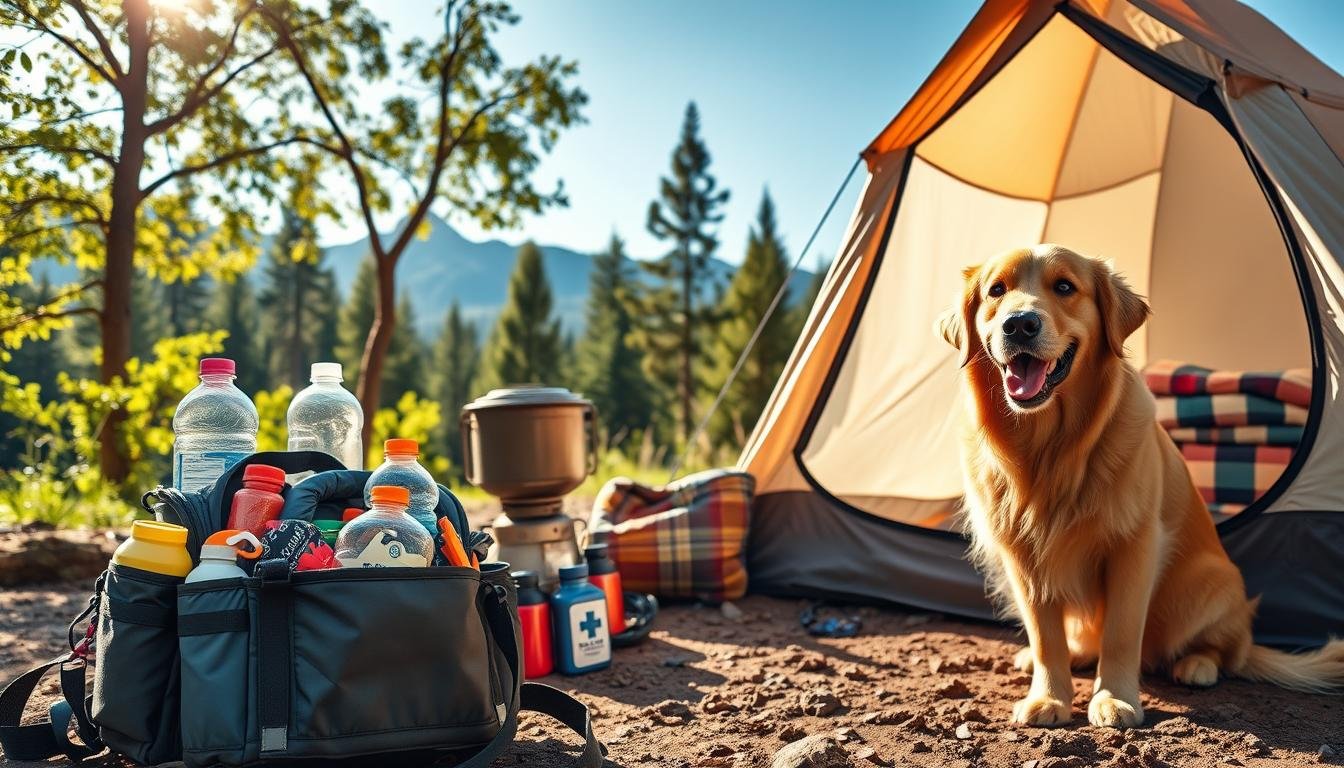
Camping with my dog began with a day hike that was perfect. My Labrador mix, Cooper, found his first mountain stream. He was so happy splashing and exploring.
This made me think about our first camping trip. Three months later, we went to a state park. I packed my gear, extra dog food, and a bowl.
Our first trip was a learning experience. Cooper didn’t have a sleeping pad, and he was cold. He tried to get on my pad, showing me I’d forgotten about his comfort.
Despite my mistakes, something special happened that weekend. Waking up to birds chirping and seeing Cooper sleep beside me was magical. Hiking and camping with your dog creates a bond that goes beyond regular daily routines.
We explored trails together, and Cooper kept checking on me. He trusted me in the wilderness. We were a team.
The sunrise on our second morning made me love camping with my dog. We watched the sky turn from purple to gold. It was peaceful, just us and nature.
Those early challenges motivated me to improve. I researched better gear for Cooper and learned from others. Each mistake made our next trip better.
Now, after three years, we’ve camped in seven states. Every trip reminds me of the memories, our bond, and Cooper’s joy exploring the world with me.
Essential Sleep and Shelter Gear for Your Canine Companion
My dog shivered and paced on our first cold night outdoors. I had packed everything for me but forgot about my dog’s sleep. He curled up on the tent floor, and we both had a bad night.
The next morning, I knew I had to get my dog the right sleep gear. Good rest makes a big difference in a dog’s energy and mood. Now, our camping trips are much more comfortable for both of us.
Ruffwear Highlands Dog Sleeping Pad
The Ruffwear Highlands Dog Sleeping Pad is now my top choice. It’s made of insulated foam to keep your dog warm. It’s also easy to pack into my backpack.
This pad comes in different sizes for various breeds. My 65-pound dog uses the large size, giving him room to stretch. It’s also tough against muddy paws and twigs.
The pad’s non-slip bottom is a big plus. My dog moves a lot while sleeping, but this pad stays put. It also cushions joints, which is great for older dogs or after long hikes.
Dogs lose heat to the ground just like humans do. I learned this the hard way on our first cold night. Insulation keeps your dog’s body heat in, keeping them warm and cozy.
Different coats offer different levels of warmth. Even my thick-coated dog benefits from a sleeping pad when it’s cold. Short-haired breeds need it even more.
Using proper insulation made a huge difference for my dog. He stopped shivering and slept well, waking up ready for hikes. Keeping your dog off the cold ground keeps their body temperature stable.
Hurtta Outback Dreamer Dog Sleeping Bag
For extra warmth, I use the Hurtta Outback Dreamer Dog Sleeping Bag. It’s perfect for high-altitude or winter camping. The bag insulates your dog on all sides, not just underneath.
I use this bag when it’s cold or we’re camping high up. It has a soft lining my dog loves, and he’ll climb in when he sees it. The outer shell is water-resistant, keeping him dry.
This bag works with or without a sleeping pad. In cold weather, I use both for extra warmth. It also has attachment points to keep it from moving around at night.
Bringing a familiar item helps my dog adjust to new places. Sometimes, I bring his DOOG Car Seat as a bed. It carries his scent from home, making him feel more at ease.
Tent Space Considerations and Dog-Friendly Options
Choosing the right tent size is key when camping with your dog. I tried a solo tent but it was too small for both of us. A three-person tent is perfect for one human and one large dog, with enough room for gear.
Measure your tent’s floor space before buying to avoid problems. I make sure there’s room for my dog’s pad, my gear, and a spot for muddy paws. Vestibules are great for dirty boots and wet gear.
Here are the tent features I look for in dog-friendly shelters:
- Multiple doors for easy entry and exit
- Good ventilation to manage moisture and temperature
- Durable floor material that withstands claws and movement
- Generous vestibule space for storing gear and managing muddy paws
- Adequate headroom for sitting up and moving around
Practice sessions at home are very helpful. Setting up your tent in the backyard helps your dog get used to it. This makes camping trips less stressful and more enjoyable.
Investing in good sleep gear for your dog makes a big difference. We both wake up refreshed and ready for more outdoor adventures.
Food and Water Equipment You Can’t Forget
My dog once knocked over a bowl, spilling water all over our tent. This happened on a hot summer day. It taught me the importance of having the right gear for feeding and hydrating my dog outdoors.
Having the right food and water equipment makes camping with pets easier. I’ve tried many bowls, bottles, and storage solutions. Some were great, while others didn’t make the cut.
Ruffwear Quencher Collapsible Dog Bowl
The Ruffwear Quencher changed how I manage hydration on the trail. This collapsible bowl system combines a water bottle with an integrated fabric bowl that folds flat when not in use. It fits easily in my side pocket.
The 32-ounce capacity is perfect for my medium-sized dog during quick stops. The bowl’s sturdy rim prevents collapse, even when my dog dives into it. After three years, the waterproof coating is as good as new.
I love how easy it is to use one-handed. I can pour water while keeping my other hand on the leash. The wide bowl design lets my dog drink comfortably without splashing water everywhere.
LifeStraw Pet Water Bottle with Filter
I got the LifeStraw Pet Water Bottle for camping in areas with questionable water. It filters water from streams, lakes, and questionable sources into safe drinking water for my dog.
The integrated filter removes bacteria, parasites, and microplastics. I fill it from natural water sources without worrying about making my dog sick. The 24-ounce capacity is enough for several hours on moderate trails.
The dispensing mechanism works smoothly. I squeeze the bottle and water flows through the filter into the attached bowl. My dog learned to drink from it quickly.
I always bring backup water for emergencies. No filtration system is perfect, and having extra water provides peace of mind on longer hikes.
YETI Roadie Cooler for Dog Food Storage
The YETI Roadie Cooler is a big investment, but it’s worth it for serious camping with pets. I use the 24-quart size, which holds four days of food for my 50-pound dog plus ice packs.
Temperature control is key. Kibble can spoil in hot weather, and wet food becomes unsafe quickly without proper cooling. The YETI keeps food fresh even in summer.
The bear-resistance feature is essential in bear country. I could sleep soundly knowing wildlife couldn’t access my dog’s food. The cooler earned its IGBC certification through rigorous testing against actual bears.
The only drawback is the weight. The empty cooler weighs 12.5 pounds before adding food and ice. I only bring it on car camping trips where I don’t need to carry it long distances. For backpacking, I use sealed dry bags instead.
Meal Planning Tips for Multi-Day Trips
Planning meals for extended camping trips requires more thought than daily feeding at home. I’ve developed a system that keeps my dog healthy and happy on the trail while minimizing the risk of stomach upset or running short on food.
Stick with familiar food brands. The wilderness isn’t the place to experiment with new diets. I bring the exact kibble my dog eats at home to avoid digestive issues. Stress and increased activity already challenge his system enough.
I portion meals into individual ziplock bags before leaving home. Each bag gets labeled with the day and meal time. This system prevents overfeeding early in the trip and running short later. It also makes pack organization simpler.
| Dog Weight | Daily Food (Normal Activity) | Daily Food (High Activity) | Extra Emergency Supply |
|---|---|---|---|
| 20-30 lbs | 1.5-2 cups | 2-2.5 cups | +20% (1 extra day) |
| 40-60 lbs | 2.5-3.5 cups | 3.5-4.5 cups | +20% (1 extra day) |
| 70-90 lbs | 4-5 cups | 5-6.5 cups | +20% (1 extra day) |
I always pack 20% extra food beyond what I calculate for the planned trip length. Weather delays, extended hiking, or simply burning more calories than expected can increase food needs. Running out of dog food in the backcountry creates a genuine emergency.
For trips longer than three days, I increase calorie intake by about 25-30%. The sustained physical activity demands more energy than our normal routine. I monitor my dog’s body condition and adjust portions if needed.
Treats serve double duty as training rewards and morale boosters. I bring high-value treats in a separate waterproof container. These help reinforce good trail behavior and provide comfort during stressful moments like thunderstorms.
Safety and First Aid Must-Haves
When you’re far from a vet, having the right safety gear is key. I learned this on a camping trip in Colorado when my dog cut his paw. A good first aid kit helped me clean and bandage it right away, preventing infection until we could see a vet the next day.
The wilderness doesn’t care about your schedule or how close you are to help. That’s why I always carry safety gear that helps prevent and fix emergencies. These pet camping safety tips have saved me from panic many times.
RC Pet Products Canine First Aid Kit
This kit is my top pick for dog camping safety. It’s made for dogs, not humans, and covers common injuries. I’ve used it for everything from minor cuts to removing ticks.
The kit comes in a bright red, water-resistant bag that’s easy to find. It has a detailed guide for emergencies. It’s also small enough to fit in my backpack without taking up too much space.
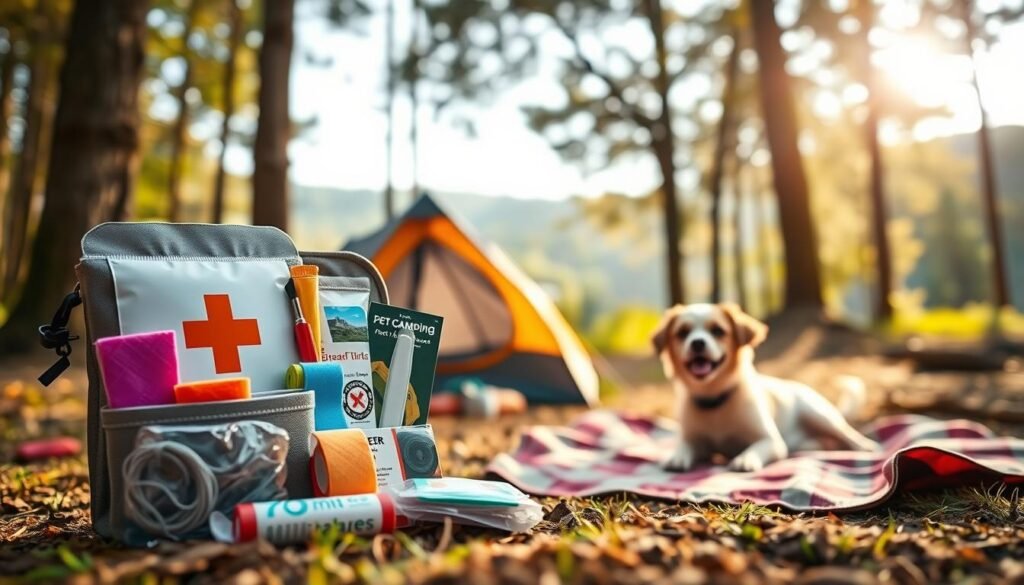
I’ve also added to my dog’s first aid supplies over the years. Here’s what I think is essential for camping:
- Gauze pads and rolls for covering wounds and making bandages
- Adhesive tape that doesn’t hurt when you take it off
- Antiseptic wipes for cleaning wounds before bandaging
- Tweezers and tick remover tool for safely removing parasites
- Blunt-tip scissors for cutting bandages and trimming fur
- Instant cold pack for swelling from sprains or stings
- Digital thermometer to check for fever or heat exhaustion
- Emergency blanket for shock or cold
- Saline solution for cleaning eyes and flushing wounds
- Disposable gloves for staying clean during treatment
I also keep my vet’s emergency number and the nearest animal clinic’s info handy. This was a lifesaver when my dog had an allergic reaction to a bee sting.
Nite Ize SpotLit LED Collar Light
Visibility in the dark is a big safety issue. My black Lab nearly vanished in the dark one morning. That’s when I got this LED collar light.
The SpotLit clips onto any collar and shines up to 1,000 feet. You can choose between glow or flash mode. The battery lasts about 20 hours on glow, perfect for weekend trips.
This canine camping gear has saved me from countless worries. It helps me find my dog at night or when she wanders off. The light is also weatherproof, so it works even in the rain.
K9 Advantix II Flea and Tick Prevention
Preventing parasites is key to camping safety. I apply K9 Advantix II 48 hours before camping to protect against ticks, fleas, mosquitoes, and flies for a month.
Ticks and tick-borne diseases like Lyme disease are common in wooded areas. Using monthly prevention has greatly reduced tick attachments. It also keeps mosquitoes away, which can carry heartworm.
I always check with my vet about local parasite risks before camping. Different places have different dangers, and timing your prevention is critical. Some campsites even require proof of flea and tick prevention.
Waterproof Document Holder for Vet Records
This might seem like overkill, but it’s essential. I carry a waterproof pouch with my dog’s vaccination records, vet’s contact info, and medical history. This has saved me a lot of trouble.
Many campsites need proof of rabies vaccination before letting dogs in. They might also want to see records of kennel cough and parvovirus vaccines. Having these documents ready prevents delays.
The pouch also keeps these important papers dry in the rain or if they get wet. I learned this after a water bottle leak ruined my vet records on a trip. Now, I use a sealed pouch that floats if dropped in water.
Emergency vets will also appreciate having your dog’s medical history. This helps them make quicker, better decisions if something goes wrong far from home. I update my documents before each camping season to keep them current.
Navigation and Identification Essentials
My dog wandered off during our second camping trip, and I realized I needed tracking equipment. She chased a squirrel and hid behind aspens. Those minutes searching for her taught me the importance of more than just a collar and leash.
I bought navigation and identification gear after that. These tools have made my camping trips much safer.
Now, I know I can find my dog even if she explores too far. I have many safety systems to bring her back.
GPS Dog Tracker for Remote Locations
The Garmin T5 Mini GPS Dog Tracker was a lifesaver for me. It tracks my dog up to 9 miles away, though Garmin says it can go further in perfect conditions.
This system has a collar and a handheld device. I can see where my dog is, where she’s going, and set alerts if she strays too far.
The battery lasts about 20-30 hours. I always carry a charger for long trips.
This tracker costs a lot, but it’s worth it for serious hikers or dogs that love to run off.
Make sure your campsite allows GPS tracking collars. Some places have rules against them, but most campsites don’t.
Durable Identification Tags
Dogs need reliable ID tags, and GoTags Stainless Steel ID Tags are the best. I switched to stainless steel because cheaper tags fade and wear out fast.
Stainless steel tags can handle weather, water, and rough terrain without losing their info. They’ve survived mud, rivers, and rocks.
I put three important things on my dog’s tag:
- Her name (to calm her if found)
- My cell phone number (to contact me)
- “Needs medication” (to encourage quick return)
Remember to check your dog’s microchip info is up to date. Tags can fall off, but a microchip is permanent. I update my info twice a year.
Reflective Harness for Visibility and Control
I switched to the Chai’s Choice Reflective Harness for camping. It’s better for control, comfort, and visibility in the dark.
The harness stops her from pulling too hard and is comfy for long walks. It also has reflective strips for safety at night.
The top handle is great for helping her over obstacles or grabbing her when needed.
Fitting the harness right is key. Measure her chest and use the chart to find the right size. It should fit snug but not too tight.
Harnesses spread out the pressure, which is good for rocky trails and helping her up steep parts.
| Navigation & ID Gear | Primary Function | Best Feature | Investment Level |
|---|---|---|---|
| Garmin T5 Mini GPS | Real-time location tracking | 9-mile tracking range | Premium ($300-400) |
| GoTags Stainless Steel ID | Contact information display | Weather-resistant durability | Budget ($8-15) |
| Chai’s Choice Harness | Control and visibility | 3M reflective material | Moderate ($25-40) |
Campgrounds usually require dogs to be on a leash or under voice control. It’s not just a rule—it’s for safety and to protect wildlife.
I keep my dog on a leash unless it’s okay to be off-leash. A leash stops her from chasing wildlife and keeps her safe from danger.
Teaching your dog to come when called takes time. Start in safe areas before using it at campsites.
Following leash rules shows respect for other campers and their pets. It also keeps wildlife safe from dogs.
GPS, ID tags, and a reflective harness offer multiple safety layers. If one fails, the others help bring your dog back safely.
Weather Protection and Comfort Items
Not every camping trip needs weather protection for your dog. But knowing when it’s essential has changed how comfortable my dog stays outdoors. I used to think weather gear was unnecessary until Mother Nature showed me the truth.
Now, I pack specific items based on the forecast, destination, and my dog’s needs. This way, I avoid bringing too much or too little.
The right weather gear for your dog isn’t about spoiling them. It’s about keeping them comfortable and safe. I assess each trip to decide what to pack, considering the weather and my dog’s needs.
Hurtta Rain Blocker Coat
My short-haired dog shivered during a rainy camping trip before I got the Hurtta Rain Blocker Coat. That taught me some dogs need protection from wet weather. This jacket has made a big difference in our camping trips.
The coat covers from neck to tail and fits well. It has reflective trim for visibility and packs small. This is important when space is limited.
Thick-coated breeds might not need rain coats. But my dog with shorter fur stays happier and drier with it. This makes them more energetic and willing to explore.
“A dog’s comfort in the outdoors directly impacts their enthusiasm for adventure and their physical well-being during extended exposure to the elements.”
Proper fit is key to prevent rubbing and discomfort. I measured my dog carefully, following Hurtta’s guidelines. The coat should cover without restricting movement or bathroom activities.
Ruffwear Swamp Cooler Evaporative Vest
Heat protection is just as important as rain protection. The Ruffwear Swamp Cooler Evaporative Vest keeps your dog cool by evaporating water. It’s a game-changer for summer camping.
In Arizona, this vest was a lifesaver when temperatures soared. My dark-furred dog would have been too hot without it. We enjoyed hikes safely, re-soaking the vest as needed.
Watch for signs of overheating: excessive panting, drooling, weakness, or disorientation. The vest helps but doesn’t eliminate all heat risks. I plan activities during cooler hours when possible.
The vest’s three-layer construction provides shade and cooling. It fits snugly without restricting breathing or movement. It’s built for active dogs, not just for looks.
Musher’s Secret Paw Wax and Ultra Paws Boots
Paw protection is often overlooked until problems arise. I always carry Musher’s Secret Paw Wax for various conditions. It prevents cracking and injury.
The wax creates a barrier that protects without restricting paw function. I’ve used it in desert heat, mountain rockiness, and winter cold. It’s lightweight and inexpensive but prevents significant discomfort.
Ultra Paws Boots offer more protection for extreme conditions. Getting my dog to wear them was a challenge. But they were essential for certain terrain.
When Your Dog Actually Needs Boots
Boots are necessary in specific situations. I use them for:
- Hot pavement or sand that would burn paws (if you can’t hold your hand comfortably on the surface for 7 seconds, it’s too hot for bare paws)
- Sharp rocky terrain where cuts and abrasions become likely during extended hiking
- Ice and snow that causes ice ball formation between paw pads or extended cold exposure
- Existing paw sensitivities from injuries, allergies, or thin pad development
Acclimating my dog to boots took practice and patience. I started with short indoor sessions, rewarding calm acceptance. The funny high-stepping walk gradually disappeared as my dog adjusted. Proper fit matters enormously—too tight causes discomfort, too loose results in boots flying off mid-hike.
I don’t use boots for mild terrain, moderate temperatures, or when my dog’s paw pads are well-conditioned. Many dogs handle normal camping conditions perfectly well without them. The goal is informed decision-making based on actual needs.
| Weather Condition | Recommended Protection | When It’s Essential | When It’s Optional |
|---|---|---|---|
| Heavy Rain | Waterproof coat | Short-haired breeds, extended exposure, cold temperatures | Thick-coated breeds, brief activities, warm rain |
| High Heat (85°F+) | Cooling vest, paw wax | Dark-colored dogs, daytime activities, low humidity | Shade-only camping, dawn/dusk activities only |
| Snow and Ice | Paw wax or boots | Extended exposure, ice ball formation, salt exposure | Brief outings, well-conditioned paws, powder snow |
| Hot Sand/Pavement | Boots or paw wax | Surface too hot to touch, unavoidable exposure | Early morning/evening only, grass alternatives available |
The key to weather protection when camping with pets is matching gear to genuine needs. I assess each trip’s specific conditions, my dog’s individual characteristics, and activity plans before deciding what to pack. This approach prevents both under-preparation and carrying unnecessary weight.
Waste Management and Leave No Trace Gear
Managing waste responsibly is more than following rules. It’s about caring for the natural places we explore with our dogs. When we camp with pets, we must protect these areas for wildlife and future visitors. Our dogs don’t understand the impact of their waste like we do.
Having the right gear makes it easier to manage waste. Good intentions aren’t enough; we need practical tools for outdoor use. Over the years, I’ve found products that help me leave campsites cleaner than I found them.
Earth Rated Biodegradable Waste Bags
These bags are my top choice for areas where I can pack out waste. The Earth Rated bags are sturdy enough to prevent tears, which is key when carrying waste for hours. I’ve had cheaper bags break open, and that’s a bad experience.
I love the lavender scent of these bags, which helps mask odors. The dispenser clips to my leash, making bags easy to access. I never want to be without a bag when my dog needs to go.
I always bring more bags than I think I’ll need. They’re lightweight, so there’s no reason not to overpack. I keep them in several places: on the leash, in my backpack, and in the tent. This way, I’m always prepared.
Restop Disposable Waste Bags for Backcountry
I started using these bags for my first multi-day backpacking trip with my dog. In remote areas, carrying several days of waste isn’t practical. Restop bags contain enzymes that break down waste, making it easier to carry and less smelly.
These bags are more expensive, but they’re worth it for certain situations. I use them for multi-day trips, sensitive ecosystems, and areas with strict pack-out rules. They’ve made longer trips with my dog possible.
The gel technology in these bags works well. I’ve carried them for up to three days without the smell of regular bags. For serious backcountry camping, this gear is essential.
Wysi Wipes Bamboo Dog Cleaning Wipes
Waste management isn’t just about picking up after bathroom breaks. My dog gets dirty and rolls in things he shouldn’t. Wysi Wipes are biodegradable, gentle on skin, and effective at cleaning his paws and fur.
I use these wipes in several situations: before my dog enters the tent, after he’s rolled in something bad, and for minor scrapes. The bamboo material breaks down naturally, so I don’t feel guilty about using them.
These wipes also help keep our campsite clean. A quick wipe-down prevents my dog from tracking mud and debris. They’re small enough to fit in my day pack, so I take them on every hike.
My Leave No Trace Principles with Dogs
Beyond the right gear, I follow specific practices for environmental stewardship. These aren’t just rules; they’re principles I’ve adopted to preserve the places I love visiting with my dog.
- Always pack out waste, even in remote areas where I might not see another person for days
- Bury waste properly when truly necessary: 6-8 inches deep and 200 feet from water sources
- Keep my dog on established trails to protect fragile vegetation and prevent erosion
- Prevent wildlife harassment by maintaining control through leashes or voice commands
- Respect quiet hours and manage barking to minimize disturbance to other campers
- Clean up thoroughly at campsites, removing any fur, food debris, or waste my dog might have left
I use a Walkie Pouch—a small bag that clips to the leash—to keep waste bags handy. This simple addition prevents excuses for leaving waste behind. There’s never a good reason to leave waste when I’m prepared.
Some people think burying dog waste is okay, but it’s not. In high-use areas, it damages ecosystems. Dog waste doesn’t decompose as quickly as wild animal waste and can contaminate water sources. When in doubt, I pack it out.
Bringing dogs into natural spaces is a privilege, not a right. Other hikers, campers, and land managers watch how we behave with our pets. Every piece of waste I leave behind reflects poorly on all dog owners and could lead to restrictions on dog-friendly camping areas.
I make it a point to pick up waste left by other irresponsible owners when I find it. While it’s frustrating, I’d prefer to preserve access to these spaces than let one person’s laziness ruin it for everyone. My dog deserves to keep enjoying these outdoor adventures, and that means all of us need to do our part.
Recreation and Exercise Equipment
My best camping trips all have one thing in common: my dog was active and happy. The right gear makes outdoor adventures with dogs fun for everyone. It makes the trip easier for both of us.
A tired dog is a happy dog. This means peaceful evenings by the campfire. The right gear turns camping into real adventures that strengthen our bond.
Mendota 30-Foot Training Leash
The Mendota 30-Foot Training Leash is key for my camping trips. It lets my dog explore while I keep control in safe areas.
I use it for many things when hiking and camping. It’s great for letting my dog sniff around without getting lost. It also helps with recall training in busy places.
The leash is waterproof and lasts long. I’ve used it in streams, mud, and wet grass without any problems.
Thirty feet is the perfect length. It gives dogs freedom and keeps them safe in new places.
Attach a carabiner to your belt loop to keep the leash clean. This stops it from getting tangled and keeps it ready for use.
West Paw Zogoflex Camping Toys
Mental stimulation is as important as physical exercise for dogs. That’s why I always bring West Paw Zogoflex toys on trips. They keep my dog entertained and comfortable in new places.
I choose these toys for their durability and bright colors. They survive rough play and are easy to spot if lost.
They also float, which is great for water play. The tough material is made in the USA, so I know they’re safe.
Familiar toys help my dog feel at home in new places. Seeing his favorite toys at a new campsite makes him feel better.
I bring a Zogoflex ball for fetch and a chew toy for quiet time. Evening play helps my dog relax before bed.
Ruffwear Approach Dog Backpack
Introducing my dog to the Ruffwear Approach Dog Backpack changed everything. It made him feel important on the trail and lightened my pack.
The pack has a padded harness for comfort. It has pockets for gear and reflective trim for safety. Adjusting the straps is key for a good fit.
How Much Weight Your Dog Can Safely Carry
Knowing the right weight limit is important for safety and fun. Here’s what I follow:
- Healthy adult dogs can carry 10-12% of their body weight comfortably during hikes
- Start with lighter loads and gradually increase as your dog gets stronger
- Ensure proper fit to avoid discomfort and injury
- Monitor for signs of fatigue like panting or lagging behind
- Never load a puppy whose bones and joints are developing
My dog carries his own supplies in his pack. This includes food, bowls, toys, and waste bags. It’s important to balance the weight evenly.
I check the load halfway through long hikes. If my dog looks tired, I move the weight to my pack. His comfort is always first.
Preparing for Your First Trip: My Camping with My Dog Checklist
I learned the hard way that successful camping with my dog depends on thorough preparation, not just having the right equipment. My first overnight trip turned chaotic because I forgot to check whether the campground actually allowed dogs. Now I use a detailed checklist that covers everything from dog camping essentials to administrative tasks I used to overlook.
This checklist has evolved through years of experience and countless adventures. It prevents those “I can’t believe I forgot that” moments that can turn a relaxing trip into a stressful scramble.
Let me share the exact preparation routine I follow before every camping adventure with my furry companion.
Before You Leave Home
Start your preparation at least two weeks before departure. This gives you time to address any issues that come up during your planning.
- Verify campground policies: Call ahead to confirm dogs are allowed, check size restrictions, and ask about specific rules like leash requirements or designated pet areas
- Update vaccinations: Ensure all shots are current, including rabies and bordetella, and request printed proof from your vet
- Check microchip registration: Log into your microchip provider’s database and verify your contact information is accurate
- Research emergency veterinarians: Find the nearest 24-hour animal hospital to your camping location and save the number in your phone
- Review weather forecasts: Check extended forecasts to pack appropriate gear for temperature and precipitation
- Practice with new equipment: Set up any unfamiliar gear at home so your dog can acclimate before the trip
Complete Gear Checklist by Category
I organize my dog camping essentials into categories to ensure nothing gets left behind. Here’s the complete breakdown:
| Category | Essential Items | Why You Need It |
|---|---|---|
| Sleep & Shelter | Dog sleeping pad, sleeping bag or blanket, familiar comfort toy | Ensures restful sleep and reduces anxiety in new environments |
| Food & Water | Pre-measured meals plus 2 extra days, collapsible bowls, water filtration, treats | Maintains nutrition and hydration without overloading your pack |
| Safety & First Aid | Complete first aid kit, LED collar light, current ID tags, vet records, leash and long line | Addresses emergencies and prevents your dog from getting lost |
| Weather Protection | Rain coat, cooling vest, paw wax, protective boots | Keeps your dog comfortable regardless of conditions |
| Waste Management | Biodegradable bags (lots of them), backcountry disposal bags, cleaning wipes, small trowel | Allows you to practice Leave No Trace principles responsibly |
The Practice Run That Saved My Trip
I always recommend doing a backyard camping test before your actual adventure. This advice comes from personal experience that could have been a disaster.
During my first practice run, I discovered my dog absolutely refused to sleep on his new sleeping pad. He kept sliding off and seemed uncomfortable throughout the night. This gave me three weeks to acclimate him gradually by placing the pad next to his regular bed and rewarding him for lying on it.
By the time our real camping trip arrived, he considered the pad his special outdoor bed. Without that practice session, we would have had a miserable first night in the wilderness.
Training Hikes with Full Gear
Take short training hikes with all your equipment before the main event. Load your dog’s backpack if you plan to use one, and have them wear any boots or protective gear.
These trial runs reveal fit issues, chafing problems, or behavioral concerns you can address beforehand. I learned my dog needed gradual weight increases in his backpack, not a full load.
Car Travel Comfort Considerations
Don’t overlook the journey to your camping destination. Plan regular rest stops every two hours for bathroom breaks and leg stretches.
Bring a car-specific water bowl and keep your dog’s regular harness or seatbelt restraint accessible. Never leave your dog unattended in a parked vehicle, even in cool weather.
I pack a separate bag for car travel essentials so I can grab water, waste bags, and treats without digging through my camping gear.
Creating Your Reusable Checklist System
I keep a laminated checklist that I can mark off with a dry-erase marker for each trip. This prevents me from relying on memory alone when I’m excited about an upcoming adventure.
Store all your camping gear in one dedicated location—I use a large bin in my garage. This centralized system means I’m not hunting through closets trying to remember where I put the paw wax or extra collar light.
The best camping trips happen when preparation feels effortless because you’ve created systems that work.
After each camping trip, I review my checklist and add any items I wished I’d brought. This continuous improvement approach has transformed camping with my dog from a stressful logistical challenge into a smooth, enjoyable experience we both look forward to.
Start with this detailed checklist, adapt it to your specific needs, and you’ll develop confidence in your ability to handle any situation that arises during your outdoor adventures together.
Conclusion
This guide covered a lot of ground. The gear list might seem extensive at first glance. But don’t let it overwhelm you. My camping setup evolved gradually over several years of trips.
Each item represents a lesson learned and an improvement in our adventures together. You can start with the basics and build from there. The most important thing is getting outside with your furry companion.
Proper preparation isn’t about spending excessively. It’s about safety, comfort, and enjoying dog-friendly camping without constant worry. The payoff makes every bit of preparation worthwhile.
Picture yourself sitting by a campfire with your dog’s head resting on your lap. Stars emerge overhead while crickets chirp in the background. That moment of complete presence and connection with nature and your best friend is irreplaceable.
Being well-prepared gives you confidence. You can focus on the experience, not logistics. Start planning your next adventure by researching the best campgrounds for dogs in your area.
Check specific policies before booking. Many locations offer designated dog areas, nearby trails, and amenities that enhance the experience. The preparation takes effort.
The memories you create, the bond you strengthen, and the joy of sharing outdoor adventures with your canine companion last forever. Trust me, waking up to your dog’s excited face in a tent surrounded by wilderness will show you why this has become my favorite way to explore the world.
FAQ
What essential gear do I need for my first camping trip with my dog?
For your first camping trip with your dog, start with the basics. You’ll need a dog sleeping pad like the Ruffwear Highlands for warmth. Also, get collapsible food and water bowls, such as the Ruffwear Quencher.
Don’t forget Earth Rated Biodegradable Waste Bags, a canine first aid kit, and ID tags. A sturdy leash and familiar toys are also important. Bring enough food, proof of vaccinations, and your vet’s emergency contact info.
How do I keep my dog warm while camping in cold weather?
To keep your dog warm, use a sleeping pad like the Ruffwear Highlands. This prevents heat loss to the cold ground. For extra warmth, consider the Hurtta Outback Dreamer Dog Sleeping Bag.
Choose the right coat for your dog’s fur type. The Hurtta Rain Blocker Coat helps retain heat when wet. Keep your dog close to you for body heat inside the tent. Use a familiar blanket for comfort.
Can I let my dog drink from streams and lakes while camping?
While camping, it’s safer to use a LifeStraw Pet Water Bottle with Filter for water from streams and lakes. Natural water can have parasites that make dogs sick. This can ruin your trip and require vet care.
Monitor your dog for signs of upset stomach after drinking from streams. Always bring backup water, as natural sources might be scarce or questionable.
What should I include in a canine first aid kit for camping?
Your first aid kit should have gauze, adhesive tape, and antiseptic wipes. Include tweezers for tick removal and a digital thermometer. An emergency blanket, saline solution, and a reference guide are also essential.
Add your vet’s emergency number and research the nearest animal clinic. Pack any medications your dog takes and Benadryl for allergic reactions. This kit helps you handle minor issues and stabilize your dog if needed.
How much food should I pack for my dog on a multi-day camping trip?
Pack your dog’s regular food amount plus 10-20% extra for increased activity. For a three-day trip, double their daily amount. Use individual bags for each day to track consumption.
Bring extra food in case of unexpected weather or circumstances. Use a YETI Roadie Cooler to keep food fresh and safe from wildlife. Stick to your dog’s regular food to avoid stomach upset.
What are the best campgrounds for dogs?
The best campgrounds for dogs have designated off-leash areas and hiking trails. They also have waste disposal stations and welcome dogs. Look for natural swimming areas and spacious campsites.
Consider proximity to emergency veterinary services. National forests are often better than national parks for dog-friendly camping. Research specific regulations before booking.
How do I prevent my dog from getting lost while camping?
To prevent loss, keep your dog leashed or under voice control. Use a Mendota 30-Foot Training Leash for freedom and connection. Invest in a Garmin T5 Mini GPS Dog Tracker for real-time tracking.
Use ID tags and a reflective harness. Establish a routine and boundaries. Never leave your dog unattended outside. Practice recall commands regularly.
Do I really need special sleeping gear for my dog, or can they sleep on the tent floor?
Yes, your dog needs proper sleeping gear. A Ruffwear Highlands Dog Sleeping Pad prevents heat loss to the cold ground. Even in moderate temperatures, the ground temperature drops significantly at night.
Use the pad for a good night’s sleep. A well-rested dog is better behaved and safer on the trail. The pad is lightweight and packs easily.
What weather conditions are too extreme for camping with my dog?
Weather extremes depend on your dog’s breed, age, and health. For heat, avoid temperatures over 85°F without shade and cooling options. Watch for signs of overheating like excessive panting and lethargy.
For cold, avoid temperatures below what your dog can handle with proper gear. Consider weather stability—rapidly changing conditions can be dangerous. If you’re uncomfortable, your dog probably is too.
How do I properly dispose of dog waste while camping?
Proper waste disposal is critical for responsible camping. Use Earth Rated Biodegradable Waste Bags in developed campgrounds. For backcountry camping, use Restop Disposable Waste Bags.
If burying is necessary, dig a cathole 6-8 inches deep and at least 200 feet from water sources. Always carry more bags than you think you’ll need. Follow Leave No Trace principles to preserve wild places.
Should my dog wear a harness or collar while camping?
I prefer harnesses for camping, like the Chai’s Choice Reflective Harness. Harnesses distribute pressure safely. The harness also has reflective strips for visibility and a sturdy handle for assistance.
Attach ID tags to both the harness and a separate collar. This provides redundant identification in case the harness is removed.
How do I keep my dog cool during summer camping trips?
Summer camping requires heat management. Use a Ruffwear Swamp Cooler Evaporative Vest for cooling. Plan activities for early morning and evening to avoid heat.
Provide shade and access to water. Use the Ruffwear Quencher for hydration breaks. Encourage swimming for cooling. Apply Musher’s Secret Paw Wax to protect paws from hot surfaces.
What’s the safest way to secure my dog at the campsite?
Never leave your dog unattended outside. Use a Mendota 30-Foot Training Leash attached to a reflective harness. Secure the leash to a tree or vehicle using a proper tie-out system.
Monitor constantly for tangling or escape. If you need to be away longer, bring your dog with you. Camping means being together, not just in the same location.
Should I bring familiar items from home for my dog?
Yes, bring familiar items for comfort in unfamiliar environments. Pack your dog’s favorite blanket and toys. Maintain their regular feeding schedule and bedtime routine.
For anxious dogs, bring an old t-shirt with your scent. Balance familiarity with practicality. After several trips, camping gear becomes familiar, and your dog will look forward to it.