
Have you ever wondered if your child is ready to care for a pet? I’ve asked myself this many times as a parent.
Before your child cuddles a puppy or strokes a kitten, they can learn to care for a pet. Stories help build resilience and empathy in young people. They also help develop social-emotional skills.
Sharing animal stories with your child is special. It lets them imagine what animals think and feel. This is more than fun—it’s getting ready for pet care.
Through stories, kids learn to care without the worry of a pet needing them. It’s a safe way to see if your family is ready for a pet.
Key Takeaways
- Interactive storytelling creates neural pathways that translate directly into real-world caregiving abilities
- Stories help children develop imagination and anticipate animal needs before encountering real pets
- Reading together offers a no-pressure method to assess your child’s readiness for pet ownership
- Character connections in books build emotional recognition and social-emotional skills
- Animal stories cultivate responsibility and understanding through engaging, age-appropriate narratives
Why I Started Reading Pet Books with My Kids (And Why You Should Too)
It was a rainy Tuesday evening when my son asked for a dog. He had forgotten to feed his goldfish for three days. I knew I had to find a better way to teach him about responsibility.
That’s when I started reading bonding over pet books with my kids. It turned into our favorite evening activity. Instead of asking for a puppy, we read stories about all kinds of pets.
After each story, my daughter would say things like, “But dogs just need love and hugs, right?” This led to deep conversations that were hard to have during the day.
Through teaching kids through pet stories, my son began to understand. He realized that pets can’t tell us when they’re sick. He learned to watch them carefully.
These stories helped me see how my kids reacted to pet challenges. They learned that caring for animals is hard work, not just fun. They understood the long-term commitment needed.
Switching from lectures to stories changed everything. Here’s what I noticed:
| Abstract Lectures | Story-Based Learning | Results |
|---|---|---|
| Eyes glazed over after 30 seconds | Engaged for entire 20-minute sessions | Better retention and understanding |
| Defensive reactions to responsibility talk | Voluntary questions about care routines | Self-motivated learning emerged |
| Focused only on getting the pet | Discussed what pets actually need | Empathy developed naturally |
| Promises made without understanding | Realistic expectations formed | Genuine readiness built gradually |
I faced a common dilemma as a parent. My heart wanted to say yes to their wishes. But my brain worried about the timing and commitment.
Reading became our compromise. It made my kids feel involved in pet-related activities. I had time to prepare them without the pressure of caring for a pet.
My daughter started setting alarms to “feed” her stuffed rabbit. My son noticed the neighbor’s dog limping and showed concern. These moments showed they were truly understanding.
This ritual changed our family’s approach to pets. Instead of being the dream-crusher, I became their partner in preparation. We worked together toward the goal of caring for a pet.
This change made a big difference. The whining stopped, and thoughtful questions started. I felt confident that when we got a pet, my kids would be ready.
How Reading Pet Books with Children Builds the Foundation for Empathy
I remember when my son looked up from a book about a lonely kitten. He asked, “Does our neighbor’s cat feel sad when she’s alone all day?” This simple question showed he was learning to understand and care for others.
Stories and emotional development are closely linked. When kids read about animals, they practice empathy. Studies show stories help kids develop empathy and other important social skills.
This isn’t by chance. Reading helps kids learn about different feelings and experiences. It broadens their view of the world.
Understanding Emotions Through Animal Characters
Children naturally feel emotions through animal characters. This helps them recognize and name feelings. It’s easier to understand emotions through animals than through people.
When a story shows a scared rabbit or a lonely dog, kids can easily spot their emotions. Animals in stories make feelings clear and simple.
I’ve seen my daughter learn a lot from reading. She would point out emotions in the pictures. This was more than just talking about the story—it was learning to read emotions.
Animal characters are easy for kids to relate to. Stories about nervous cats or excited puppies teach kids to notice emotional cues. These skills are important for real pets.
Recognizing Needs Beyond Our Own
Understanding another being’s needs is a big step for kids. It challenges their natural self-centeredness. This is key for being ready for pets.
Books that teach kids about animals do a great job of showing this. They show how pets’ needs come first. This helps kids learn to put others first.
One book we read showed a child waiting patiently for their kitten to settle. My son was frustrated at first but learned that the kitten’s comfort was more important.
This shift from wanting what we want to considering others’ needs is huge. It’s called developing a “theory of mind.” It means understanding that others have their own thoughts and feelings.
| Developmental Stage | Empathy Skill Gained | Story Element That Teaches It | Real-World Application |
|---|---|---|---|
| Ages 2-4 | Emotion recognition | Character facial expressions and simple feelings | Identifying when pets are happy, scared, or tired |
| Ages 4-6 | Perspective-taking | Scenarios showing animal needs versus child wants | Understanding pets need rest, space, and gentle handling |
| Ages 6-8 | Compassionate action | Characters solving problems to help animals | Taking initiative in daily pet care and problem-solving |
| Ages 8+ | Long-term commitment | Stories showing ongoing responsibility and challenges | Maintaining consistent care even when novelty fades |
Developing Compassion Through Story Connections
Empathy and compassion are closely related. Empathy is understanding someone else’s feelings. Compassion is wanting to help or make things better.
Reading about animals facing challenges builds both empathy and compassion. Kids learn to care about solving problems for others.
Our reading journey has shown this. At first, my kids just acknowledged feelings in stories. But as we read more, they started to think of solutions. They would say things like, “We should give that dog a warm blanket.”
Our discussions after reading help solidify these lessons. Asking questions like “How do you think the cat feels?” helps kids turn empathy into action.
Research shows reading can improve mental and physical health, and even academic success. Stories help kids process emotions and prepare for challenges.
This preparation is key when kids get their first pet. They come ready with the emotional skills to care for it.
The Science Behind Storytime: What Happens in Your Child’s Brain
I used to think reading pet books was just a sweet bonding activity. But then I learned about the neuroscience behind it. It turns out, those cozy reading sessions are doing amazing things in your child’s brain. This simple practice creates lasting changes in how kids understand and treat animals.
Reading with children about animals does more than entertain them. It activates special neural pathways that shape their world view. The science shows why storytime is not just good—it’s transformative.
Mirror Neurons and Emotional Development
Your child’s brain has special cells called mirror neurons. These cells fire when they do something and when they see someone else do it. They’re the basis of empathy.
During storytime, these mirror neurons light up as if your child is living the story. When they read about a character gently stroking a scared puppy, their brain acts as if they’re doing it. This isn’t just imagination—it’s neurological practice.
Dr. Linda C. Mayes from Yale Child Study Center found that animals reduce stress. Her research shows animals make people feel more relaxed and present. Reading about them extends this calming feeling, making the brain more open to learning.
“Animals help reduce stress by making humans feel more relaxed and present.”
This is important because a calm brain builds stronger neural pathways. When you read educational animal books, you’re making empathy lessons stick. Just telling kids to be gentle with animals doesn’t work like a story does.
The emotional development from mirror neurons includes:
- Automatic emotional recognition – Kids learn to read facial expressions and body language
- Instinctive response patterns – They practice appropriate reactions to different situations
- Empathetic connection – They literally feel what characters feel, building genuine compassion
- Behavioral rehearsal – They mentally practice gentle, caring actions before performing them
How Narrative Processing Shapes Behavior and Decision-Making
Your child’s brain processes stories differently than facts or instructions. When I tell my kids “feed the pet every morning,” it’s a rule. But when they read about a character who forgets to feed their hamster and watches it get sick, that story becomes part of their personal memory network.
Reading with children about animals is like a flight simulator for empathy. Pilots practice emergency procedures in simulators so they’re ready when real situations happen. Stories do the same thing for kids—they practice decision-making in a safe environment where mistakes don’t have real consequences.
Here’s what happens during narrative processing:
- The brain engages multiple regions simultaneously—language centers, emotional centers, and motor planning areas
- Information from the story gets tagged with emotional significance, making it more memorable
- The child creates mental models of cause-and-effect relationships
- These models become templates for future decision-making
Educational animal books for young readers that show characters making pet care choices create these mental templates. When your child later faces a similar real-world situation, their brain uses these story-based models to guide their response. They’ve already “experienced” the situation through the character.
Research shows that children who are frequent readers report better mental health. This isn’t coincidental. Reading builds emotional regulation skills, increases stress resilience, and creates cognitive flexibility. All these benefits compound when the reading focuses on animals and empathy.
The practical outcome is this: kids who regularly read pet stories don’t just know more about animals. They’ve built neural pathways that automatically guide them toward gentleness, patience, and responsibility. Their brains have literally practiced these behaviors hundreds of times through characters’ experiences.
This is why I’m such a believer in making storytime a consistent part of preparing kids for pet ownership. You’re not just teaching concepts—you’re reshaping how their brains process empathy and responsibility at a fundamental level.
7 Ways Pet Stories Prepare Kids for Real Pet Ownership
What books help kids learn to care for animals goes beyond fun. These stories teach them about responsibility, patience, and commitment. Kids learn these lessons without even realizing it.
Interactive pet storybooks for families teach kids about animal care in a safe way. My kids have learned more about pet ownership from these books than from any lecture.
Let me share the seven most important ways these stories transform curious children into prepared, responsible future pet owners.
1. Learning Daily Care Routines and Feeding Schedules
Stories show pets need regular feeding times. When we read about a dog waiting for breakfast, my kids ask why it’s important.
I explain that animals have internal clocks. Books like the Biscuit series show a puppy waiting for meals, teaching this reality.
Here are the daily care elements that quality pet books consistently portray:
- Morning and evening feeding times shown as non-negotiable routines
- Fresh water bowl refills depicted as essential daily tasks
- Grooming sessions scheduled regularly, not just when convenient
- Exercise and playtime built into the character’s daily schedule
- Bedtime routines that include checking on the pet’s comfort and safety
These repetitive story elements normalize pet care as part of everyday life. My children now understand that skipping a feeding isn’t an option, even on busy days.
2. Understanding Pet Body Language and Emotional Cues
The best pet books show animals’ emotions through body language. I’ve noticed my kids pointing out when a story’s dog has flattened ears or a tucked tail, recognizing fear without me prompting them.
Books like Harry the Dirty Dog excel at showing emotional states through the dog’s posture and actions. When Harry runs away from the bath, children see his reluctance through visual cues.
During our reading sessions, I pause to discuss what the pet’s body language reveals:
- Relaxed versus tense body postures and what they signal
- The difference between playful and aggressive behavior
- Signs that an animal needs space or quiet time
- How tail position, ear placement, and eye contact communicate feelings
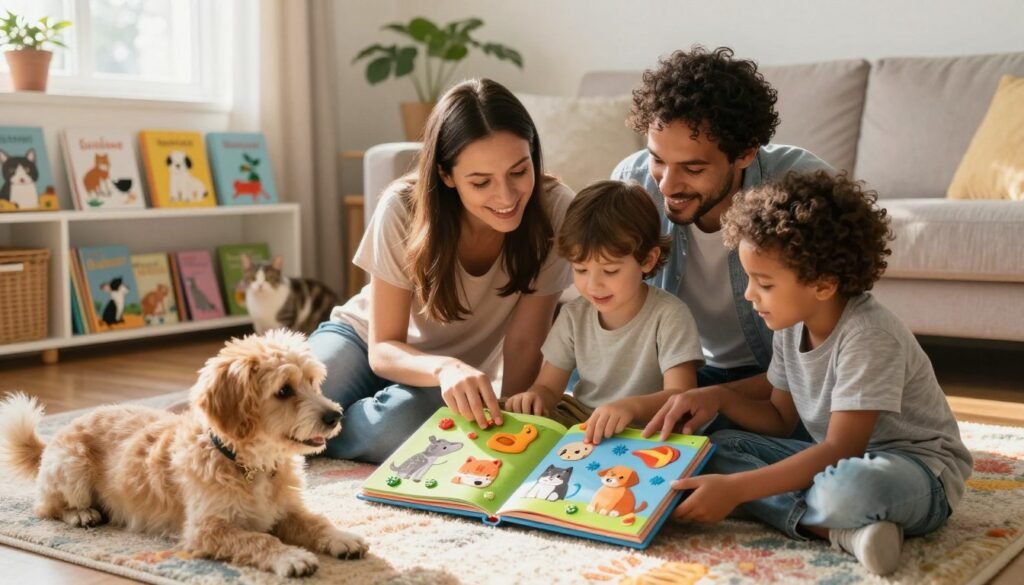
This visual literacy translates directly to real-world safety. My daughter now knows to approach our neighbor’s cat slowly, watching for welcoming signals before reaching out to pet.
3. Grasping Long-Term Commitment and Consistency
Many children’s books address the lifespan reality of pet ownership in age-appropriate ways. Stories that follow a character and their pet over months or years demonstrate that this relationship requires sustained effort.
I’ve found that books showing pets aging help children understand the “forever” aspect of adoption. When a story shows a puppy growing into an older dog who is cared for daily, the message resonates deeply.
We discuss how the character’s commitment never wavers:
- Care continues during vacations, requiring planning and arrangements
- The pet needs attention even when new interests emerge
- Responsibilities persist through different life stages and seasons
- The bond strengthens through years of consistent care and interaction
This concept challenges the instant gratification mindset many children have. Quality stories show that the rewards of pet ownership come from sustained dedication, not momentary excitement.
4. Recognizing Responsibility Versus Just the Fun Parts
Honest pet books don’t shy away from showing the less glamorous aspects of animal care. I appreciate stories that include scenes of cleaning litter boxes, picking up waste during walks, or dealing with muddy paw prints.
Can I Be Your Dog? brilliantly shows a dog searching for the right home, touching on the reality that pet ownership involves sacrifice and inconvenience. The families who say “no” aren’t villains—they’re being realistic about their capacity.
These narratives help children understand the full picture:
- Cleanup duties are part of the package, not optional extras
- Veterinary visits and medical care require time and money
- Training takes patience and consistent effort over weeks or months
- Sometimes pets interrupt plans or create unexpected messes
- The cute moments are balanced by challenging, frustrating times
When my son asked for a hamster, we reread stories showing nighttime cleaning routines. He gained a more complete understanding of what he was requesting.
5. Building Patience and Practicing Gentle Touch
Interactive pet storybooks for families often model the slow, calm approach necessary for positive animal interactions. Characters who rush toward pets and get scratched or bitten learn valuable lessons that my children absorb vicariously.
Stories showing characters practicing gentle petting techniques give children a visual template. When we read about soft hands and quiet voices, I have my kids demonstrate with their stuffed animals.
We practice these patience-building skills during reading time:
- Approaching animals slowly and from the side, not head-on
- Waiting for the pet to come to them, not chasing
- Using soft touches on appropriate body areas
- Recognizing when a pet has had enough interaction and needs space
- Speaking in calm, reassuring tones, not loud, excited voices
This preparation has proven invaluable. My children now naturally extend one finger for unfamiliar animals to sniff before attempting full contact, exactly as we’ve practiced with our storybooks.
6. Problem-Solving Common Pet Challenges
Books that present realistic pet problems help children develop critical thinking skills. When a story’s cat won’t use the litter box or a dog barks excessively, the character must troubleshoot solutions.
I use these narrative challenges as discussion prompts. We brainstorm what might be causing the problem and what solutions the character should try.
Common scenarios that what books help kids learn to care for animals often address include:
- Pets who are fearful of loud noises or new environments
- Animals adjusting to changes in household routines
- Introducing pets to new family members or other animals
- Dealing with separation anxiety or destructive behaviors
- Managing pets who are sick or recovering from injury
These problem-solving narratives build resilience. Children learn that challenges are normal parts of pet ownership, not reasons to give up.
7. Creating Realistic Expectations About Pet Behavior
The most valuable pet books show animals acting authentically, not like tiny humans in fur coats. Pets in these stories get scared, have accidents, resist training, and sometimes just want to be left alone.
Charlotte’s Web beautifully portrays Wilbur as a real pig with genuine pig behaviors and needs. He’s lovable but not perfect, requiring understanding and adaptation from those who care for him.
I emphasize these realistic portrayals during our discussions:
- Pets don’t always want to play when we’re ready
- Animals communicate differently than humans and may be misunderstood
- Training takes repetition, and setbacks are completely normal
- Different species and individual animals have unique personality traits
- Pets have their own preferences, fears, and boundaries that must be respected
This realistic foundation prevents the disappointment many children feel when their fantasy pet doesn’t match the real animal. My kids know that real pets are better than fantasy ones because they’re authentic and unique.
| Preparation Skill | How Stories Teach It | Real-World Application | Age to Start |
|---|---|---|---|
| Daily Care Routines | Showing consistent feeding, grooming, and exercise schedules in storylines | Children understand pets need care every single day | Ages 2-3 |
| Body Language Reading | Illustrations depicting clear emotional states and physical cues | Kids recognize when animals are happy, scared, or need space | Ages 3-4 |
| Long-Term Commitment | Following character-pet relationships over extended time periods | Understanding that pets are lifelong family members | Ages 4-5 |
| Responsibility Balance | Depicting both enjoyable and challenging aspects of pet care | Realistic expectations about work involved in ownership | Ages 5-6 |
| Patience and Gentleness | Modeling slow approaches, soft touches, and calm interactions | Safe, respectful handling of real animals | Ages 2-4 |
These seven preparation pathways work together to create genuinely ready children. When the time comes to bring home a real pet, kids who’ve absorbed these lessons through stories approach the experience with eyes wide open.
The transformation I’ve witnessed in my own children proves the power of these narrative lessons. They’ve moved from viewing pets as living toys to understanding them as beings with their own needs, emotions, and rights to respectful treatment.
Best Pet Books for Toddlers (Ages 2-4): Building Early Empathy
When I first started reading pet stories to my toddler, I quickly learned that not all animal books are created equal. The best pet books for toddlers empathy development have special qualities that match where young children are developmentally.
Age-appropriate pet books for children in the 2-4 range share common features. They use simple, repetitive text that toddlers can predict and remember. The illustrations are clear and expressive, showing emotions that little ones can recognize.
Many include interactive elements like flaps, textures, or sounds that keep tiny hands engaged. Most importantly, they present straightforward emotional arcs that toddlers can follow from beginning to end.
Dear Zoo by Rod Campbell
This interactive lift-the-flap classic has been teaching toddlers about animals for decades. Each page reveals a different animal sent from the zoo, but there’s always a problem—too big, too fierce, too jumpy.
I love this book because it introduces a key concept: not every animal is suitable for every situation. Toddlers learn that we must consider an animal’s nature and needs, not just whether we think they’re cute.
The repetitive structure helps even very young children predict what comes next. Ask your toddler, “Why do you think this one won’t work?” This simple question builds critical thinking about animal welfare.
Harry the Dirty Dog by Gene Zion
Harry is a white dog with black spots who hates baths so much that he runs away. After playing in coal, mud, and dirt, he becomes a black dog with white spots.
This classic story teaches toddlers that pets need care routines even when they don’t want them. Harry’s family doesn’t recognize him at first, but his behavior and personality give him away.
The clear cause-and-effect structure helps toddlers understand consequences. I ask my kids, “What happened because Harry didn’t want a bath?” This connects actions to outcomes in a gentle, memorable way.
The story also reinforces that pets are family members who come home, belong with us, and deserve our care.
The Pout-Pout Fish by Deborah Diesen
This rhythmic underwater tale follows Mr. Fish, who believes he’s doomed to be sad forever. His friends try to cheer him up, and eventually he discovers he can spread happiness instead of gloom.
While this book features a fish, it builds foundational emotional literacy skills. Toddlers practice identifying feelings in others and understanding that we can help others feel better.
The bouncy, repetitive rhythm makes this book highly engaging for read-alouds. I point to Mr. Fish’s face and ask, “How does he feel right now?” This teaches emotional recognition.
The story’s message—that we’re not stuck with one emotion forever—is powerful for building empathy and emotional flexibility.
Biscuit Series by Alyssa Satin Capucilli
Biscuit is a small yellow puppy who appears in dozens of gentle stories about daily adventures. He gets into minor trouble, needs patience, and requires consistent care.
These books show realistic pet behavior in a toddler-accessible format. Biscuit doesn’t always listen the first time. He gets excited and needs gentle redirection.
The simple vocabulary and repetitive phrases (“Woof, woof!”) build reading confidence. At the same time, the stories model gentle interaction with pets.
I use Biscuit books to practice prediction: “What do you think Biscuit needs right now?” This encourages toddlers to think about an animal’s needs, not just their own desires.
The series covers bedtime, bathtime, visits to the vet, and everyday routines. This repetition reinforces that pet care happens every single day, building realistic expectations.
Each of these books creates opportunities for discussion that extend beyond the pages. The goal isn’t just reading the words—it’s pausing to identify emotions, predict needs, and connect story moments to real animals your toddler might encounter.
Top Pet Books for Preschoolers (Ages 4-6): Responsibility in Action
The preschool years are magical. Children start to see responsibility as a big deal. They learn to follow stories and understand cause-and-effect over time.
At this age, kids can grasp the daily needs of animals. They see that feeding pets is not just fun. It’s something that needs to happen every day.
The books for this age group teach kids about responsibility in action. Each story shows characters making choices and learning to care for others over time.
Can I Be Your Dog? by Troy Cummings
This book is special because it’s written in letters. Arfy, a homeless dog, writes to different families hoping to be adopted. He faces many responses, some kind, some not.
It’s a favorite because it shows adoption from the animal’s view. Arfy hopes, feels, and needs. He faces disappointment but keeps trying.
The book teaches kids about finding the right pet match. It shows adoption is a process, not quick. It also teaches that animals in shelters wait for homes.
After reading, we talk about the story. I ask questions like “Why wasn’t Arfy a good fit for the apartment family?” These talks help kids think about what pets need.
A Sick Day for Amos McGee by Philip C. Stead
This story touches my heart every time. Amos, a zookeeper, visits his animal friends daily. When he gets sick, they visit him instead.
The book shows that caring relationships are two-way. Amos builds special bonds with each animal. When he’s sick, they show him kindness.
This story teaches kids about daily commitment. My preschoolers see that the animals noticed Amos’ absence because he came every day. It shows that pet care doesn’t stop when we’re tired.
The book also shows that we care for others even when we’re not feeling well. The animals chose to care for Amos. This teaches kids to be compassionate before they have pets.
Flora and the Flamingo by Molly Idle
This wordless book is a masterpiece for teaching non-verbal communication. Flora and a flamingo learn to dance together. They start slow and find their rhythm over time.
It’s great for preschoolers because it teaches them to read body language. Without words, kids must understand what the characters feel. This skill helps them understand pet behavior.
The story teaches important pet relationship lessons. It shows building trust takes time. It teaches us to adjust to each other’s communication styles. It shows compromise in relationships.
After reading, we act out the story. We talk about what the characters might be thinking. These talks help kids practice observing pet behavior.
The Goodbye Book by Todd Parr
Some parents worry about reading about pet loss to young kids. But I think it’s important preparation. Todd Parr’s book gently introduces the idea that pets don’t live forever.
The book explains different kinds of goodbyes in simple language. It validates kids’ feelings of sadness and anger. It shows that we can remember and honor those we’ve lost.
This book helps kids understand that loving something means we might feel sad. But the love was worth it. It builds emotional resilience and realistic expectations.
When we read this together, we talk about our feelings. We connect the idea of goodbye to our own experiences. This helps kids process big emotions before facing pet loss.
| Book Title | Key Responsibility Concept | Best Discussion Starter | Emotional Skill Developed |
|---|---|---|---|
| Can I Be Your Dog? | Matching pet needs with family capabilities | “Why wasn’t this family right for Arfy?” | Understanding perspective-taking and realistic assessment |
| A Sick Day for Amos McGee | Daily consistency builds trust and relationship | “What would happen if Amos skipped visiting for a week?” | Recognizing reciprocal care and commitment |
| Flora and the Flamingo | Building trust requires patience and non-verbal understanding | “How do Flora and the flamingo know what each other wants?” | Reading body language and adjusting behavior |
| The Goodbye Book | Loving involves eventual loss but remains worthwhile | “What helps you feel better when you’re sad about goodbyes?” | Processing grief and building emotional resilience |
Each book opens up deeper conversations about pet ownership. They show the work, commitment, and emotional complexity involved. When kids learn about these concepts through stories, they’re ready for real life.
I’ve seen my preschoolers apply lessons from these books in unexpected ways. After reading about Amos McGee, my daughter started checking on her stuffed animals “every single day” to make sure they weren’t lonely. This consistent care practice, even with toys, builds the habits she’ll need with a real pet someday.
Essential Pet Books for Early Readers (Ages 6-8): Deeper Understanding
When my kids were in early elementary school, their questions about animals changed. They weren’t just asking simple questions anymore. They wanted to know about animal cruelty, if animals feel like we do, and what happens when pets die.
Chapter books were perfect for these deeper conversations. Unlike picture books, these stories lasted longer. My kids formed lasting bonds with fictional animals, just like real pet owners do.
The best pet books for kids in this age range introduce moral complexity. They prepare kids for the ethics of caring for animals. These stories show the consequences of decisions and the reality of making tough choices for animals.
Because of Winn-Dixie by Kate DiCamillo
This story about Opal and her stray dog captured my daughter’s heart. It shows emotional wounds and healing through pet companionship honestly. Winn-Dixie is more than a pet; he connects Opal to a community.
The book touches on themes of loneliness and feeling different. Opal’s bond with Winn-Dixie helps her make friends and understand her mother’s absence. It shows pets can change our emotional lives.
I loved discussing Winn-Dixie’s story with my kids. It mirrors Opal’s feelings about her mother leaving. This helped them understand that pets carry their own trauma and need patience and consistency.
Conversation starters I used:
- How does taking care of Winn-Dixie change the way Opal sees herself?
- What does the dog need from Opal beyond food and shelter?
- Why do you think some people abandon pets, and what can we do to help?
Shiloh by Phyllis Reynolds Naylor
This book is tough. It deals with animal mistreatment and the reality of cruelty. But it’s valuable for the conversations it sparks.
Shiloh shows that not all people treat animals with kindness. Judd Travers represents a harsh reality. The story teaches kids to stand up against animal cruelty.
The book explores moral gray areas. Marty lies to protect Shiloh. Is that right? These questions are important because they don’t have simple answers.
We talked about recognizing animal abuse and how to report it. We discussed the courage needed to protect animals. I connected it to real-world resources, making the lessons practical.
Hoot by Carl Hiaasen
This book expanded my kids’ understanding to include wildlife conservation. Roy’s fight to protect owls taught them about caring for wild creatures affected by human actions.
The book shows kids taking action. Roy and his friends don’t just feel sad; they take steps to help. This empowers them to make a difference.
The story led to discussions about animal habitats. We noticed construction sites differently, thinking about displaced animals. My son started documenting birds in our backyard.
Discussion topics that emerged:
- How are wild animals different from pets in terms of what they need from us?
- What can kids actually do to protect animal habitats in their communities?
- Why should we care about species we’ve never seen in person?
Charlotte’s Web by E.B. White
No list of the best pet books for kids would be complete without this masterpiece. It addresses friendship, sacrifice, and the natural cycle of life and death beautifully. When Charlotte dies, my kids cried, showing genuine grief.
The book challenges the hierarchy of animal importance. Charlotte, a spider, proves intelligent, loyal, and worthy of love. This changes how my kids view all creatures.
Wilbur’s growth from a frightened piglet to a confident friend is inspiring. We discussed how animals have rich emotional lives. This builds empathy beyond the book.
“It is not often that someone comes along who is a true friend and a good writer. Charlotte was both.”
This quote sparks conversations about valuable relationships and bonds between species. We talked about Charlotte’s legacy and how love and impact last beyond individual lives.
Discussing Charlotte’s death, we acknowledged the sadness but also the preciousness of time together. This prepares kids for future pet loss in a way that feels honest and healing.
These chapter books laid a foundation that picture books couldn’t. They offer complex moral questions and realistic portrayals of joy and heartache. This gives kids a deep understanding of caring for living creatures.
Making Reading Interactive: 5 Techniques That Bring Pet Stories to Life
When I started making pet stories interactive with my kids, everything changed. We moved from just listening to actively participating. Dr. Mayes says making reading fun is key. If kids enjoy reading, they’ll want to do it more.
Interactive reading helps kids connect what they learn in books to real life. When you make reading pet books with children an engaging, multi-sensory experience, you’re not just entertaining them. You’re also teaching them empathy and how to care for pets.
Here are five ways to make reading about pets fun for toddlers and older kids. Each method turns storytime into a memorable learning experience.
Ask Prediction Questions Throughout the Story
Pausing to ask what might happen next makes your child an active participant. Prediction questions get their minds working before they see the next page.
Ask questions at natural breaks in the story. Try to connect them to pet care and feelings.
Effective prediction questions include:
- “What do you think the puppy needs right now?”
- “How do you think the cat will feel about that?”
- “What would you do if you were taking care of this bunny?”
- “Do you think the dog is happy or worried? Why?”
- “What happens when pets don’t get their food on time?”
These questions help build empathy and predictive thinking. Your child learns to read situations and anticipate needs. This is key for caring for pets.
Act Out Care Routines with Stuffed Animals
When a book character feeds their dog, grab a stuffed animal and a paper bowl. Acting out what you’re reading helps reinforce learning through multiple senses.
I keep a basket of stuffed animals next to our reading spot. As we read about pet care, we practice it with toys.
Simple props make this technique even more effective:
- Paper bowls for “feeding” practice
- Soft brushes for “grooming” routines
- Small blankets for “bedtime” care
- Toy leashes for “walking” practice
- Pretend water bottles for hydration lessons
This hands-on approach turns abstract concepts into real actions. Your child isn’t just hearing about gentle touches—they’re practicing them.
Create Voice Characterizations and Sound Effects Together
Making animal sounds and giving each character a distinct voice turns reading into a performance. This playful approach increases engagement and memory retention.
I’ve noticed my kids remember stories better when we’ve created voices together. The silly dog voice or the grumpy cat meow becomes a memorable part of the learning experience.
Don’t worry about being a professional voice actor. The goal is making the experience joyful. Try having your child suggest what sound each animal should make or how a character might talk.
Sound effects and voices create emotional connections that make pet care concepts stick. When your child remembers the excited puppy bark, they also remember why the puppy was excited—maybe because someone filled their food bowl or threw a ball.
Pause to Identify and Discuss Emotions
Stopping to examine how characters feel builds emotional literacy. I point to illustrations and ask simple questions that help my kids connect facial expressions to feelings.
This technique teaches children to read body language and emotional states. Those same observation skills transfer directly to recognizing when real pets are scared, happy, or uncomfortable.
Age-appropriate emotion questions:
| Age Group | Question Type | Example Questions |
|---|---|---|
| Toddlers (2-4) | Basic identification | “Is the dog happy or sad?” “Does the cat look scared?” “What makes the bunny feel good?” |
| Preschoolers (4-6) | Cause and effect | “Why do you think the puppy feels that way?” “What happened to make the cat worried?” “How can we help this animal feel better?” |
| Early Readers (6-8) | Complex analysis | “What clues show how the pet is feeling?” “How would you feel in this situation?” “What does this teach us about taking care of animals?” |
These emotional check-ins create space for deeper conversations. You’re teaching observation, interpretation, and compassionate response—the complete empathy package.
Connect Story Moments to Real-Life Animal Observations
Linking book scenes to actual experiences helps children transfer learning from fiction to reality. When we see a dog at the park, I remind my kids of similar situations in our pet stories.
This bridging technique makes abstract book knowledge concrete and applicable. Your child starts recognizing patterns between what they’ve read and what they observe in the real world.
Try these connection strategies:
- “Remember when the dog in our story pulled on the leash? That’s what’s happening here.”
- “This cat is sitting just like the one in our book when it wanted to be left alone.”
- “See how that bird is eating? Just like we read about in the story.”
- “The vet visit in our book looked like this, didn’t it?”
I’ve started keeping a simple photo collection on my phone of animals we encounter. During storytime, we reference these real experiences, strengthening the connection between stories and life.
These five techniques transform how to make reading about pets interactive for toddlers and children of all ages. Start with one approach that feels natural to you, then gradually add others as you build confidence.
The goal isn’t perfection—it’s engagement. Even small implementations make a significant difference in how much your child learns and retains from each reading session.
From Storybook to Reality: How Vibo Brings Those Reading Moments to Life
Bedtime stories about pets filled my kids’ minds with knowledge. But their hands needed to learn too. They could recite facts from interactive pet storybooks, but practicing with stuffed animals felt abstract.
Then, I found Vibo. It wasn’t just another toy or app. It was the missing piece that made story time lessons real.
Practicing What They’ve Read About in Real Time
Vibo responds to the care routines my kids read about. When they feed him, he’s happy. If they forget, he shows he’s hungry.
This feedback makes learning stick. Unlike silent stuffed animals, Vibo shows consequences. My daughter learned that actions matter, just like in the stories.
Reading and doing became connected. We’d read about grooming, then practice with Vibo. The story gave context, and Vibo made it real.
Building Hands-On Confidence Before Getting a Real Pet
Dr. Mayes’s research shows that non-judgmental companions help kids feel confident. Vibo offers this kind of support and more.
My kids practice care without worrying about a real animal. They build muscle memory for feeding and grooming. Mistakes are safe to learn from.
Vibo showed me if my kids were ready for a pet. Consistency with Vibo proved their readiness.
The confidence my kids gained was amazing. My son went from being unsure to confident in caring for pets.
Creating Consistent Care Habits Through Daily Interaction
Stories are great at bedtime, but pets need care every day. Vibo fills this gap beautifully. My daughter’s morning routine with Vibo mirrors what we read about in interactive pet storybooks.
This daily routine builds habits before a real pet needs them. My kids learned to show up every day, no matter what.
- Morning feeding became as automatic as brushing teeth
- Evening play time created a wind-down routine
- Weekly grooming taught planning and follow-through
- Daily check-ins built observation skills
The transition to responsibility happened naturally with Vibo. It made daily care feel manageable.
Making Storybook Lessons Tangible and Memorable
Reading and Vibo interaction made learning stronger. Stories gave emotional connection, while Vibo provided physical practice.
We developed a pattern: read a story, then practice with Vibo. This made lessons stick in ways I didn’t expect.
Vibo’s responses sparked discussions that referenced book characters. “Vibo is sleepy—just like when Harry the Dog needed his rest!” These connections made learning memorable.
Imagination, as Dr. Mayes describes, came alive through this combination. My kids could predict Vibo’s needs and solve care challenges because of stories.
Imagination helps children anticipate what might be before something happens and helps them create their own internal world, developing problem-solving skills and emotional management.
Vibo became the next chapter in our journey to readiness for a pet. It’s not a replacement for reading but a perfect complement. Storybook moments now have a living, breathing extension that prepares my children for real responsibility. Download free Book 1: “Vibo’s First Adventure”.
Conclusion: Your Reading Journey Starts Today
Starting your journey to pet ownership can seem daunting. You might question if your child is ready, if you’re making the right choice, or if they’ll keep their promises to care for a pet.
Reading about animals with your child adds value beyond just preparing for a pet. Every story you share together boosts empathy, emotional smarts, and patience. These skills help your child in many ways throughout their life. Studies show that reading improves mental health, self-esteem, and school performance. By reading pet books together, you’re investing in your child’s growth right now.
You don’t have to read every book or be perfect at it. Just start with one book from the library tonight. Try one new way of reading together. See how bonding over pet books changes your relationship.
Listen to what your child asks and notice their growing empathy. Their questions show their growing compassion and sense of responsibility. This can surprise many parents.
Reading is your first step towards a more joyful journey. It makes everything that comes next—more stories, practice, or even getting a pet—more fun and successful.
So, grab a book and get cozy. Your reading adventure begins today, and I’m looking forward to seeing where it takes your family.