
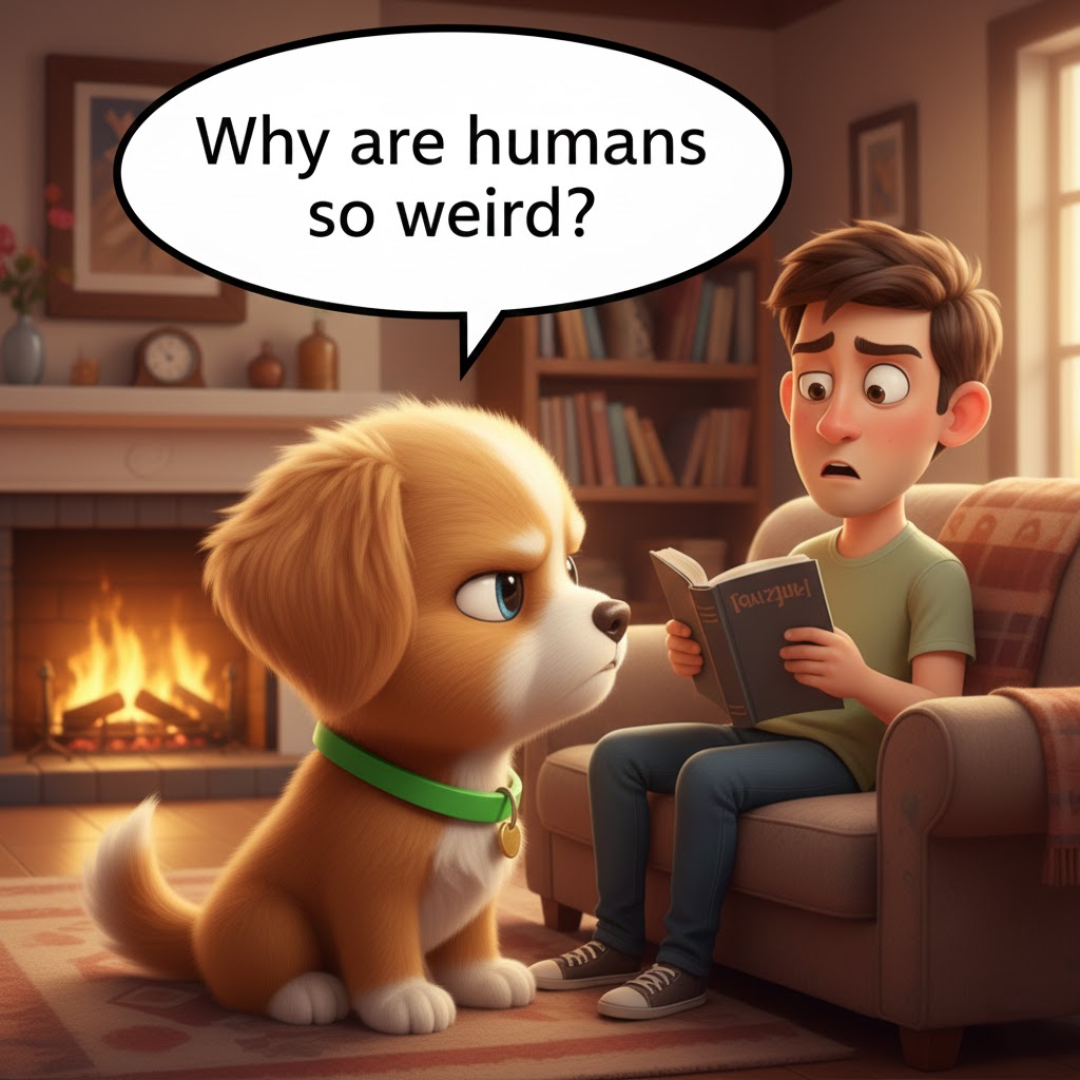
Did you ever ask yourself, “Why does my dog stare at me?”
Have you ever found yourself sitting comfortably, only to look up and lock eyes with your dog, staring at you with an intensity that borders on the surreal? This common and sometimes amusing behavior often leaves dog owners curious and perhaps a bit perplexed. While your furry friend’s gaze might just seem like a cute quirk, it actually speaks volumes about their world and relationship with you. Understanding why your dog stares at you can not only strengthen your bond but also help you respond to their needs better. Let’s unravel the mystery behind those thoughtful eyes.
Understanding the Canine Gaze
Before jumping into the specific reasons behind your dog’s persistent gaze, it’s essential to explore the broader context of canine eyesight and behaviors associated with eye contact. Dogs, like humans, use eye contact as a crucial means of communication, but there’s more nuance to their gaze than initially meets the eye.
The Evolutionary Perspective
Dogs have evolved alongside humans for thousands of years, adapting their behaviors to cohabitate effectively with us. This evolution has influenced how dogs use eye contact as a communication tool. While eye contact is highly valued and often considered a sign of trust and attention in humans, for dogs, it can carry a wide range of implications depending on the context. In the wild, direct eye contact could be a sign of dominance or a challenge, but domesticated dogs have learned to associate eye contact with positive interactions, often leading to rewards or affection.
Comparing Human and Canine Vision
Though dogs do not see the world as vividly as humans in terms of color, their vision is well-suited for perceiving movement. They are particularly adept at reading body language and interpreting subtle cues from our faces. Unlike humans, who rely on visual detail, dogs use eye contact in conjunction with body language and vocal cues to interpret our emotions and intentions.
Deciphering Different Types of Dog Stares
Not every stare has the same meaning. Understanding the situation and context in which your dog stares at you can reveal the motivation behind those eyes. Let’s explore some of the common reasons your dog might be watching you so intently.
Seeking Attention
Your dog might simply want your attention. Dogs are inherently social animals and thrive on interaction. If your dog is staring at you, it might be a signal that they want a bit of your time, whether it’s for play, a walk, or just some good old-fashioned petting. This friendly gaze is often accompanied by relaxed body language and maybe even a wagging tail.
Hunger or Thirst
Just like clockwork, your dog might remind you it’s dinner time by staring at you. If you notice your canine friend staring around feeding times or if they cast glances at their food dish, it’s a pretty clear indication they might be hungry or thirsty. Keeping track of your dog’s meal schedule can help you discern this type of stare.
Expressing Affection
Dogs are known for their loyalty and affection towards their owners. Sometimes, your dog stares at you just because they adore you. This affectionate gaze typically features soft eyes, a relaxed face, and sometimes paired with a sigh of contentment. It’s akin to a loving look one might receive from a close friend or family member.
Need for Bathroom Break
If your dog is staring at you and suddenly seems restless or begins pacing, it might be signaling that it needs a bathroom break. Consider their routine and the last time they went outside. A quick walk might be exactly what they need.
Staring as Part of Training and Reinforcement
Engagement through eye contact is a fundamental part of training. When you train your dog, eye contact signifies attentiveness and helps in reinforcing commands. These moments of shared focus aid in building a stronger bond between you and your pet.
Eye Contact in Training
Dogs learn effectively when they are attentive and focused on their owner. Training that involves solid eye contact can help in enhancing obedience and performance. When your dog locks eyes with you during a training session, it shows they are attentive and ready to work. It’s an indication that they’re waiting for the next cue or command from you, eager to please and earn that reward.
Reward and Reinforce
Positive reinforcement through treats or praise when your dog maintains eye contact can reinforce good behavior. Canines respond well to rewarding systems, and acknowledging their focus encourages them to continue this behavior. Over time, your dog may use eye contact as a way to communicate their eagerness to perform tasks or tricks learned during training.
Medical Reasons Behind the Stare
While many reasons for a dog’s stare are benign or positive, there are instances where it might signify an underlying health issue. It’s important to be aware of these potential medical concerns to ensure your pet’s well-being.
Cognitive Dysfunction
As dogs age, some might suffer from cognitive dysfunction, which is somewhat similar to dementia in humans. Symptoms can include staring into space or at walls without reason. If your older dog is displaying unusual staring behaviors, along with disorientation or changes in sleeping patterns, it might be a good idea to consult your veterinarian.
Anxiety and Stress
Dogs, like humans, can experience anxiety and stress affecting their behavior. If your dog’s stare is coupled with signs of fear or nervous behaviors, it might be experiencing anxiety. This could be due to environmental changes, separation, or loud noises. It’s crucial to identify and address the causes of stress to maintain their happiness and health.
Vision Problems
Strange staring behavior might be explained by vision problems. Dogs suffering from eye conditions may struggle to focus properly, leading to unusual staring. A veterinary check-up can help diagnose and address these issues effectively.
Communicating With Your Dog
Understanding your dog’s stare is part of the larger picture of communicating effectively with your pet. A deeper understanding of their language can strengthen your bond significantly.
Observing Body Language
In addition to eye contact, dogs use their entire body to communicate. Paying attention to your dog’s posture, tail movement, and facial expressions alongside the stare will provide better insight into what they might be feeling or thinking.
Vocalizations and Context
Coupling the context and vocalizations your dog uses when staring can help in decoding their intentions. Whining, barking, or different kinds of vocalizations can accompany a stare, potentially indicating a want or need from you.
Responding Appropriately
When deciphering the cause behind your dog’s stare, responding appropriately can help solidify your communication. Whether it’s a need for affection, food, or addressing potential health concerns, timely responses affirm to your dog that their attempts to communicate with you are understood and appreciated.
Conclusion
Although it might seem like a simple act, when your dog stares at you, there’s usually more than meets the eye. These stares can signify a range of emotions, needs, and desires, each rooted in their relationship with you. Recognizing these cues and understanding them fosters a deeper connection between you and your dog, enhancing your role as a responsible and attuned pet owner. So, the next time you catch your furry friend watching you intently, you’ll be equipped with the knowledge to interpret that gaze and respond in the best possible way for both you and your companion.