
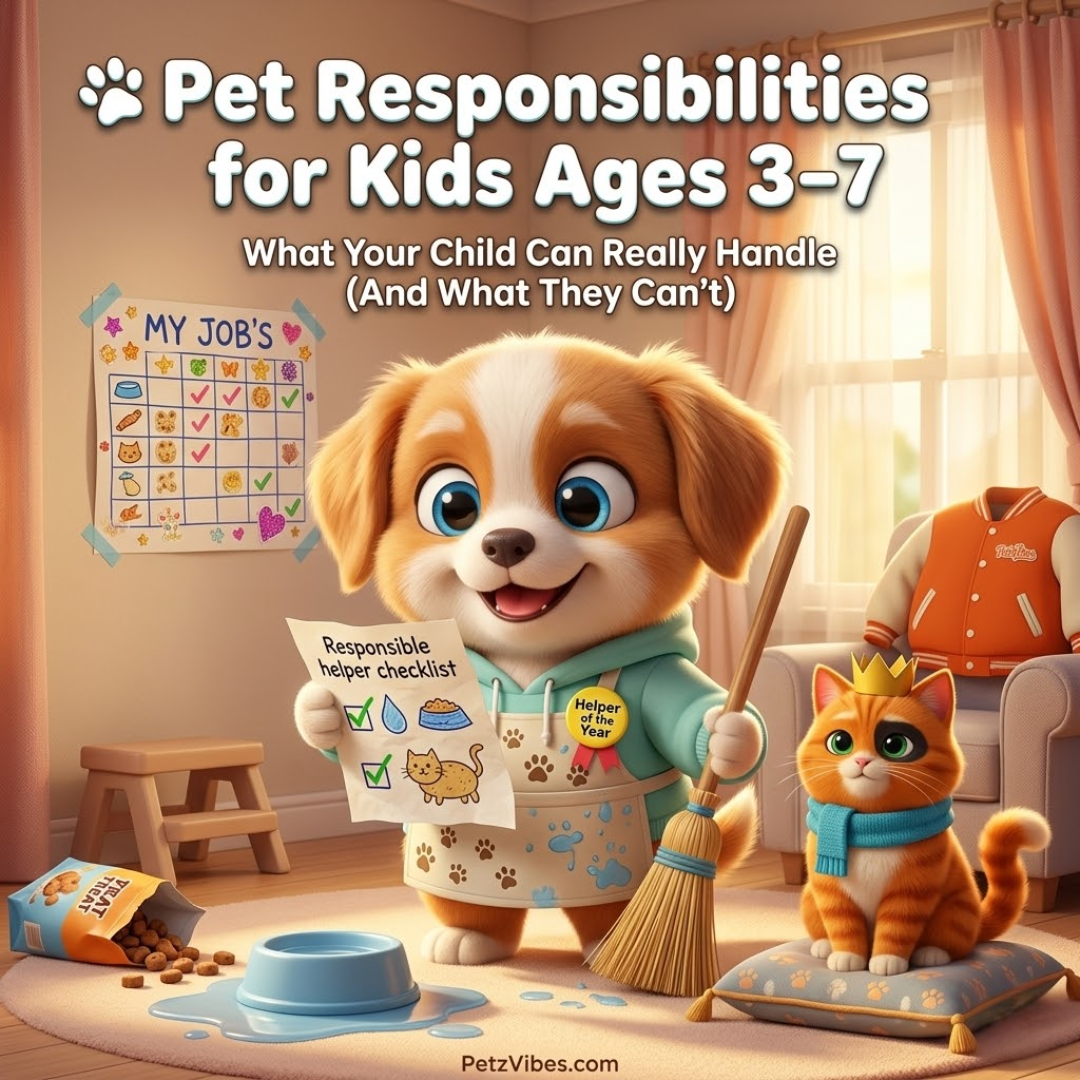
Did you know that nearly 67% of American households have a pet? Yet, most parents find it hard to decide what tasks their young kids can do safely. I learned this the hard way.
My five-year-old thought he was ready to help with our dog. He took our 25-pound Labrador to the bathtub without telling anyone. It was a mess.
There was water everywhere, our dog was scared, and my kid was crying. It was too much for him.
That moment taught me a big lesson: enthusiasm doesn’t equal capability. Kids want to help with pets, but they often can’t do what they think they can.
I’ve learned which tasks are right for preschoolers and which ones cause trouble. This guide will show you what your child can handle. It’s for dogs, cats, rabbits, or fish. It keeps your child and pet safe and happy.
Key Takeaways
- Children under seven are eager to help with pets but lack the coordination and safety sense.
- Tasks that match their age help build responsibility and prevent stress for both kids and pets.
- It’s not just about age, but also about the child’s developmental stage when giving pet duties.
- Adults must always watch over kids when they’re with animals.
- Starting with easy tasks helps kids feel confident and not discouraged.
- The same rules apply to all pets—dogs, cats, rabbits, hamsters, and fish.
- Choosing tasks that fit your child’s abilities helps their confidence and keeps pets safe.
Let’s Get Real About Young Kids and Pet Care
I need to be honest with you about something that catches most parents off guard. Your preschooler probably won’t remember to feed the dog without reminders. Your six-year-old might enthusiastically promise to clean the hamster cage every week, then conveniently forget by Tuesday.
And you know what? That’s completely normal.
The disconnect between what we hope our kids will do and what actually happens isn’t a failure on anyone’s part. It’s simply how young brains work. When we talk about age-appropriate chores for young children with pets, we’re looking at something very different from what most parents initially imagine.
I’ve watched countless families bring home pets with the best intentions. Parents envision their children learning responsibility through daily feeding schedules and regular care routines. But within weeks, they’re doing all the work themselves while feeling frustrated that their child “isn’t stepping up.”
Here’s what I’ve learned: teaching young children pet responsibility isn’t about delegating tasks. It’s about creating supervised opportunities for connection and learning. The research backs this up beautifully.
A study from The Kids Research Institute found something remarkable. Children aged 2 to 5 in dog-owning households were more likely to engage in pro-social behaviors like sharing and helping. These benefits came from interaction with pets, not from completing chores independently.
Children’s Hospital Colorado notes that simply petting a dog can lower anxiety and help regulate heart rate in young children. The HABRI study discovered that young children with pet dogs are more physically active and spend less time on screens.
Notice what’s missing from these benefits? Nobody mentioned whether the kids remembered to fill water bowls or scoop litter boxes.
The real value of pets for children ages 3-7 comes through relationship-building, not task completion. When your four-year-old gently brushes the cat while you supervise, they’re developing empathy. When your six-year-old helps you measure kibble, they’re learning routine and cause-and-effect thinking.
Young children’s brains are not yet developed enough for tasks like planning, remembering, and following through without prompts. Expecting consistent, independent pet care from a preschooler is like expecting them to do algebra—the developmental wiring simply isn’t there yet.
So what does realistic pet responsibility look like for this age group? Here’s the framework I use:
- Ages 3-4: Helper tasks with constant supervision (handing you the food scoop, sitting quietly while you brush the pet)
- Ages 5-6: Simple tasks with you nearby (filling a water bowl you’ve placed on the counter, putting toys in a basket)
- Age 7: Beginning independence on very specific tasks (scooping dry food into a bowl, gentle brushing sessions)
But here’s the critical part: You remain the primary caretaker. Always. Your child’s role is participation, not ownership of responsibilities.
I know this might feel disappointing if you got a pet hoping it would teach your child to be more responsible. But shifting your expectations actually opens up something better. Instead of constant nagging and disappointment, you create positive moments of learning together.
When you stop expecting your five-year-old to remember feeding time without prompts, you can celebrate when they do remember. When you accept that supervision is necessary, you transform pet care into quality time instead of a source of conflict.
The goal right now isn’t creating an independent pet caretaker. It’s laying the foundation for empathy, gentleness, routine awareness, and animal safety. These building blocks matter far more than whether your child can handle feeding duties alone.
And honestly? The fact that you’re reading this article tells me you’re already doing the most important thing—thinking carefully about what your child can handle and how to set them up for success.
The Ultimate Pet Responsibilities for Kids Ages 3-7: Quick Reference Table
I’ve made a quick guide for busy parents. It shows pet responsibilities for kids ages 3-7 in a simple way. This table took months to make, using research and feedback from many parents.
Think of this as your quick answer guide. Can your four-year-old really fill the water bowl alone? Should your six-year-old walk the dog without you? The answers are right here.
| Age | Feeding Tasks | Grooming & Care | Exercise & Play | Cleaning Duties | Supervision Needed |
|---|---|---|---|---|---|
| 3 Years | Help scoop food with your hand guiding theirs; shake treat container | Gentle petting with reminders; hold brush while you guide it | Supervised play in same room; roll ball to pet | Watch you clean; hand you supplies | Constant, within arm’s reach |
| 4 Years | Pour pre-measured food into bowl; place bowl on floor with help | Brush pet’s back with supervision; wipe paws with damp cloth | Throw toys for fetch; supervised petting and gentle play | Put old bedding in trash; help refill water | Direct supervision, same room |
| 5 Years | Fill food bowl independently from container; check water level daily | Brush with minimal reminders; help during bath time | Play fetch outside with you nearby; practice basic commands | Wipe food area after meals; spot-clean small spills | Nearby supervision, check-ins |
| 6 Years | Complete feeding routine; refill water bowl and check for cleanliness | Brush thoroughly on their own; trim-safe nail filing for small pets | Walk small/calm dogs on short routes; lead backyard play sessions | Scoop litter with supervision; clean cage sections with guidance | Periodic check-ins, nearby |
| 7 Years | Full feeding responsibility including portion control; track feeding schedule | Complete brushing sessions; basic ear and teeth checks | Walk trained dogs on familiar routes; organize play activities | Clean small pet habitats with spot-checks; manage waste disposal | Occasional oversight, increasing independence |
How to Use This Age-by-Age Guide in Your Home
This age-specific pet tasks chart is a guide, not a rulebook. It’s meant to be flexible, fitting your family’s needs. Consider your child’s personality, your pet’s nature, and your routine when deciding what works best.
Here’s how to use this guide in your daily life:
- Start with your child’s current age and pick just one task from that row to introduce first, not the entire list at once
- Watch how they handle it for a full week before adding anything new to their responsibilities
- Adjust based on your specific pet – a calm senior cat requires different handling than an energetic puppy
- Move backward without guilt if a task proves too challenging; there’s no shame in waiting a few months and trying again
- Celebrate small victories when your child masters a responsibility, even if it seems minor to you
- Print this table and post it where your child can see their growing capabilities as a visual reminder
Remember, teaching preschoolers pet care is a gradual process. A child who successfully completes a task one week might need reminders the next. That’s completely normal and part of the learning process.
I’ve found that the supervision column matters just as much as the task columns. The level of oversight your child needs will directly impact whether they can truly handle a responsibility or if it becomes another item on your already-full to-do list. Be honest about how much supervision you can realistically provide before assigning a new task.
Age 3: What Your Toddler Can (And Can’t) Do With Pets
Watching three-year-olds with pets is a mix of joy and no control. They are eager to help but can’t do it safely yet. It’s a time when they need constant adult help.
It’s okay for three-year-olds to help with pet care for three year olds. But we must set clear limits on what they can do. It’s more about participating than taking on big responsibilities.
At three, kids live in the moment and can’t predict what will happen next. Their fine motor skills and impulse control are just starting to develop.
Tasks That Actually Work for Three-Year-Olds
First pet tasks for toddlers should be simple and safe. They’re not chores your child will remember. They’re moments to bond and learn together.
Here’s what works for them:
| Task | How It Works | Supervision Level | Learning Benefit |
|---|---|---|---|
| Gentle Petting | Using an open palm on safe areas like the pet’s back and sides, avoiding face, ears, and tail | Within arm’s reach at all times | Builds respect for animals and gentle touch |
| Saying Pet’s Name | Cheerfully calling the dog or cat by name in a happy voice | Active monitoring | Creates positive associations and connection |
| Helping Pour Food | Holding the scoop while you guide their hands and control the container | Hand-over-hand guidance required | Introduces routine and caring concepts |
| Water Bowl Refill | Carrying a small cup of water to pour while you hold the bowl steady | Direct assistance throughout | Teaches that pets need fresh water daily |
Notice that you’re doing the real work. Your three-year-old is your helper, not your substitute.
Teach toddlers to use an open hand for petting. This prevents grabbing or poking. Guide their hand to show them safe areas on the pet’s body.
“The best predictor of safe child-pet interactions isn’t the child’s age—it’s the consistency of adult supervision during every single interaction.”
Dropping treats on the floor is safer than hand-feeding. It lets your toddler feel involved without risk. Make sure the treats are safe for your pet and not for your child to eat.
Sitting calmly near a resting pet is also a way to involve your toddler. They can learn to observe quietly, which helps with impulse control.
What’s Stil Way Beyond Their Abilities
It’s important to be honest: three-year-olds can’t do much with pets.
Never let your toddler hold a leash. They might let go and your pet could get hurt. It’s a big risk.
Feeding pets on their own is not safe. It’s too complicated and there’s a risk of choking. I’ve seen kids feed pets the wrong food by mistake.
Cleaning pet areas is also not for three-year-olds. It’s not safe and they don’t have the skills yet.
- Walking pets on a leash (even with adult help)
- Bathing or grooming pets independently
- Cleaning litter boxes, cages, or habitats
- Feeding pets without direct hand-over-hand guidance
- Remembering any pet care routine without prompting
- Being alone with a pet for any length of time
Three-year-olds’ brains are not ready for big responsibilities. They can’t plan or predict consequences yet.
I once worked with a family whose three-year-old daughter wanted to hug their rabbit. She didn’t understand why it wasn’t safe. We taught her a “gentle touch” game instead.
It took weeks of practice for her to learn. Even then, an adult had to be nearby at all times.
At three, it’s not about being independent. It’s about learning to interact with pets gently and respectfully.
Your patience now will help your child become a responsible pet owner later. For now, your job is to supervise and guide them.
Four-Year-Olds: When Pet Helping Really Begins
Something magical happens around age four when it comes to helping with family pets. Your child’s attention span grows longer, their impulse control starts improving, and they genuinely want to be part of the daily routine. This is when pet tasks for preschoolers shift from mostly pretend to actual participation.
I remember when my neighbor’s daughter turned four and became obsessed with being the “official water bowl filler” for their golden retriever. She’d drag her little step stool to the kitchen sink every morning, fill a small pitcher, and carefully pour it into Max’s bowl. Sure, there was usually water on the floor, but her pride in that simple job was absolutely beautiful to watch.
The difference between three and four might seem small on paper, but it’s huge in practice. Four-year-olds can follow single-step directions more consistently and remember tasks they’ve done multiple times before. They’re also starting to understand cause and effect better, which helps them grasp why pets need food, water, and gentle treatment.
Simple Responsibilities Your 4-Year-Old Can Start Learning
Let me be clear about something important: these are tasks your child can start learning, not tasks they’ll master or do independently. You’ll be right there guiding them through each step. That’s how simple animal care duties for kindergarteners should work at this stage.
Here are the four year old pet chores that actually work well with close supervision:
- Gentle brushing: Your child can hold a soft pet brush and make gentle strokes on a calm, willing pet. Start with just a few strokes on the pet’s back.
- Scooping food into bowls: While you measure the portions, they can pour the pre-measured food from a cup into the pet’s dish.
- Refilling water bowls: Using a small, lightweight pitcher they can manage, four-year-olds can help keep water bowls full.
- Offering treats properly: They can now practice holding treats on a flat palm instead of just dropping them, which is a big step forward from age three.
- Organizing pet toys: Gathering scattered toys and putting them in a designated bin becomes a fun cleanup game.
- Sitting nearby during meals: They can observe feeding time and tell you when the pet has finished eating.
- Gentle play activities: Rolling a ball for a dog or dragging a ribbon toy for a cat are perfect at this age.
The key word throughout all these pet tasks for preschoolers is “gentle.” I can’t stress this enough. Four-year-olds are learning to control their excitement and energy, which is important around animals they love.
One of my favorite examples involves a little boy named Jake who became his family’s “treat captain” at age four. His mom pre-portioned training treats into a small container each morning, and Jake’s job was to offer one treat at a time to their beagle after the dog followed basic commands. This simple responsibility taught Jake so much about patience, timing, and reading the dog’s body language when he was ready for a treat.
I always tell parents to think of themselves as co-participants at this stage, not just supervisors watching from across the room. Work alongside your four-year-old, narrating what you’re doing and why. “We’re brushing Sophie gently so her fur doesn’t get tangled. See how she likes it when we brush here?”
Where They’ll Stil Need Your Hands-On Help
Now let’s talk about what definitely doesn’t belong on the responsibility list yet. Even though four-year-olds show remarkable growth, there are critical tasks that require your direct involvement.
Measuring food portions accurately is beyond their capability right now. They might help pour, but you need to control how much food the pet receives. Overfeeding or underfeeding can happen quickly when a young child is in charge of portions.
Don’t expect your four-year-old to remember feeding schedules without multiple reminders. Their concept of time is developing, and “twice a day” doesn’t mean much to them yet. You’ll need to prompt them every single time until they’re much older.
Here’s a reality check on other tasks that need to stay in the adult column:
- Any form of walking, even in a fenced yard (pets can pull suddenly, and kids can trip or lose grip)
- Cleaning up accidents or waste (hygiene and thoroughness matter here)
- Bath time (slippery pets plus water equals chaos)
- Nail trimming or grooming that could cause discomfort
- Recognizing when to stop interactions based on pet body language
That last point deserves special attention. Four-year-olds are very impulsive and emotionally driven. They can’t consistently tell the difference between a pet who’s enjoying attention and one who’s getting annoyed, stressed, or overstimulated. I’ve seen too many situations where a child kept petting or playing because they were having fun, completely missing the signs that the pet wanted space.
Your four-year-old also won’t reliably understand when a pet is in pain or feeling unwell. They might notice something seems “different,” but they can’t be trusted to recognize or report health concerns consistently.
Stay within arm’s reach during all pet interactions at this age. I mean literally close enough that you could intervene in one second if needed. This isn’t about hovering or being overprotective; it’s about being realistic about developmental capabilities.
Think of your role as an active coach, not a distant referee. You’re in the game with your child, guiding their hands, showing them how much pressure is gentle, helping them notice when the pet walks away (which means “I’m done now”), and celebrating when they remember to be soft and kind.
The patience you show during this stage pays off enormously later. Four-year-olds who learn pet care with this kind of supportive, hands-on guidance develop much better habits than kids who are given too much independence too soon or criticized when they make mistakes.
Age 5: Building Confidence and Capability With Pets
At five years old, kids start to get better at taking care of pets. They can follow instructions and do tasks that need coordination. But, they also get too confident sometimes.
Remember the bathtub disaster I talked about earlier? It happened because my five-year-old thought she could handle bath time alone. She had the skills to turn on the water and wanted to help. But, she didn’t know when things were going wrong.
Five-year-olds are very excited about kindergarten age pet responsibilities. They’re getting better at many things. The challenge is knowing when to let them do things on their own and when to stay close.
What Five-Year-Olds Can Handle With Minimal Supervision
When we talk about minimal supervision, it means you’re nearby but not right next to them. You can be in the same room doing something else while keeping an eye on your child and the pet.
Here’s what most five-year-olds can do for five year old animal care:
- Brushing a calm, cooperative pet for several minutes using proper strokes you’ve demonstrated
- Scooping pre-measured food into bowls without spilling everywhere (though some mess is normal)
- Refreshing water bowls and wiping up small spills with a towel
- Giving treats properly on a flat, open palm to prevent nipped fingers
- Helping organize pet supplies like putting toys in a basket or stacking food cans on a shelf
- Holding a secondary loop on the leash during walks while you maintain primary control
- Gentle play sessions with appropriate toys like balls or feather wands
- Sitting quietly with a pet during calm time, reading or watching TV together
At this age, kids can start to remember routines. After a few weeks, your five-year-old might remind you to feed the cat. They’re learning about cause and effect, like the dog needing water after playing.
My kids at this age have developed real care skills. My daughter could brush our cat for five minutes, carefully around his ears. She felt proud when he purred, and I felt confident watching from across the room.
But, remember, minimal supervision doesn’t mean they’re independent. They’re helpers learning important skills, not the main caretaker.
Tasks That Stiill Require You Nearby
There are tasks that need your close, hands-on presence. These tasks require judgment, strength, or safety awareness that kids at this age don’t have yet.
Walking pets is one of these tasks. Even with a small dog or in a small area, five-year-olds lack the strength and judgment to handle distractions. That squirrel darting across the path? Your kindergartener will drop the leash to point at it. Every single time.
Here’s what else needs your active participation:
- Any interaction with unfamiliar animals or pets you’re meeting for the first time
- Bathing or grooming tasks involving water (as my soggy bathroom taught me)
- Administering medications or treatments of any kind
- Trimming nails or any task involving sharp tools
- Thorough cage or litter box cleaning that requires handling waste
- Making decisions about pet health, behavior problems, or emergency situations
I also keep my five-year-old away from feeding time decisions. She can scoop the pre-measured food I’ve prepared, but she doesn’t decide how much or when. That level of responsibility introduces too much room for error at this developmental stage.
The hardest part for many parents is resisting the urge to give more responsibility than the child can handle. Your kindergartener looks so capable in many ways. They’re reading simple books, dressing themselves, and having complex conversations. It’s natural to assume they’re ready for more independence with pets than they actually are.
The goal at age five isn’t independence—it’s building confidence through successful completion of appropriate tasks with your guidance.
When you give tasks beyond their abilities, you set everyone up for frustration. Your child feels like a failure when they can’t manage what you’ve asked. Your pet potentially faces stress or danger. And you end up more stressed than if you’d just done it yourself.
Instead, focus on mastering these minimal-supervision tasks throughout the kindergarten year. Let your five-year-old become really good at brushing the dog, really consistent at filling the water bowl, really gentle at giving treats. These wins build the foundation for the increased responsibility they’ll be ready for at six and seven.
I’ve learned that celebrating what they can do—instead of pushing for what they can’t quite manage yet—creates kids who genuinely love caring for animals. My five-year-old doesn’t resent pet care because I’m not forcing tasks that frustrate her. She asks to help because the jobs I give her feel successful and important.
That’s the real victory when introducing pet ownership to small children at this age. You’re not trying to create an independent pet caretaker. You’re nurturing a confident, capable helper who’s learning skills they’ll use for a lifetime.
Six-Year-Olds: Ready for Real Responsibility
I’ve seen many six-year-olds grow from needing constant reminders to taking charge of pet tasks. This age brings new maturity and a desire to prove they can do it. First grade is when they start to show they’re ready for more.
At this stage, first grade pet care is about building habits, not just learning. Your six-year-old starts to see pets as more than just playthings. They understand pets rely on them.
Parents often tell me that six-year-olds start doing things on their own, like checking the water bowl. They notice when pets seem hungry or bored. This awareness helps them handle more tasks.
Independent Pet Tasks Perfect for Age 6
When I talk about six year old pet ownership tasks, I mean tasks they can do by themselves. They might need reminders, but they can do the work.
Here are age-appropriate chores for young children with pets that six-year-olds can usually handle:
- Feeding pets at scheduled times when you remind them it’s feeding time
- Refilling water bowls and wiping up any spills with a towel
- Basic brushing sessions with calm, cooperative pets who enjoy being groomed
- Playing fetch or using feather wands with cats in appropriate ways
- Practicing simple commands like sit, stay, and come that you’ve taught them
- Putting away pet toys and organizing supplies in designated spots
- Preparing pet areas by fluffing beds or arranging favorite toys
- Reporting when supplies run low like food, treats, or waste bags
At six, “independent” means they can do the task without you showing them every step. But they might need a reminder to do it.
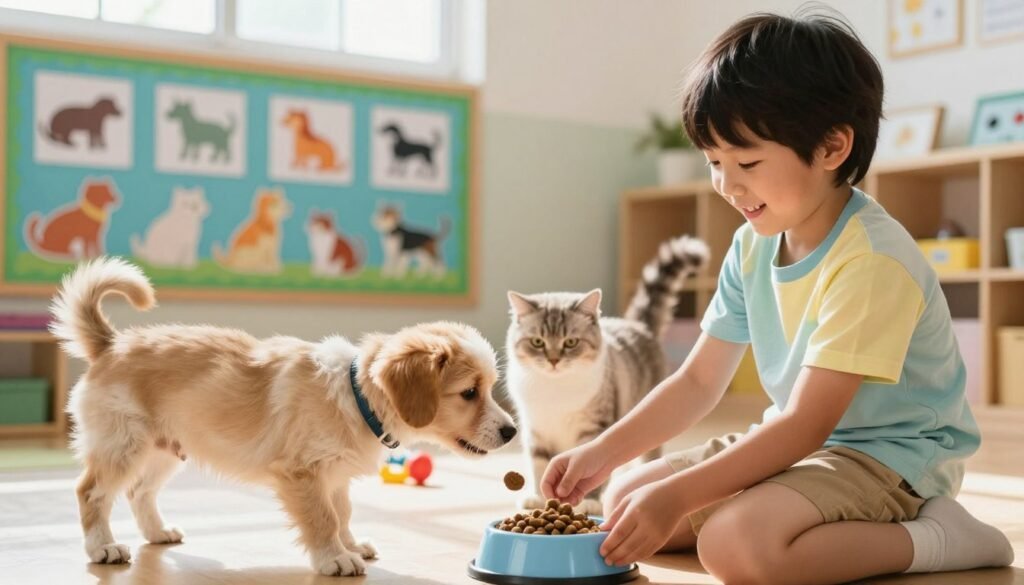
Six-year-olds do well with routine charts. Give them a checklist with pictures, and they’ll be proud to mark off each task. This builds confidence for more responsibility later.
When to Step In and When to Step Back
Knowing when to help and when to let them do it alone is key. I’ve seen parents hover too much and also step back too soon.
You should step in when:
- The pet shows any signs of stress, discomfort, or irritation
- Your child seems frustrated, overwhelmed, or losing patience
- Anything involves possible injury, even minor scratches or nips
- Meeting new animals or being in unfamiliar situations
- Any outdoor activities like walks, even in your own yard
- Your child directly asks for help with something
You can step back when:
- Your child successfully completes a familiar task, even if they’re slow
- The pet remains calm and cooperative throughout the interaction
- The environment is controlled, safe, and free from distractions
- Your child demonstrates focus and handles the pet gently
Finding the right balance between age-appropriate chores for young children with pets and safety supervision takes time. Trust your instincts about your child and pet.
Let me share a real example. Emma became her family’s “morning cat feeder” at six years old. Every morning before school, she fed Whiskers and refreshed the water.
Her mom set a phone reminder for 7:15 AM that played a cat meow sound. Emma loved this responsibility. She felt proud checking it off her chart each day.
This one task built her confidence a lot. By seven, she added evening feeding and weekend litter box scooping to her routine. It all started with that one morning job she could own.
That’s the power of first grade pet care done right. It’s not just about teaching tasks. It’s about building a responsible, caring person who understands commitment.
Age 7: Your Capable Little Pet Care Partner
At age seven, kids start taking more responsibility for their pets. They grow in memory, consistency, and judgment. This is a big step forward.
Seven-year-olds are no longer just excited to help. They actually make things easier for you. This is when pet care becomes a team effort in your family.
They can follow through on their own. They remember to do things without being told. They even do things right without constant help.
Real Responsibilities Your Seven-Year-Old Can Handle
Seven-year-olds can do a lot more for their pets than younger kids. My own seven-year-old has grown a lot in just a few months.
Here’s what most kids this age can do almost on their own:
- They can feed their pets and clean up afterwards.
- They keep water fresh for their pets all day.
- They brush their pets and check for any problems.
- They can walk dogs in safe places with them.
- They practice training commands with their pets.
- They play games that are good for their pets.
- They follow a pet care routine without needing to be reminded.
- They notice and tell you if something is wrong with their pets.
- They help take care of small pets like hamsters or guinea pigs.
- They give treats to their pets at the right time.
They can do these things without you watching them all the time. But, they need you to check if they did it right and to help with big problems.
Seven-year-olds know when to stop if their pet looks upset. They know when they need help from an adult. This makes them very reliable in ways younger kids aren’t.
Where Grown-Ups Should Stay in Charge
Even though seven-year-olds can do a lot, there are some things they shouldn’t do. Safety is always more important than doing things on your own.
Your seven-year-old should never do these things alone:
- Walking pets in places that aren’t safe, like near roads.
- Dealing with animals that are mean, scared, or unpredictable.
- Giving medicine or making health decisions for pets.
- Bathing big pets or animals that don’t like water.
- Being in charge of pets for a long time without help.
- Handling emergencies with pets.
- Changing a pet’s diet, routine, or home without permission.
Even though seven-year-olds can do a lot, they shouldn’t be in charge all the time. Most kids this age feel happy knowing adults are in charge. They want to help and feel they can, but they also need to know someone is watching over their pet.
This mix of independence and supervision is perfect for learning about pet care. Your child will feel more confident and capable. You’ll make sure your pet is safe and happy.
The Hard No List: Tasks to Keep Off-Limits for All Kids Under 8
Let’s talk about the pet care tasks that kids under 8 shouldn’t do. It’s hard to say no when they’re excited to help. But pet safety for young children means setting clear limits.
These limits aren’t about stopping your child’s growth. They’re about keeping everyone safe from danger. Even the most mature seven-year-old isn’t ready for some tasks.
Knowing these age restrictions for pet care helps create a safe space. Your child can grow without unnecessary risks. Some tasks just need to wait a bit longer.
Tasks That Put Both Kids and Pets at Risk
Walking dogs independently is a big no-no for kids under 8. It doesn’t matter how well-trained your dog is. Young children can’t handle a dog’s sudden moves.
I’ve seen kids get pulled by dogs who see other animals. Even a medium-sized dog can overpower a seven-year-old. One wrong move and your child could get hurt badly.
Administering medications or supplements is also a strict no. Giving the wrong dose can harm pets. Young children can’t measure correctly or understand timing.
Here are more dangerous pet tasks for kids that should only be done by adults:
- Handling pets during vet visits or when they’re sick (bite and scratch risk)
- Bathing medium to large pets (slip and fall dangers, drowning risk)
- Cleaning litter boxes or handling large animal waste (disease transmission, chemical exposure)
- Trimming nails or any grooming that could cause pain (injury to both child and pet)
- Being solely responsible for pets for extended periods (no help available if problems arise)
- Making decisions about feeding amounts or diet changes (serious health implications)
- Handling unfamiliar or visiting animals (unpredictable behavior)
- Intervening in conflicts between multiple pets (severe injury risk)
I never leave infants or toddlers alone with pets, even for a minute. This rule applies to all children under 8. Things can go wrong fast.
Your family dog might be gentle most of the time. But that 1% when your child accidentally steps on a paw or pulls a tail? That’s when even the best-behaved pet can react with a snap or scratch.
The Developmental Reality Behind These Boundaries
These age restrictions for pet care aren’t made-up rules. They’re based on how children’s brains and bodies develop. Young kids just aren’t ready for some tasks, no matter how smart or responsible they seem.
Risk assessment abilities haven’t fully developed in children under 8. They can’t predict consequences or evaluate danger like older kids and adults. This means they might not recognize a threatening situation until it’s too late.
Physical limitations matter a lot with pets. Children lack the strength and coordination needed for tasks involving larger animals. A 40-pound dog pulling on a leash can easily overwhelm a 50-pound first-grader.
Their immune systems are also more vulnerable to certain pet-related pathogens. Parasites and bacteria found in animal waste can cause more serious illness in young children than in adults. This is why litter box cleaning and waste management need adult handling.
Emotional regulation is another factor. Kids under 8 can’t consistently override their emotional responses with logical thinking. If a pet gets scared or aggressive, young children might freeze, run, or react in ways that escalate the situation.
Reaction time and reflexes haven’t matured enough to handle sudden movements or aggressive behavior. When a pet unexpectedly lunges or snaps, children need split-second responses they simply don’t have yet.
I’ve learned that even gentle pets can become unpredictable during stressful situations. Grooming tasks that might cause discomfort can trigger defensive reactions. Your child doesn’t have the experience to read warning signs or the reflexes to pull back quickly enough.
Decision-making about pet care requires understanding nutrition, health needs, and behavioral cues. Young children can’t grasp these complex concepts well enough to make safe choices about feeding amounts or recognize when a pet needs medical attention.
I know it’s hard to tell your eager six-year-old they can’t walk the dog around the block. But these boundaries exist for very good reasons. They’re not negotiable based on individual maturity levels because the risks are too serious.
Focus instead on the many age-appropriate tasks your child can handle. Building competence in safe responsibilities now creates the foundation for taking on bigger tasks when they’re developmentally ready. Patience with these limitations keeps everyone in your family safe and healthy.
How Different Pets Change the Responsibility Game
Many parents don’t know that the pet you choose affects what tasks your child can do. Teaching preschoolers about pet care is different for dogs, cats, hamsters, or fish tanks.
Families often struggle because they think kids should do the same tasks for any pet. But, different pets offer different learning chances and limits.
Dogs Versus Cats: What Your Kid Can Actually Do
Dogs are great for kids to learn about responsibility because they interact a lot. But, their size and energy can be too much for little kids.
Kids can help with dog care in many ways. They can feed, fill water bowls, and play with them. But, walking a dog is a big responsibility and should be done with caution.
Dogs need lots of activity and attention. Kids will be more involved, but they need adult supervision for safety.
Cats are more independent, which means less daily work but less predictable interactions.
Kids can feed cats, change water, and play with them safely. Brushing cats is okay if they like it. But, cats don’t need walks, which is a big plus for kids.
But, cats can get upset and scratch or bite. It’s important for kids to learn when to back off. They need to understand cat body language.
Small Pets Like Hamsters, Fish, and Guinea Pigs
Many parents think small pets are easier for kids to care for. But, that’s not true for kids under eight.
Hamsters and guinea pigs seem easy, but they’re actually fragile. Kids can help with feeding and talking to them. This helps kids learn empathy and routine.
But, kids can’t clean cages or handle pets without supervision. These animals bite when scared, and kids might not know when to stop.
Fish are another story. Kids can help feed them safely. But, cleaning the tank is too hard for kids.
My advice is to pick a pet that fits your family’s lifestyle. A well-trained dog might be better for teaching kids than a hamster that hides and bites.
The best pet for teaching responsibility is one that fits your child’s age and abilities. It’s not always the smallest or easiest pet.
My Best Tips for Teaching Pet Care Without the Power Struggles
Teaching preschoolers pet care isn’t about the tasks themselves. It’s about how you introduce them. Many families turn pet care into daily battles. But, it doesn’t have to be that way.
Over the years, I’ve found that successful pet responsibility training for kids relies on three key strategies. These strategies work with your child’s learning style. They’re not complicated theories but practical methods that have worked for me and many others.
Young children learn differently than adults. They need repetition, visual cues, and gradual skill-building. When you teach in a way that matches their developmental stage, pet care becomes something they want to do.
Start With One Task and Master It First
I learned a hard lesson when I tried teaching my daughter five pet tasks at once. She felt overwhelmed, and so did I. The solution was simple: focus on one task at a time.
Start with something easy like refilling the water bowl every morning. Don’t add more tasks yet. Let your child practice this one responsibility until they can do it consistently for at least two weeks without reminders.
Young children get confused when we pile on too many expectations. But when they master one task, their confidence grows. They prove to themselves and to you that they’re capable.
My neighbor’s five-year-old started with just putting the food bowl down at dinner time. The parents measured and poured the food, while she placed the bowl on the floor. After two weeks, they added scooping the food. Three weeks later, she was measuring it herself.
Over three months, she gradually built up to the complete feeding routine. Each step felt manageable because she wasn’t learning everything at once. This approach to building pet care habits in young children creates lasting success instead of quick burnout.
Create Simple Visual Routines They Can Follow
Visual charts changed everything for me when teaching pet care. Kids this age can’t read well yet, and they definitely can’t remember multi-step processes reliably. But show them pictures? They’ve got it.
I create simple picture sequences for each pet task. For feeding the dog, my chart shows four images:
- Picture of the cabinet where we keep dog food
- Picture of the scoop and bowl together
- Picture of our dog eating from his bowl
- Picture of the empty scoop being put back in the container
That’s it. No words needed, just clear visual steps. I laminate these charts so they last, and I give my kids stickers to place next to each step as they complete it. They love this part.
The tracking element adds a fun game-like quality to pet care. Kids can see their own progress, which builds pride and motivation. Keep your charts extremely simple with no more than three or four steps for children under seven.
You can make these charts yourself with photos, printed clipart, or simple drawings. What matters is that your child can clearly understand the sequence at a glance. I’ve watched this transform pet responsibility training for kids from abstract instructions into concrete, followable steps.
The “We Do, You Watch” Method That Actually Works
This progressive teaching method has become my absolute favorite approach. It respects how children actually learn skills: through observation, guided practice, and then independent mastery.
Here’s how it works in three clear stages:
Stage 1 – We Do, You Watch: I complete the entire pet care task while my child watches closely. I narrate every single step out loud. “First, I’m opening the food container. Now I’m taking the scoop and filling it level. Next, I’m pouring it into the bowl.”
This stage might last several days. I’m building a mental map in their brain of exactly what the task looks like from start to finish.
Stage 2 – I Do, You Help: Now I perform the task again, but my child helps with small pieces. They might hold the bowl steady while I pour, or they brush the cat while I gently guide their hand to show the right pressure and direction.
We stay in this stage until they’re comfortable with the physical motions and understand the purpose of each step. This might take a week or more depending on task complexity.
Stage 3 – You Do, I Watch: Now my child does the complete task independently while I stand nearby. I only step in if something unsafe is happening or if they specific ask for help. They work through it on their own.
I used this exact method to teach my five-year-old how to brush our cat. The whole progression took about two weeks. Week one was observation and narration. Week two involved her holding the brush while I guided her hand. By week three, she was brushing independently while I watched from across the room.
The timeline varies based on your child’s age and the task difficulty. A three-year-old learning to pet gently might progress in days. A six-year-old learning to clean a hamster cage might need weeks. Both timelines are completely normal and appropriate.
The beauty of this method is that it prevents the two most common teaching mistakes: jumping to independence too quickly (which creates anxiety and failure) or hovering too long (which prevents confidence-building). You’re giving your child exactly the support they need at each learning stage.
Not Ready for a Real Pet? Start With Vibo Interactive Pet Ebooks
If you’re unsure about getting a pet, you might be right. Many families feel torn between their child’s excitement and their own doubts. There’s a great way to explore pet readiness for preschoolers without harming a real animal.
Interactive pet ebooks are a safe way to start. They let your child try out pet care before getting a real animal.
Why This Works Perfectly for Ages 3-5
I think interactive pet ebooks are a smart choice for young kids. They’re great for introducing them to pet care.
These ebooks let kids practice pet care without harming a real animal. Your three-year-old can learn about responsibility without any risks.
They teach cause and effect in a way kids can understand. When your child doesn’t play with their digital pet, it gets sad. But when they do, it’s happy.
The interactive format makes first pet tasks for toddlers fun. Kids make choices about feeding, grooming, and playing. They’re not just reading about pets; they’re caring for one.
This approach teaches kids that pets aren’t toys. A virtual pet that needs care teaches the same lesson as a real one, but without the sadness of neglect.
| Readiness Factor | Real Pet Demands | Interactive Ebook Practice | What Your Child Learns |
|---|---|---|---|
| Daily Feeding | Must happen twice daily, no exceptions | Child decides when to feed, sees consequences | Consistency matters; pets depend on them |
| Attention & Play | Pet needs interaction regardless of child’s mood | Virtual pet shows sadness when ignored | Pets have feelings and ongoing needs |
| Memory & Follow-Through | Animal suffers if child forgets care tasks | Safe environment to practice remembering | Building routine habits before real stakes |
| Long-Term Commitment | 10-15 years of daily responsibility | 2-3 months of consistent virtual care | Whether novelty wears off or interest sustains |
Building the Foundation Before Bringing Home a Real Animal
I suggest using Vibo Interactive Pet Ebooks as a prep period. Think of it as a trial run to see if your child is ready.
Use these ebooks for two to three months while you prepare for a real pet. You can research breeds, pet-proof your home, and set care rules. Your child will practice daily routines with their virtual pet.
Here’s the truth: if your child loses interest in caring for an ebook pet in three months, they’re not ready for a real one. This gives you clear evidence, not just hopes.
Children who practice with interactive pet ebooks usually adjust better to real pets. They learn basic care routines and understand the daily commitment needed.
This approach is stress-free. Your child gets to experience pet ownership without risk. You can see if they follow through without worrying about a real animal’s well-being.
It’s a great way to decide if you’re ready for a dog, cat, or smaller pet. The interactive format teaches universal pet care concepts like feeding, play, and health monitoring.
If you’re thinking about getting a pet, start with Vibo’s interactive pet ebook series. It’s a safe way to teach pet responsibilities and see if your family is truly ready. Your future self and any future pet will thank you for this smart step.
The 4 Biggest Mistakes I See Parents Make (And How to Avoid Them)
The biggest obstacles to teaching kids about pet care are often our own mistakes. I’ve made all these errors myself and seen others do the same. The good news is that fixing these mistakes is quite simple once you know what they are.
Let’s explore the four mistakes that hinder teaching kids about pet care. We’ll also look at practical solutions that work in real life.
Assigning Tasks Beyond Their Developmental Stage
Assigning tasks that are too hard for kids is a common mistake. I once asked my four-year-old to feed our cat every morning by herself. She forgot every day for two weeks.
I was frustrated until I realized the task was too hard for her. Most four-year-olds can’t do it without help.
Here’s how to avoid this mistake:
- Check if the task is right for your child’s age
- Start with tasks that your child can already do
- Add new tasks slowly, not all at once
- Remember, developmental stages are ranges, not exact birthdays
Some five-year-olds can do what six-year-olds usually do, and vice versa. If your child struggles, it might just mean they need more time to grow.
Assuming They’ll Remember Without Reminders
I used to get really frustrated when my six-year-old forgot the same task every day. I couldn’t understand why.
Young children’s brains don’t remember routines like adults do. Expecting them to remember on their own is a recipe for daily frustration.
Here are some tips that helped me:
- Make routine charts with pictures
- Use phone alarms or timers your child can recognize
- Link pet tasks to routines (like feeding the dog after breakfast)
- See reminders as teaching tools, not failures
Reminders aren’t failures—they’re part of teaching. Soon, the routine becomes automatic.
Changing how I saw reminders helped a lot. Instead of getting annoyed, I saw each reminder as a chance to build a habit. After three months, my son started remembering most days on his own.
Taking Over When They’re Slow Instead of Patient
Watching my daughter take ten minutes to brush our dog was hard for me. I’d often take over to speed things up.
This taught her a bad lesson: if you take too long, someone else will do it for you.
To fix this, I changed how I approached it:
- Give kids extra time for tasks
- Only step in if it’s a safety issue
- Slow doesn’t mean bad quality
- Recognize that slower pace is okay
My daughter’s slow dog brushing was actually better than mine. She was doing it well, just at her own pace. Once I stopped interrupting, she became more confident and faster over time.
Not Celebrating Small Wins Along the Way
Not celebrating small achievements can kill motivation fast. Focusing only on what kids aren’t doing can make them feel unappreciated.
Young children thrive on approval and pride. Making pet care a source of positive attention helps them stay motivated.
Here are ways to celebrate small wins:
- Praise the effort, not just the outcome
- Use a sticker chart for task completion
- Display photos of your child caring for pets
- Tell others about their contributions
- Offer small privileges for consistent effort
I started celebrating what my son did complete. “You remembered to fill Fluffy’s food bowl all by yourself today—that’s so helpful!” This made him want to do more pet care tasks.
Teaching kids about pet care isn’t about being perfect. It’s about avoiding common mistakes. When you match tasks to their abilities, remind them, be patient, and celebrate their progress, you’ll see real growth.
Conclusion: Raising Responsible Pet Owners, One Small Task at a Time
Do you remember that five-year-old trying to bathe the puppy in the tub? He wasn’t ready for that big task. But he was ready to do smaller things like fill the water bowl, brush the dog’s fur, and help measure kibble. That’s what teaching pet responsibilities for kids ages 3-7 is really about.
You’re not making your child a full-fledged pet caretaker overnight. You’re helping them develop lifelong habits in pet care. Every small task is important. When your three-year-old learns to pet gently, that shows empathy. When your seven-year-old remembers to refill the water dish without being asked, that shows responsibility.
I know it’s tempting to do everything yourself. Teaching age-appropriate animal care takes patience. But the reward is huge. You’re investing in your child’s character and creating a joyful chapter in your family’s story.
Use the task table when you’re unsure what to assign. Start with something small. Celebrate every little bit of progress. The goal isn’t to be perfect. It’s about participation, growth, and building a loving bond between your child and pet.
You’re raising a child who will treat animals with respect and kindness. They’ll understand that pets are family members who deserve care. They’ll grow up to be a responsible pet owner themselves.
Choose one task from this guide to start this week. Begin with that. Watch how your child grows when they care for another living being.
FAQ
At what age can my child actually start helping with pet care tasks?
Kids as young as three can start with simple pet care with close watch. They can help with gentle petting, dropping treats, and sitting near pets. These are not big tasks but help teach gentle interaction.
By four, they can hold a pet brush and make gentle strokes. By seven, they can handle feeding and know when pets need something. It’s about matching tasks to their age, not just their eagerness.
Can my five-year-old walk our small dog around the block independently?
No, it’s not safe. Small dogs can suddenly run off or get into trouble. Five-year-olds can’t handle unexpected situations or dangers.
At five, they can hold a leash loop while you control the dog. But walking a dog alone should wait until they’re at least eight. It depends on their strength and the dog’s behavior.
My four-year-old desperately wants to feed our cat every morning. Is she ready for this responsibility?
Four-year-olds can help with feeding with your help. They can put food scoops in the bowl and refill water bowls. But they can’t remember to feed without reminders.
Start with her helping you feed the cat. Let her pour the food while you supervise. By six or seven, she might be ready to feed alone.
What’s the single best first pet responsibility to teach a preschooler?
Refilling the pet’s water bowl is a great start for kids 4-6. It’s easy to understand and has immediate results. It also lets kids see if they’ve done their job.
Start with a small, easy-to-carry pitcher. Show them how to fill it and pour it into the bowl. This builds confidence and lays the groundwork for more tasks.
Can my six-year-old walk our small dog around the block independently?
No, it’s not safe. Even small dogs can suddenly run off or get into trouble. Six-year-olds can’t handle unexpected situations or dangers.
At six, they can hold a leash loop while you control the dog. But walking a dog alone should wait until they’re at least eight. It depends on their strength and the dog’s behavior.
My four-year-old desperately wants to feed our cat every morning. Is she ready for this responsibility?
Four-year-olds can help with feeding with your help. They can put food scoops in the bowl and refill water bowls. But they can’t remember to feed without reminders.
Start with her helping you feed the cat. Let her pour the food while you supervise. By six or seven, she might be ready to feed alone.
What’s the single best first pet responsibility to teach a preschooler?
Refilling the pet’s water bowl is a great start for kids 4-6. It’s easy to understand and has immediate results. It also lets kids see if they’ve done their job.
Start with a small, easy-to-carry pitcher. Show them how to fill it and pour it into the bowl. This builds confidence and lays the groundwork for more tasks.
Can my six-year-old walk our small dog around the block independently?
No, it’s not safe. Even small dogs can suddenly run off or get into trouble. Six-year-olds can’t handle unexpected situations or dangers.
At six, they can hold a leash loop while you control the dog. But walking a dog alone should wait until they’re at least eight. It depends on their strength and the dog’s behavior.
My four-year-old desperately wants to feed our cat every morning. Is she ready for this responsibility?
Four-year-olds can help with feeding with your help. They can put food scoops in the bowl and refill water bowls. But they can’t remember to feed without reminders.
Start with her helping you feed the cat. Let her pour the food while you supervise. By six or seven, she might be ready to feed alone.
What’s the single best first pet responsibility to teach a preschooler?
Refilling the pet’s water bowl is a great start for kids 4-6. It’s easy to understand and has immediate results. It also lets kids see if they’ve done their job.
Start with a small, easy-to-carry pitcher. Show them how to fill it and pour it into the bowl. This builds confidence and lays the groundwork for more tasks.
Can my six-year-old walk our small dog around the block independently?
No, it’s not safe. Even small dogs can suddenly run off or get into trouble. Six-year-olds can’t handle unexpected situations or dangers.
At six, they can hold a leash loop while you control the dog. But walking a dog alone should wait until they’re at least eight. It depends on their strength and the dog’s behavior.
My four-year-old desperately wants to feed our cat every morning. Is she ready for this responsibility?
Four-year-olds can help with feeding with your help. They can put food scoops in the bowl and refill water bowls. But they can’t remember to feed without reminders.
Start with her helping you feed the cat. Let her pour the food while you supervise. By six or seven, she might be ready to feed alone.
What’s the single best first pet responsibility to teach a preschooler?
Refilling the pet’s water bowl is a great start for kids 4-6. It’s easy to understand and has immediate results. It also lets kids see if they’ve done their job.
Start with a small, easy-to-carry pitcher. Show them how to fill it and pour it into the bowl. This builds confidence and lays the groundwork for more tasks.
Can my six-year-old walk our small dog around the block independently?
No, it’s not safe. Even small dogs can suddenly run off or get into trouble. Six-year-olds can’t handle unexpected situations or dangers.
At six, they can hold a leash loop while you control the dog. But walking a dog alone should wait until they’re at least eight. It depends on their strength and the dog’s behavior.
My four-year-old desperately wants to feed our cat every morning. Is she ready for this responsibility?
Four-year-olds can help with feeding with your help. They can put food scoops in the bowl and refill water bowls. But they can’t remember to feed without reminders.
Start with her helping you feed the cat. Let her pour the food while you supervise. By six or seven, she might be ready to feed alone.
What’s the single best first pet responsibility to teach a preschooler?
Refilling the pet’s water bowl is a great start for kids 4-6. It’s easy to understand and has immediate results. It also lets kids see if they’ve done their job.
Start with a small, easy-to-carry pitcher. Show them how to fill it and pour it into the bowl. This builds confidence and lays the groundwork for more tasks.
Can my six-year-old walk our small dog around the block independently?
No, it’s not safe. Even small dogs can suddenly run off or get into trouble. Six-year-olds can’t handle unexpected situations or dangers.
At six, they can hold a leash loop while you control the dog. But walking a dog alone should wait until they’re at least eight. It depends on their strength and the dog’s behavior.
My four-year-old desperately wants to feed our cat every morning. Is she ready for this responsibility?
Four-year-olds can help with feeding with your help. They can put food scoops in the bowl and refill water bowls. But they can’t remember to feed without reminders.
Start with her helping you feed the cat. Let her pour the food while you supervise. By six or seven, she might be ready to feed alone.
What’s the single best first pet responsibility to teach a preschooler?
Refilling the pet’s water bowl is a great start for kids 4-6. It’s easy to understand and has immediate results. It also lets kids see if they’ve done their job.
Start with a small, easy-to-carry pitcher. Show them how to fill it and pour it into the bowl. This builds confidence and lays the groundwork for more tasks.
Can my six-year-old walk our small dog around the block independently?
No, it’s not safe. Even small dogs can suddenly run off or get into trouble. Six-year-olds can’t handle unexpected situations or dangers.
At six, they can hold a leash loop while you control the dog. But walking a dog alone should wait until they’re at least eight. It depends on their strength and the dog’s behavior.
My four-year-old desperately wants to feed our cat every morning. Is she ready for this responsibility?
Four-year-olds can help with feeding with your help. They can put food scoops in the bowl and refill water bowls. But they can’t remember to feed without reminders.
Start with her helping you feed the cat. Let her pour the food while you supervise. By six or seven, she might be ready to feed alone.
What’s the single best first pet responsibility to teach a preschooler?
Refilling the pet’s water bowl is a great start for kids 4-6. It’s easy to understand and has immediate results. It also lets kids see if they’ve done their job.
Start with a small, easy-to-carry pitcher. Show them how to fill it and pour it into the bowl. This builds confidence and lays the groundwork for more tasks.
Can my six-year-old walk our small dog around the block independently?
No, it’s not safe. Even small dogs can suddenly run off or get into trouble. Six-year-olds can’t handle unexpected situations or dangers.
At six, they can hold a leash loop while you control the dog. But walking a dog alone should wait until they’re at least eight. It depends on their strength and the dog’s behavior.
My four-year-old desperately wants to feed our cat every morning. Is she ready for this responsibility?
Four-year-olds can help with feeding with your help. They can put food scoops in the bowl and refill water bowls. But they can’t remember to feed without reminders.
Start with her helping you feed the cat. Let her pour the food while you supervise. By six or seven, she might be ready to feed alone.
What’s the single best first pet responsibility to teach a preschooler?
Refilling the pet’s water bowl is a great start for kids 4-6. It’s easy to understand and has immediate results. It also lets kids see if they’ve done their job.
Start with a small, easy-to-carry pitcher. Show them how to fill it and pour it into the bowl. This builds confidence and lays the groundwork for more tasks.
Can my six-year-old walk our small dog around the block independently?
No, it’s not safe. Even small dogs can suddenly run off or get into trouble. Six-year-olds can’t handle unexpected situations or dangers.
At six, they can hold a leash loop while you control the dog. But walking a dog alone should wait until they’re at least eight. It depends on their strength and the dog’s behavior.
My four-year-old desperately wants to feed our cat every morning. Is she ready for this responsibility?
Four-year-olds can help with feeding with your help. They can put food scoops in the bowl and refill water bowls. But they can’t remember to feed without reminders.
Start with her helping you feed the cat. Let her pour the food while you supervise. By six or seven, she might be ready to feed alone.
What’s the single best first pet responsibility to teach a preschooler?
Refilling the pet’s water bowl is a great start for kids 4-6. It’s easy to understand and has immediate results. It also lets kids see if they’ve done their job.
Start with a small, easy-to-carry pitcher. Show them how to fill it and pour it into the bowl. This builds confidence and lays the groundwork for more tasks.
Can my six-year-old walk our small dog around the block independently?
No, it’s not safe. Even small dogs can suddenly run off or get into trouble. Six-year-olds can’t handle unexpected situations or dangers.
At six, they can hold a leash loop while you control the dog. But walking a dog alone should wait until they’re at least eight. It depends on their strength and the dog’s behavior.
My four-year-old desperately wants to feed our cat every morning. Is she ready for this responsibility?
Four-year-olds can help with feeding with your help. They can put food scoops in the bowl and refill water bowls. But they can’t remember to feed without reminders.
Start with her helping you feed the cat. Let her pour the food while you supervise. By six or seven, she might be ready to feed alone.
What’s the single best first pet responsibility to teach a preschooler?
Refilling the pet’s water bowl is a great start for kids 4-6. It’s easy to understand and has immediate results. It also lets kids see if they’ve done their job.
Start with a small, easy-to-carry pitcher. Show them how to fill it and pour it into the bowl. This builds confidence and lays the groundwork for more tasks.
Can my six-year-old walk our small dog around the block independently?
No, it’s not safe. Even small dogs can suddenly run off or get into trouble. Six-year-olds can’t handle unexpected situations or dangers.
At six, they can hold a leash loop while you control the dog. But walking a dog alone should wait until they’re at least eight. It depends on their strength and the dog’s behavior.
My four-year-old desperately wants to feed our cat every morning. Is she ready for this responsibility?
Four-year-olds can help with feeding with your help. They can put food scoops in the bowl and refill water bowls. But they can’t remember to feed without reminders.
Start with her helping you feed the cat. Let her pour the food while you supervise. By six or seven, she might be ready to feed alone.
What’s the single best first pet responsibility to teach a preschooler?
Refilling the pet’s water bowl is a great start for kids 4-6. It’s easy to understand and has immediate results. It also lets kids see if they’ve done their job.
Start with a small, easy-to-carry pitcher. Show them how to fill it and pour it into the bowl. This builds confidence and lays the groundwork for more tasks.
Can my six-year-old walk our small dog around the block independently?
No, it’s not safe. Even small dogs can suddenly run off or get into trouble. Six-year-olds can’t handle unexpected situations or dangers.
At six, they can hold a leash loop while you control the dog. But walking a dog alone should wait until they’re at least eight. It depends on their strength and the dog’s behavior.
My four-year-old desperately wants to feed our cat every morning. Is she ready for this responsibility?
Four-year-olds can help with feeding with your help. They can put food scoops in the bowl and refill water bowls. But they can’t remember to feed without reminders.
Start with her helping you feed the cat. Let her pour the food while you supervise. By six or seven, she might be ready to feed alone.
What’s the single best first pet responsibility to teach a preschooler?
Refilling the pet’s water bowl is a great start for kids 4-6. It’s easy to understand and has immediate results. It also lets kids see if they’ve done their job.
Start with a small, easy-to-carry pitcher. Show them how to fill it and pour it into the bowl. This builds confidence and lays the groundwork for more tasks.
Can my six-year-old walk our small dog around the block independently?
No, it’s not safe. Even small dogs can suddenly run off or get into trouble. Six-year-olds can’t handle unexpected situations or dangers.
At six, they can hold a leash loop while you control the dog. But walking a dog alone should wait until they’re at least eight. It depends on their strength and the dog’s behavior.
My four-year-old desperately wants to feed our cat every morning. Is she ready for this responsibility?
Four-year-olds can help with feeding with your help. They can put food scoops in the bowl and refill water bowls. But they can’t remember to feed without reminders.
Start with her helping you feed the cat. Let her pour the food while you supervise. By six or seven, she might be ready to feed alone.
What’s the single best first pet responsibility to teach a preschooler?
Refilling the pet’s water bowl is a great start for kids 4-6. It’s easy to understand and has immediate results. It also lets kids see if they’ve done their job.
Start with a small, easy-to-carry pitcher. Show them how to fill it and pour it into the bowl. This builds confidence and lays the groundwork for more tasks.
Can my six-year-old walk our small dog around the block independently?
No, it’s not safe. Even small dogs can suddenly run off or get into trouble. Six-year-olds can’t handle unexpected situations or dangers.
At six, they can hold a leash loop while you control the dog. But walking a dog alone should wait until they’re at least eight. It depends on their strength and the dog’s behavior.
My four-year-old desperately wants to feed our cat every morning. Is she ready for this responsibility?
Four-year-olds can help with feeding with your help. They can put food scoops in the bowl and refill water bowls. But they can’t remember to feed without reminders.
Start with her helping you feed the cat. Let her pour the food while you supervise. By six or seven, she might be ready to feed alone.
What’s the single best first pet responsibility to teach a preschooler?
Refilling the pet’s water bowl is a great start for kids 4-6. It’s easy to understand and has immediate results. It also lets kids see if they’ve done their job.
Start with a small, easy-to-carry pitcher. Show them how to fill it and pour it into the bowl. This builds confidence and lays the groundwork for more tasks.
Can my six-year-old walk our small dog around the block independently?
No, it’s not safe. Even small dogs can suddenly run off or get into trouble. Six-year-olds can’t handle unexpected situations or dangers.
At six, they can hold a leash loop while you control the dog. But walking a dog alone should wait until they’re at least eight. It depends on their strength and the dog’s behavior.
My four-year-old desperately wants to feed our cat every morning. Is she ready for this responsibility?
Four-year-olds can help with feeding with your help. They can put food scoops in the bowl and refill water bowls. But they can’t remember to feed without reminders.
Start with her helping you feed the cat. Let her pour the food while you supervise. By six or seven, she might be ready to feed alone.
What’s the single best first pet responsibility to teach a preschooler?
Refilling the pet’s water bowl is a great start for kids 4-6. It’s easy to understand and has immediate results. It also lets kids see if they’ve done their job.
Start with a small, easy-to-carry pitcher. Show them how to fill it and pour it into the bowl. This builds confidence and lays the groundwork for more tasks.
Can my six-year-old walk our small dog around the block independently?
No, it’s not safe. Even small dogs can suddenly run off or get into trouble. Six-year-olds can’t handle unexpected situations or dangers.
At six, they can hold a leash loop while you control the dog. But walking a dog alone should wait until they’re at least eight. It depends on their strength and the dog’s behavior.
My four-year-old desperately wants to feed our cat every morning. Is she ready for this responsibility?
Four-year-olds can help with feeding with your help. They can put food scoops in the bowl and refill water bowls. But they can’t remember to feed without reminders.
Start with her helping you feed the cat. Let her pour the food while you supervise. By six or seven, she might be ready to feed alone.
What’s the single best first pet responsibility to teach a preschooler?
Refilling the pet’s water bowl is a great start for kids 4-6. It’s easy to understand and has immediate results. It also lets kids see if they’ve done their job.
Start with a small, easy-to-carry pitcher. Show them how to fill it and pour it into the bowl. This builds confidence and lays the groundwork for more tasks.
Can my six-year-old walk our small dog around the block independently?
No, it’s not safe. Even small dogs can suddenly run off or get into trouble. Six-year-olds can’t handle unexpected situations or dangers.
At six, they can hold a leash loop while you control the dog. But walking a dog alone should wait until they’re at least eight. It depends on their strength and the dog’s behavior.
My four-year-old desperately wants to feed our cat every morning. Is she ready for this responsibility?
Four-year-olds can help with feeding with your help. They can put food scoops in the bowl and refill water bowls. But they can’t remember to feed without reminders.
Start with her helping you feed the cat. Let her pour the food while you supervise. By six or seven, she might be ready to feed alone.
What’s the single best first pet responsibility to teach a preschooler?
Refilling the pet’s water bowl is a great start for kids 4-6. It’s easy to understand and has immediate results. It also lets kids see if they’ve done their job.
Start with a small, easy-to-carry pitcher. Show them how to fill it and pour it into the bowl. This builds confidence and lays the groundwork for more tasks.