

Did you know that over 20% of dogs over one year old suffer from arthritis? This number goes up to 80% for senior dogs over eight years. When my Golden Retriever started moving slower, I knew I had to act quickly.
I spent a lot of time looking for ways to help my dog stay active. What I found changed how I take care of my dog’s health.
It’s important to remember that small dogs and big dogs need different natural pet supplements. The size of your dog’s breed is key to choosing the right support.
In this guide, I’ll share what I’ve learned about key ingredients such as glucosamine and chondroitin. I’ll also talk about veterinary-recommended dog vitamins that really help. Plus, I’ll show you how to shop smart, including using affiliate marketing tools. Let’s find the best solution for your furry family member together.
Key Takeaways
- Breed size directly impacts dosage requirements and ingredient effectiveness for mobility support
- Glucosamine, chondroitin sulfate, MSM, and omega-3 fatty acids are science-backed active ingredients
- Natural pet supplements work best when started early, before mobility issues become severe
- Veterinary-recommended dog vitamins should match your pet’s specific weight category and age
- Affiliate marketing platforms can help you access exclusive discounts on quality products
- Multiple purchasing options exist through specialized vet suppliers and trusted online retailers
Why Breed Size Matters for Canine Joint Supplements
Many dog owners make a big mistake when buying supplements for dogs. They think one size fits all. I learned this the hard way when I bought a “joint support” bottle without thinking about my Labrador’s needs. My vet quickly corrected me.
Your dog’s size is key when picking canine joint supplements. The weight your dog carries affects their joints a lot every day.
Consider this: a 10-pound Pomeranian and a 100-pound German Shepherd both have four legs and similar joints. But the German Shepherd’s joints bear ten times more weight with every step, jump, and play session.
Large and giant breeds face the most intense joint challenges. Their bodies work overtime supporting all that weight, making them vulnerable to several conditions:
- Hip dysplasia – malformed hip joints that worsen over time
- Elbow dysplasia – abnormal elbow development causing pain and lameness
- Canine arthritis – degenerative joint disease that progresses with age
- Patellar luxation – kneecap displacement (more common in small breeds)
Small breed dogs process supplements for dogs differently than large breeds. Their faster metabolic rates mean nutrients move through their systems more quickly. They need concentrated doses that won’t overwhelm their smaller bodies.
I talked to Dr. Jennifer Morrison, a veterinary orthopedic specialist. She explained the dosage dilemma perfectly. Giving a Chihuahua the same concentration as a Mastiff could cause digestive upset. Under-dosing a large breed makes the supplement useless.
| Breed Size | Weight Range | Primary Joint Concerns | Metabolic Considerations |
|---|---|---|---|
| Small Breeds | Under 25 lbs | Patellar luxation, early arthritis | Fast metabolism, concentrated formulas needed |
| Medium Breeds | 25-50 lbs | Hip dysplasia, general wear and tear | Moderate processing, balanced dosing |
| Large Breeds | 50-90 lbs | Hip and elbow dysplasia, arthritis | Higher volumes needed, slower onset |
| Giant Breeds | Over 90 lbs | Severe joint stress, rapid degeneration | Maximum concentrations, preventive approach |
Choosing canine joint supplements that match your dog’s size is key. A Great Dane puppy needs preventive care because their rapid growth stresses their joints. A Boston Terrier might not need it until middle age.
The ingredients in supplements are important, but size determines how much your dog needs. Glucosamine and chondroitin help all breeds. But a 120-pound Rottweiler needs much more than a 15-pound Shih Tzu to get the same protection.
Large breed dogs benefit from MSM (methylsulfonylmethane) for inflammation control. Their joints face constant stress, leading to more inflammation. Small breeds might do well on simpler formulas that focus on joint lubrication.
I’ve seen friends waste money on generic supplements for dogs that don’t fit their pet’s size. Their dogs didn’t improve much. But when we switched to a large-breed-specific formula, my friend’s Golden Retriever started to show improvement.
Matching supplement formulation to breed size isn’t about marketing—it’s about providing targeted nutritional support that actually works for your dog’s body.
Giant breeds like Mastiffs and Saint Bernards need the right canine joint supplements the most. They often need preventive care from puppyhood. Without proper support, joint problems can start before they’re fully grown.
Understanding these size-based differences changes how you shop for joint support. You’re no longer grabbing any bottle off the shelf. You’re making an informed choice based on your dog’s specific needs, setting them up for better mobility and comfort throughout their life.
Best Joint Supplements for Small Breed Dogs (Under 25 lbs)
When my sister’s 15-pound Shih Tzu started showing signs of joint stiffness, I discovered that finding the right supplements for dogs under 25 pounds requires a completely different approach than shopping for larger breeds. Small dogs have faster metabolisms and different nutritional needs, which means the dosage and formulation really matter.
Tiny companions like Yorkies, Pomeranians, and Chihuahuas need joint support products designed for their petite frames. Standard formulations for medium or large dogs can overwhelm their systems and cause digestive upset.
I’ve spent countless hours researching and comparing products to find options that deliver real results without the guesswork. Let me share the two standout choices that consistently earn praise from veterinarians and pet parents alike.
Nutramax Cosequin for Small Dogs
Overview
Nutramax Cosequin has been the gold standard in canine joint care for over two decades. My own veterinarian recommended this brand when I asked about preventive care for aging small breeds.
This formula is designed for dogs weighing under 25 pounds. It delivers therapeutic levels of active ingredients without overwhelming their delicate digestive systems.
The product has undergone extensive clinical research and continues to be one of the most trusted veterinary-recommended dog vitamins on the market. Veterinarians across the country keep this brand in their offices because they’ve seen the results firsthand.
Cosequin’s small breed formula contains precisely measured amounts of glucosamine hydrochloride and sodium chondroitin sulfate. These two compounds work synergistically to support cartilage health and joint lubrication.
The chewable tablet format makes administration simple, even for pet parents dealing with medication-resistant dogs. Each tablet is scored for easy breaking if your dog requires a half dose.
- Clinically proven ingredients: Glucosamine HCl (300mg) and chondroitin sulfate (250mg) per tablet
- Small breed optimization: Dosing designed for dogs under 25 pounds
- Veterinary trust: Recommended by thousands of veterinarians nationwide
- Quality manufacturing: Made in the USA with rigorous quality control standards
- Long-term safety: Safe for daily, long-term use with minimal side effects
Why It Works for Small Breeds
The precise dosing prevents the digestive upset that can happen when small dogs take products formulated for larger breeds. I learned this lesson the hard way when a friend gave her Maltese a supplement meant for a Golden Retriever—the poor pup had stomach issues for days.
Small breed dogs have unique metabolic rates that require careful ingredient balancing. Cosequin’s formulation accounts for these differences, delivering optimal joint support without taxing their tiny systems.
The chewable tablets are also sized appropriately for small mouths. This matters more than you might think—trying to get a Chihuahua to swallow a horse-sized pill is an exercise in frustration.
Zesty Paws Mobility Bites Small Breed Formula
Overview
Zesty Paws has rapidly gained popularity among pet parents who struggle with picky eaters. These soft chews taste like treats, which means even the fussiest small dogs devour them eagerly.
Getting supplements for dogs into reluctant mouths is genuinely half the battle. I’ve watched my sister’s Shih Tzu, who refuses most medications, beg for her daily Zesty Paws chew like it’s a premium snack.
This brand takes a multifunctional approach by combining joint support with additional health benefits. The formula addresses multiple wellness areas simultaneously, making it an efficient choice for busy pet parents.
Key Features
Zesty Paws Mobility Bites pack an impressive combination of joint-supporting ingredients into one soft chew. The formula includes glucosamine, chondroitin, OptiMSM, and omega-3 fatty acids for complete joint and inflammation support.
The soft chew texture is perfect for senior small breeds who may have dental sensitivities or missing teeth. No crushing or breaking required—just hand it over and watch it disappear.
- Multi-benefit formula: Supports joints, skin, coat, and immune system simultaneously
- Premium ingredients: Contains OptiMSM (a purified form of MSM) and organic turmeric
- Omega-3 enriched: Includes fish oil for additional anti-inflammatory benefits
- Irresistible taste: Chicken flavor that even picky eaters accept eagerly
- No artificial additives: Free from corn, wheat, and soy fillers
Why It Works for Small Breeds
The optimized nutrient concentration delivers powerful joint support in a small serving size. This matters because small breed dogs can’t consume large quantities of supplements without feeling full or experiencing digestive issues.
The addition of omega-3s provides extra anti-inflammatory support that benefits not just joints but also skin and coat health. I’ve noticed that dogs taking this supplement often develop shinier coats as a bonus benefit.
The soft chew format eliminates the struggle of pill administration entirely. For senior dogs with arthritis who already struggle with discomfort, avoiding the stress of forced medication administration is a genuine quality-of-life improvement.
| Feature | Nutramax Cosequin | Zesty Paws Mobility Bites |
|---|---|---|
| Primary Ingredients | Glucosamine HCl, Chondroitin Sulfate | Glucosamine, Chondroitin, OptiMSM, Omega-3s |
| Form | Chewable Tablet | Soft Chew (Treat-Like) |
| Best For | Dogs needing veterinary-grade joint support | Picky eaters needing multi-benefit support |
| Additional Benefits | Clinically researched for over 20 years | Skin, coat, and immune support included |
| Price Range | $$-$$$ | $$ |
Here’s a money-saving tip I wish someone had told me earlier: use affiliate marketing tools like Honey or Rakuten when purchasing through Amazon or Chewy. These browser extensions automatically apply coupon codes and give you cashback on purchases.
I’ve saved over $150 in the past year just by clicking through these tools before checking out. Given that joint supplements are an ongoing expense, those savings add up quickly and can fund other aspects of your dog’s care.
Best Joint Supplements for Medium Breed Dogs (25-50 lbs)
If your dog weighs between 25 and 50 pounds, you’re in luck. This size has great joint supplement options. Dogs like Beagles and Cocker Spaniels face mobility challenges. They’re active but don’t bear as much weight as giant breeds.
I’ve researched canine joint supplements for this weight range. It’s key to find the right balance of strength and digestibility. Too weak, and your dog won’t get the support they need. Too strong, and you’re wasting money.
Let’s look at two top products for medium breed dogs. These natural pet supplements are backed by vet research. They help dogs stay active well into their senior years.
Nutramax Dasuquin with MSM
Overview
Nutramax Dasuquin with MSM is a top choice for joint care. It’s like Cosequin’s advanced version. Dasuquin offers more support with its unique formula.
This supplement combines glucosamine, chondroitin, MSM, and ASU. The ASU may protect existing cartilage. It’s backed by vet studies and research.
Key Features
Dasuquin stands out for medium breed dogs. Here’s why:
- Optimized ingredient concentrations: Each tablet has the right amounts for 25-50 pound dogs.
- Loading phase protocol: Use twice-daily dosing for the first 4-6 weeks, then switch to once daily.
- Cost-effective long-term: After the first phase, most dogs need just one tablet a day.
- Veterinary-exclusive formula: Available only through vets and authorized online retailers.
- Palatable tablets: Dogs love the taste, making it easy to give them their daily dose.
The loading phase is important. It might seem like you’re using the product quickly at first. But, it delivers faster results. You’ll see improved mobility in 4-6 weeks, not months.
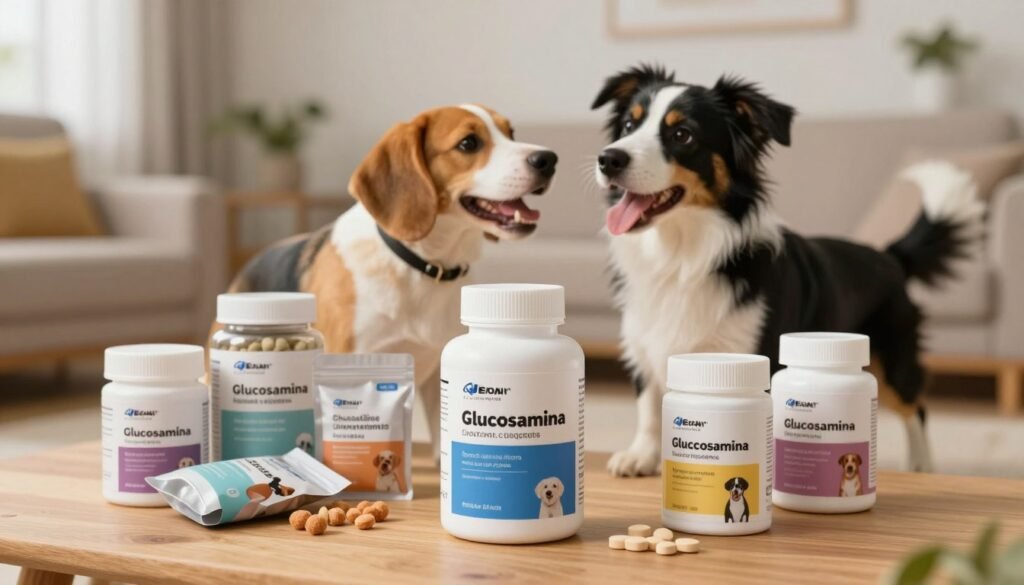
Medium-sized dogs are active and agile. Think of a Border Collie or a Beagle. But, they don’t face the same joint problems as giant breeds.
Dasuquin’s formula is perfect for them. It provides strong support without being too much. This means better value and the right support for your dog.
This supplement works wonders for dogs showing early signs of stiffness. The combination of ingredients works together well. The MSM adds anti-inflammatory action, reducing joint discomfort.
VetriScience GlycoFlex Plus Hip and Joint Support
Overview
VetriScience takes a scientific approach to joint health with GlycoFlex. They offer a staged system for different needs. GlycoFlex Plus is perfect for medium breed dogs showing early signs of stiffness.
This supplement is designed for dogs in the middle of their life. It helps maintain healthy joints before problems start. The green-lipped mussel extract is a key ingredient.
Key Features
VetriScience GlycoFlex Plus has several benefits:
- Green-lipped mussel extract (Perna canaliculus): Provides natural joint support and omega-3s.
- Antioxidant support: Includes vitamins C and E to fight joint inflammation.
- Chewable soft tablets: Dogs find them tasty, making it easy to give them their daily dose.
- Moderate potency design: Formulated for 25-50 pound dogs, avoiding too much or too little.
- Made in the USA: Manufactured in FDA-registered facilities with strict quality control.
The antioxidants in GlycoFlex Plus are smart. They help fight inflammation and protect joints. This supplement is great for prevention and early intervention.
Why It Works for Medium Breeds
VetriScience designed GlycoFlex Plus for medium-sized dogs. It provides enough support without overwhelming them. The green-lipped mussel extract is a standout feature.
This supplement is excellent for prevention and early intervention. If your dog is getting older or shows stiffness, GlycoFlex Plus can help. It keeps joints healthy and active.
Best Joint Supplements for Large Breed Dogs (50-90 lbs)
My Golden Retriever taught me that large breed dogs need more than standard joint supplements. They require maximum-strength formulas for their big bodies. Dogs weighing 50 to 90 pounds face unique challenges. Their weight stresses their joints, yet they stay active like smaller dogs.
Breeds like Labrador Retrievers, German Shepherds, and Boxers need strong support. They go beyond basic maintenance. Over the years, I’ve found three products that work well for large breed joint health.
Nutramax Cosequin Maximum Strength Plus MSM
Overview
This supplement has been my go-to for my dog for three years. Nutramax Cosequin Maximum Strength Plus MSM is the strongest in the Cosequin line. It’s made for larger, more active dogs needing high doses.
The formula has proven ingredients like glucosamine, chondroitin, and MSM. This triple-action approach supports cartilage, joint fluid, and reduces inflammation. My Golden Retriever’s mobility improved in six weeks.
Key Features
- 600mg of glucosamine per tablet provides the therapeutic dose large breeds require for effective cartilage support
- Initial loading protocol recommends double doses for the first 4-6 weeks to build up joint-supporting compounds quickly
- Tablet formulation offers better cost-per-dose value for large breed owners compared to soft chew alternatives
- MSM component at 250mg delivers targeted anti-inflammatory benefits that combat joint stress from carrying extra body weight
- Veterinary-recommended with decades of clinical research supporting its effectiveness
Why It Works for Large Breeds
Large breed dogs need maximum concentrations for therapeutic benefits. Standard formulas aren’t enough. This maximum strength version ensures even a 90-pound German Shepherd gets enough joint support.
The MSM in this product is key for large breeds. Their weight causes more inflammation. MSM acts as a natural anti-inflammatory, helping glucosamine and chondroitin build cartilage.
Joint health in large breed dogs requires proactive, high-dose supplementation, not just reactive treatment after problems arise.
Honest Paws Mobility Soft Chews
Overview
Honest Paws offers a holistic approach that appeals to pet parents seeking natural supplements. This brand is known for organic, USA-sourced ingredients. Their Mobility Soft Chews support joints and overall wellness.
This product stands out with its wide range of ingredients. It includes glucosamine, turmeric, boswellia, and hemp seed powder. This formula addresses cartilage health and systemic inflammation.
Key Features
- Organic turmeric with curcumin provides powerful anti-inflammatory compounds that work differently than MSM
- Boswellia serrata extract offers additional inflammation control through a unique mechanism that preserves joint comfort
- Hemp seed powder inclusion supports overall wellness while contributing omega fatty acids for dog health
- Soft chew format makes administration easy, with a bacon flavor that large dogs genuinely enjoy
- No artificial preservatives or fillers appeals to health-conscious pet parents
Why It Works for Large Breeds
Large breed dogs often face systemic inflammation beyond their joints. Turmeric and boswellia in this product address this whole-body inflammation. Dogs on this supplement show better mobility and vitality.
The soft chew format is easier to give than tablets, which is great for picky eaters. For large breeds needing daily supplements, palatability is key.
Nordic Naturals Omega-3 Pet with Fish Oil for Dog Skin and Joints
Overview
Nordic Naturals Omega-3 Pet is a unique supplement. It’s pharmaceutical-grade fish oil with high EPA and DHA. These omega fatty acids reduce inflammation at the cellular level.
I believe omega-3 supplements deserve their own product, not just what’s added to others. Nordic Naturals uses wild-caught anchovies and sardines for their fish oil. This ensures purity and potency.
Key Features
- High EPA and DHA concentration provides therapeutic doses of the omega-3 fatty acids that reduce inflammatory cytokines
- Sustainably sourced from anchovies and sardines ensures environmental responsibility and superior quality
- Lemon essence added prevents the fishy burps that many fish oil supplements cause (trust me, this matters significantly)
- Liquid format with pump dispenser allows easy pouring over food for precise dosing
- Third-party tested for purity guarantees the absence of heavy metals and contaminants
Why It Works for Large Breeds
The science behind omega-3 fatty acids and joint health is compelling. EPA and DHA reduce inflammation that damages cartilage and causes pain. For large breed dogs, this makes a big difference.
There’s a bonus benefit—their skin gets healthier and shinier. My Golden Retriever’s coat became lustrous in a month. This product improves joint health and skin health.
I recommend using this omega-3 supplement with a glucosamine-based product. They work differently but complement each other. Glucosamine rebuilds cartilage, while omega-3s control inflammation.
| Product | Primary Benefit | Cost Per Day (80 lb dog) | Best For |
|---|---|---|---|
| Nutramax Cosequin Maximum Strength | Cartilage rebuilding with anti-inflammatory support | $1.25 – $1.50 | Dogs needing maximum strength glucosamine and chondroitin |
| Honest Paws Mobility Soft Chews | Holistic joint and whole-body inflammation control | $1.75 – $2.00 | Pet parents preferring organic, natural ingredients |
| Nordic Naturals Omega-3 Pet | Cellular inflammation reduction plus skin health | $0.90 – $1.10 | Dogs needing targeted anti-inflammatory support |
| Combination Strategy | Complete joint support from multiple mechanisms | $2.15 – $2.60 | Large breeds with significant joint stress or early arthritis |
When choosing, consider your dog’s needs and budget. Many owners use Nordic Naturals Omega-3 as a base, then add Nutramax or Honest Paws based on their preference.
If you want to recommend these products, explore affiliate marketing. Platforms like Amazon Associates or ShareASale can help. Many pet bloggers and advocates use these to earn while helping others find quality supplements.
Success with large breed joint supplements comes from consistency. These products work gradually over weeks and months. My Golden Retriever, now eight, runs and plays like a younger dog thanks to her supplements.
Best Joint Supplements for Giant Breed Dogs (Over 90 lbs)
I’ve learned that giant breed dogs need joint supplements early on. My neighbor’s 120-pound Great Dane showed mobility issues at just four years old. This made me realize how different these dogs are from smaller ones.
Giant breeds like Mastiffs and Newfoundlands carry a lot of weight on their joints every day. This is because the biomechanical stress on their hips and elbows is much greater than in smaller dogs. That’s why veterinary-recommended dog vitamins for giant breeds have strong formulas with proven ingredients.
Preventive care is key for giant breeds. Starting joint supplements as early as 18 months can greatly improve their quality of life later on. Here are three supplement options for dogs over 90 pounds, including multivitamins for senior dogs that support overall health.
Nutramax Dasuquin with MSM for Large Dogs
Overview
Nutramax Dasuquin with MSM is a top choice for veterinary-recommended dog vitamins for giant breeds. Despite being labeled for “Large Dogs,” it’s the go-to for dogs over 90 pounds. Many veterinarians recommend it as essential for giant breed owners.
The formula combines strong glucosamine and chondroitin with MSM and ASU compounds. The ASU compounds are unique and may help slow cartilage breakdown at the cellular level.
Key Features
- High-concentration formula: Provides enough dosing for 120+ pound dogs without needing lots of chews
- Loading phase protocol: Starts with higher doses to support cartilage, then lowers to maintenance levels
- Veterinary trust: The top veterinarian-recommended brand for joint health
- ASU technology: Uses proprietary compounds that work with glucosamine and chondroitin
- MSM inclusion: Adds extra anti-inflammatory support for giant breed joints
Why It Works for Giant Breeds
The advanced formula tackles the extreme stress these dogs face daily. For a 110-pound Rottweiler or 130-pound Mastiff, it’s not just optional—it’s essential. The loading phase gives them the cartilage support they need quickly.
I suggest starting supplementation as early as 18 months for at-risk breeds. The early investment in Dasuquin pays off in mobility during senior years.
Vetoquinol Flexadin Advanced with UC-II
Overview
Vetoquinol Flexadin Advanced is at the forefront of joint supplementation. It uses UC-II undenatured type II collagen, which works differently from traditional glucosamine and chondroitin. Instead of just building cartilage, UC-II supports the immune system’s response to cartilage breakdown.
This innovative approach makes Flexadin Advanced great for multivitamins for senior dogs regimens. The research behind UC-II shows it offers an alternative way to support joints. For giant breeds facing relentless joint stress, having multiple ways to support joints makes sense.
Key Features
- UC-II collagen effectiveness: Studies show 40mg of UC-II can be as effective as 1,500mg glucosamine plus 1,200mg chondroitin
- Once-daily dosing: Offers a convenient soft chew format that giant breed owners like
- Omega-3 addition: Includes beneficial fatty acids for overall joint and health support
- Immune modulation: Works by supporting the body’s natural joint maintenance processes
- Palatable formula: Even picky giant breeds usually accept these soft chews easily
Why It Works for Giant Breeds
The UC-II approach benefits the largest dogs whose joints face constant stress. I’ve seen Great Dane and Saint Bernard owners notice improvements in mobility within 4-6 weeks. The once-daily dosing also makes it easier for busy pet parents to follow.
What’s interesting is that Flexadin Advanced can be used alone or with traditional glucosamine supplements for maximum effect. Some veterinarians suggest using both for giant breeds with existing joint issues. This dual approach addresses joint health from different angles.
Grizzly Pollock Oil Omega Fatty Acids for Dog Health
Overview
Giant breeds need extra omega-3s beyond what’s in joint chews. The anti-inflammatory benefits are too important to rely only on small amounts in other supplements. Grizzly Pollock Oil from wild-caught Alaskan pollock is one of the purest omega-3 sources for dogs.
I believe fish oil supplementation is non-negotiable for giant breeds. The benefits extend beyond joints to heart health, skin, and brain function. For massive dogs, these whole-body benefits are critical.
Key Features
- Exceptional omega-3 concentration: High EPA and DHA levels per serving for maximum anti-inflammatory effect
- Pump dispenser design: Makes dosing easy even for 100+ pound dogs needing more
- Natural vitamin E: Acts as a preservative to keep it fresh and potent
- Wild-caught source: Alaskan pollock provides cleaner, more sustainable omega-3s than farmed fish
- No fishy aftertaste: Most dogs accept it well when pumped over their food
Why It Works for Giant Breeds
The high-dose Omega-3s reduce inflammation throughout their massive bodies. For a 140-pound English Mastiff, the heart benefits of omega-3s are as important as joint benefits. Large breed dogs face higher heart risks, making omega-3s doubly valuable.
Grizzly Pollock Oil complements glucosamine-based supplements well. I recommend using it alongside either Dasuquin or Flexadin Advanced for full joint support. The pump dispenser makes adjusting dosing easy based on your dog’s weight.
If you want to share these life-changing supplements with other giant breed owners, affiliate programs through platforms like Commission Junction or Impact let you earn commissions. Many pet supplement companies offer generous affiliate rates because they value recommendations from experienced owners.
| Supplement | Primary Mechanism | Key Ingredients | Best For | Dosing Frequency |
|---|---|---|---|---|
| Nutramax Dasuquin with MSM | Cartilage building blocks with ASU technology | Glucosamine, Chondroitin, MSM, ASU | Preventive care and moderate joint issues | Twice daily (loading phase), then once daily |
| Vetoquinol Flexadin Advanced | Immune modulation with UC-II collagen | UC-II Collagen, Omega-3s, Manganese | Alternative approach or combination therapy | Once daily |
| Grizzly Pollock Oil | Systemic anti-inflammatory support | EPA, DHA, Natural Vitamin E | Comprehensive inflammation reduction | Once daily with food |
The table above helps compare the three supplement options for giant breeds. Many owners find that combining Grizzly Pollock Oil with either Dasuquin or Flexadin provides the best support. Always talk to your vet about your giant breed’s specific needs before starting any supplements.
Remember, giant breeds often benefit from starting joint supplements early. The investment in preventive care during young adult years greatly improves their mobility and comfort in senior years. Your giant breed deserves the best joint support available.
Essential Ingredients in Quality Joint Supplements for Dogs
Looking at a joint supplement label can be confusing. But knowing what works is key to helping your dog. I’ve learned which ingredients really help with joint health after years of research and talking to vets.
Not all supplements are created equal. Some have too little of the good stuff, while others pack a powerful punch. Let’s explore the must-have ingredients for your furry friend’s joint health.
Glucosamine and Chondroitin Sulfate
Glucosamine and chondroitin are a dynamic duo. Glucosamine is an amino sugar that helps build new cartilage. It’s like the raw material for cartilage repair.
Chondroitin sulfate does its own thing but is just as important. It slows down cartilage breakdown and improves joint cushioning. This means less friction and pain for your dog.
It’s best to find supplements with both ingredients. Here’s what you need to know about dosing:
- Small dogs (under 25 lbs): 500mg glucosamine and 400mg chondroitin daily
- Medium dogs (25-50 lbs): 1,000mg glucosamine and 800mg chondroitin daily
- Large dogs (50-90 lbs): 1,500mg glucosamine and 1,200mg chondroitin daily
- Giant breeds (over 90 lbs): 2,000mg glucosamine and 1,600mg chondroitin daily
Many cheap supplements don’t have enough of these ingredients. I’ve seen products with too little glucosamine. Always check the label to ensure you’re getting enough.
MSM (Methylsulfonylmethane)
MSM might sound scary, but it’s a natural anti-inflammatory. It’s a secret weapon for dogs with joint pain.
MSM reduces inflammation, which means less pain and stiffness for your dog. It also keeps joints flexible and supports connective tissue.
MSM works fast, often improving mobility in just 2-3 weeks. The typical dose is 50-100mg per 10 pounds of body weight daily.
“MSM has shown great benefits in reducing joint inflammation and improving comfort in dogs with osteoarthritis. It’s a valuable addition to joint support protocols.”
Omega Fatty Acids for Dog Health
Omega fatty acids don’t rebuild cartilage but fight inflammation. Omega-3 fatty acids, like EPA and DHA from fish oil, reduce inflammation in your dog’s body.
Plant-based omega-3s from flaxseed or chia aren’t as effective for dogs. They can’t convert ALA into EPA and DHA. That’s why marine-based sources are best.
Fish oil benefits your dog’s skin and joints. It reduces swelling and improves skin health, coat shine, and brain function. You get many health benefits from one ingredient.
For joint support, look for supplements with at least 300mg of EPA and DHA per 10 pounds of body weight daily. Higher doses are often used for dogs with arthritis or inflammation.
Green-Lipped Mussel Extract
Green-lipped mussel is a New Zealand superfood. It naturally contains glucosamine, chondroitin, and omega-3 fatty acids. It’s like nature’s perfect joint supplement.
What makes it special is its unique omega-3 profile. It has ETA, a rare omega-3 with strong anti-inflammatory effects. Studies show ETA may be more effective than standard fish oil for joint inflammation.
Premium joint supplements often include green-lipped mussel. It’s great for dogs with multiple joint issues or needing intense support. The recommended dose is 15-20mg per pound of body weight daily.
Hyaluronic Acid and UC-II Collagen
Hyaluronic acid and UC-II are advanced ingredients. Hyaluronic acid acts like a lubricant in the joint space, helping synovial fluid maintain its shock-absorbing properties. It’s like oil for creaky joints.
As dogs age, they make less hyaluronic acid. Supplementation helps keep joints lubricated and improves mobility. I’ve seen great results in senior dogs who seem stiff when standing up.
UC-II works differently. Instead of building cartilage, UC-II modulates the immune system’s response to cartilage breakdown. It teaches your dog’s immune system to stop attacking cartilage tissue.
Research shows 40mg of UC-II daily can be as effective as higher doses of glucosamine and chondroitin. It’s great for dogs with autoimmune-related joint issues or severe osteoarthritis.
| Ingredient | Primary Function | Time to Results | Best For |
|---|---|---|---|
| Glucosamine & Chondroitin | Cartilage building and protection | 4-6 weeks | Prevention and maintenance |
| MSM | Anti-inflammatory and pain relief | 2-3 weeks | Active joint pain |
| Omega-3 Fatty Acids | Inflammation reduction | 3-4 weeks | Overall joint and body inflammation |
| Green-Lipped Mussel | Comprehensive joint support | 3-5 weeks | Multiple joint issues |
| Hyaluronic Acid & UC-II | Joint lubrication and immune modulation | 2-4 weeks | Advanced arthritis and senior dogs |
When choosing joint supplements, look for products with multiple ingredients. The best formulas use combinations that tackle joint health from all sides. A supplement with glucosamine, chondroitin, MSM, and omega-3s will usually outperform one with just one ingredient.
Understanding these ingredients helps you become a better advocate for your dog’s health. You’ll be able to read labels with confidence, compare products, and choose supplements that really help, not just promise to.
How to Choose the Right Joint Supplements for Your Dog
My first time buying a joint supplement for my dog was a disaster. I picked something fancy without knowing what she needed. The product sat unused for months, and I lost nearly fifty dollars. This taught me to carefully choose supplements based on more than just looks.
Once you know what to look for, picking the right supplement is easier. I’ve developed a method that saves time and money. It ensures my dog gets the right support for her joints.
Let me explain the key factors I consider when choosing a joint supplement.
Age and Life Stage Make All the Difference
Your dog’s age is key in choosing the right supplement. A young German Shepherd has different needs than an older dog with arthritis. Many owners treat all ages the same, which is a mistake.
Young large-breed dogs (ages 1-3) need supplements to support joint development. They benefit from moderate amounts of glucosamine and chondroitin. These help build strong cartilage without overwhelming their systems.
Middle-aged active dogs (ages 4-7) need support to keep their joints moving smoothly. I look for formulas that balance glucosamine with anti-inflammatory ingredients like MSM or omega fatty acids.
Senior dogs (ages 8+) with arthritis need strong support. They benefit from higher doses of glucosamine and additional ingredients like hyaluronic acid and UC-II collagen. These target joint damage.
Always talk to your vet before starting any supplement. They can help choose the right one based on your dog’s age, weight, and health.
Why Veterinary Recommendations Matter
“Veterinary-recommended” labels mean the product has been tested and proven effective. Veterinary-recommended dog vitamins are backed by science. They’re not just marketing tricks.
Brands like Nutramax have published studies showing their supplements work. These studies are based on real trials, not just customer testimonials.
Choosing a vet-recommended product means avoiding ineffective ones. Your vet can guide you to products they’ve seen work. They have access to research and resources that help them make informed choices.
Natural Versus Synthetic Isn’t Always Clear-Cut
Many people wonder if natural pet supplements are better than synthetic ones. The truth is, “natural” doesn’t always mean better, and “synthetic” doesn’t mean worse.
Natural supplements use whole-food ingredients like green-lipped mussel extract. These ingredients come from food sources and often include other nutrients that work well together.
Synthetic supplements are made in labs to exact specifications. For example, synthetic glucosamine is just as good as natural but often cheaper and more consistent.
What really matters is bioavailability. This is how well your dog’s body can use the ingredient. Some natural sources are highly bioavailable, while others aren’t. The same goes for synthetic versions.
I look for products that tell you where their ingredients come from and how well they’re absorbed. The best supplements often mix natural and synthetic ingredients for the best results.
Third-Party Testing Protects Your Investment
Pet supplements aren’t regulated as strictly as human ones. This means some products might not have what they claim. That’s why third-party testing and quality certifications are key when choosing a supplement.
The NASC (National Animal Supplement Council) seal means the product meets strict quality standards. It’s tested for purity and potency.
Third-party testing checks if a supplement has the ingredients it claims. It also looks for contaminants like heavy metals or bacteria. Products with these certifications cost a bit more but are worth it.
Supplement Forms Each Have Unique Advantages
The type of supplement you choose—chews, powders, or liquids—can affect how well your dog takes it and how it works. I’ve tried all three with my dogs, and each has its own benefits and drawbacks.
| Supplement Form | Main Advantages | Potential Drawbacks | Best For |
|---|---|---|---|
| Soft Chews | Convenient, dogs usually love the taste, no mixing required | Most expensive option, some contain unnecessary sugars or fillers | Picky eaters, busy owners, dogs who enjoy treats |
| Powders | Cost-effective, easy to adjust dosage, mixes into food | Some dogs detect and avoid the powder, requires daily mixing | Budget-conscious owners, dogs who eat regular meals, multi-dog households |
| Liquids | Fastest absorption rate, easy to administer with food or directly | Often require refrigeration, can be messy, shorter shelf life | Senior dogs with absorption issues, dogs recovering from surgery |
| Tablets | Precise dosing, long shelf life, affordable | Difficult to administer to uncooperative dogs, slower absorption | Trained dogs who take pills easily, owners wanting exact dosing control |
Soft chews work best for my picky eater. But for my Labrador, who eats everything, I use powder. It’s cheaper and easier to mix into his meals.
Choose a form based on your dog’s eating habits and your lifestyle. The best supplement is one your dog will take regularly, even if it’s not the most bioavailable.
Smart Shopping with Affiliate Marketing Tools
I’ve found a great way to save money: using affiliate marketing tools and browser extensions. They help find the best prices on quality supplements. This has saved me a lot of money over the years.
Browser extensions like Honey, Rakuten, and Capital One Shopping find coupon codes and cashback offers. They work in the background and apply discounts at checkout without extra effort.
Here’s a tip: if you share pet care advice or on social media, join affiliate marketing programs. You can earn commissions when people buy products through your links.
- Amazon Associates: Easy to join, offers 1-4% commissions on pet products, provides links to virtually any supplement
- Chewy Affiliate Program: Offers competitive commissions on pet supplies including supplements
- ShareASale: Connects you with multiple pet supplement brands that offer affiliate partnerships
- Rakuten: Provides cashback on purchases while shopping through their portal
I’m not saying you should become a full-time affiliate marketer. But if you already recommend products, you might as well earn some money. The commissions can help with your pet care costs.
Using price comparison tools, cashback extensions, and buying during sales can cut your costs by nearly 30% without sacrificing quality. Subscribe to our newsletters to find current discount codes and compare prices before your next purchase.
When to Start Your Dog on Hip and Joint Support
I remember the exact moment I realized I’d waited too long to start my dog on joint supplements. Watching him struggle to climb stairs that he used to bound up effortlessly broke my heart. That experience taught me a valuable lesson about timing that I want to share with you today.
The question of when to begin canine joint supplements keeps many dog owners awake at night. I used to think you waited until symptoms appeared, but that’s like waiting for a cavity before brushing your teeth. You’ve already missed the preventive window when real damage begins.
Understanding the right timing can make all the difference in your dog’s quality of life. Let me walk you through what I’ve learned from veterinarians and my own experience.
Starting Joint Support Early for At-Risk Breeds
Some dogs need preventive care much earlier than others. I’ve learned that large and giant breeds benefit tremendously from starting joint supplements between 18 months and 2 years of age.
The breeds at highest risk include Labrador Retrievers, Golden Retrievers, and German Shepherds. Giant breeds like Great Danes, Mastiffs, and Saint Bernards face even greater challenges. These dogs carry significant weight on their joints from a young age.
Dogs genetically prone to hip dysplasia need extra attention. If your dog comes from a line with known joint problems, early intervention becomes critical. Starting glucosamine and chondroitin before symptoms appear can potentially slow degenerative joint disease.
My veterinarian explained it this way: you’re investing in your dog’s future mobility. The research shows promising results when we introduce preventive canine joint supplements to young at-risk dogs. This proactive approach has changed how I think about joint health entirely.
Building strong puppy immune support through proper nutrition early in life creates a foundation for healthier joints later. Everything connects when it comes to your dog’s overall wellness.
Warning Signs That Joint Support Is Needed Now
Your dog can’t tell you when their joints hurt, but their body language speaks volumes. I’ve learned to watch for subtle changes that many owners miss initially.
Here are the key signs that your dog needs joint support right now:
- Stiffness after rest – Your dog takes longer to get moving after naps or sleep
- Hesitation before jumping – They pause before getting on furniture or into the car
- Limping or favoring a leg – Even slight changes in gait matter
- Decreased enthusiasm – Less excitement about walks or playtime
- Difficulty on stairs – Climbing up or down becomes challenging
- Behavioral changes – Irritability when touched in certain areas
- Licking or chewing joints – Your dog focuses attention on specific areas
- Reduced range of motion – Less flexibility during movement
Don’t wait until your dog shows obvious pain. Those early subtle signs give you the opportunity to act before significant discomfort develops.
I must stress the importance of veterinary diagnosis first. Some symptoms could indicate other health problems beyond joint issues. A proper examination ensures you address the right problem with the right solution.
Maximizing Benefits Through Supplement Combinations
Here’s something I wish I’d known earlier: joint supplements work best when your dog’s digestive system absorbs nutrients optimally. The connection between gut health and joint health surprised me at first.
Dog probiotics create an environment where glucosamine and other joint ingredients absorb more effectively. A healthy gut means your dog gets maximum benefit from every supplement dose. This synergy makes your investment in joint health go further.
Digestive enzymes for dogs break down nutrients into more bioavailable forms. They help your dog’s body actually use the supplements you’re providing. I started adding these to my dog’s routine and noticed improvements within weeks.
The combination approach addresses joint health from multiple angles. Strong puppy immune support through proper nutrition sets the stage for better joint outcomes throughout life. Everything works together in your dog’s body.
When introducing multiple supplements, start gradually. I learned this the hard way when I added everything at once and caused temporary digestive upset. Add one supplement at a time over several days to let your dog’s system adjust.
Consider starting with canine joint supplements as your foundation. Then add probiotics after a week or two. If needed, introduce digestive enzymes last. This staggered approach prevents overwhelming your dog’s system.
The timing of when you start matters just as much as what you give. But combining the right supplements at the right time creates the best possible outcome for your dog’s mobility and comfort. Your proactive approach today pays dividends in your dog’s golden years.
Additional Natural Pet Supplements to Support Joint Health
Maximizing your dog’s joint supplement effectiveness is more than just picking the right product. It’s about creating a complete nutritional foundation that boosts results. I’ve learned that joint supplements work best when paired with other natural pet supplements.
Think of it like building a house. Joint supplements are the framework. But you need more materials to build a strong, complete structure.
Let me show you four types of supplements that make great joint care even better. Each one supports your dog’s mobility and overall health in its own way.
Fish Oil for Dog Skin and Anti-Inflammatory Benefits
When I first looked into fish oil, I was surprised. Most joint supplements have some omega-3s, but not enough for real anti-inflammatory effects. I recommend adding a dedicated fish oil supplement to your dog’s routine for the best results.
Omega-3 fatty acids from fish oil reduce inflammation all over your dog’s body. This means less joint pain, healthier skin, a shinier coat, and fewer allergy symptoms.
I prefer pharmaceutical-grade fish oil because it’s clean of contaminants like mercury and PCBs. Products like Nordic Naturals Omega-3 Pet or Grizzly Salmon Oil are top-notch in quality and purity.
Dosing is key. Here are some general guidelines based on your dog’s weight:
- Small dogs (under 25 lbs): 500-750 mg EPA/DHA combined daily
- Medium dogs (25-50 lbs): 1,000-1,500 mg EPA/DHA combined daily
- Large dogs (50-90 lbs): 1,500-2,000 mg EPA/DHA combined daily
- Giant dogs (over 90 lbs): 2,000-3,000 mg EPA/DHA combined daily
Fish oil is a favorite of mine because it supports joint health and improves skin conditions and overall wellness.
Dog Probiotics for Better Nutrient Absorption
Most pet parents don’t know this: your dog’s gut health affects how well they absorb joint supplements. If your dog’s digestive system isn’t working right, you’re wasting money on expensive supplements.
Dog probiotics add beneficial bacteria to your pet’s gut. These tiny helpers make sure your dog absorbs the nutrients from joint supplements.
I focus on specific probiotic strains that research shows are good for dogs. Lactobacillus acidophilus, Lactobacillus casei, and Bifidobacterium animalis are great for canine health.
When introducing dog probiotics, start slow to avoid digestive issues. I begin with half the recommended dose for the first week, then increase to the full amount.
Here’s a bonus benefit: dog probiotics often help with mild digestive issues some dogs have when starting new supplements. My older Labrador had occasional soft stools when I first introduced her joint formula, but adding probiotics fixed that problem.
Quality matters with probiotic supplements. Look for products that guarantee live cultures at the time of consumption, not just at manufacturing. Refrigerated options usually have higher potency.
Digestive Enzymes for Dogs to Maximize Supplement Effectiveness
Digestive enzymes for dogs are the unsung heroes of supplement optimization. These special proteins break down food and supplements into smaller pieces that your dog’s body can use.
As dogs age, their natural enzyme production often goes down. This means older dogs may have trouble digesting and using even the best supplements.
Different enzymes handle different nutrients. Proteases break down proteins, lipases work on fats, and amylases digest carbohydrates. A broad-spectrum enzyme supplement covers all bases.
I noticed a big difference when I added digestive enzymes for dogs to my senior Shepherd’s routine. Her mobility improved noticeably within three weeks, even though I hadn’t changed her joint supplement. The difference? Her body was now fully using the glucosamine and chondroitin she’d been taking for months.
Look for enzyme supplements that include:
- Protease complex: For protein digestion and amino acid absorption
- Lipase: For fat breakdown and omega-3 utilization
- Amylase: For carbohydrate processing
- Cellulase: For plant fiber digestion
- Bromelain or papain: For additional anti-inflammatory benefits
I give digestive enzymes for dogs with meals that include supplements. This ensures enzymes are present when your dog’s body processes the joint support ingredients.
Multivitamins for Senior Dogs with Joint Issues
Aging dogs face more than just joint problems. When I see a senior dog with joint issues, I know they’re likely dealing with multiple age-related deficiencies.
Quality senior dog multivitamins create a complete nutritional foundation. These formulas include joint support ingredients plus additional vitamins and minerals that aging dogs need.
I look for senior formulas that provide antioxidants for cognitive function, B vitamins for energy and metabolism, and vitamin E for immune support. This all-around approach supports better overall health, which naturally benefits joint function.
Some excellent options include formulas that combine glucosamine and chondroitin with vitamins C, E, and selenium. These antioxidants fight free radical damage that speeds up aging and joint deterioration.
The key is choosing a multivitamin designed for seniors, not just an all-life-stages formula. Senior dogs have unique nutritional needs that general formulas don’t meet.
| Supplement Type | Primary Benefits | Works Best With | Recommended For |
|---|---|---|---|
| Fish Oil | Reduces inflammation, supports skin and coat health | All joint supplements | Dogs with arthritis or skin allergies |
| Dog Probiotics | Improves gut health and nutrient absorption | All supplements and medications | Dogs with digestive sensitivities or poor absorption |
| Digestive Enzymes for Dogs | Breaks down nutrients for maximum bioavailability | Joint supplements and food | Senior dogs or those with enzyme deficiencies |
| Senior Multivitamins | Comprehensive nutritional support for aging dogs | Joint formulas and omega-3s | Dogs over 7 years with multiple health concerns |
Creating an effective supplement stack doesn’t need to be overwhelming. Start with your primary joint supplement, then add one complementary product at a time. Give your dog two weeks to adjust before introducing the next addition.
I’ve seen this approach transform dogs’ quality of life. When everything works together, the results are better than what any single supplement could achieve alone.
Conclusion
I’ve shared all I know about picking the right joint supplements for dogs based on their size. It’s important to choose wisely because it affects your dog’s health. The right supplement can make a big difference.
Improving your dog’s joint health is a team effort. It involves good food, exercise, and vet visits. I’ve seen how these steps can change a dog’s life for the better.
Starting early is key for breeds at risk of joint issues. If your dog is already stiff, the right supplement can help them move better.
If you love helping other pet owners, think about joining affiliate programs. You can earn money while sharing products that help dogs live better lives.
Your dog looks up to you for making healthy choices. By reading this guide, you’ve taken a big step. Here’s to happy walks and pain-free playtime for your furry friend.
FAQ
What’s the difference between joint supplements for small breed dogs versus large breed dogs?
Joint supplements for small and large breed dogs differ in dosage and effectiveness. Small dogs need lower doses due to their fast metabolism. Products like Nutramax Cosequin for Small Dogs are designed for them. Large dogs, on the other hand, require higher doses because of their weight and joint stress.
For example, a 10-pound Pomeranian and a 70-pound Labrador need different amounts of glucosamine. The right supplement ensures your dog gets the right amount without over- or under-dosing.
Can I give my puppy joint supplements, or should I wait until they’re older?
For at-risk breeds, starting joint supplements around 18-24 months can be beneficial. This helps slow degenerative changes before symptoms appear. Always talk to your vet about your puppy’s risk factors.
For small and medium breeds without joint issues, waiting until they’re 5-7 years old is fine. Early nutrition and supplements can also support healthier joints.
How long does it take before I see results from joint supplements?
Results from joint supplements take time, typically 4-6 weeks. Some dogs may show slight improvements sooner. But, the real benefits usually appear around 6-8 weeks.
Glucosamine and chondroitin support cartilage repair, which takes time. Quality supplements like Nutramax Dasuquin with MSM may have a loading phase for faster benefits. If you don’t see improvements after 8-10 weeks, consult your vet.
Should I give joint supplements with food or on an empty stomach?
It’s best to give joint supplements with food. This ensures better absorption, as most supplements are fat-soluble. It also helps with digestive comfort.
For dogs with dental issues, soft chews are a good option. Always check the product instructions for the best timing.
Can I use human joint supplements for my dog instead of buying dog-specific products?
No, using human supplements for dogs is not recommended. Dosage and ingredients are not suitable for dogs. Human supplements can be toxic to pets.
Veterinary-recommended dog vitamins are safer and more effective. They are formulated for canine metabolism and weight-based dosing. The cost difference is not worth the risks.
What’s the difference between glucosamine hydrochloride and glucosamine sulfate?
Glucosamine hydrochloride and glucosamine sulfate are both effective. Hydrochloride has a higher concentration of pure glucosamine and is more stable. It’s used in Nutramax Cosequin.
Glucosamine sulfate includes sulfur, which may provide additional benefits. But, research hasn’t proven one form superior. The key is the total amount of bioavailable glucosamine.
Are soft chews better than tablets or powders for joint supplements?
The best format depends on your dog. Soft chews are convenient and palatable, but more expensive. Tablets offer better value and fewer ingredients, but some dogs refuse them.
Powders are cost-effective but may be detected by dogs. I use soft chews for my picky eater and tablets for my larger dog. The effectiveness of the ingredients is similar across formats.
Can joint supplements help dogs who already have arthritis, or are they only preventive?
Joint supplements can help dogs with arthritis. They work best when started early but can also improve established degenerative joint disease. Supplements like Nutramax Dasuquin with MSM reduce inflammation and support cartilage repair.
They won’t reverse severe arthritis but can improve mobility and comfort. Supplements are part of a broader pain management plan. Always consult your vet for the right treatment plan.
Do I need to give separate fish oil if the joint supplement already contains omega-3s?
Most joint supplements don’t contain enough omega-3s for significant benefits. Separate, high-quality fish oil provides anti-inflammatory effects that complement joint supplements. Omega-3s help reduce inflammation and support overall health.
Using both glucosamine-based supplements and fish oil can be remarkable for large and giant breed dogs. It addresses joint health from multiple angles.
How do I use affiliate marketing platforms to save money on dog supplements?
Browser extensions like Honey and Rakuten can save you money. They search for coupon codes and offer cashback. I’ve saved hundreds of dollars using these strategies.
Joining affiliate programs through platforms like Amazon Associates can also help. You earn commissions when people purchase through your links. I share my favorite products and earn commissions, offsetting my dogs’ supplement costs.
What’s the difference between multivitamins for senior dogs and joint-specific supplements?
Multivitamins for senior dogs support overall health, while joint-specific supplements focus on cartilage health. Joint supplements have higher concentrations of ingredients like glucosamine and chondroitin.
For senior dogs with joint issues, using both is best. This ensures your dog gets optimal joint support and overall vitality. If budget is a concern, prioritize joint-specific supplements first.