

Ever thought about turning simple walks into epic adventures? For me, it all changed with four paws and a wagging tail.
My German Shepherd mix Neirah showed me how hiking with dogs creates unbreakable bonds. Later, Rosie and Captain joined, and each trail brought new joys and challenges.
Learning how to hike with dogs safely needs more planning than just strolls. This guide covers everything I’ve learned from hundreds of miles, vet visits, and mistakes. You’ll find the best dog hiking gear, hiking safety tips for dogs, and dog-friendly trails for your level.
Whether you’re starting with a puppy or taking your adult dog on their first hike, this guide is for you. It’s packed with tips and tools from PetzVibes to support your journey.
Key Takeaways
- Trail adventures strengthen the bond between you and your canine companion through shared outdoor experiences and exercise
- Proper preparation with essential safety gear protects your dog from injuries, dehydration, and environmental hazards on the trail
- Training fundamentals ensure your dog responds to commands, respects trail etiquette, and stays safe around wildlife and other hikers
- Assessing your dog’s fitness level and choosing appropriate trails prevents exhaustion and health complications during outdoor activities
- Understanding seasonal considerations helps you adapt your approach for hot summers, cold winters, and varying trail conditions
- Trail etiquette knowledge keeps dog-friendly trails accessible by respecting wildlife, other hikers, and Leave No Trace principles
Why I Started Hiking with My Dog (And Why You Should Too)
The first time I took my dog on a trail, I felt pure joy. Neirah ran ahead, stopping to sniff new smells. It made me realize I’d been missing out.
Before I started hiking with dogs, I felt nervous about solo trails. I wanted to explore more than city walks. But remote trails seemed scary.
Everything changed when I got my first hiking buddy. Suddenly, trails became exciting adventures.
I’ll never forget the moment I fell in love with hiking with dogs. Rosie and I tackled a rocky trail. She showed me we could do it, and I felt brave.
Learning to hike with dogs had many benefits. Neirah became calmer at home. Trail adventures were better than regular walks.
Captain, my energetic dog, changed a lot after hiking. He stopped chewing things and barked less. The right gear made our hikes safer and more fun.
Hiking with dogs is better than regular walks. It tires them out in a good way. A two-hour hike is like three neighborhood walks.
Hiking with dogs is special. It creates a bond that’s different from everyday life. When Rosie and I climbed a steep hill together, our trust grew.
Training dogs for hiking boosts their confidence and yours. Watching them solve problems and explore new places is rewarding. They become more adaptable and engaged.
Having the right gear makes hiking smoother. But the real magic is in the unplanned moments. Like when Captain found his first waterfall, or when Neirah helped me during a deer encounter.
| Before Hiking with Dogs | After Regular Trail Adventures | Key Improvement |
|---|---|---|
| Nervous about solo hiking | Confident exploring new trails | 300% increase in trail frequency |
| Dogs destructive at home | Calm and well-behaved indoors | 80% reduction in problem behaviors |
| Limited bonding opportunities | Deep trust and connection | Stronger relationship quality |
| Short neighborhood walks only | Multi-hour trail adventures | 5x more physical exercise |
Hiking with dogs benefits more than just you and your dog. Other hikers love seeing happy dogs on trails. It’s uplifting to see dogs enjoying nature.
Here are the top reasons I believe every dog owner should consider trail hiking:
- Superior exercise: Trails provide mental and physical stimulation that regular walks cannot match
- Better behavior: Tired, stimulated dogs are calmer and more obedient at home
- Deeper bonding: Shared adventures create trust and connection beyond everyday routines
- Increased confidence: Both you and your dog develop problem-solving skills and resilience
- Pure joy: Watching your dog thrive in nature brings unmatched happiness
- Health benefits: Regular hiking improves cardiovascular fitness for both species
- Mindfulness practice: Dogs keep you present and engaged with your surroundings
Learning to hike with dogs has changed my life. Weekend mornings are now filled with excitement for our next adventure.
If you’re thinking about starting, take that first step. Start with easy trails, get the right gear, and watch your bond grow. For more stories, visit petzvibes.com.
The trail is waiting, and your dog is ready. Trust me, you won’t regret hiking together.
Assessing If Your Dog Is Ready for the Trail
Not every dog is ready for mountain trails right away. Knowing if your dog is ready is key to hiking safely with them. I’ve seen owners take unprepared dogs on tough trails, leading to injuries or exhaustion.
Most healthy dogs can become great hiking buddies. It’s important to match their abilities to your expectations and build up gradually. Let’s look at the key things to consider before hitting the trails.
Age and Physical Condition Considerations
Puppies have lots of energy, but their bodies need care. I tell new puppy owners to be patient. Puppies can start walking on trails at 3-4 months after their vaccinations.
Start with short, easy walks on flat ground. These walks help them get used to trails and learn leash skills. It’s about introducing them to trails, not long hikes.
| Age Range | Appropriate Activity | Maximum Distance | Terrain Type |
|---|---|---|---|
| 3-4 months | Leash training walks | 15-20 minutes | Flat, soft surfaces |
| 5-6 months | Moderate trail hikes | 2-3 miles | Gentle elevation, maintained trails |
| 6-12 months | Challenging terrain introduction | 3-5 miles | Moderate elevation gain, varied surfaces |
| 12-18 months | Full hiking capability | 5-10+ miles | All terrain types appropriate for breed |
Adult dogs new to hiking need a slow start. A sedentary dog needs the same gradual training as a human starting exercise. Start with 1-2 mile hikes and increase distance by no more than 10% weekly.
Senior dogs need special care. My older Lab loves trails, but we’ve adjusted our hikes to fit his abilities. Watch for signs of stiffness or breathing trouble.
Breed-Specific Factors to Keep in Mind
Your dog’s breed affects their hiking ability. Knowing this is key for safety. Brachycephalic breeds, like Pugs and Bulldogs, face breathing challenges on trails.
These breeds overheat and struggle to breathe during exercise. If you have one, limit hikes to cool mornings and keep them short. Watch for breathing problems.
“Brachycephalic dogs are at significantly higher risk for heat exhaustion and respiratory distress during physical activity. Owners should be extremely cautious about hiking in temperatures above 70°F with these breeds.”
Working and herding breeds, like Border Collies, are often great hikers. They have stamina and trail instincts. But, they may push themselves too hard.
Small breeds, like Terriers and Corgis, can also be great hikers. Just be ready to help them over obstacles or carry them when needed. I use a dog backpack carrier for my friend’s Jack Russell on long hikes.
Giant breeds, like Great Danes, face joint stress and orthopedic issues. Keep hikes moderate and avoid steep descents.
For more on breed-specific hiking, check out petzvibes.com. They provide guides and recommendations for different breeds.
When to Consult Your Veterinarian
Before starting hiking, get a vet checkup. This is a critical safety tip many owners overlook. Your vet can spot issues you might miss.
Get a pre-hiking checkup that includes joint and heart checks. Discuss your hiking plans honestly. Your vet needs accurate info to advise you.
Definitely consult your veterinarian if your dog has:
- Pre-existing joint problems like arthritis or hip dysplasia
- Heart conditions or respiratory issues
- A history of heat sensitivity or exercise intolerance
- Recent injuries or surgeries within the past six months
- Obesity or significant weight issues
Ask about exercise intensity for your dog’s condition. Some vets recommend joint supplements for regular hikers, like glucosamine for large breeds.
Your vet can also tell you when to stop hiking. Knowing when to turn back can prevent emergencies. I keep a list of red flags in my phone.
For puppies, wait until vaccinations are complete before trail exposure. Diseases like parvo can linger in soil. Finish the vaccination series before introducing your puppy to trails.
Senior dogs need regular vet checks as you continue hiking. What was okay last year might need adjustment this year. I see my older dog’s vet twice a year to keep our hikes safe and fun.
Assessing your dog’s readiness is the first step in safe hiking. Taking time to evaluate age, breed, and vet advice prevents problems and sets up years of great trail memories.
Essential Safety Gear Every Dog Hiker Needs
I’ve learned that proper gear is key for safe hiking with dogs. The right equipment protects your dog from injuries and keeps them comfortable. It also gives you better control in unexpected situations.
Choosing the best dog hiking gear means prioritizing safety over convenience. Many first-time dog hikers use everyday walking equipment on serious trails. This approach puts both you and your dog at risk.
Let me guide you through the essential items for every dog hiker. These recommendations come from real-world experience on various trails.
Harness or Collar: Making the Right Choice
I only use harnesses for trail hiking, and I recommend you do the same. Harnesses distribute pressure across your dog’s chest and shoulders, not the delicate throat area. This prevents trachea damage that can happen when dogs pull against traditional collars.
The Ruffwear Front Range Harness is my top pick for most hiking situations. Its Y-front design allows natural shoulder movement, which is important on long hikes. The harness also has reflective trim for visibility and a sturdy aluminum V-ring for leash attachment.
For dogs who pull excessively, I suggest front-clip harnesses. They redirect forward momentum and give you better steering control without choking your dog. This way, when they pull, they turn slightly sideways.
Backpacks That Serve Multiple Purposes
Dog backpacks offer double benefits. They carry essential supplies while providing physical and mental work for high-energy breeds. My German Shepherd behaves better on trails when she’s wearing her pack.
Dogs can safely carry 10-20% of their body weight, depending on fitness level and terrain difficulty. A 50-pound dog might carry 5-10 pounds comfortably on moderate trails. Always start with an empty pack to let your dog adjust before adding weight.
I recommend beginning with just the pack itself for the first two or three outings. Once your dog moves naturally without noticing the pack, add a few light items. This gradual approach prevents negative associations and ensures comfort.
Quality backpacks feature padded straps, balanced compartments, and secure closures. Check out petzvibes.com for detailed reviews of specific pack models that perform well in various conditions.
Protecting Paws on Challenging Surfaces
Booties are a topic of debate among dog owners. I’ve found that protective booties become essential for hot pavement, sharp rocks, snow, or salt-treated roads. These conditions can cause serious paw injuries.
Getting dogs accustomed to wearing booties takes patience. Start by putting booties on for just a few minutes indoors with lots of treats and positive reinforcement. Gradually extend the wearing time before attempting trail use.
For dogs who absolutely won’t tolerate booties, Musher’s Secret Paw Wax provides an alternative. This wax creates a protective barrier against hot surfaces and rough terrain while allowing natural paw sensation. I apply it before hikes and reapply during breaks on challenging trails.
The key hiking safety tips for dogs regarding paw protection include checking their feet regularly during hikes. Stop every hour or so to inspect for cuts, thorns, or excessive wear. Early detection prevents minor issues from becoming serious problems.
Choosing Between Leash Styles
Leash selection matters more on trails than many hikers realize. I strongly advocate for 6-foot leather leashes over any other material or length for trail hiking. Leather provides a non-slip grip that becomes critical on steep terrain. Braided leather options under $20 offer excellent durability without breaking your budget.
Never use retractable leashes on hiking trails. They’re genuinely dangerous because you can’t react quickly enough when wildlife appears or other hikers approach. Standard leashes give you immediate control without the mechanical failure points of retractable systems.
For trail running or scrambling situations where you need both hands free, hands-free leash systems transform the experience. The Ruffwear Trail Runner Belt clips around your waist and includes a bungee section that absorbs shock when your dog moves ahead or falls behind slightly. This setup keeps your hands available for balance on technical sections while maintaining connection to your dog.
Understanding how to hike with dogs safely means matching your leash choice to the specific trail conditions. Narrow paths with steep drop-offs require short, tight control. Wide forest roads might allow more length for exploration while maintaining voice command response.
| Leash Type | Best Use Case | Key Advantages | Limitations |
|---|---|---|---|
| 6-Foot Leather | General trail hiking, technical terrain | Non-slip grip, durable, immediate control, comfortable in hand | Fixed length limits exploration range |
| Hands-Free Belt System | Trail running, scrambling, photography | Frees both hands, bungee shock absorption, waist attachment | Less precise control than hand-held options |
| Retractable/Extending | Not recommended for trails | Variable length in controlled environments | Delayed reaction time, mechanical failure risk, rope burn danger |
| Rope/Nylon Standard | Casual day hikes, well-maintained trails | Lightweight, quick-drying, affordable | Can slip when wet, less comfortable for extended holding |
The investment in quality gear pays dividends in safety and enjoyment. I’ve seen too many preventable incidents caused by inadequate equipment. Each piece of the best dog hiking gear works together as a system that keeps your companion safe while you both enjoy the trail.
Must-Have Items in Your Dog Hiking Pack
Figuring out how to hike with dogs means packing the right stuff. It’s as important as picking the trail. Here are the must-haves for a safe and fun hike.
Water and Portable Bowls
Water is a must for hiking with your dog. Many hikers forget this, leading to thirsty dogs. Don’t be one of them.
Dogs need about one ounce of water per pound of body weight on active days. My 50-pound dog needs 50 ounces. In hot weather, I add more.
Carry a dedicated water bottle for your dog. I use a collapsible silicone bowl that clips to my backpack. The Ruffwear Quencher is also great, with a built-in bowl and water-saving feature.
For longer hikes, I have a separate Nalgene bottle for my dog. It keeps things organized and ensures we both stay hydrated.
High-Energy Snacks and Treats
Trail snacks are more than just food. They reward good behavior, keep energy up, and make hiking fun for your dog.
I carry two types of treats. Zuke’s Mini Naturals are great for quick rewards. For longer hikes, I bring higher-calorie treats to keep energy up. Remember, the “snack rule” helps keep your dog happy and motivated.
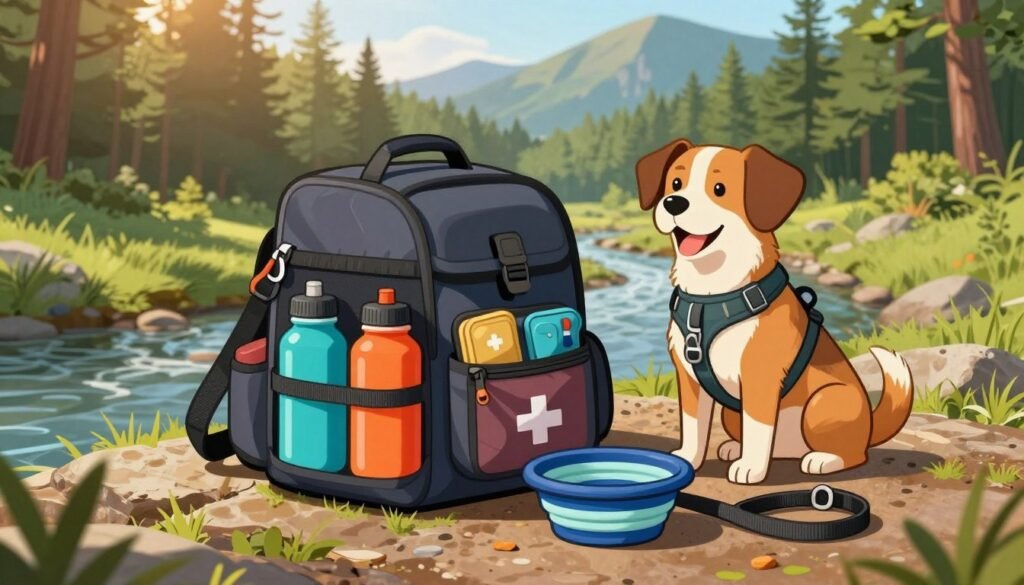
Keep treats in waterproof bags. Nothing ruins a hike like soggy snacks.
First Aid Kit Essentials
Having a good dog first aid for hikers kit is vital. I learned this the hard way after my dog got hurt. You can buy a kit or make your own. Here’s what you need:
Bandages and Wound Care Supplies
Your kit should have these items:
- Gauze pads in various sizes for wounds
- Self-adhesive wrap that sticks to itself but not fur
- Antiseptic wipes for cleaning cuts and scrapes
- Antibiotic ointment to prevent infection
- Medical tape for securing bandages
- Scissors for cutting tape and gauze
I’ve used these supplies a lot. Paw pad injuries are common on rocky trails.
Tweezers for Ticks and Splinters
Quality tweezers are key in the best dog hiking gear. Never use your fingers to remove ticks. It can leave the head in your dog’s skin or expose you to disease.
When removing ticks, grasp as close to the skin as possible and pull straight out. Don’t twist or jerk. I keep my tweezers in a small plastic case to keep them clean and protected.
For splinters, remove them promptly before they work deeper into the paw pad or become infected.
Emergency Contact Information
Write down these important numbers and keep them in your first aid kit:
- Your regular veterinarian’s phone number
- The nearest emergency vet clinic to your hiking area
- Pet poison control hotline (ASPCA: 888-426-4435)
- Your dog’s medical history and current medications
I laminate this card so it stays readable even if it gets wet. Cell service is unreliable on many trails, so having physical backups is important.
Waste Bags and Trail Courtesy Supplies
Following Leave No Trace principles means packing out all waste. Yes, even on remote trails where you think nobody will notice.
I carry biodegradable waste bags, but remember, biodegradable doesn’t mean you can leave them on the trail. They need to come home with you. I use a poop caddy that clips to my backpack to keep odors in during the hike.
Nothing is more frustrating than finding abandoned waste bags on the trail. If you packed it in, pack it out. It’s that simple.
For a complete downloadable packing checklist, visit petzvibes.com. It has everything you need for safe and responsible dog hiking adventures.
How to Hike with Dogs: Training Fundamentals
Every successful dog hiking adventure starts long before you lace up your boots—it begins with mastering essential training fundamentals. I can’t stress enough how important proper preparation is for safe and enjoyable trails.
The skills your dog needs on hiking trails go far beyond basic sit and stay commands. When you’re miles from your car on a narrow mountain path, training dogs for hiking becomes a matter of safety.
I learned this lesson when my dog spotted a squirrel on our first trail attempt. Without solid training, what should have been a peaceful morning turned into a chaotic scene that left us both exhausted and frustrated.
Three Essential Commands Every Trail Dog Needs
Before you tackle any trail, your dog must respond reliably to three non-negotiable commands. These aren’t suggestions—they’re requirements for how to hike with dogs safely.
“Leave it” tells your dog not to engage with something they’ve spotted. This command prevents your dog from eating wildlife scat, toxic mushrooms, or chasing after animals on the trail.
I use this command constantly when hiking. Last month, it stopped my dog from investigating what turned out to be a decomposing fish near a lake trail.
“Drop it” is different from “leave it” and equally critical. This command gets your dog to release whatever they’ve already picked up in their mouth.
The distinction matters because dogs don’t always listen to “leave it” when excitement takes over. When they’ve grabbed something dangerous, you need a reliable way to get them to let go immediately.
Loose leash walking is the third essential skill for trail success. Your dog should walk anywhere within leash length without pulling you forward.
Notice I said loose leash walking, not strict heeling. Dogs experience the world mainly through smell, and hiking should allow them to explore scents along the trail. Forcing them to walk in perfect heel position removes much of their enjoyment.
Here’s what works for me when teaching these commands:
- Practice each command separately in low-distraction environments first
- Use high-value treats that your dog only gets during training sessions
- Gradually increase distractions as your dog masters each skill
- Remember that any training deficits during neighborhood walks will amplify on hiking trails
- Consider enrolling in obedience classes if you’re struggling with consistency
For detailed video tutorials on teaching these specific commands, I recommend checking out professional training resources at petzvibes.com, where you’ll find step-by-step guides for training dogs for hiking.
Progressive Endurance Building
You wouldn’t run a marathon without training, and your dog shouldn’t attempt a challenging hike without proper conditioning. Building endurance gradually prevents injuries and ensures enjoyable experiences for both of you.
I follow a specific progression that has worked perfectly for multiple dogs over the years. Start with one-hour neighborhood walks that include hills or stairs to build foundational fitness.
Once your dog handles these walks comfortably without excessive panting or fatigue, progress to 1-3 mile flat trails. These introductory hikes should be easy for both of you, allowing your dog to experience trail environments without physical strain.
The next step involves 2-4 mile moderate hikes with some elevation gain. Watch your dog carefully during these outings for signs of tiredness or discomfort.
Lastly, you can advance to challenging terrain with steep climbs, rocky paths, or longer distances. This progression typically takes 6-8 weeks for most healthy adult dogs.
Here’s an important lesson I learned the hard way: match difficulty to both your fitness level and your dog’s abilities. Last year while recovering from a minor injury, I had to scale back my ambitious hiking plans despite my dog being ready for more challenging trails.
Your hiking safety tips for dogs should always include regular fitness assessments. If your dog seems tired, take breaks. If they’re limping or favoring a paw, turn back.
Trail Socialization Strategies
A well-socialized dog makes trail encounters stress-free for everyone involved. Your dog needs to remain calm around other hikers, trail runners, mountain bikers, and other dogs.
I started socializing my current dog by visiting busy trailheads at peak times without actually hiking. We’d sit near the parking area and watch people come and go, rewarding calm behavior with treats.
Puppy socialization classes provide excellent foundations, but adult dogs can learn appropriate trail behavior too. The key is controlled exposure to various situations before expecting perfect trail manners.
Consider these socialization priorities:
- Exposure to people wearing backpacks, hiking poles, and unusual gear
- Positive experiences with cyclists passing at various speeds
- Calm reactions to other dogs both on-leash and at a distance
- Comfort with trail runners approaching quickly from behind
- Relaxed behavior around children, families, and groups
Start these exposures in controlled settings like dog-friendly outdoor stores or quiet trails before tackling busy hiking areas. Your goal is building confidence, not overwhelming your dog with too much stimulation.
Mastering Recall for Off-Leash Freedom
Off-leash hiking represents the pinnacle of trail freedom, but it requires absolutely reliable recall training. I need to be clear: not every dog should hike off-leash, and many trails prohibit it entirely.
When I teach recall for how to hike with dogs off-leash, I use a specific progression that prioritizes safety. Start in a securely fenced area where your dog can’t escape if training doesn’t go as planned.
Attach a 15-30 foot long lead to your dog’s harness. This gives them a sense of freedom while keeping them under your control. Let them wander and sniff, then call them back using your chosen recall word.
When they return, reward generously with high-value treats—think real chicken, cheese, or whatever your dog finds irresistible. These treats should be special rewards reserved only for recall training.
Gradually increase distractions as your dog masters the basic recall. Invite a friend with a dog to provide temptation. Scatter toys in the area. Practice when squirrels are active.
The next progression involves dropping the long lead while following closely behind your dog. You’re not holding the lead, but you can step on it instantly if your dog doesn’t respond to your recall command.
I learned this technique from watching experienced off-leash hikers, and it’s been invaluable. Their well-behaved dogs provided excellent examples for my own dog to observe and model.
Here’s the reality about off-leash hiking: it’s a privilege that requires months of consistent training and 100% reliable recall. If your dog only comes back 9 times out of 10, they’re not ready.
Even with perfect recall, I always use leashes on:
- Trails with wildlife that my dog might chase
- Busy routes where other hikers might be uncomfortable with off-leash dogs
- Any area where regulations require leashes
- Terrain with steep drop-offs or other hazards
- New trails where I don’t know what to expect
“The goal of training isn’t perfect obedience—it’s creating a partnership where your dog understands what you need and wants to respond.”
For more training tips and resources, visit petzvibes.com. They offer video tutorials and training plans for trail dogs.
Remember, training is an ongoing process, not a destination. Even well-trained dogs need regular practice and occasional refresher sessions to maintain their skills on the trail.
Choosing the Right Dog-Friendly Trails
When learning how to hike with dogs, picking the right trails is key. Not all paths are dog-friendly. It’s important to find trails that are both challenging and safe.
Technology makes finding dog-friendly trails easy. With the right apps, you can find trails, check their difficulty, and see current conditions before you go.
Finding Routes with Digital Tools
AllTrails is my top choice for finding dog-friendly trails. It has a huge database of hiking routes across the U.S. You can filter to find trails that allow dogs.
On AllTrails, I look at recent reviews for dog-friendly tips. These reviews share details like muddy spots and wildlife encounters. The app also shows steep sections that might be tough for dogs.
Besides AllTrails, Hiking Project offers detailed trail info. Google Maps is great for checking trailhead distances and parking. Some apps offer offline maps, which are handy in areas with no cell service.
“The best hike is the one where both you and your dog finish strong, not exhausted. Choose trails that challenge you both without overwhelming either of you.”
Decoding Difficulty Classifications
Understanding trail difficulty is important. Most trails are rated Easy, Moderate, or Hard. These ratings consider distance and elevation gain.
Easy trails are under 3 miles with little elevation change. They’re perfect for puppies, senior dogs, or beginners. The terrain is usually smooth and easy to follow.
Moderate trails are 3 to 6 miles long with noticeable elevation changes. Dogs need some conditioning for these routes. I use them to build my dog’s endurance.
Hard trails are over 6 miles or have big elevation gain. Only experienced dogs should tackle these. Difficulty ratings can vary, so what’s easy for one hiker might be hard for another.
| Difficulty Level | Distance Range | Elevation Gain | Best For | Terrain Features |
|---|---|---|---|---|
| Easy | Under 3 miles | 0-500 feet | Puppies, beginners, senior dogs | Well-maintained paths, minimal obstacles |
| Moderate | 3-6 miles | 500-1,500 feet | Conditioned dogs with some experience | Some rocky sections, stream crossings |
| Hard | 6+ miles | 1,500+ feet | Advanced fitness, experienced trail dogs | Steep climbs, scrambles, exposed areas |
| Very Hard | 10+ miles | 2,500+ feet | Peak fitness, extensive trail experience | Technical terrain, high altitude, extended duration |
Investigating Rules and Restrictions
Before you go, research local rules to avoid surprises. Some trails ban dogs, while others require leashes. Always check if your dog can hike off-leash.
Look at official park websites for dog rules. These sites have info on leashes, restricted areas, and seasonal closures. They also post updates on wildlife activity.
Trail apps often list rules, but always check official sources. Rules can change with the seasons or due to wildlife management. Reading recent reviews can also help you understand enforcement and any dog-related issues.
Before heading out, I complete this quick research checklist:
- Confirm dogs are permitted on the specific trail
- Verify current leash requirements and length restrictions
- Check for temporary closures due to weather, maintenance, or wildlife
- Identify water sources along the route
- Note any fees or parking permits required
- Review recent trail condition reports
- Locate the nearest veterinary clinic to the trailhead
For more on dog-friendly trails, visit petzvibes.com. They have guides for each state and tips for safe hiking with dogs.
Spending time researching ensures a great hike for you and your dog. It might seem like a lot of work, but it keeps you both safe and happy on the trail.
Keeping Your Dog Hydrated on the Trail
I’ll never forget a hiker whose dog was dehydrating. We were three miles into a trail on a warm day. The dog was panting heavily, and the owner hadn’t brought water.
I shared my dog’s water, and we had to cut the hike short. This taught me that dog hydration on trails is not optional—it’s a must.
Water is not just for comfort. It helps regulate body temperature and supports organ function. It prevents heat-related emergencies. When planning your next hike, remember your dog’s hydration needs.
How Much Water Dogs Need While Hiking
Dogs need about one ounce of water per pound of body weight daily. But hiking increases this need due to physical exertion.
I recommend at least 8 ounces of water per hour of moderate hiking for an average-sized dog. This is just a starting point.
Temperature and humidity greatly affect hydration needs. On hot days or humid trails, dogs lose moisture quickly. I double my water estimates when temperatures exceed 75°F.
The exertion level also matters. Steep climbs, rocky terrain, or fast-paced hikes demand more water. I bring one full Nalgene bottle for every 2-3 hours of hiking, plus an extra for longer adventures.
Individual factors also play a role. Larger dogs need more water, while senior dogs or those with health conditions may need extra hydration. Breeds with thick coats or shortened snouts face higher dehydration risks during exercise.
Portable Hydration Solutions I Recommend
Finding the right portable hydration system has changed my hiking experience. I’ve tested many products, and some are essential for best dog hiking gear for water management.
I love a squeeze bottle with an attached bowl that recollects unused water. This design eliminates waste. It’s lightweight, clips to my backpack, and makes water breaks easy.
Collapsible silicone bowls that clip to backpack straps are also great. They fold flat when not in use and are easy to clean. I keep one attached to my pack’s shoulder strap for easy access.
For longer hikes, consider a dog hydration pack. These vests distribute weight evenly and allow dogs to carry their own water. This works best for larger, well-conditioned dogs who can handle the extra load comfortably.
While dogs can technically drink from streams, I strongly discourage relying on this. Giardia, bacteria, and other parasites lurk in many backcountry water sources. Carrying fresh water from home is always the safer choice for maintaining your dog’s health.
Recognizing Signs of Dehydration
Knowing how to spot dehydration early can prevent a minor issue from becoming a medical emergency. I regularly check my dog during hikes, on warm days or challenging trails.
Watch for these critical warning signs:
- Excessive panting that seems disproportionate to the current exertion level
- Thick, ropy saliva instead of thin, watery drool
- Dry nose and gums that feel tacky to the touch
- Loss of skin elasticity—when you gently pull up the skin on their neck, it doesn’t snap back quickly
- Sunken eyes or a glazed, unfocused expression
- Unusual lethargy or reluctance to continue walking
- Loss of appetite or refusing treats they normally love
I also check capillary refill time by gently pressing on my dog’s gums and watching how quickly the color returns. Normal refill happens within two seconds. Anything longer suggests dehydration or poor circulation.
Prevention is always easier than treatment. I offer water every 20-30 minutes during moderate hikes, more frequently in heat or on strenuous climbs. Even if your dog doesn’t seem thirsty, encouraging regular water breaks maintains proper hydration levels.
If you notice multiple dehydration symptoms, stop hiking immediately and find shade. Offer water in small amounts frequently. For emergency dehydration protocols and when to seek veterinary care, visit petzvibes.com for detailed guidance.
Remember that dehydration can escalate quickly into heat exhaustion or heat stroke, both of which are life-threatening conditions. Making dog hydration on trails a priority isn’t just good practice—it’s essential for keeping your adventure companion safe and healthy.
Trail Safety Tips Every Dog Owner Should Know
I’ve learned that knowing hiking safety tips for dogs makes every trail trip worry-free. Being ready for anything doesn’t mean expecting disaster. It means you can enjoy the journey with your furry friend. These tips have helped me deal with everything from unexpected wildlife to minor injuries calmly and effectively.
Knowing how to handle tough situations is key. My dog relies on my quick thinking and knowledge on the trail.
Wildlife Encounters and How to React
It’s important to know how to react to wildlife when how to hike with dogs in nature. Different animals need different responses. Knowing these can prevent panic.
In bear country, I make noise while hiking. This helps avoid surprise encounters. I carry bear spray in a hip holster, not buried in my backpack.
If we meet a black bear, I appear big, speak firmly, and back away slowly. I keep my dog close. For grizzly bears, playing dead might be necessary if attacked.
Dealing with snakes is different. I keep my dog on a leash in snake areas, mainly during warm months. If we see a snake, I give it space and calmly move my dog away.
Smaller wildlife like squirrels and rabbits might seem harmless but can be dangerous. I never let my dog chase them. This can lead to getting lost or injured. The “leave it” command is vital for safety.
Protecting Your Dog from Ticks and Parasites
Preventing ticks is a must for trail dogs. I use monthly meds like Bravecto or Seresto collars. But, meds alone aren’t enough.
After every hike, I do a thorough tick check. I focus on high-risk areas like ears, toes, and the tail base.
- Around and inside the ears
- Between the toes and paw pads
- Under the collar area
- Armpits and groin regions
- Around the tail base
When I find a tick, I remove it right away. I use tweezers to pull it out straight, without twisting. I save the tick in a sealed bag for later.
Before hiking, I make sure my dog is vaccinated against tick-borne diseases. This includes Lyme disease and Leptospirosis. These vaccinations protect against serious illnesses from ticks and wildlife.
I watch for signs of tick-borne illness after hikes. Look for lethargy, loss of appetite, fever, lameness, or swollen lymph nodes. If I see any, I call my vet right away.
Managing Overheating and Heat Exhaustion
Heat-related emergencies are very dangerous for dogs on trails. Unlike humans, dogs don’t sweat well. They cool down mainly by panting. This makes them more prone to heat stroke.
Understanding the signs of overheating to heat stroke is key. Prevention is better than treatment. Knowing how to respond is critical dog first aid for hikers knowledge.
Early Warning Signs of Overheating
I always watch for signs that my dog is getting too hot. Catching overheating early prevents heat stroke.
Excessive panting that doesn’t slow down during breaks is a warning sign. If my dog’s panting doesn’t decrease after resting in shade, we need to cool down.
Other early signs include:
- Bright red tongue and gums (instead of normal pink)
- Thick, ropy saliva
- Slowed pace or reluctance to continue
- Weakness or stumbling
- Seeking shade constantly
At this stage, cooling measures can prevent heat stroke. I never ignore these signs or push my dog to keep hiking.
Immediate Cooling Techniques
When I notice overheating signs, I stop hiking right away. Continuing can make things worse.
My cooling plan is:
- Move to the shadiest spot available immediately
- Offer small amounts of cool water—I don’t force large quantities as this can cause vomiting
- Apply cool (not ice cold) water to paw pads, belly, and armpits
- Place wet bandanas on neck and head
- Create airflow with a portable fan or by fanning manually
I always carry extra water for cooling. Wetting paw pads first helps with heat dissipation. Then, cool the belly and armpits.
I avoid ice-cold water or ice packs on the skin. Extreme cold can slow cooling. Cool to lukewarm water works better.
We rest in shade for 20-30 minutes while I watch for improvement. If my dog’s breathing normalizes and energy returns, we either head back or continue slowly with breaks.
When to Seek Emergency Veterinary Care
Some symptoms mean heat stroke is beyond what I can handle on the trail. These need immediate vet care:
- Vomiting or diarrhea
- Collapse or inability to stand
- Disorientation or confusion
- Seizures or muscle tremors
- Blue or purple gums
Heat stroke can be fatal, even with treatment. If severe symptoms appear, I start cooling while planning to get to the vet fast. I call ahead to prepare them for our arrival.
Prevention is the best strategy. I start hikes early in summer to avoid heat. I choose shaded trails and avoid hiking when it’s over 80°F.
What to Do If Your Dog Gets Injured
Trail injuries happen despite precautions. Knowing how to assess and respond to injuries is key dog first aid for hikers knowledge.
If my dog shows signs of injury, I stop and assess calmly. Panicking doesn’t help.
My injury assessment follows this systematic approach:
| Injury Type | Immediate Action | When to Evacuate |
|---|---|---|
| Minor cuts/scrapes | Clean with saline, apply antibiotic ointment, bandage if needed | If bleeding doesn’t stop within 5 minutes or wound is deep |
| Pad injuries | Clean debris, apply bootie for protection, slow pace significantly | If pad is torn through or bleeding heavily |
| Limping/lameness | Check for thorns, cuts, or swelling; rest 10-15 minutes | If limping worsens, dog won’t bear weight, or swelling increases |
| Suspected fracture | Immobilize limb gently, keep dog calm and stay | Immediately—carry dog out if possible |
For minor injuries, I treat them on the trail. I clean wounds, apply pressure, and bandage when needed. If it’s minor, we can hike slowly with breaks.
For serious injuries, I turn back. My dog’s safety is more important than reaching our destination. I’ve never regretted choosing safety over reaching a goal.
If my dog can’t walk, I carry her out. For smaller dogs, I carry them in my arms or a carrier. For larger dogs, I’ve practiced emergency carries with a partner.
I always tell someone my hiking plans and expected return time. This ensures someone knows to look for us if we’re late due to an emergency.
The best emergency is the one that never happens. Preparation, prevention, and knowing when to turn back have kept my dog safe on hundreds of miles of trails.
These safety tips give me confidence to explore new trails. Understanding hiking safety tips for dogs doesn’t create fear—it gives us freedom to adventure safely together.
Understanding National Park Dog Policies
When I first started planning hikes with my dog, I hit a roadblock. The excitement of exploring famous parks quickly turned to disappointment. I found out dogs are limited in many of America’s most famous parks.
Learning about these rules before your trip saves you from frustration. It helps you plan adventures where your dog is welcome. The truth is, national park dog policies protect wildlife, preserve ecosystems, and ensure all visitors have positive experiences.
Many people think national parks welcome pets on all trails. But, this is not true. Families often find out their dogs can’t join them on backcountry adventures at trailheads.
Restrictions Vary by Location
The National Park Service allows dogs in certain areas but not others. Dogs can go on paved roads, in developed campgrounds, and some paved trails. But, most backcountry trails, beaches, and wilderness areas are off-limits to dogs.
Dogs can disturb wildlife and spread diseases to native animals. They can also damage sensitive vegetation. Ground-nesting birds are very vulnerable to dog presence, even when pets are leashed.
I’ve looked into policies across dozens of parks. The rules vary a lot. Yellowstone, Yosemite, and Grand Canyon have strict rules. In these parks, dogs can only access parking areas, campgrounds, and a few paved paths.
On the other hand, Acadia National Park, Shenandoah National Park, and Cuyahoga Valley National Park offer better access for dog owners. Acadia allows dogs on most carriage roads and many hiking trails. It’s one of the most dog-friendly options in the system.
Signs at trailheads outline pet rules. Following leash requirements prevents dogs from being banned from areas where they’re currently allowed.
Before visiting any national park, I always check the specific rules on the park’s official website. This simple step prevents wasted time and ensures I can plan alternative activities if needed.
Leash Laws Protect Everyone
Where dogs are allowed in national parks, leash rules are strict. The standard rule requires leashes of six feet or shorter at all times. These rules are important for several reasons.
Leashes prevent dogs from chasing wildlife. This can cause stress to animals and disrupt their natural behaviors. I’ve seen the chaos when an off-leash dog spots a deer or squirrel. The situation becomes dangerous for everyone involved.
Following leash requirements also protects other visitors. Not everyone is comfortable around dogs, and some people have allergies or fears. Keeping your dog leashed shows respect for shared spaces.
I’ve seen irresponsible owners let their dogs run free in restricted areas. They claim their pets are “well-behaved” or “under voice control.” This behavior leads to more restrictions. When you learn how to hike with dogs in protected areas, following leash laws preserves access for future visitors.
Wildlife protection remains the primary concern. Dogs carry scents that can frighten wildlife away from critical habitat. Even the most well-trained dog may react instinctively to a wild animal, potentially injuring protected species.
Better Options for Dog Owners
The good news? Plenty of incredible alternatives offer dog-friendly trails without the restrictions found in national parks. I’ve discovered some of my favorite hiking spots by exploring these options.
National Forests generally have more permissive policies regarding dogs. Most trails in National Forest lands welcome leashed dogs, and some areas even allow off-leash hiking. The scenery rivals national parks, with fewer crowds and more flexibility.
State Parks vary by state, but many allow dogs on most trails. I’ve found state parks often provide the perfect balance—beautiful landscapes, maintained trails, and welcoming attitudes toward canine companions.
Bureau of Land Management (BLM) lands are typically very dog-friendly. These vast public spaces offer endless exploration opportunities. BLM areas near restricted national parks provide similar geology and ecosystems without the pet restrictions.
National Recreation Areas may have fewer limitations than national parks. These areas focus on recreational use, making them more accommodating to families with dogs.
Here are specific alternatives I recommend near popular restricted national parks:
- San Juan National Forest offers stunning trails near Mesa Verde National Park
- Stanislaus National Forest provides incredible hiking near Yosemite
- Kaibab National Forest surrounds Grand Canyon with dog-friendly options
- Green Mountain National Forest delivers beautiful trails in Vermont with minimal restrictions
I use AllTrails to filter for dog-friendly trails in any area I’m visiting. The app clearly marks which trails allow dogs and provides user reviews that often mention how pet-friendly the experience was.
| Public Land Type | Typical Dog Policy | Leash Requirements | Trail Access Level |
|---|---|---|---|
| National Parks | Highly restricted | Required (6 feet max) | Paved areas, campgrounds only |
| National Forests | Generally permissive | Recommended, sometimes optional | Most trails accessible |
| State Parks | Varies by state | Usually required | Many trails accessible |
| BLM Lands | Very permissive | Recommended in developed areas | Extensive access |
Understanding these differences helps you choose destinations where your dog is genuinely welcome. Planning around dog-friendly trails creates better experiences for everyone—you won’t feel restricted, and your dog gets to enjoy the adventure fully.
For detailed information about specific national park dog policies, I recommend visiting petzvibes.com, which maintains an updated database of regulations across all parks. This resource has saved me countless hours of research when planning trips.
The key takeaway? Don’t let national park restrictions discourage you from hiking with your dog. Countless amazing alternatives exist where your furry friend is not just tolerated but welcomed. These areas often provide more freedom, fewer crowds, and equally stunning natural beauty.
Summer Hiking with Dogs: Special Considerations
I learned the hard way that summer trails can be dangerous for dogs if you’re not properly prepared. During my first summer hiking with dogs, I underestimated how quickly heat affects them. Now I approach warm-weather adventures with a completely different mindset and specific strategies.
Dogs handle heat very differently than humans. They cool themselves mainly through panting and their paw pads. This limited cooling system makes them vulnerable to heat exhaustion much faster than we experience it ourselves.
Summer hiking with dogs requires careful timing, protective gear, and constant vigilance. I’ve developed a set of rules that have kept my hiking companions safe through countless hot-weather adventures.
Timing Your Hikes to Avoid Peak Heat
The most important hiking safety tips for dogs I’ve learned centers on timing. I follow what mountaineers call the “summit by noon” rule religiously.
This means I plan to reach my turnaround point, summit, or halfway mark by noon at the absolute latest. Preferably, I aim for 10 a.m. The reasoning is simple: temperatures typically peak between noon and 4 p.m.
For longer hikes, this means setting my alarm for 5 or 6 a.m. I know that sounds early, but the benefits are incredible. Morning trails are cooler, quieter, and far less crowded.
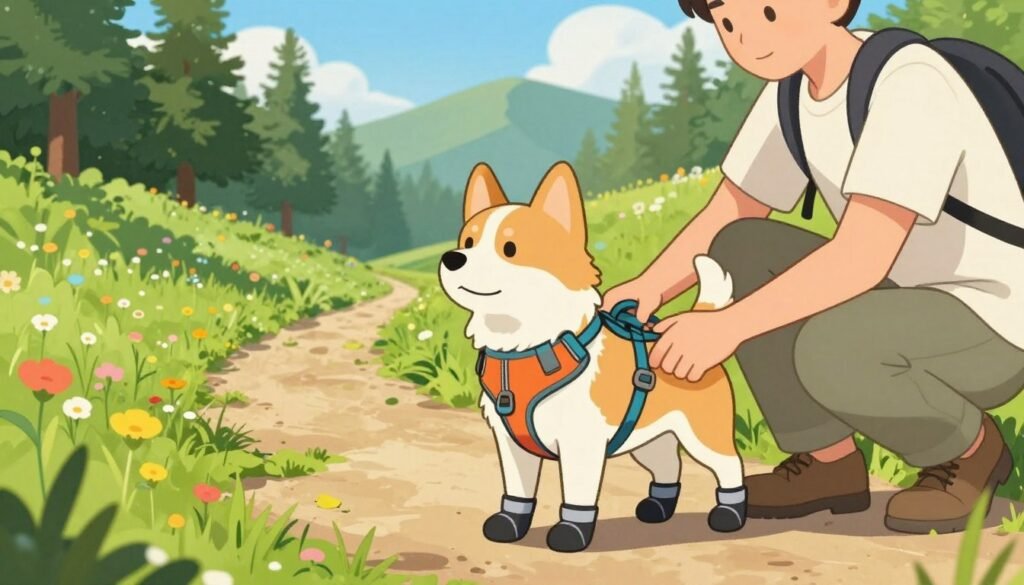
I remember one July hike in Arizona where we started at 5:30 a.m. By the time we returned to the trailhead at 11 a.m., the temperature had climbed from 68 to 95 degrees. Other hikers were just starting out, and I could see their dogs already panting heavily.
Here are my timing strategies for hot weather:
- Check sunrise times and start within 30 minutes of first light
- Review weather forecasts the night before, paying attention to hourly predictions
- Calculate your turnaround time based on half your total hiking time ending before noon
- Consider evening hikes after 6 p.m. when temperatures drop significantly
- Choose shaded forest trails over exposed ridge walks during summer months
Even seemingly comfortable 75-degree temperatures can be dangerous for dogs during exertion in full sun. I’ve learned to be conservative with my timing decisions. When in doubt, I start earlier or choose a shorter route.
Hot Pavement and Trail Surface Dangers
One danger many hikers overlook is trail surface temperature. Asphalt, concrete, and even sand can reach temperatures hot enough to burn paw pads within minutes.
I use the 7-second rule before any walk or hike. If I can’t comfortably hold the back of my hand on the surface for seven seconds, it’s too hot for my dog’s paws.
Dark asphalt in direct sunlight can reach 140 degrees when air temperature is only 87 degrees. That’s hot enough to cause serious burns. I’ve seen dogs limping from painful blisters that could have been prevented.
My approach to protecting paws includes these strategies:
- Stick to dirt trails whenever possible during summer months
- Avoid parking lot crossings during midday heat
- Carry my dog across hot surfaces when necessary
- Apply paw wax like Musher’s Secret before hikes for added protection
- Invest in protective booties for unavoidable hot terrain
Dark rocks also absorb significant heat. I’ve touched trail rocks that felt like stovetops. During hot hikes, I encourage my dog to walk on the shaded side of the trail where surfaces stay cooler.
Watch for signs your dog is uncomfortable with surface temperature. Lifting paws repeatedly, refusing to walk, or trying to stand on your feet all indicate the ground is too hot.
Cooling Vests and Other Summer Gear
The best dog hiking gear for summer includes specialized cooling products that make a real difference. I’ve tested numerous options over the years, and some are genuinely effective.
Cooling vests use evaporative cooling technology. You soak them in water, wring out excess moisture, and the vest keeps your dog cool as water evaporates. I use the Ruffwear Swamp Cooler for my dogs, and it drops their body temperature noticeably.
Here’s my summer gear checklist:
- Cooling vest: Essential for temperatures above 80 degrees or exposed trails
- Cooling bandana: Worn around the neck to cool blood flow to the brain
- Insulated water bottles: Keeps water cold for hours, more refreshing for dogs
- Collapsible water bowl: Allows frequent hydration breaks
- Portable dog fan: Battery-powered fans that clip to backpacks for resting breaks
Certain dogs face higher heat risks. Breeds with thick coats like Huskies and Malamutes struggle more in heat. Brachycephalic breeds—Bulldogs, Pugs, Boston Terriers—have compromised breathing that makes cooling even harder. Dark-colored dogs absorb more heat than lighter-colored ones.
I always choose trails with water features during summer. Streams, lakes, or waterfalls give dogs opportunities to wade or swim for cooling. Nothing cools an overheated dog faster than a dip in cold water.
Taking frequent breaks in shade is non-negotiable. I stop every 20-30 minutes during hot hikes, find shade, offer water, and let my dog rest until their breathing returns to normal.
For more hot weather protocols and summer hiking with dogs resources, visit petzvibes.com where I’ve compiled detailed safety guidelines.
Dogs don’t sweat efficiently like humans. They rely on panting and paw pad cooling, which means heat affects them much faster than it affects us. Always err on the side of caution.
My final summer safety checklist includes monitoring your dog constantly for signs of overheating: excessive panting, drooling, weakness, or disorientation. If you notice any of these signs, stop immediately, find shade, offer water, and cool your dog with wet towels or by finding water for them to stand in.
Planning Long-Distance Hiking Adventures
Planning multi-day hikes with your dog opens up amazing opportunities to explore remote areas together. It takes months of preparation, special gear, and a plan to condition your dog. I learned this when I spent a week in Crawford Notch, New Hampshire, tackling peaks with my dog after years of training.
Overnight backpacking trips with your dog are incredibly rewarding. You’ll connect deeper with nature, see your dog’s confidence grow, and make memories that day hikes can’t match.
Building Up to Multi-Day Trips
Before starting overnight adventures, your dog should handle single-day hikes of 8-10 miles without getting too tired. Next, try back-to-back hiking days to see how they recover. Start with weekend trips of two days, each with 4-6 mile hikes.
This approach helps find issues before you’re far from home. Check your dog’s paw pads each evening for cuts or wear. Also, watch their appetite closely, as a drop in food interest can mean they’re overexerted.
Training dogs for hiking at this level requires focus on several areas. Cardiovascular fitness is key, but so is paw pad toughness and joint conditioning. Mental stamina is also important, as some dogs get anxious in new places.
When planning your first multi-day trip, start with shorter daily distances than your dog’s max. If they can handle 10-mile day hikes, start overnight trips with 4-5 mile days. Carrying gear and hiking multiple days increases the challenge.
After my dog mastered day hikes, we gradually moved to two-day trips before our week-long New Hampshire adventure. This gradual progression helped us avoid injuries and stay enthusiastic throughout.
Camping with Your Dog on the Trail
Camping introduces new challenges beyond just hiking longer. Research dog-friendly campgrounds and backcountry sites before you go. Some areas welcome dogs, while others don’t.
Your packing list grows for multi-day trips. You’ll need a dog sleeping pad or lightweight sleeping bag for warmth. Calculate food carefully, as dogs burn more calories on hiking days. I pack 30-40% more food than usual.
The best gear for camping includes a sturdy tie-out cable or portable fence. Never leave your dog alone at camp, but secure restraints are safe while you set up or cook. Choose tie-out spots away from other campers to avoid disturbances.
Food storage is critical in areas with wildlife. Bear canisters must hold both human and dog food. Hang food bags far from your sleeping area in areas without bears. Raccoons and other animals will check out dog kibble.
I let my dog sleep inside my tent for warmth and safety. Some hikers prefer dogs to sleep outside on insulated pads. Either way works if your dog is comfortable at night. Cold, anxious dogs don’t recover well for the next day.
Consider bathroom routines on multi-day trips. Always pack out waste in sensitive areas or busy campgrounds. Bury waste at least 200 feet from water sources, following Leave No Trace. Bring extra waste bags for day hikes.
Using GPS Trackers Like Whistle and FitBark
Technology has changed safety and monitoring for long-distance hiking with dogs. GPS tracking devices offer peace of mind in unfamiliar backcountry. If your dog gets lost, tracking is critical.
I use a Whistle GPS tracker on extended trips for real-time tracking. It attaches to your dog’s collar and connects to your phone via cellular networks. It tracks activity levels to see if your dog is recovering well.
FitBark offers similar features with a focus on fitness and sleep. This data helps spot overexertion before injuries happen. If your dog’s sleep quality drops on a three-day trip, plan a shorter day or rest.
For serious backcountry adventures without cell service, Garmin tracking collars provide satellite monitoring. These cost more and need subscription plans, but work anywhere. Battery life is key for trips over 2-3 days.
Smartphone apps complement dedicated GPS trackers. Gaia GPS and AllTrails offer offline maps to show your position without cell service. I download trail maps and mark campsites and water sources before losing signal.
The table below compares popular GPS tracking options for training dogs for hiking on extended adventures:
| Device | Coverage Type | Battery Life | Key Features | Best For |
|---|---|---|---|---|
| Whistle GPS | Cellular networks | 7-10 days | Activity tracking, health monitoring, location alerts | Weekend trips with cell coverage |
| FitBark GPS | Cellular networks | 5-7 days | Sleep analysis, fitness metrics, location tracking | Health-focused multi-day hikes |
| Garmin Alpha 200i | Satellite (InReach) | 20+ hours active use | Topo maps, SOS messaging, unlimited range | Remote wilderness expeditions |
| Gaia GPS App | GPS only (no tracking) | Depends on phone | Offline maps, route planning, waypoint marking | Navigation backup for all trips |
Technology adds safety layers but shouldn’t replace training and preparation. Knowing your dog’s exact location lets you explore more remote areas. This freedom makes multi-day trips rewarding.
For more on backpacking with dogs and the best gear for extended adventures, visit https://petzvibes.com for expert advice and trip planning resources.
Trail Etiquette: Being a Responsible Dog Hiker
Trail etiquette is key when hiking with your dog. It keeps trails open for all dog lovers. Bad behavior from a few dogs can lead to new rules for everyone.
I’ve seen both good and bad trail manners. It all comes down to being prepared, aware, and respectful. By hiking responsibly, you help keep trails open for everyone.
Your actions on the trail matter more than you think. They shape policies, change how people see dogs in nature, and affect future access to trails.
Understanding Right-of-Way on Multi-Use Paths
Right-of-way rules keep everyone safe on shared trails. Horses always have priority over hikers and dogs, no matter the direction. When you meet horseback riders, step to the downhill side with your dog close on a short leash.
Horses can get scared by dogs. Call out calmly to let riders know you’re there, then stand quietly while they pass. Dogs barking at horses can be dangerous for everyone.
Hikers going uphill have the right-of-way over those going downhill. It’s harder to stop going uphill. When going downhill, step aside at a safe spot and let uphill hikers pass without breaking their rhythm.
Trail runners and mountain bikers (where allowed) move faster than hikers. They should announce themselves when approaching from behind. But you should stay alert. Pull your dog close and move to the side when faster users need to pass.
Communication is key to avoid problems. Always call out “dog on trail” when approaching other hikers around blind corners. This gives people time to prepare, which is important for those who might be nervous around dogs.
Never assume other people want your dog to greet theirs. Ask “is your dog friendly?” before letting them interact. Some dogs are in training, recovering from injury, or just prefer to avoid other animals. These tips protect everyone’s experience.
Practicing Leave No Trace With Your Canine
Leave No Trace principles apply to dogs just as much as humans. I recently found three bags of dog waste abandoned on a trail. This is worse than leaving waste unbagged because the plastic lasts for years.
Packing out dog waste is absolutely non-negotiable on dog-friendly trails. Dog waste isn’t natural fertilizer like wildlife droppings. It contains harmful bacteria and parasites that damage ecosystems, harm vegetation, and contaminate water sources.
I recommend using poop caddies that clip to your backpack exterior. These containers seal in odors and make carrying waste bags much easier. Always carry extra waste bags—bring more than you think you’ll need.
Some people think bagging waste and leaving it to “pick up on the way back” is okay. It’s not. You forget, other hikers see it as litter, and animals can tear into the bags. Pack it out immediately or don’t bring your dog.
Other Leave No Trace practices include keeping dogs on designated trails. Don’t let them cut switchbacks or create new paths that cause erosion. Prevent your dog from chasing wildlife—wild areas are their homes, and we’re just visitors passing through.
Excessive barking disrupts the natural soundscape that many people enjoy. If your dog barks constantly at other hikers or wildlife, choose less crowded trails or work on training before visiting popular areas.
When camping on multi-day trips, use only designated sites. Keep your dog on leash in camp and clean up any food spills promptly to avoid attracting wildlife. Your responsibility doesn’t end when you set up your tent.
The wilderness holds answers to questions we have not yet learned to ask.
Handling Dogs Who React to Trail Encounters
Not every dog exhibits perfect behavior on trails, and that’s okay—as long as you manage the situation responsibly. I’ve worked with dogs who lunge, bark, or get over-excited when seeing other people or animals. Honesty about your dog’s limitations is key.
If your dog reacts strongly to other trail users, step far off the path and have them sit while others pass. Use high-value treats to maintain focus and reward calm behavior. The distance helps reduce your dog’s stress and shows other hikers you’re actively managing the situation.
During training phases, choose less popular trails where you’ll encounter fewer people. Hiking during off-peak hours—early mornings or weekday afternoons—gives reactive dogs space to practice skills without overwhelming them.
Don’t take a highly reactive dog on busy trails during peak times. This isn’t fair to your dog, other hikers, or well-behaved dogs who might get caught in a conflict. Build skills gradually in quieter environments first. Understanding how to hike with dogs means knowing when conditions aren’t right for your specific animal.
Off-leash hiking is a privilege, not a right, even on trails where it’s technically allowed. Your dog needs exceptional recall training and consistently calm behavior around other trail users. Even friendly dogs shouldn’t approach others without permission—not everyone appreciates the interaction.
I’ve encountered off-leash dogs who rushed up to me and my leashed dog, creating tension and possible danger. The owner’s distant shout of “he’s friendly!” doesn’t solve the problem. If your dog can’t stay within a few feet of you and respond immediately to commands, they need to remain leashed.
Reactive behavior often improves with consistent training and positive experiences. The recall training and socialization skills covered earlier in this guide form the foundation for better trail manners. Be patient with the process and celebrate small improvements.
| Situation | Proper Response | Why It Matters |
|---|---|---|
| Meeting horses on trail | Step to downhill side, hold dog close, stand quietly | Prevents spooking horses and possible injury to riders |
| Dog waste on trail | Pack out immediately in sealed bags or caddy | Protects water quality, prevents disease transmission, maintains trail access |
| Approaching other hikers | Call out “dog on trail,” ask before allowing dog greetings | Gives nervous people time to prepare, respects others’ space preferences |
| Dog shows reactive behavior | Step far off trail, use treats for focus, choose quieter trails | Keeps everyone safe while your dog builds better skills |
Responsible trail behavior protects access for the entire dog-hiking community. When we follow etiquette guidelines consistently, we show that dogs belong on trails. Poor behavior from even a small percentage of users can result in new restrictions affecting everyone.
I’ve seen trails lose dog access because of repeated violations. These closures hurt responsible owners who follow all the rules. Your commitment to proper etiquette helps prevent these outcomes and keeps dog-friendly trails available for years to come.
For additional resources on Leave No Trace principles and responsible outdoor recreation with dogs, visit petzvibes.com for detailed guides and community support. The hiking safety tips for dogs you practice today shape the opportunities available tomorrow.
Conclusion
I’ve covered everything from assessing readiness to mastering training dogs for hiking throughout this guide. Learning how to hike with dogs might seem overwhelming at first. The truth is simpler than you think.
Start with short walks on dog-friendly trails near your home. You don’t need all the best dog hiking gear on day one. Pick up essentials like a sturdy harness, collapsible water bowl, and waste bags. Build from there as you and your pup gain confidence.
The bond you’ll create while exploring nature together is worth every bit of effort. Watching your dog’s excitement at new scents and sights never gets old. Those summit photos and stream crossings become cherished memories that last forever.
Visit https://petzvibes.com for downloadable checklists, detailed gear reviews, and trail recommendations. I’ve tested products from Ruffwear, Kurgo, and other trusted brands to help you make smart choices. Apps like AllTrails help you discover perfect routes, while GPS trackers like Whistle and FitBark keep your dog safe.
Be a responsible trail user who follows Leave No Trace principles. Your actions help maintain access to dog-friendly trails for everyone. Respect wildlife, pack out waste, and yield to other hikers.
Your dog is ready for an adventure. Grab your leash, fill your pack, and hit the trail. Every hike strengthens your bond and creates stories you’ll share for years to come.
FAQ
At what age can I start hiking with my puppy?
You can start short walks with your puppy at 3-4 months after they’ve had all their shots. Stick to short, flat trails under 1 mile with lots of sniffing breaks. By 4-6 months, you can try trails up to 3 miles. By 6-12 months, you can tackle more challenging hikes.
Full physical maturity is around 12-18 months, depending on the breed. Always check with your vet before starting a hiking routine. Growth plates need to fully develop before starting strenuous exercise.
What’s the best dog hiking gear to start with?
You’ll need a well-fitting harness, like the Ruffwear Front Range Harness. It has a Y-front design and reflective trim. A sturdy 6-foot leash is also essential, never a retractable one.
Don’t forget a collapsible water bowl, dedicated water bottle for your dog, high-value treats, and a basic first aid kit. A poop caddy that clips to your pack is also important. For longer hikes, consider protective booties and a dog backpack.
How do I find dog-friendly trails near me?
Use AllTrails to find dog-friendly trails. It lets you filter for dog-friendly trails, sort by difficulty, and check recent reviews. Always read recent reviews to confirm current conditions and dog policies.
Other useful apps include Hiking Project and local trail apps. Always check official park websites for up-to-date regulations on dog access.
How much water should I bring for my dog on a hike?
Dogs need about 1 ounce of water per pound of body weight daily. During exercise, this increases significantly. Aim for at least 8 ounces per hour of moderate hiking.
Bring one water bottle for every 2-3 hours of hiking, plus extra for safety. A 50-pound dog on a 4-hour hike might need 32+ ounces of water. Never forget to bring water for your dog.
Are dogs allowed in national parks?
Dogs face significant restrictions in most national parks. They’re allowed on paved roads, developed campgrounds, and some paved trails. But they’re not allowed on most backcountry trails, beaches, and wilderness areas.
Parks like Yellowstone, Yosemite, and Grand Canyon have very limited dog access. But Acadia, Shenandoah, and Cuyahoga Valley offer better options. Always check specific policies before visiting.
What basic commands does my dog need before hitting the trail?
Your dog needs to know “leave it,” “drop it,” and loose leash walking. These commands are essential for safe trail hiking. Start with short walks and gradually increase the distance and distractions.
Recall training is also important if you plan off-leash hiking. But this should only happen where permitted and with 100% reliable response.
How do I know if my dog is overheating on the trail?
Watch for excessive panting, bright red tongue and gums, thick saliva, slowed pace, and weakness. If you notice these signs, move to shade immediately and offer cool water.
Apply cool water to paw pads, belly, and armpits. Stop all activity. Emergency signs include vomiting, diarrhea, collapse, disorientation, or seizures. Heat stroke can be fatal.
Should I use a harness or collar for hiking with my dog?
Use harnesses for hiking, not collars. Harnesses distribute pressure across the chest and shoulders, providing better control and preventing escape. The Ruffwear Front Range Harness is a great option.
Front-clip harnesses are helpful if your dog tends to pull on leash. They allow natural shoulder movement and have reflective trim for visibility.
Can small breed dogs really go hiking?
Yes, small breeds can be excellent hikers. They may need to be carried over obstacles like large rocks or stream crossings. Their shorter legs mean more steps to cover the same distance.
They’re more vulnerable to temperature extremes. Start with shorter trails and bring a dog backpack or carrier for breaks. Be extra vigilant about paw pad protection and hydration.
How do I build up my dog’s hiking endurance gradually?
Start with 1-hour neighborhood walks that include hills. Then progress to 1-3 mile flat trails. Next, try 2-4 mile moderate hikes with some elevation gain.
Gradually tackle challenging terrain. This progression might take several weeks to months. Pay attention to how your dog recovers after each hike.
What should I do if I encounter wildlife on the trail with my dog?
Make noise while hiking to avoid surprising wildlife. Carry bear spray in an accessible holster. Know the proper response protocol for different wildlife.
For black bears, make yourself large, back away slowly, and don’t run. For grizzly bears, the response is different—research specific protocols for your region. Never allow your dog to chase wildlife.
Is it safe to let my dog drink from streams and lakes on the trail?
While many dogs drink from natural water sources without issue, there are risks. Giardia, leptospirosis, and other parasites and bacteria can cause serious illness. The safest approach is carrying enough fresh water for your dog throughout the hike.
On longer hikes, you can let your dog drink from flowing streams. Make sure your dog is vaccinated against leptospirosis and other water-borne diseases. Monitor for symptoms like diarrhea, vomiting, or lethargy in the following days.
What basic commands does my dog need before hitting the trail?
Your dog needs to know “leave it,” “drop it,” and loose leash walking. These commands are essential for safe trail hiking. Start with short walks and gradually increase the distance and distractions.
Recall training is also important if you plan off-leash hiking. But this should only happen where permitted and with 100% reliable response.
How do I know if my dog is overheating on the trail?
Watch for excessive panting, bright red tongue and gums, thick saliva, slowed pace, and weakness. If you notice these signs, move to shade immediately and offer cool water.
Apply cool water to paw pads, belly, and armpits. Stop all activity. Emergency signs include vomiting, diarrhea, collapse, disorientation, or seizures. Heat stroke can be fatal.
Should I use a harness or collar for hiking with my dog?
Use harnesses for hiking, not collars. Harnesses distribute pressure across the chest and shoulders, providing better control and preventing escape. The Ruffwear Front Range Harness is a great option.
Front-clip harnesses are helpful if your dog tends to pull on leash. They allow natural shoulder movement and have reflective trim for visibility.
Can small breed dogs really go hiking?
Yes, small breeds can be excellent hikers. They may need to be carried over obstacles like large rocks or stream crossings. Their shorter legs mean more steps to cover the same distance.
They’re more vulnerable to temperature extremes. Start with shorter trails and bring a dog backpack or carrier for breaks. Be extra vigilant about paw pad protection and hydration.
How do I build up my dog’s hiking endurance gradually?
Start with 1-hour neighborhood walks that include hills. Then progress to 1-3 mile flat trails. Next, try 2-4 mile moderate hikes with some elevation gain.
Gradually tackle challenging terrain. This progression might take several weeks to months. Pay attention to how your dog recovers after each hike.
What should I do if I encounter wildlife on the trail with my dog?
Make noise while hiking to avoid surprising wildlife. Carry bear spray in an accessible holster. Know the proper response protocol for different wildlife.
For black bears, make yourself large, back away slowly, and don’t run. For grizzly bears, the response is different—research specific protocols for your region. Never allow your dog to chase wildlife.
Is it safe to let my dog drink from streams and lakes on the trail?
While many dogs drink from natural water sources without issue, there are risks. Giardia, leptospirosis, and other parasites and bacteria can cause serious illness. The safest approach is carrying enough fresh water for your dog throughout the hike.
On longer hikes, you can let your dog drink from flowing streams. Make sure your dog is vaccinated against leptospirosis and other water-borne diseases. Monitor for symptoms like diarrhea, vomiting, or lethargy in the following days.
What basic commands does my dog need before hitting the trail?
Your dog needs to know “leave it,” “drop it,” and loose leash walking. These commands are essential for safe trail hiking. Start with short walks and gradually increase the distance and distractions.
Recall training is also important if you plan off-leash hiking. But this should only happen where permitted and with 100% reliable response.
How do I know if my dog is overheating on the trail?
Watch for excessive panting, bright red tongue and gums, thick saliva, slowed pace, and weakness. If you notice these signs, move to shade immediately and offer cool water.
Apply cool water to paw pads, belly, and armpits. Stop all activity. Emergency signs include vomiting, diarrhea, collapse, disorientation, or seizures. Heat stroke can be fatal.
Should I use a harness or collar for hiking with my dog?
Use harnesses for hiking, not collars. Harnesses distribute pressure across the chest and shoulders, providing better control and preventing escape. The Ruffwear Front Range Harness is a great option.
Front-clip harnesses are helpful if your dog tends to pull on leash. They allow natural shoulder movement and have reflective trim for visibility.
Can small breed dogs really go hiking?
Yes, small breeds can be excellent hikers. They may need to be carried over obstacles like large rocks or stream crossings. Their shorter legs mean more steps to cover the same distance.
They’re more vulnerable to temperature extremes. Start with shorter trails and bring a dog backpack or carrier for breaks. Be extra vigilant about paw pad protection and hydration.
How do I build up my dog’s hiking endurance gradually?
Start with 1-hour neighborhood walks that include hills. Then progress to 1-3 mile flat trails. Next, try 2-4 mile moderate hikes with some elevation gain.
Gradually tackle challenging terrain. This progression might take several weeks to months. Pay attention to how your dog recovers after each hike.
What should I do if I encounter wildlife on the trail with my dog?
Make noise while hiking to avoid surprising wildlife. Carry bear spray in an accessible holster. Know the proper response protocol for different wildlife.
For black bears, make yourself large, back away slowly, and don’t run. For grizzly bears, the response is different—research specific protocols for your region. Never allow your dog to chase wildlife.
Is it safe to let my dog drink from streams and lakes on the trail?
While many dogs drink from natural water sources without issue, there are risks. Giardia, leptospirosis, and other parasites and bacteria can cause serious illness. The safest approach is carrying enough fresh water for your dog throughout the hike.
On longer hikes, you can let your dog drink from flowing streams. Make sure your dog is vaccinated against leptospirosis and other water-borne diseases. Monitor for symptoms like diarrhea, vomiting, or lethargy in the following days.
What basic commands does my dog need before hitting the trail?
Your dog needs to know “leave it,” “drop it,” and loose leash walking. These commands are essential for safe trail hiking. Start with short walks and gradually increase the distance and distractions.
Recall training is also important if you plan off-leash hiking. But this should only happen where permitted and with 100% reliable response.
How do I know if my dog is overheating on the trail?
Watch for excessive panting, bright red tongue and gums, thick saliva, slowed pace, and weakness. If you notice these signs, move to shade immediately and offer cool water.
Apply cool water to paw pads, belly, and armpits. Stop all activity. Emergency signs include vomiting, diarrhea, collapse, disorientation, or seizures. Heat stroke can be fatal.
Should I use a harness or collar for hiking with my dog?
Use harnesses for hiking, not collars. Harnesses distribute pressure across the chest and shoulders, providing better control and preventing escape. The Ruffwear Front Range Harness is a great option.
Front-clip harnesses are helpful if your dog tends to pull on leash. They allow natural shoulder movement and have reflective trim for visibility.
Can small breed dogs really go hiking?
Yes, small breeds can be excellent hikers. They may need to be carried over obstacles like large rocks or stream crossings. Their shorter legs mean more steps to cover the same distance.
They’re more vulnerable to temperature extremes. Start with shorter trails and bring a dog backpack or carrier for breaks. Be extra vigilant about paw pad protection and hydration.
How do I build up my dog’s hiking endurance gradually?
Start with 1-hour neighborhood walks that include hills. Then progress to 1-3 mile flat trails. Next, try 2-4 mile moderate hikes with some elevation gain.
Gradually tackle challenging terrain. This progression might take several weeks to months. Pay attention to how your dog recovers after each hike.
What should I do if I encounter wildlife on the trail with my dog?
Make noise while hiking to avoid surprising wildlife. Carry bear spray in an accessible holster. Know the proper response protocol for different wildlife.
For black bears, make yourself large, back away slowly, and don’t run. For grizzly bears, the response is different—research specific protocols for your region. Never allow your dog to chase wildlife.
Is it safe to let my dog drink from streams and lakes on the trail?
While many dogs drink from natural water sources without issue, there are risks. Giardia, leptospirosis, and other parasites and bacteria can cause serious illness. The safest approach is carrying enough fresh water for your dog throughout the hike.
On longer hikes, you can let your dog drink from flowing streams. Make sure your dog is vaccinated against leptospirosis and other water-borne diseases. Monitor for symptoms like diarrhea, vomiting, or lethargy in the following days.
What basic commands does my dog need before hitting the trail?
Your dog needs to know “leave it,” “drop it,” and loose leash walking. These commands are essential for safe trail hiking. Start with short walks and gradually increase the distance and distractions.
Recall training is also important if you plan off-leash hiking. But this should only happen where permitted and with 100% reliable response.
How do I know if my dog is overheating on the trail?
Watch for excessive panting, bright red tongue and gums, thick saliva, slowed pace, and weakness. If you notice these signs, move to shade immediately and offer cool water.
Apply cool water to paw pads, belly, and armpits. Stop all activity. Emergency signs include vomiting, diarrhea, collapse, disorientation, or seizures. Heat stroke can be fatal.
Should I use a harness or collar for hiking with my dog?
Use harnesses for hiking, not collars. Harnesses distribute pressure across the chest and shoulders, providing better control and preventing escape. The Ruffwear Front Range Harness is a great option.
Front-clip harnesses are helpful if your dog tends to pull on leash. They allow natural shoulder movement and have reflective trim for visibility.
Can small breed dogs really go hiking?
Yes, small breeds can be excellent hikers. They may need to be carried over obstacles like large rocks or stream crossings. Their shorter legs mean more steps to cover the same distance.
They’re more vulnerable to temperature extremes. Start with shorter trails and bring a dog backpack or carrier for breaks. Be extra vigilant about paw pad protection and hydration.
How do I build up my dog’s hiking endurance gradually?
Start with 1-hour neighborhood walks that include hills. Then progress to 1-3 mile flat trails. Next, try 2-4 mile moderate hikes with some elevation gain.
Gradually tackle challenging terrain. This progression might take several weeks to months. Pay attention to how your dog recovers after each hike.
What should I do if I encounter wildlife on the trail with my dog?
Make noise while hiking to avoid surprising wildlife. Carry bear spray in an accessible holster. Know the proper response protocol for different wildlife.
For black bears, make yourself large, back away slowly, and don’t run. For grizzly bears, the response is different—research specific protocols for your region. Never allow your dog to chase wildlife.
Is it safe to let my dog drink from streams and lakes on the trail?
While many dogs drink from natural water sources without issue, there are risks. Giardia, leptospirosis, and other parasites and bacteria can cause serious illness. The safest approach is carrying enough fresh water for your dog throughout the hike.
On longer hikes, you can let your dog drink from flowing streams. Make sure your dog is vaccinated against leptospirosis and other water-borne diseases. Monitor for symptoms like diarrhea, vomiting, or lethargy in the following days.
What basic commands does my dog need before hitting the trail?
Your dog needs to know “leave it,” “drop it,” and loose leash walking. These commands are essential for safe trail hiking. Start with short walks and gradually increase the distance and distractions.
Recall training is also important if you plan off-leash hiking. But this should only happen where permitted and with 100% reliable response.
How do I know if my dog is overheating on the trail?
Watch for excessive panting, bright red tongue and gums, thick saliva, slowed pace, and weakness. If you notice these signs, move to shade immediately and offer cool water.
Apply cool water to paw pads, belly, and armpits. Stop all activity. Emergency signs include vomiting, diarrhea, collapse, disorientation, or seizures. Heat stroke can be fatal.
Should I use a harness or collar for hiking with my dog?
Use harnesses for hiking, not collars. Harnesses distribute pressure across the chest and shoulders, providing better control and preventing escape. The Ruffwear Front Range Harness is a great option.
Front-clip harnesses are helpful if your dog tends to pull on leash. They allow natural shoulder movement and have reflective trim for visibility.
Can small breed dogs really go hiking?
Yes, small breeds can be excellent hikers. They may need to be carried over obstacles like large rocks or stream crossings. Their shorter legs mean more steps to cover the same distance.
They’re more vulnerable to temperature extremes. Start with shorter trails and bring a dog backpack or carrier for breaks. Be extra vigilant about paw pad protection and hydration.
How do I build up my dog’s hiking endurance gradually?
Start with 1-hour neighborhood walks that include hills. Then progress to 1-3 mile flat trails. Next, try 2-4 mile moderate hikes with some elevation gain.
Gradually tackle challenging terrain. This progression might take several weeks to months. Pay attention to how your dog recovers after each hike.
What should I do if I encounter wildlife on the trail with my dog?
Make noise while hiking to avoid surprising wildlife. Carry bear spray in an