
Did you know that treats should make up no more than 10% of your pup’s daily caloric intake according to vets? That’s a small amount, which is why I started making snacks at home. The first time I baked for my dog, their eyes lit up. It was priceless!
By making your own snacks, you control every ingredient. No more worries about harmful additives or unknown preservatives. You can also adjust portions, manage allergies, and save money.
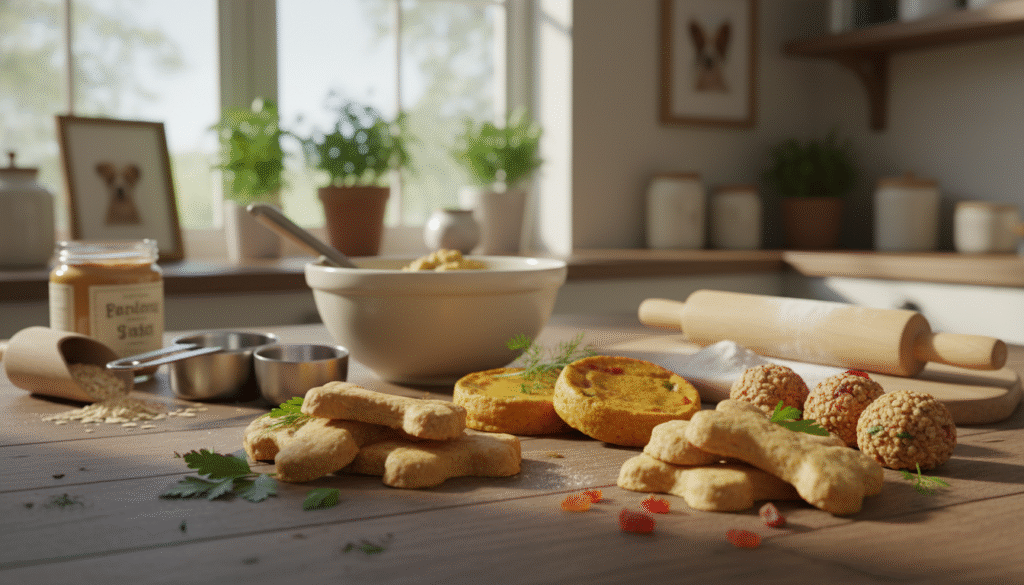
I’ve spent hours testing recipes and learning about nutrition for this guide. These 10 recipes are perfect for any dog, whether they have food sensitivities or just love treats. For more pet tips and resources, check out PetzVibes. I share all I’ve learned there.
Key Takeaways
- Making treats at home gives you full control over ingredients and helps avoid harmful additives found in store-bought options
- Veterinary guidelines recommend that snacks should comprise no more than 10% of your pup’s daily caloric intake
- Homemade alternatives offer fewer preservatives, better allergen management, and significant cost savings
- These 10 tested recipes provide nutritious, safe, and delicious options your furry friend will love
- Creating your own healthy dog treats strengthens the bond with your pet while ensuring optimal nutrition
Why I Fell in Love with Making Homemade Dog Treats
I started making natural pet treats when I couldn’t read the ingredients on store treats. I thought, “Why should my dog eat something I wouldn’t?” This question changed my life.
At home, I made my first batch with peanut butter, flour, and an egg. My dog loved the smell and couldn’t wait for them to be done.
When the treats were ready, my dog’s tail wagged so much it seemed like he might fly. That moment showed me how special homemade treats are.
Making treats at home has many benefits. It means no artificial preservatives and you control what goes into them. This is great for avoiding harmful additives.
For dogs with allergies, making treats at home is a must. I can change ingredients to suit my dog’s needs. This isn’t possible with store-bought treats.
Homemade treats also save money. A small bag of high-quality treats can cost $15-25. Buying ingredients in bulk, I’ve saved hundreds of dollars a year.
| Benefit Category | Store-Bought Treats | Homemade Natural Pet Treats |
|---|---|---|
| Ingredient Control | Unknown sources, preservatives included | Complete transparency, fresh whole foods |
| Monthly Cost | $60-100 for premium brands | $15-30 buying ingredients in bulk |
| Allergy Management | Limited options, difficult substitutions | Fully customizable for any sensitivity |
| Freshness | 6-18 month shelf life with chemicals | Made fresh weekly, no preservatives needed |
Homemade treats have brought us closer. My dog loves watching me make them. He knows they’re made with love.
It’s rewarding to feed your dog real food instead of processed treats. When I give him a homemade treat, I know it’s safe and healthy.
Learning to make diy puppy snacks was easy. My first recipes had just three ingredients and took 30 minutes. As I got better, I tried new flavors and textures.
Once you start making your own treats, you’ll wonder why you didn’t sooner. The health benefits, cost savings, and joy on your dog’s face make it all worth it. Plus, you’ll feel better knowing your dog is eating clean, healthy food.
Essential Kitchen Tools and Apps for Perfect Homemade Dog Treats
Starting your journey to make easy dog treats requires a few key tools. I learned this the hard way after my first batch of treats stuck to every surface imaginable! You don’t need a professional kitchen to create delicious, healthy snacks for your furry friend.
Having the right equipment saves time, reduces frustration, and produces better results. Most items are affordable and can be found at your local kitchen supply store or online. Let me walk you through exactly what I use in my kitchen every week.
Baking Equipment That Makes Everything Easier
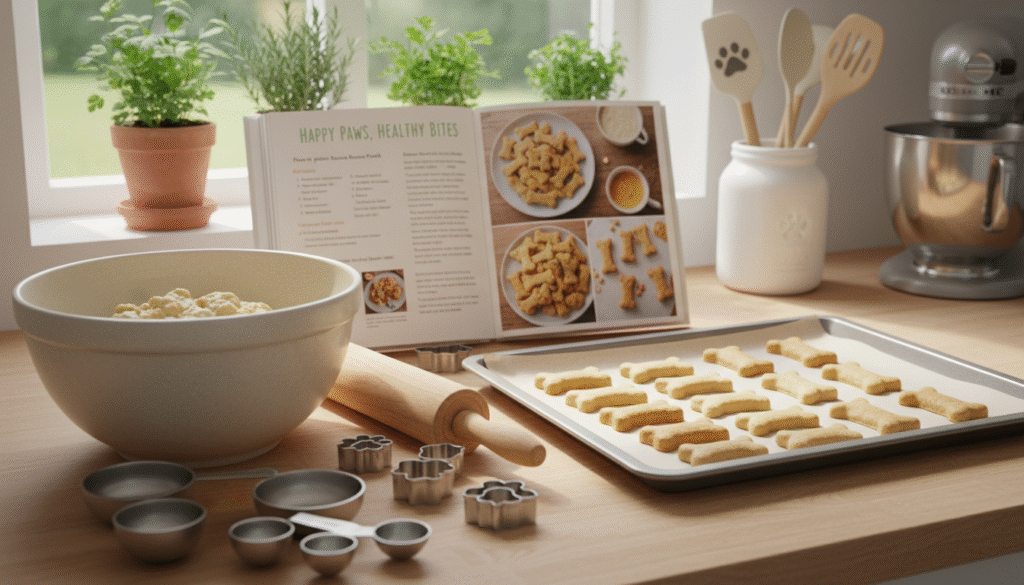
The foundation of any successful dog treat baking session starts with basic equipment. I always keep silicone baking mats on hand because they’re reusable and completely non-stick. You’ll never waste another batch scraping burnt treats off parchment paper again!
Cookie cutters in different shapes add fun to your easy dog treat recipes. I recommend having at least three sizes: small for training treats, medium for everyday snacks, and large for special occasions. Bone shapes are classic, but paw prints and hearts work beautifully too.
Here are my essential baking tools:
- Rolling pin for even dough thickness
- Mixing bowls in various sizes (stainless steel or glass work best)
- Measuring cups and spoons for accuracy
- Wire cooling racks to prevent soggy bottoms
- Baking sheets (at least two for efficiency)
Now, if you’re ready to take your treat-making to the next level, a food dehydrator is an absolute game-changer. I use the Excalibur 9-Tray Food Dehydrator, which handles large batches perfectly. It’s an investment, but I’ve used mine weekly for over two years.
For those on a budget, the NESCO Food Dehydrator offers excellent value at a lower price point. It works wonderfully for smaller batches of jerky-style treats. The LEM 10-Tray Double Door model is another solid choice for serious treat makers.
Here’s a money-saving tip I wish someone had told me earlier: check Facebook Marketplace and Craigslist for gently used dehydrators. I’ve found incredible deals, sometimes at half the retail price! Many people buy them with good intentions but never use them.
Helpful Apps for Tracking Your Dog’s Nutrition
Technology has made managing my dog’s nutrition surprisingly simple. I rely on several apps to ensure my homemade treats stay within healthy limits. These digital tools take the guesswork out of portion control.
My top recommendation is Dog Food Calculator. This app calculates proper treat portions based on your dog’s weight, age, and activity level. It prevents overfeeding while ensuring treats don’t exceed that critical 10% of daily calories.
I also use MyPetNutritionist to track ingredients and monitor nutritional balance. The app maintains a database of common ingredients and automatically calculates calories, protein, and fat content. This helps me create easy dog treat recipes that complement my dog’s regular meals.
For recipe organization, Paprika Recipe Manager has been invaluable. I save all my favorite recipes, make notes about what my dog loved, and easily scale batches up or down. The app syncs across devices, so I can access recipes from my phone while shopping or from my tablet while baking.
These apps have transformed how I approach homemade treat making. They give me confidence that I’m providing optimal nutrition without complicated calculations.
Storage Solutions for Freshness
Proper storage extends the shelf life of your homemade treats and keeps them safe for your pup. I learned this lesson after a batch of treats went stale within days because I used the wrong container!
Airtight containers are non-negotiable for maintaining freshness. I swear by OXO Pop Containers for countertop storage. Their push-button seal creates an airtight environment that keeps treats crispy and prevents moisture buildup.
Mason jars with tight-fitting lids work beautifully too. They’re affordable, widely available, and look charming on your kitchen counter. Plus, you can see exactly what’s inside without opening them.
Here’s a professional trick: I keep food-safe silica gel packets in my treat containers. These small desiccants absorb excess moisture and dramatically extend freshness. You can purchase them online for food storage.
For longer-term storage, heavy-duty freezer bags are essential. I remove as much air as possible before sealing, then label each bag with the treat type and date. This system keeps treats fresh for up to three months in the freezer.
| Storage Method | Location | Shelf Life | Best For |
|---|---|---|---|
| Airtight Container | Room Temperature | 5-7 Days | Daily treats with moderate moisture |
| Sealed Container | Refrigerator | Up to 2 Weeks | Treats with fresh ingredients |
| Freezer Bags | Freezer | Up to 3 Months | Bulk batches and long-term storage |
| Mason Jars with Desiccants | Pantry/Counter | 7-10 Days | Completely dried treats like jerky |
Having quality storage solutions means you can make larger batches less frequently. This saves time and ensures your dog always has fresh, delicious treats available. I typically bake once a week and store portions using all these methods.
You can find detailed equipment recommendations and helpful affiliate links at https://petzvibes.com. Investing in the right tools makes creating easy dog treat recipes an enjoyable routine. Your pup will taste the difference that proper equipment and storage make!
Ingredients to Avoid: Keeping Your Best Friend Safe
Realizing you almost used a toxic ingredient in your dog’s treats is scary. I was about to use peanut butter for treats when I saw xylitol on the label. It could have been fatal to my dog. I threw the jar away, feeling shaken.
This close call changed how I make homemade dog treats. Now, I check every ingredient carefully. I want to help you avoid the same scare.
Safety is the top priority. Before we dive into recipes, know which ingredients can harm your dog. It’s not about being paranoid. It’s about being informed and prepared.
Dangerous Foods That Are Toxic to Dogs
Some kitchen ingredients can harm dogs seriously. Even small amounts can lead to vet visits or worse. I keep a list of these dangerous items on my fridge as a reminder.
Here are the absolute no-go ingredients for homemade treats:
- Xylitol: Found in sugar-free products, it can cause liver failure and death. Always check labels.
- Chocolate: Contains theobromine, which dogs can’t process. Dark chocolate is very dangerous.
- Grapes and Raisins: They can cause sudden kidney failure in dogs, and scientists don’t know why.
- Onions and Garlic: They damage red blood cells and can lead to anemia, even in powder form.
- Macadamia Nuts: They cause weakness, tremors, and temporary paralysis in dogs.
- Avocado: Contains persin, which can cause vomiting and diarrhea in dogs.
- Raw Yeast Dough: It expands in the stomach and produces alcohol as it ferments.
Peanut butter is common in dog treats, so be careful. Always read the label before buying. I use natural peanut butter with only peanuts and maybe a little salt.
Safe brands include Jif Natural, Smucker’s Natural, and Crazy Richard’s. These usually don’t have xylitol, but always check the label.
Apples are often used in dog treats, but be careful. Apple seeds and cores have cyanide compounds that can harm dogs. Always remove them.
I always core my apples before using them in recipes. It takes a minute, but it’s worth it for my dog’s safety.
Recognizing and Managing Food Allergies
Creating allergy-friendly dog treats is key when your dog has food sensitivities. I’ve helped many dog owners with special diets, and homemade treats make it easy.
Common allergens include beef, dairy, wheat, chicken, egg, soy, and corn. Your dog might be allergic to one or more of these.
Watch for these allergy symptoms in your dog:
- Excessive itching or scratching
- Red, inflamed skin or hot spots
- Recurring ear infections
- Digestive issues like vomiting or diarrhea
- Constant paw licking or face rubbing
The beauty of homemade treats is you control the ingredients. If your dog is allergic to wheat, use coconut flour or oat flour instead. For chicken sensitivity, try turkey, fish, or beef.
Introduce new ingredients gradually, one at a time. This helps you know what causes any reactions. Never introduce multiple new ingredients at once.
Keep a food journal to track what your dog eats and any symptoms. I use a notes app on my phone for this. It’s helpful for vet visits and future recipes.
For dogs with severe allergies, grain-free and single-protein treats are best. Sweet potato is a great base for allergy-friendly treats because it’s rarely an allergen and is nutritious.
If you’re unsure about an ingredient or your dog’s reaction, ask your vet. They can do allergy tests and give dietary advice for your dog’s needs.
For more on dog nutrition and ingredient safety, visit https://petzvibes.com. I update safety guidelines and share the latest on canine nutrition there.
Recipes 1-5: Classic Homemade Dog Treats Your Pup Will Devour
These five recipes have been a journey of trial and joy. I’ve made peanut butter dog treats and other goodies countless times. They’re easy to make and always a hit with my dog.
Each recipe has been tested in my kitchen with my dog’s feedback. Let’s explore these classics that will make your kitchen a treat factory.
1. Peanut Butter and Banana Biscuits
This recipe is special because it was my first homemade treat. The smell in your kitchen is amazing, and it’s a hit with dogs.
Ingredients and Instructions
Here’s what you need for these irresistible biscuits:
- 1 ripe banana, mashed until smooth
- 1/2 cup natural peanut butter (xylitol-free—this is critical!)
- 1 1/4 cups oat flour (blend rolled oats in a food processor)
- 1/4 cup rolled oats for texture
- 1 egg for binding
Preheat your oven to 325°F and line a baking sheet with parchment paper. Mash the banana until it’s smooth.
Mix in the peanut butter until well combined. Then, add the egg and stir well. Fold in the oat flour and oats until you get a firm dough.
Roll the dough out to 1/4-inch thickness. Use cookie cutters for fun shapes. Arrange the shapes on your baking sheet.
Bake for 15-20 minutes until they’re golden and firm. Let them cool completely before serving. This step is important for the right texture.
Why Your Dog Will Love These
The peanut butter and banana mix is a naturally sweet flavor dogs love. It’s healthy and tasty.
These treats are soft and perfect for training. I use them as rewards for learning new commands.
2. Sweet Potato Chews
This recipe is simple and loved by my dog. It’s a staple in my treat jar.
Ingredients and Instructions
You’ll need:
- 1-2 large sweet potatoes (organic preferred for the cleanest ingredients)
Preheat your oven to 250°F. Wash and peel the sweet potatoes if desired. I usually peel mine for extra fiber.
Slice the sweet potatoes into 1/4-inch thick strips or rounds. Arrange them on a parchment-lined baking sheet without overlapping.
Bake for about 3 hours, flipping halfway. They should be dried out but slightly chewy.
Let them cool completely on the baking sheet. They’ll firm up and become chewy.
Why Your Dog Will Love These
Sweet potatoes are full of fiber and vitamins. They’re great for digestive health and immune function.
The chewy texture is perfect for chewing and dental health. My dog loves carrying them around before enjoying them.
3. Pumpkin and Oat Cookies
These cookies are a fall favorite but loved all year. They’re sweet, crunchy, and appealing to dogs of all ages.
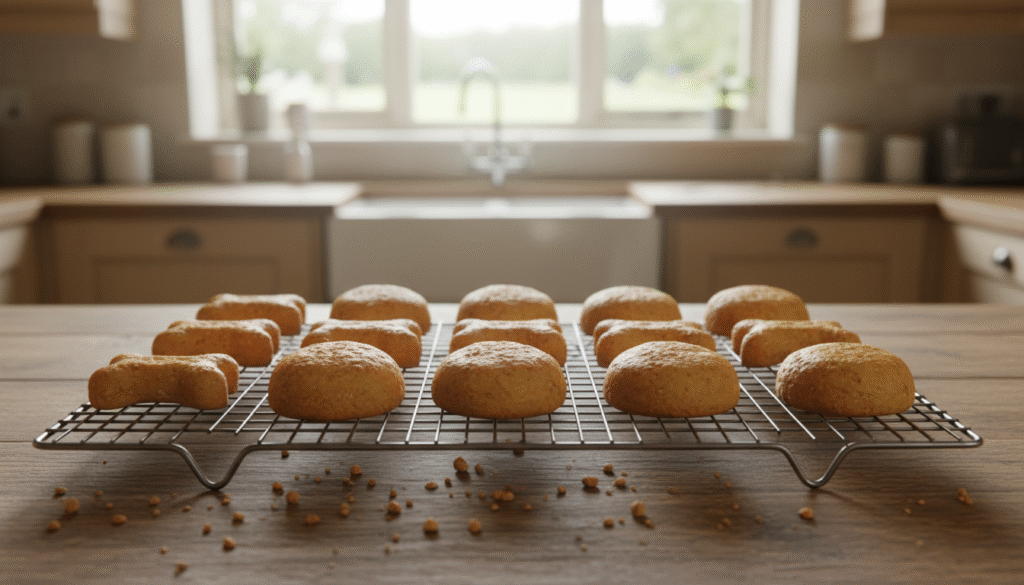
- 1 cup pure pumpkin puree (not pumpkin pie filling—check the label!)
- 2 eggs
- 2 1/2 cups rolled oats, blended into flour
Preheat your oven to 350°F. Blend the oats into flour. This takes about 30-60 seconds.
In a large bowl, mix the pumpkin and eggs until smooth. Add the oat flour and stir until thick.
Roll the dough out to 1/4-inch thickness. Cut into shapes or squares for quick prep.
Place the cookies on a lined baking sheet and bake for 30 minutes. Cool completely for a crunchy texture.
Why Your Dog Will Love These
Pumpkin is great for digestive health. It’s high in fiber and helps with digestion.
The flavor is mild and sweet. The crunch is satisfying, and they’re grain-free. I give these treats every day.
4. Chicken and Rice Training Treats
These treats are soft and protein-rich. They’re perfect for training and have a savory flavor.
Ingredients and Instructions
You’ll need these ingredients:
- 1 cup cooked chicken breast, finely shredded
- 1/2 cup grated carrots for added nutrition
- 2 eggs
- 3/4 cup brown rice flour (or regular rice flour)
Preheat your oven to 350°F. Mix the chicken, carrots, and eggs in a bowl.
Add the rice flour and stir until thick. The dough should be spreadable.
Spread the dough in a greased 8×8 baking dish. Bake for 25 minutes until firm. Cool completely before cutting into cubes.
Why Your Dog Will Love These
The chicken and carrot mix is healthy and tasty. It’s soft for easy chewing during training.
I use these treats for training and rewards. They’re great for dogs of all ages and sizes.
5. Cheddar Cheese Crackers
These crackers are a hit with dog owners. The cheese flavor is irresistible to dogs.
Ingredients and Instructions
Here’s what you need:
- 1 cup shredded sharp cheddar cheese
- 1 1/4 cups whole wheat flour (or oat flour for grain-free option)
- 1/4 cup water
- 3 tablespoons vegetable oil or melted coconut oil
Preheat your oven to 350°F. Prepare a baking sheet with parchment paper. Mix the cheese, flour, and oil until combined.
Add water gradually until the dough forms. Roll it out thinly and cut into shapes or squares.
Arrange on the baking sheet and bake for 18-20 minutes. Cool completely for a crunchy texture.
Why Your Dog Will Love These
Cheese is a high-value treat for dogs. These crackers are crunchy and healthy.
They’re great for training and rewards. Just remember to serve them in moderation.
For more creative treats and baking tips, check out https://petzvibes.com. I share seasonal treats and specialty options.
These five recipes are the foundation of my homemade treat repertoire. Each one has been perfected through countless batches. Start with your favorite recipe and watch your dog’s excitement grow!
Recipes 6-10: Specialty and Allergy-Friendly Homemade Dog Treats
I’m excited to share my favorite allergy-friendly and specialty recipes. These next five recipes address specific dietary needs while delivering amazing flavors your pup will adore. Whether your furry companion has grain sensitivities, needs extra joint support, or you simply want to add variety to their treat rotation, these grain-free dog biscuits and specialty snacks offer something special for every dog.
Each recipe in this collection serves a unique purpose. From cooling summer treats to high-value training rewards, you’ll find options that work for different situations and health requirements.
6. Grain-Free Coconut Flour Bites
These delicious bites are my go-to solution for dogs with grain sensitivities. I discovered this recipe when my neighbor’s Labrador developed wheat allergies, and it’s been a lifesaver for countless pups.
Ingredients and Instructions
What you’ll need:
- 1/2 cup oat flour (use certified gluten-free oats if needed)
- 1/2 cup coconut flour
- 1/2 cup pure pumpkin puree (unsweetened)
- 2 tablespoons melted coconut oil
- 1 egg
Step-by-step process: Preheat your oven to 350°F and line a baking sheet with parchment paper. Combine both flours in a mixing bowl. Add the pumpkin puree, melted coconut oil, and egg, mixing until a thick dough forms.
Coconut flour is incredibly absorbent, so the dough should be moldable but firm. Roll the mixture into small balls about 1-inch in diameter and place them on your prepared baking sheet. Gently flatten each ball with your palm or the bottom of a glass.
Bake for 20 minutes until the treats are firm and lightly golden. Allow them to cool completely before serving to your excited pup.
Why Your Dog Will Love These
Coconut flour naturally provides healthy fats that support skin and coat health. The pumpkin adds valuable fiber for digestive support, and these treats have a slightly sweet, tropical flavor that appeals to most dogs. They’re perfect for pups with wheat or corn allergies, making them excellent allergy-friendly dog treats that don’t compromise on taste.
7. Frozen Blueberry Yogurt Drops
Summer in my kitchen means making batches of these refreshing frozen drops. My dog literally does backflips when he sees me reaching for the freezer!
Ingredients and Instructions
What you’ll need:
- 1 cup plain Greek yogurt (unsweetened, absolutely no xylitol)
- 1/2 cup fresh or frozen blueberries
- 1 tablespoon honey (optional)
Step-by-step process: Blend all ingredients in a blender or food processor until smooth and the blueberries are fully incorporated. Pour the mixture into silicone molds—I love using mini ice cube trays or bone-shaped molds for extra fun.
Alternately, drop spoonfuls onto a parchment-lined baking sheet. Freeze for at least 4 hours or overnight until completely solid. Pop them out of the molds and store in a freezer-safe container.
Why Your Dog Will Love These
These frozen treats are perfect for hot summer days and provide cooling relief while delivering probiotics from the yogurt. The probiotics support gut health, while blueberries provide powerful antioxidants. They’re also fantastic for teething puppies because the cold provides soothing relief to sore gums.
8. Beef Liver Training Treats
I need to warn you upfront—these smell pretty intense while baking! I recommend opening windows or using an outdoor oven if possible. That said, they’re absolutely worth it for training sessions.
Ingredients and Instructions
What you’ll need:
- 1 pound beef liver (fresh or thawed)
- 1 egg
- 1/2 cup oat flour (rice flour works too)
Step-by-step process: Preheat your oven to 350°F. Cut the beef liver into chunks and cook thoroughly—I boil mine for about 10 minutes until no pink remains. Once cooked and slightly cooled, add the liver to a food processor along with the egg.
Pulse until you have a smooth paste. Transfer to a bowl and stir in the oat flour until well combined. The mixture should be thick and spreadable.
Spread the mixture evenly on a parchment-lined baking sheet about 1/4-inch thick. Bake for 25-30 minutes until firm and cooked through. Let it cool completely, then cut into small training-sized squares. Store these in the refrigerator or freezer.
Why Your Dog Will Love These
Liver is incredibly nutrient-dense, packed with vitamin A, iron, and B vitamins. Dogs find the strong flavor absolutely irresistible, making these perfect high-value training rewards. Because liver is so rich, use these sparingly as special training treats.
9. Apple Cinnamon Dental Chews
These crispy chews serve double duty—they’re delicious and help maintain your dog’s dental health naturally. I make big batches because they store beautifully in airtight containers.
Ingredients and Instructions
What you’ll need:
- 1 large apple (cored and thinly sliced—remove all seeds!)
- 1/4 teaspoon cinnamon (Ceylon cinnamon is safer in larger quantities)
Step-by-step process: Preheat your oven to 225°F—this low temperature dehydrates without baking. Core your apple and slice it into very thin rounds, about 1/8-inch thick. A mandoline slicer works perfectly for achieving uniform thickness.
Remove any seeds you see, as apple seeds contain trace amounts of cyanide and should never be fed to dogs. Arrange the apple slices in a single layer on parchment-lined baking sheets and lightly dust them with cinnamon.
Bake for approximately 90 minutes, flipping the slices halfway through, until they’re dried out and crispy. They’ll continue to crisp up as they cool.
Why Your Dog Will Love These
Apples provide natural fiber and vitamins while the crunchy texture helps scrape plaque off teeth. Cinnamon has natural anti-inflammatory properties and helps freshen breath. These are extremely low-calorie treats, making them perfect for dogs who need to watch their weight.
10. Salmon and Spinach Power Bites
I make a big batch of these once a month and freeze half for later use. They’re beneficial for senior dogs or any pup needing extra nutritional support.
Ingredients and Instructions
What you’ll need:
- 1 can (6 oz) salmon in water, drained (wild-caught when possible)
- 1 egg
- 2 tablespoons fresh parsley, finely chopped
- 1 tablespoon fresh spinach, finely chopped
- 1/2 cup whole wheat flour or oat flour
Step-by-step process: Preheat your oven to 350°F and grease or line a mini muffin tin. Mash the drained salmon with a fork, breaking up any large chunks. You can leave the soft bones in—they provide valuable calcium.
Add the egg, parsley, and spinach, mixing well. Gradually stir in the flour until the mixture holds together but remains moist. Spoon the mixture into mini muffin tins, filling each cup about 3/4 full.
Bake for 15-20 minutes until the tops are golden and firm to the touch. Let them cool in the pan for 5 minutes before transferring to a cooling rack. Store in the refrigerator for up to one week.
Why Your Dog Will Love These
Salmon is packed with omega-3 fatty acids which are incredible for skin, coat, joint, and cognitive health. The parsley provides a breath-freshening bonus, while spinach adds iron and antioxidants. These savory little muffins have a strong fish flavor that most dogs find absolutely delectable.
They’re beneficial for senior dogs who need extra joint support or dogs with dry, itchy skin. The combination of ingredients makes these nutrient-packed treats that support overall wellness.
| Recipe Name | Best For | Storage Duration | Preparation Time |
|---|---|---|---|
| Grain-Free Coconut Flour Bites | Dogs with grain allergies | 2 weeks (room temp) | 30 minutes |
| Frozen Blueberry Yogurt Drops | Summer cooling, teething puppies | 3 months (frozen) | 15 minutes + freezing |
| Beef Liver Training Treats | High-value training rewards | 1 week (fridge), 3 months (freezer) | 45 minutes |
| Apple Cinnamon Dental Chews | Dental health, weight management | 3 weeks (airtight container) | 2 hours |
| Salmon and Spinach Power Bites | Senior dogs, joint support, skin health | 1 week (fridge), 2 months (freezer) | 35 minutes |
For even more specialty recipes including seasonal variations and therapeutic treats tailored to specific health conditions, visit https://petzvibes.com. I share advanced recipes and detailed nutritional breakdowns. You’ll find everything from holiday-themed treats to recipes designed for dogs with diabetes, kidney issues, or sensitive stomachs.
These five specialty recipes give you incredible flexibility in meeting your dog’s unique dietary needs. Each one addresses specific health considerations while delivering flavors that make treat time truly special.
How to Properly Store Your Homemade Dog Treats
I learned the hard way that storing homemade dog treats is just as important as making them. It saves money, prevents waste, and keeps my pup healthy. I never forget the day I found a batch of dog biscuits covered in mold.
With the right storage, your treats can stay fresh for weeks or months. I’ll share what I’ve learned to keep your treats in top condition.
Short-Term Storage Methods
For treats you’ll use in a week or two, proper storage is key. I learned this during a humid summer when treats spoiled in three days.
Baked treats like cookies and biscuits last 5-7 days at room temperature if it’s cool and dry. But I refrigerate most treats to keep them fresh longer, preventing mold, which is more common in warmer months.
- Cool all treats completely before storing—any warmth creates condensation that leads straight to mold
- Use airtight containers like glass jars with tight-fitting lids or OXO Pop Containers
- Add food-safe silica gel packets to absorb excess moisture
- Label containers with the date and treat type for easy tracking
- Store moisture-rich treats (pumpkin, banana, meat) in the refrigerator immediately
For treats with ingredients like pumpkin, banana, or meat and fish, refrigeration is mandatory. Use these within 1-2 weeks. I store them in glass containers because they don’t absorb odors, and fish treats can get smelly in plastic!
Room temperature storage works for dry, crispy treats. But if your kitchen is humid, refrigerate them. Refrigerated homemade dog treats tend to keep their texture better than those left on the counter.
Long-Term Freezing and Preservation
Freezing is my best friend when I bake in bulk. Most treats freeze well and can last up to three months without losing quality.
Here’s how I freeze treats to prevent freezer burn and keep them tasting fresh:
- Let treats cool completely before freezing
- Arrange them in a single layer on a baking sheet and freeze for about an hour
- Transfer frozen treats to heavy-duty freezer bags or airtight freezer containers
- Remove as much air as possible from bags before sealing
- Label everything with treat type and date—this is vital for rotation
I use a freezer inventory app to track what I have stored and when I made it. This has been a game-changer for avoiding freezer burn and reducing waste. Nothing feels worse than finding forgotten treats in the freezer!
For protein-heavy treats like liver squares or salmon bites, I always freeze them. Only thaw small portions as needed. My pro tip: freeze treats in portion-sized bags so you’re not constantly thawing and refreezing the entire batch.
Dehydrated treats have the longest shelf life because there’s minimal moisture content. I store sweet potato chews and beef jerky in mason jars with moisture-absorbing packets. They easily last 2-3 weeks at room temperature or several months in the freezer.
Signs Your Treats Have Gone Bad
This section is vital for your dog’s safety. Always inspect treats before giving them to your pup. If in doubt, throw them out—it’s not worth risking your dog’s health.
Here are the warning signs I watch for every single time:
- Visible mold—even tiny spots mean the entire batch should be discarded immediately
- Off or sour smell—fresh treats should smell pleasant; rancid odors signal spoilage
- Slimy or sticky texture—treats should be dry or have consistent texture
- Discoloration—significant darkening or color changes indicate oxidation
- Soft texture when they should be crispy—this indicates moisture infiltration
I made a costly mistake early on trying to salvage a batch with a few suspicious spots. I thought I could just remove the affected pieces, but my dog ended up with an upset stomach. That taught me that mold has roots spreading beyond what you can see.
Meat and fish-based homemade dog treats spoil much faster than plant-based ones. I’m very careful with these and perform the “sniff test” religiously. If something smells even slightly off, it goes straight in the trash.
One helpful habit I’ve developed is checking treats every few days when stored at room temperature. This quick inspection takes just seconds but prevents problems before they become serious.
| Storage Method | Best For | Maximum Duration | Special Considerations |
|---|---|---|---|
| Room Temperature | Dry baked treats, dehydrated chews | 5-7 days | Use airtight containers with moisture packets; avoid in humid climates |
| Refrigeration | All baked treats, moisture-rich treats | 1-2 weeks | Mandatory for meat, fish, pumpkin, and banana treats; use glass containers |
| Freezing | All homemade dog treats | Up to 3 months | Flash freeze first; use freezer bags; thaw only needed portions |
| Dehydrated Storage | Sweet potato chews, jerky | 2-3 weeks (room temp) or 6 months (frozen) | Longest shelf life; store in mason jars with silica packets |
Creating a storage system might seem tedious at first, but once you establish your routine, it becomes second nature. The peace of mind knowing that every treat you give your pup is fresh, safe, and delicious makes it all worthwhile. Plus, you’ll save money by reducing waste and always having treats ready when your furry friend deserves a reward!
Customizing Recipes for Your Dog’s Special Needs
Every dog has their own story, and their treats should reflect that unique journey through different life stages and health challenges. I learned this lesson when I tried giving my friend’s senior Labrador the same crunchy biscuits I made for my energetic young pup. The older dog struggled to chew them, and I realized that creating truly beneficial diy puppy snacks means thinking beyond just flavor.
The best part about making homemade treats is having complete control over every ingredient. You can adjust recipes based on your dog’s age, weight, activity level, and any health concerns. This customization transforms simple baking into targeted nutrition that supports your pet’s wellbeing.
Before diving into specific adjustments, remember the golden rule: treats should never exceed 10% of your dog’s daily caloric intake. This keeps their main meals nutritionally balanced while allowing room for delicious rewards. Your veterinarian can help calculate exact calorie needs, but here’s a general guide:
- 10-pound dog: approximately 35 calories from treats per day
- 30-pound dog: approximately 100 calories from treats per day
- 60-pound dog: approximately 200 calories from treats per day
Adjustments for Different Life Stages
Your dog’s nutritional requirements change dramatically as they grow older. What works perfectly for a bouncy puppy might not suit a dignified senior. I’ve spent years experimenting with these modifications, and the results have been remarkable.
Puppies (8 weeks to 1 year) need special consideration because their bodies are developing rapidly. When I started making diy puppy snacks for young dogs, I discovered they need smaller portions with softer textures. Their little mouths can’t handle the same crunch that adult dogs enjoy.
Here’s what I focus on for puppy treats:
- Make treats about half the size of regular portions for easier chewing
- Create softer textures by slightly underbaking cookies or using frozen yogurt drops
- Boost protein content with extra chicken, salmon, or eggs to support growth
- Add calcium-rich ingredients like plain yogurt for developing bones
- Limit rich ingredients such as cheese or liver that might upset sensitive tummies
The frozen blueberry yogurt drops from Recipe 7 work wonderfully for teething puppies. They soothe sore gums while providing nutrition. Just remember that puppies have smaller stomachs, so even though they’re growing, keep portions tiny.
Adult dogs (1 to 7 years) offer the most flexibility in treat making. This is when I adjust recipes based on lifestyle, not just life stage. My neighbor’s working border collie gets higher-protein, calorie-dense healthy dog treats compared to my moderately active mixed breed.
For active adult dogs, I incorporate ingredients that fuel their energy. Oats provide sustained power throughout the day. Natural peanut butter adds healthy fats that support their coat and joints.
Less active dogs need a different approach. I reduce fat content and add more vegetables to create volume without excessive calories. Carrots, green beans, and zucchini work beautifully for this purpose.
Senior dogs (7+ years, varying by breed) require thoughtful modifications that address aging bodies. When my dog reached his golden years, I completely revamped my treat recipes. Older dogs often have dental issues, reduced metabolism, and developing health concerns.
My senior-friendly adjustments include:
- Softening textures by briefly soaking biscuits in warm water or low-sodium broth
- Adding joint-supporting ingredients like turmeric or fish oil
- Reducing sodium and fat because seniors are prone to kidney and heart problems
- Making treats smaller because calorie needs typically decrease with age
- Increasing fiber with pumpkin or sweet potato to support digestive regularity
The salmon and spinach power bites from Recipe 10 are excellent for seniors. They provide omega-3 fatty acids that support brain function and reduce inflammation. I just make them slightly softer for easier chewing.
Modifications for Health Conditions and Allergies
This is where homemade healthy dog treats truly shine compared to commercial options. When my friend’s dog was diagnosed with grain allergies, store-bought options became extremely limited and expensive. Making custom treats solved both problems immediately.
For dogs with grain allergies or sensitivities, flour substitutions are your best friend. I’ve tested dozens of alternatives over the years. Coconut flour is highly absorbent, so use about one-third the amount of regular flour and add extra liquid to your recipe.
Chickpea flour creates wonderfully crispy textures and packs extra protein. Tapioca flour offers a neutral flavor that works in almost any recipe. Each flour behaves differently, so expect some trial and error at first.
Protein allergies require strategic ingredient swaps. If your dog can’t tolerate chicken, try turkey, duck, rabbit, or fish instead. Beef sensitivities respond well to bison or venison. The key is identifying safe proteins through elimination diets with your veterinarian’s guidance.
Weight management challenges affect many dogs, including as they age. I’ve helped several friends modify recipes for their overweight pets. The goal is creating satisfying treats that don’t sabotage weight loss efforts.
My weight-conscious modifications include:
- Replacing oil with unsweetened applesauce to reduce fat content
- Adding high-fiber vegetables that increase volume without many calories
- Making treats smaller and crunchier so they take longer to eat
- Using pumpkin puree instead of peanut butter as a binding agent
- Avoiding cheese and other calorie-dense ingredients
Dogs with diabetes need carefully controlled ingredients. I eliminate all sweeteners including honey. Instead, I focus on low-glycemic ingredients like berries and leafy greens. Cinnamon is a wonderful addition because research suggests it may help regulate blood sugar naturally.
Kidney disease requires close veterinary supervision, but homemade treats can play a role. I moderately reduce protein content while focusing on high-quality sources. Avoiding high-phosphorus ingredients becomes critical. Limited salt is essential for these special diets.
Digestive issues improve with thoughtful ingredient selection. I incorporate probiotic-rich plain yogurt in small amounts. Easily digestible proteins like chicken or fish work better than beef or pork. Pumpkin and sweet potato naturally support healthy digestion.
Here’s a real-world example: my neighbor’s Labrador has both grain allergies and needs weight management. I created custom treats using coconut flour, lean ground turkey, shredded zucchini, and a tiny bit of unsweetened applesauce. These diy puppy snacks are grain-free, low-calorie, and her dog absolutely devours them!
Always introduce new treats gradually to avoid stomach upset. I recommend starting with just one small piece per day for three days. Watch for any digestive changes or allergic reactions before increasing portions.
Most importantly, consult your veterinarian whenever dealing with health conditions or special dietary needs. I always run new recipes past my vet, even for healthy dog treats for dogs with medical issues. They can provide specific guidance on appropriate ingredients and safe portion sizes.
The beauty of customization is that you’re never locked into whatever products the pet store offers. You have complete control to create exactly what your individual dog needs to thrive through every stage of life.
Why Homemade Beats Store-Bought Every Time
Homemade treats are far better than store-bought ones. They’re healthier for your dog and save you money. Making treats at home has changed my dog’s life for the better.
Many dog owners have seen the same improvements. Here’s what I’ve learned from making treats at home.
The Health Advantages You Can See
Homemade treats use real, whole ingredients. I choose fresh chicken, sweet potatoes, and natural peanut butter. This is different from the processed stuff in store-bought treats.
I know exactly what’s in my treats. This gives me peace of mind. Store-bought treats often have ingredients I’m not comfortable with.
- Preservatives like BHA, BHT, and ethoxyquin that are banned in human food in many countries
- Artificial colors like Red 40 and Yellow 5 that serve no nutritional purpose and may cause hyperactivity
- Excessive sodium and sugar added to increase palatability and shelf life
- Mysterious ingredients like “animal digest” or “meat meal” where you have no idea what animal or parts are actually used
My dog’s health has improved a lot. His coat is shinier, and his digestion is better. He also has more energy and cleaner teeth.
His breath smells fresher, too. This is thanks to treats with parsley or mint. I can also manage his allergies better at home.
For dogs with serious allergies, homemade treats can be life-changing. You can make safe, tasty treats tailored to their needs. No store-bought brand can do this.
Money Saved and Value Gained
Homemade treats save money, too. I thought they’d cost more, but they don’t. Let me show you the numbers.
Store-bought premium treats: I spent $60-80 a month on high-quality treats. A 6-ounce bag costs $12-15, and my dog goes through 4-5 bags a month.
Homemade treats: Making treats at home costs about $25-30 a month. Here’s how it breaks down:
- A 5-pound bag of oat flour costs about $8 and lasts me 2-3 months
- Natural peanut butter is about $6 for a large jar that makes multiple batches
- A bag of sweet potatoes is $4 and makes several batches of chews
- A dozen eggs cost $4-5 and are used across multiple recipes
- A can of salmon is $3-4 and makes a full batch of fish treats
Buying ingredients in bulk saves even more money. I get organic oats in 10-pound bags and freeze bananas. I also buy chicken in bulk when it’s on sale.
By making treats at home, I save about $500-650 a year. This money can go toward vet visits, quality food, or toys.
| Treat Category | Store-Bought Premium | Homemade | Monthly Savings |
|---|---|---|---|
| Protein treats (jerky, training treats) | $25-30 | $10-12 | $15-18 |
| Biscuits and cookies | $20-25 | $8-10 | $12-15 |
| Special treats (dental chews) | $15-20 | $5-7 | $10-13 |
| Monthly Total | $60-75 | $23-29 | $37-46 |
| Annual Total | $720-900 | $276-348 | $444-552 |
These numbers are for a 35-pound dog. Your costs may vary. But the savings are always there.
Homemade treats also save you from waste. You make only what you need. This means no stale treats left over.
You can make special treats for occasions. I made bacon-cheddar “pupcakes” for my dog’s birthday. They cost $5, not $30+ from a bakery.
Homemade treats are a joy to make. They’re also great gifts. I make holiday treat boxes for friends’ dogs.
Once you see the health improvements and realize the money you’re saving, you’ll wonder why you ever spent premium prices on mysterious commercial treats.
Last Christmas, I made “12 Days of Dog Treats” gift baskets. Each basket had 12 homemade treats. They cost $15-20 in ingredients, not $80-100 from a bakery.
In short, homemade treats are better in every way. They’re healthier, cheaper, and you know exactly what’s in them. Once you try them, you’ll never go back to store-bought.
Conclusion
I’m thrilled you’ve made it this far in our journey together. Making easy dog treat recipes at home has changed how I care for my pup. You don’t need fancy equipment or chef-level skills to get started.
These homemade treats are simple, budget-friendly, and tailored to support your dog’s nutritional needs. Whether you want to reduce allergens, increase nutrient intake, or just spoil your furry friend, homemade treats offer a smart and loving solution.
Start with one recipe that catches your eye. The Sweet Potato Chews require just one ingredient. The Peanut Butter and Banana Biscuits come together in minutes. Pick what feels right for you and your pup.
Rotate through different options based on what your dog enjoys most. Pay attention to their reactions. Some pups go wild for chicken treats, while others prefer the sweetness of pumpkin cookies.
Remember the key safety tips we covered. Check ingredients carefully. Store treats properly. Keep portions reasonable at 10% of daily calories.
For more recipes and tips, visit petzvibes.com where I share new easy dog treat recipes and connect with fellow dog parents who want the best for their pets.
Your dog is waiting for that first batch of homemade goodness. Grab your mixing bowl and let’s make some tails wag!
FAQ
How long do homemade dog treats last compared to store-bought ones?
Homemade dog treats last 5-7 days at room temperature in an airtight container. They can last up to 2 weeks when refrigerated. Treats with ingredients like pumpkin, banana, or meat should be refrigerated and used within 1-2 weeks.
For longer storage, freeze your treats in heavy-duty freezer bags. They stay fresh for up to 3 months. Dehydrated treats like sweet potato chews last about 2-3 weeks at room temperature or several months frozen.
Store-bought treats have preservatives that extend their shelf life to months or even years. But making fresh batches regularly is better. You’ll know exactly what your pup is eating!
Can I substitute ingredients in these recipes if my dog has allergies?
Absolutely! Making allergy-friendly dog treats at home is a big advantage. For grain allergies, swap wheat flour with coconut flour, chickpea flour, or oat flour made from certified gluten-free oats.
If your dog can’t have chicken, use turkey, duck, or fish instead. For dogs with egg sensitivities, try using mashed banana or unsweetened applesauce as a binding agent. If peanut butter is problematic, sunflower seed butter works wonderfully.
Always introduce new ingredients one at a time and keep a food journal on your phone to track any reactions. This way, you can create perfectly customized grain-free dog biscuits that are safe and delicious for your pup’s specific needs!
How do I know if I’m giving my dog too many treats?
Treats should never exceed 10% of your dog’s daily caloric intake. To calculate this, know your dog’s daily calorie needs. Your vet can help, or use apps like Dog Food Calculator or MyPetNutritionist.
For example, if your 30-pound dog needs 900 calories daily, treats shouldn’t exceed 90 calories total. Signs you might be overdoing it include weight gain, decreased interest in regular meals, digestive upset, or excessive begging.
I weigh my dog monthly and adjust treat portions if I notice any changes. Remember, healthy dog treats are supplements to a balanced diet, not meal replacements. Keep portions small and use them strategically for training and bonding!
Are homemade dog treats really cheaper than buying them from the store?
Yes, significantly cheaper! I tracked my spending and found I was spending -75 monthly on premium store-bought treats. But my homemade treat ingredient costs were only -29 per month—that’s a savings of about -46 monthly or 4-552 annually!
A 5-pound bag of oat flour costs about and lasts 2-3 months. Natural peanut butter is for a large jar that makes multiple batches. Sweet potatoes are just for several batches of chews.
By buying ingredients in bulk when they’re on sale and using everyday items I already have, I’ve made these easy dog treat recipes incredibly affordable. Plus, I never waste money on half-eaten bags of treats my dog lost interest in!
What’s the best recipe to start with if I’m a complete beginner?
Start with the Sweet Potato Chews—they’re literally one ingredient and nearly impossible to mess up! Just slice sweet potatoes, bake them low and slow until they’re dried out, and you’re done.
If you want something slightly more involved but simple, try the Peanut Butter and Banana Biscuits. They only require five ingredients, come together quickly, and I’ve never met a dog who didn’t absolutely love them.
Both recipes are forgiving, don’t require special equipment, and will give you confidence to try more complex organic dog cookies later. The key is starting simple, having fun with the process, and enjoying that incredible tail wag when your pup tastes something you made just for them!
Can I use regular peanut butter or does it have to be natural?
You absolutely must use natural peanut butter that contains only peanuts (and maybe salt)—and this is critical: always check that it doesn’t contain xylitol, an artificial sweetener that’s extremely toxic to dogs.
Even tiny amounts of xylitol can cause life-threatening drops in blood sugar and liver failure. Brands like Jif Natural, Smucker’s Natural, and Crazy Richard’s are typically safe, but always read the label every single time because manufacturers sometimes change formulas.
I learned to be paranoid about this after almost using a “sugar-free” variety that contained xylitol. Regular peanut butter with added sugar, oils, and stabilizers won’t harm your dog, but natural versions are healthier and work better in peanut butter dog treats. When in doubt, flip that jar over and read the ingredients!
Do I need a food dehydrator to make homemade dog treats?
No, a dehydrator isn’t necessary, but it’s incredibly convenient if you want to make jerky-style treats regularly! I use the Excalibur 9-Tray Food Dehydrator for beef liver treats and sweet potato chews, but before I invested in one, I made everything in my regular oven at low temperatures (around 200-250°F).
The oven method works perfectly fine—it just takes a bit longer and you need to flip treats halfway through. For most baked natural pet treats like biscuits and cookies, your standard oven is all you need. If you decide later that you love making dehydrated treats, you can find great deals on used dehydrators through Facebook Marketplace or Craigslist. Start with what you have, and upgrade equipment only if you find yourself making treats regularly!
How do I adjust these recipes for a puppy versus a senior dog?
Great question! For diy puppy snacks, I make treats about half the size of adult portions, create softer textures by slightly underbaking or using recipes like the frozen yogurt drops, boost protein content with extra chicken or eggs, and limit rich ingredients like cheese or liver that can upset developing tummies.
Puppies need calcium for bone growth, so I include plain yogurt or finely ground eggshells. For senior dogs (7+ years), I soften textures by briefly soaking biscuits in warm water or low-sodium broth, add joint-supporting ingredients like salmon (for omega-3s) or turmeric, reduce fat and sodium, and increase fiber with pumpkin or sweet potato for digestive regularity.
The frozen blueberry treats are perfect for seniors because they’re soft and provide antioxidants for cognitive support. Always remember that senior dogs typically need fewer calories, so keep portions small!
What should I do if my dog doesn’t like a recipe I made?
Don’t take it personally—I’ve had plenty of recipes that flopped with my pup! Dogs have individual preferences just like humans. If your dog turns up their nose at a batch, try these troubleshooting steps: make sure the treats are completely cool (some dogs won’t eat warm treats), break them into smaller pieces (sometimes the size is intimidating), try adding a more aromatic ingredient like a tiny bit of bacon or parmesan to increase appeal, or crumble a rejected treat over their regular food to avoid waste.
Some dogs prefer crunchy textures while others like chewy treats, so experiment with baking times. If you’ve made a large batch of something your dog won’t eat, don’t throw it away—ask dog-owning friends if their pups would like to try them! You can also check with local animal shelters who often gratefully accept homemade dog treats donations. Keep experimenting with different flavors and textures until you discover your dog’s favorites!
Can I make treats for dogs with diabetes or kidney disease?
Yes, but you must work closely with your veterinarian or a veterinary nutritionist when creating treats for dogs with serious health conditions. For diabetic dogs, I eliminate all honey and sweeteners, focus on low-glycemic ingredients like berries and leafy greens, use cinnamon which can help regulate blood sugar naturally, and keep portions small to avoid blood sugar spikes.
For dogs with kidney disease, I moderately reduce protein content (but don’t eliminate it entirely—dogs need protein), avoid high-phosphorus ingredients, use very limited salt, and focus on high-quality proteins when included. The Grain-Free Coconut Flour Bites and Apple Cinnamon Dental Chews can be easily modified for these conditions.
Always run your recipes past your vet before feeding them to a dog with medical issues—they can provide specific guidance on appropriate ingredients and portions. These healthy dog treats can be part of your dog’s life with proper modifications!