
I remember my first road trip with my dog. I thought packing light was smart. I brought a bowl, some food, and a leash. How hard could it be?
But when we got to our destination, my dog looked scared. I realized I forgot his favorite blanket, his meds, and other important things.
That trip taught me a big lesson. Whether it’s your first dog road trip or you’ve traveled with your dog before, a complete checklist is key.
I’ve perfected my packing over the years. I’m excited to share what I’ve learned with you. This list isn’t generic. It’s based on real miles traveled, mistakes, and lessons learned the hard way.
At PetzVibes, we know that being prepared makes trips better. This guide covers all canine travel essentials. It includes must-haves and “just in case” items that have saved me many times.
Key Takeaways
- Proper packing reduces stress for both you and your furry companion during travel
- Familiar items help pets settle into unfamiliar environments more quickly
- A complete checklist prevents forgotten essentials that could compromise safety or comfort
- Late spring and early fall offer cooler weather advantages compared to peak summer travel
- Real-world experience reveals that pets need more items than most first-time travelers anticipate
- Having backup supplies for emergencies can make the difference between a minor inconvenience and a major problem
Planning Your Dog Road Trip: What I’ve Learned from Miles on the Road
Traveling with dogs is a whole new world compared to solo trips. My first trip with Max, my golden retriever, was a learning experience. I thought just tossing his food bag in the trunk would be enough.
But that idea didn’t last long. Dogs need routine, breaks, and more prep than I thought. My solo trips didn’t work for my furry friend.
Before any trip, I now get a pre-trip vet wellness exam for my dog. This is key. My vet found Max had an ear infection before a big trip, which would have made him uncomfortable.
Your vet checks vaccinations, microchip info, and health. Some places need special papers for pets. These steps helped avoid issues and kept Max healthy for our trip.
Weekend trips and long drives need different prep. A short trip might need basic stuff and one extra medication dose. But for a long drive, I plan pet-friendly hotels and vet clinics along the way.
For pet-friendly places, I check petzvibes.com before planning. This saves stress and makes finding places easier.
One big lesson is to plan breaks every 2-3 hours. I learned this the hard way. Dogs need breaks for bathroom, water, and stretching.
Now, I map out stops with grass, shade, and safety for Max. This makes our drives better.
Knowing your dog’s personality is key. Max loves car rides, but some dogs get sick or anxious. Pack what your dog needs, like calming aids or favorite toys.
Dogs like what’s familiar during travel. Bringing Max’s bed, food, and bowl made him feel at home. These small things help him feel secure.
Good planning and realistic expectations make a trip with pets smooth. You’ll drive slower, stop more, and need to be flexible. But the joy of sharing adventures with your dog is worth it.
Car Safety Equipment: Non-Negotiable Essentials for Canine Passengers
When I first started traveling with dogs, I didn’t realize how dangerous an unsecured pet could be. A friend’s Labrador went tumbling forward during a sudden stop. The dog was okay, but it made me research car safety for dogs extensively. An unrestrained 60-pound dog can exert nearly 2,700 pounds of force in a 35-mph collision.
That’s when I became serious about proper safety equipment. I’ve tested dozens of products over the years. Not all safety gear is created equal. Some items are merely comfort accessories, while others have undergone rigorous crash testing and can genuinely save lives.
The right equipment protects both your dog and everyone in the vehicle. Let me walk you through the three categories of safety gear that I consider absolutely essential for any road trip with your canine companion.
Crash-Tested Harnesses and Seat Belt Systems
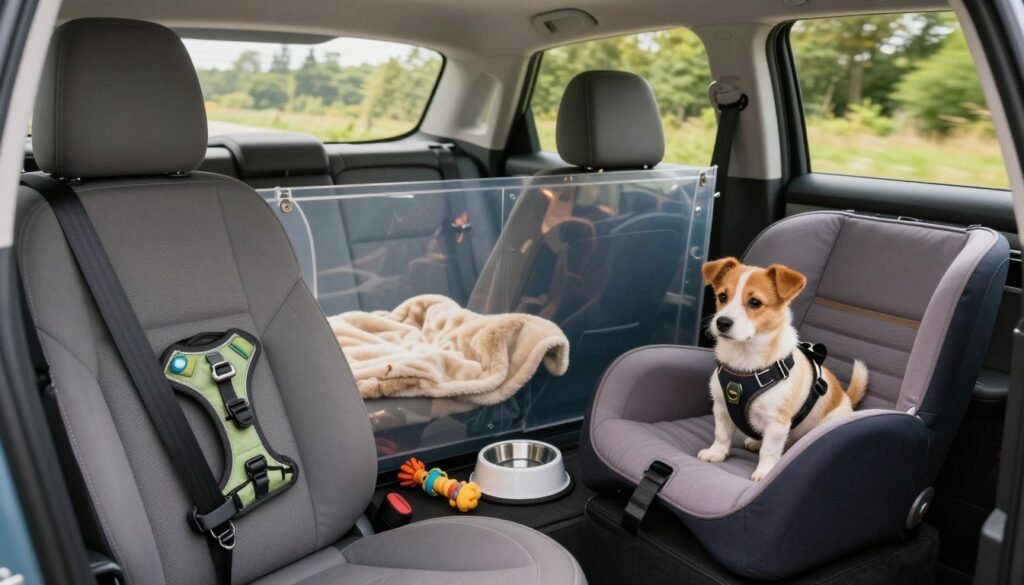
Most dog owners don’t realize that regular walking harnesses are not designed for car travel. I made this mistake early on, thinking any harness would work with a seatbelt attachment. The difference between a standard harness and a crash-tested one can literally be life or death.
Crash-tested harnesses are specially engineered to distribute impact forces across your dog’s chest and shoulders. They’re made with reinforced stitching, heavy-duty webbing, and metal hardware that won’t break under extreme stress. Brands like Kurgo and Sleepypod have invested in actual crash testing with dog-sized dummies to verify their products meet safety standards.
The Sleepypod Clickit Sport is my top recommendation after years of use. It’s one of the few harnesses that has passed Center for Pet Safety crash tests. The Kurgo Tru-Fit Smart Harness is another excellent option that I’ve used with medium to large dogs, providing both safety and comfort during long journeys.
The attachment system is straightforward but critical to understand:
- One end clips to the harness D-ring positioned on your dog’s back between the shoulder blades
- The other end clicks into your car’s standard seatbelt buckle using a universal adapter strap
- The length should allow your dog to sit, stand, or lie down but not roam freely or reach the front seats
- Always attach to a back seat position to keep your dog away from airbags, which can cause serious injury
I’ve created affiliate links to these tested harnesses on petzvibes.com, where you can find detailed reviews and sizing guides. Proper fit is critical—a harness that’s too loose won’t provide adequate protection, while one that’s too tight causes discomfort.
Secured Crates and Carriers
For some dogs, a properly secured crate offers better car safety than a harness system. I use crates for my smaller dogs and for any dog who hasn’t yet adjusted to harness restraint during travel.
Travel crates must meet specific requirements to be truly safe. They need proper ventilation on multiple sides, enough room for your dog to stand up, turn around, and lie down comfortably, and secure anchoring to prevent the crate from becoming a projectile during sudden stops.
The key word here is “secured.” I’ve seen too many people place a crate in their vehicle without anchoring it properly. In an accident or hard brake, an unsecured crate can fly forward with devastating consequences. I always use tie-down straps that attach to the crate and connect to the vehicle’s cargo hooks or seatbelt anchors.
For practicality on road trips, I recommend collapsible travel crates like the EliteField 3-Door model or the Petmate Two Door Top Load carrier for smaller dogs. These fold flat when not in use, making them ideal for multi-destination trips where space is at a premium.
- Hard-sided crates offer maximum protection in severe accidents but take up more storage space
- Soft-sided collapsible crates are easier to pack and adequate for most travel situations when properly secured
- Wire crates provide excellent ventilation and visibility but may not withstand impact as well as solid options
- Crash-tested crates like the Gunner Kennel offer premium protection for dogs who travel frequently
Size matters significantly with crates. I measure my dogs in standing and lying positions before selecting a crate, ensuring at least 2-4 inches of clearance above their heads when standing. This balance provides dog comfort in cars without giving them so much space they could be thrown around inside the crate during motion.
You can find my complete crate recommendations and sizing calculator on petzvibes.com, along with installation guides for different vehicle types.
Vehicle Barriers and Cargo Dividers
When I travel with my larger dogs in SUVs or vans, I rely on vehicle barriers to create a secure cargo area. These barriers prevent dogs from launching into the front seats during sudden stops—a scenario that’s more common than most people realize.
Vehicle barriers work by creating a physical partition between the cargo area and passenger compartments. They’re effective for dogs who don’t tolerate harnesses well or for multiple-dog households where individual restraints become complicated.
I’ve tested several barrier types over the years. The adjustable mesh barriers are affordable and work well for most dogs, though determined chewers might damage them. Heavy-duty metal barriers like those from WeatherTech or Bushwhacker offer superior durability and are my choice for powerful breeds or dogs with strong prey drive who might try to break through to the front.
Installation varies by vehicle model, but most barriers use tension mounting or vehicle-specific brackets:
- Universal barriers adjust to fit multiple vehicle sizes using telescoping bars and pressure mounts
- Vehicle-specific barriers attach to existing mounting points and provide the most secure installation
- Cargo area nets create lightweight separation suitable for smaller dogs or cats
- Full cargo dividers with doors allow access without removing the entire barrier system
One important note: barriers should be used in combination with other restraints, not as a replacement. I always secure my dogs with harnesses or use crates within the cargo area. The barrier is an additional safety layer that prevents forward movement and keeps dogs contained to their designated space.
For families with SUVs or crossovers, the Kurgo Backseat Barrier is an excellent mid-range option that I’ve recommended countless times. It installs in minutes and has held up through years of use with my own dogs.
| Safety Equipment Type | Best For | Installation Difficulty | Price Range |
|---|---|---|---|
| Crash-Tested Harness | Medium to large dogs, daily commuters, dogs comfortable with restraint | Easy (5–10 minutes) | $40-$100 |
| Secured Travel Crate | Small dogs, anxious travelers, puppies, multiple short stops | Moderate (15-20 minutes) | $50-$300 |
| Vehicle Barrier | SUV/van owners, multiple dogs, cargo area travelers | Moderate to Difficult (20-40 minutes) | $60-$250 |
| Booster Seat (small dogs) | Dogs under 20 lbs, improved visibility, anxiety reduction | Easy (5 minutes) | $30-$80 |
I’ve learned through experience that investing in quality car safety for dogs equipment pays off immediately. The peace of mind knowing your dog is protected makes every mile more enjoyable. Plus, in many states, unrestrained pets can result in distracted driving citations, so proper equipment isn’t just about safety—it’s about legal compliance too.
Remember, the best safety equipment is the one your dog will tolerate and that you’ll use consistently. Start acclimating your dog to their safety gear with short trips around the neighborhood before embarking on longer journeys. This gradual introduction helps ensure both safety and dog comfort in cars for the duration of your adventure.
Comfort and Calming Essentials for Long Drives
The first road trip with Max was tough. Eight hours of whining and pacing left us both tired. It taught me that dog comfort in cars is key for a good trip. A calm dog makes the journey enjoyable.
Investing in comfort items is more than luxury. It’s about creating a safe space for your dog. This helps them feel secure, even when things outside change.
Travel Beds and Seat Covers
Bring your dog’s bed from home. It smells familiar and comforts them. At hotels or rest stops, Max curls up on his bed because it smells like home.
I learned this the hard way. A new travel bed was ignored for three days.
Waterproof seat covers are a must. Look for brands like Kurgo and BarksBar. They’re easy to clean and keep your car’s seats safe. They also give your dog a comfy place to rest.
Place the dog bed on top of the seat cover in the back seat. It creates a cozy spot for relaxation on long drives.
Calming Aids and Anxiety Solutions
Many dogs get anxious on their first few trips. ThunderShirts are great for calming them. Start using them at home before the trip.
Let your dog get used to the ThunderShirt at home. This helps them feel calm and familiar with it.
Natural calming treats are good for mild anxiety. Look for ones with chamomile, valerian root, or CBD for pets. Test them at home first to see how your dog reacts.
If your dog is very anxious, talk to your vet about medication. Some dogs need prescription help to handle travel stress. Your vet can help with this.
Bring an old sweatshirt or t-shirt with your scent. It makes your dog feel more secure during the trip.
Climate Control Items
Temperature control is important. I used to overlook it, and my dog was uncomfortable. Now, I pack items based on the season and weather.
In summer, cooling mats are a game-changer. They don’t need to be cold and keep your dog cool for hours. I also use a portable fan to keep the air moving.
In winter or in cold cars, a fleece blanket keeps your dog warm. They can burrow into it when cold or push it aside when warm.
Watch for signs your dog is uncomfortable due to temperature:
- Excessive panting with tongue hanging far out (overheating)
- Shivering or trembling when it’s not related to anxiety (too cold)
- Restlessness and constant repositioning (seeking cooler or warmer spots)
- Drooling more than usual (possible heat stress)
- Seeking contact with cool surfaces like window glass (overheated)
Keep a digital thermometer in your travel kit. The back seat can be warmer or cooler than the front, depending on the vehicle.
What’s comfortable for you might not be for your dog. Their fur, size, and breed affect their temperature needs. My golden retriever needs more cooling than my friend’s short-haired Italian Greyhound.
Creating a comfortable environment is about more than gear. It’s about observing your dog’s behavior and adjusting. Every dog is different, and learning their signals is key to a successful trip.
Food, Water, and Feeding Supplies for the Journey
While driving through rural Montana, I realized I only had two days of dog food left. This taught me a valuable lesson about road trips. My golden retriever ate more than I expected during our week-long trip. Finding a pet store with his specific food added an extra hour to our drive.
This experience changed how I pack food for trips. Now, I prepare as if I’m preparing for the apocalypse. I never want to scramble for dog food again.
Managing food and water is more than just tossing kibble in the trunk. Your dog’s nutrition and hydration affect their comfort and energy. I’ve learned what works after many miles on the road.
Portable Water Bottles and Dispensers
I found dog-specific water bottles to be game-changing on my first long trip. They have attached bowls or dispensers for easy water access. My favorite has a flip-top design for one-handed use.
I always carry a collapsible silicone bowl for quick stops. These bowls are lightweight and perfect for rest areas. I also have a larger water reservoir in my car, which I refill at gas stations.
My hydration plan is to offer water every two hours, more often in hot weather. I use apps like BringFido to find pet stores along my route. The PetSafe Drinkwell Travel Bottle is my top pick for its leak-proof design.
In summer, I pack a cooler with ice packs. Cool water is more appealing to dogs and helps keep them cool.
Travel Food Containers and Storage
Airtight containers changed how I manage food for trips. A spill in my trunk taught me this lesson. Now, I use containers like the IRIS Airtight Food Storage Container to keep food fresh.
I pre-measure food portions into gallon-sized zip-lock bags before leaving. Each bag is labeled with the day and meal time. This makes feeding stops efficient.
Brand consistency is important. Some dogs prefer certain foods, and changing brands can upset their stomachs. A fellow traveler uses Royal Canin for this reason.
I always pack enough food for the trip plus three extra days. Delays happen, and having extra food saves me. Stick with kibble for better travel food.
Collapsible Bowls and Feeding Mats
Lightweight, packable feeding solutions are key for road trips. Collapsible silicone bowls are great for both food and water. I have two bowls in different colors to avoid confusion.
The best collapsible bowls have carabiner clips for easy attachment. Look for bowls that hold at least two cups for medium to large dogs. Smaller breeds need smaller bowls.
Waterproof feeding mats are essential after a hotel incident. These mats catch spills and protect floors. I use a silicone mat that rolls up and rinses clean.
For hotel stays, I set up a feeding station using the mat. This keeps the area clean and provides a routine for your dog.
Essential Feeding Supplies Checklist
- Portable dog water bottle with attached bowl or dispenser
- Two collapsible silicone bowls (one for food, one for water)
- Airtight food storage container sized for your trip duration
- Pre-measured food portions in zip-lock bags
- Extra food supply (3+ additional days)
- Waterproof feeding mat for hotels and vehicle
- Gallon water jug or reservoir for refills
- Dog treats in resealable bags
- Small cooler with ice packs for hot weather hydration
- Measuring cup or scoop for food portions
Feeding Supply Comparison
| Product Type | Best Features | Ideal For | Price Range |
|---|---|---|---|
| Portable Water Bottles | One-handed operation, leak-proof design, attached bowl | Rest stops, hiking, quick hydration breaks | $12-$25 |
| Airtight Food Containers | Moisture-proof seal, stackable, pest-resistant | Multi-day trips, trunk storage, food freshness | $20-$45 |
| Collapsible Bowls | Lightweight, packable, carabiner clip, dishwasher safe | Day bags, camping, minimal storage space | $8-$18 |
| Feeding Mats | Waterproof, raised edges, non-slip, easy cleaning | Hotels, vehicle protection, messy eaters | $15-$30 |
Keeping your dog’s regular feeding schedule during travel reduces stress and digestive issues. I stick to the same meal times as at home. This provides comfort when everything else feels different.
For more tips on dog nutrition during travel, check out petzvibes.com. They offer articles on dog nutrition on the road. Their advice on portion adjustments for active travel days has helped me fine-tune my feeding approach.
Investing in quality feeding supplies pays off immediately. Proper hydration and nutrition keep your dog comfortable, energized, and happy throughout your journey. After my Montana scare, I never leave home without a thorough feeding plan.
Health, Medication, and First Aid Kit Essentials
I learned the hard way that being prepared for medical situations while traveling with dogs can make a big difference. During a road trip through Montana, my golden retriever Luna stepped on a sharp rock. I was incredibly grateful I had packed a complete first aid kit. That experience taught me that health supplies aren’t optional extras—they’re absolute necessities.
Medical emergencies don’t follow convenient schedules. Your dog could experience anything from a minor scrape to digestive upset or allergic reactions while you’re hours from the nearest veterinarian. Having the right supplies on hand gives you peace of mind and the ability to respond quickly when your furry companion needs help most.
Prescription Medications and Preventatives
I always pack more medication than I think I’ll need because delays happen. Getting stuck an extra few days due to weather or vehicle issues becomes significantly more stressful when you’re counting your dog’s last few pills. My rule is simple: bring at least seven extra days’ worth of any prescription medication your dog takes regularly.
Keep all medications in their original containers with pharmacy labels intact. This prevents confusion and provides important information if you need emergency veterinary care. I use a small waterproof medication organizer to keep everything together and protected from spills or humidity.
Here’s what should be in your medication bag when traveling with dogs:
- Daily prescription medications with extra supply
- Flea and tick preventatives appropriate for the regions you’ll visit
- Heartworm prevention tablets or topical treatments
- Any supplements your dog takes regularly
- Allergy medications if your dog has seasonal sensitivities
- Pain relievers prescribed by your vet for arthritis or joint issues
Before your trip, schedule a quick vet visit to discuss your travel plans. Your veterinarian can provide extra refills and may suggest additional preventatives based on your destination. Some regions have different parasites or health risks that require specific protection.
Motion Sickness and Digestive Solutions
Not all dogs are natural road warriors. My friend’s beagle gets carsick on trips longer than thirty minutes, which taught us both valuable pet travel tips about managing motion sickness. If your dog shows signs of nausea during car rides—excessive drooling, whining, or vomiting—you’ll want to address this before embarking on a long journey.
Cerenia is a prescription medication that works wonderfully for canine motion sickness. I’ve seen it transform anxious, nauseous dogs into comfortable travelers. Talk to your vet about whether this option makes sense for your dog.
For milder cases or dogs who prefer natural remedies, consider these alternatives:
- Ginger treats or supplements that naturally settle stomachs
- Probiotics to support digestive health during travel stress
- Digestive enzymes if your dog has a sensitive stomach
- Anti-diarrheal medication recommended by your vet
I’ve found that gradually acclimating dogs to car travel helps tremendously. Start with short trips weeks before your road trip and slowly increase the duration. Feed your dog a light meal two to three hours before departure, not right before leaving.
Visit petzvibes.com for more on managing travel anxiety and digestive issues in dogs.
Complete First Aid Kit Components
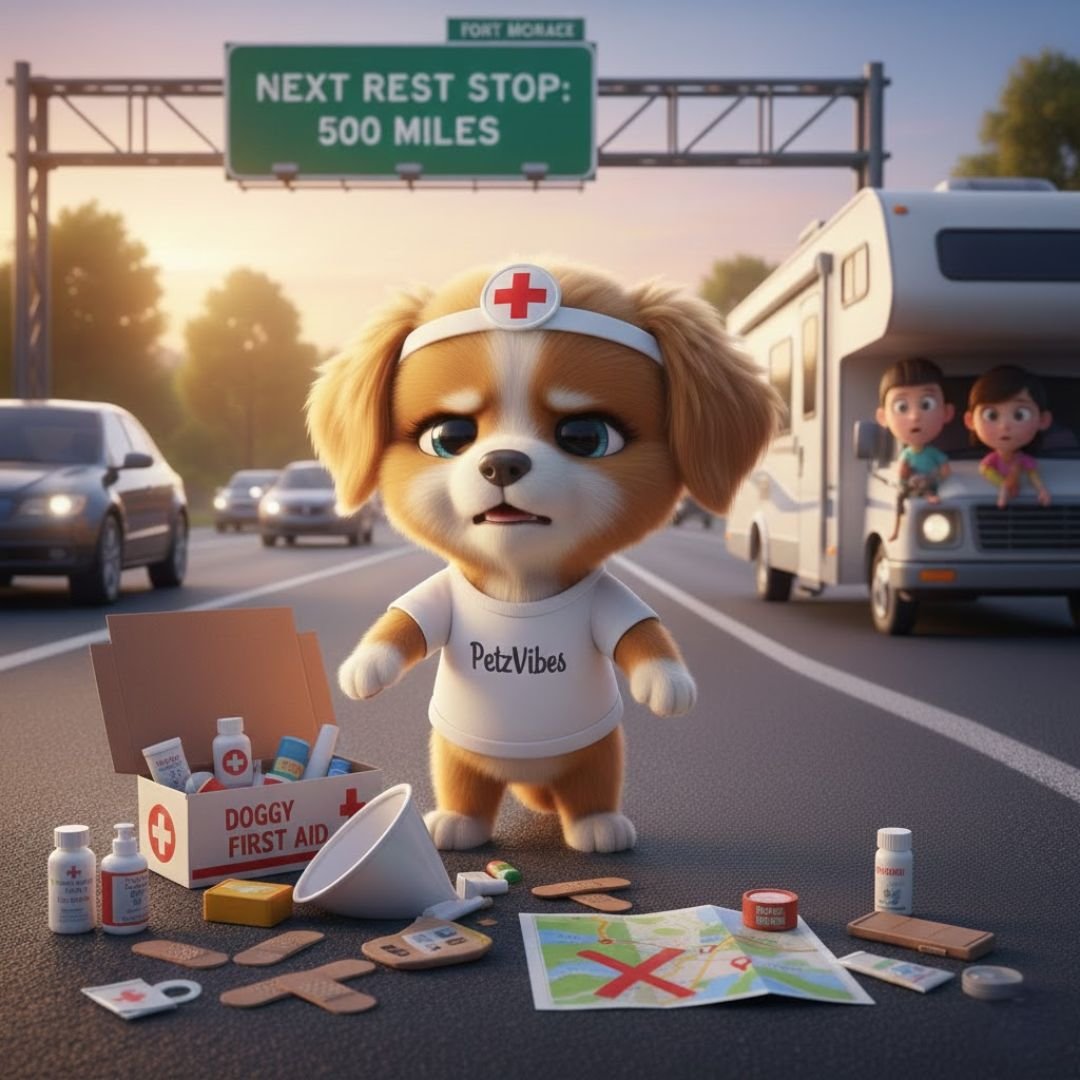
A well-stocked first aid kit is your first line of defense when minor injuries occur. I keep mine in an easily accessible location—never buried under luggage where I’d have to unpack half the car to reach it. You can purchase pre-made pet first aid kits or assemble your own based on your dog’s specific needs.
The key is having supplies for the most common travel injuries: cuts, scrapes, insect bites, and minor burns. I’ve used my kit more times than I can count for everything from thorn removal to cleaning a small wound after an encounter with a rough fence post.
Wound Care Supplies
These items help you clean and protect injuries until you can reach veterinary care if needed:
- Sterile gauze pads in multiple sizes
- Self-adhesive bandage wrap that won’t stick to fur
- Antiseptic wipes or solution for cleaning wounds
- Antibiotic ointment safe for dogs (check with your vet)
- Tweezers for removing splinters, thorns, or ticks
- Scissors with rounded tips for cutting bandages
- Cotton balls or swabs for gentle cleaning
Emergency Medical Tools
Beyond basic wound care, these tools help you assess and respond to more serious situations:
- Digital thermometer designed for pets
- Emergency blanket for shock or hypothermia
- Instant cold packs for reducing swelling
- Saline solution for flushing eyes or wounds
- Disposable gloves to maintain hygiene
- Flashlight or headlamp for examining injuries in dim conditions
- Pet first aid reference guide or app like Pet First Aid by Red Cross
I also keep copies of Luna’s vaccination records and our veterinarian’s contact information in a waterproof document holder inside my first aid kit. If we need emergency care, having this documentation readily available saves precious time and ensures the attending vet has all the necessary information.
| First Aid Category | Essential Items | When You’ll Need It | Storage Tips |
|---|---|---|---|
| Wound Care | Gauze, antiseptic, bandages, tweezers | Cuts, scrapes, insect bites, thorn removal | Keep in sealed plastic bag to stay sterile |
| Medications | Prescriptions, pain relief, antihistamines | Daily health needs, allergic reactions, pain management | Original containers in waterproof organizer |
| Digestive Support | Anti-nausea meds, probiotics, anti-diarrheal | Motion sickness, dietary changes, stress-related upset | Cool, dry location away from direct sunlight |
| Emergency Tools | Thermometer, cold packs, emergency blanket | Fever assessment, injury swelling, shock treatment | Easy-access compartment with other medical tools |
Don’t forget to include your pet insurance information and proof of coverage if you have it. I keep a photo of Luna’s insurance card on my phone and a printed copy in our travel documents. This becomes essential if you need emergency veterinary care in an unfamiliar location.
One of the best pet travel tips I can share is to familiarize yourself with your first aid supplies before you need them. Practice taking your dog’s temperature at home, review basic first aid procedures, and know the signs of common emergencies. When you’re calm and prepared, you can respond effectively if something goes wrong on the road.
Check your first aid kit every few months to replace expired medications and depleted supplies. I set a reminder on my phone to review everything before each major trip. This simple habit ensures I’m never caught unprepared when my dog needs medical attention while we’re away from home.
Documentation, Apps, and Tech Tools for Pet Travel
I always make sure my digital toolkit is ready for trips with my dog. Technology helps me plan routes and find places that welcome pets. It keeps my dog safe during long drives.
Having the right documents and apps is key for a good trip. I learned this the hard way when I was turned away from a campground. Now, I keep both physical and digital copies of important documents.
Your Complete Document Checklist
Organizing your dog’s paperwork saves time and prevents problems. I keep physical copies in a waterproof holder and digital backups in Google Drive. This way, I can access them easily.
You’ll need vaccination records, rabies certificates, and health certificates for travel. Some places require these for entry, like during disease outbreaks.
Make sure your dog’s microchip info is up to date. Carry a recent photo of your dog on your phone. This is helpful if your pet gets lost.
Pet insurance cards are also important. I learned this during an emergency vet visit in Wyoming. Having my insurance info saved me hours of phone calls.
- Current vaccination records and rabies certificate
- Health certificate (required for international and some interstate travel)
- Microchip registration papers with updated contact information
- Pet insurance cards and policy numbers
- Recent photos of your dog from multiple angles
- Prescriptions and medication lists with dosages
Update your dog’s ID tags with your mobile number. Consider adding a temporary tag with your travel details. This adds an extra layer of security.
Digital Apps That Simplify Pet Travel
The right apps make planning easier. They help find dog-friendly places along your route. I use several tools to make travel smooth.
BringFido is great for finding pet-friendly spots. It has user reviews and pet policies for thousands of places. I’ve found amazing dog parks and cafes.
GasBuddy helps find fuel stops with grass areas for breaks. It saves money and time on long drives.
Roadtrippers lets me plan routes with pet-friendly stops. It adds waypoints at dog parks and scenic areas. This makes planning easier.
The Pet First Aid app by Red Cross is always on my home screen. It has emergency guides and a vet locator. It’s very useful.
GPS Tracking Devices for Added Security
A GPS tracker on my dog’s collar is very useful. It tracks their location in real-time. I started using one after hearing about dogs getting lost.
The Fi collar is great for tracking. It has long battery life and accurate tracking. It alerts me if my dog leaves a safe area.
Whistle tracks activity and location. It helps ensure my dog gets enough exercise. It also gives health insights.
Tractive works internationally. It has features like virtual fencing and location history. It provides safety coverage.
These devices connect to your phone via cellular networks. They work across most of the United States. I charge mine every few days for constant connection.
Finding Accommodations Made Simple
Booking dog-friendly places requires research. I use multiple platforms to compare options. This helps find the best places for our stops.
BringFido specializes in welcoming pet-friendly places. It has detailed pet policies and fee information. This helps me make quick decisions.
Airbnb’s pet-friendly filter offers unique rentals. These places often have more space and privacy than hotels. They’ve been highlights of our trips.
KOA’s camping app shows dog-friendly campgrounds. It has information on amenities like washing stations. This makes comparing easy.
For reviews of pet-friendly hotels and camping guides, I check petzvibes.com. Their reviews help me choose places that meet my dog’s needs.
| Platform | Best For | Key Feature | Cost |
|---|---|---|---|
| BringFido | Hotels and restaurants | Verified pet policies | Free to use |
| Airbnb | Unique rentals | Entire home access | Varies by property |
| KOA App | Campgrounds | Dog amenities listed | Free app, camping fees apply |
| Roadtrippers | Route planning | Pet waypoint integration | Free basic, premium available |
Always call ahead to confirm pet policies. Policies can change, and a quick call ensures no surprises.
Having the right documents and technology makes dog road trips stress-free. These tools keep your pet safe, find welcoming places, and provide emergency help when needed.
Bathroom Break and Cleanup Essentials
Imagine your dog has an accident in a rental car, and you can’t find your cleanup kit. It’s buried under three suitcases in the trunk. This is why you need to pack bathroom and cleanup supplies in a special spot.
Dealing with accidents is part of dog ownership. Whether it’s a weekend trip or a long road trip, having the right supplies can save you from trouble.
Waste Management Supplies
Running out of poop bags on a trip is a disaster. Always pack at least double the amount you think you’ll need. You’ll use almost all of them.
I keep poop bag dispensers in different places. One is clipped to each leash, another in the car door pocket, and one in my day bag.
I prefer biodegradable poop bags like Earth Rated. They’re good for the environment and can handle any mess. Pets N Bags is another great option with similar quality.
Essential waste management items include:
- Three to four rolls of biodegradable poop bags (minimum 60 bags per roll)
- Multiple bag dispensers for different locations
- Small dedicated trash bags for storing used poop bags
- Zip-lock bags in various sizes for containing soiled items
- Grocery bags as emergency backups (though proper bags are preferable)
- Hand sanitizer or disinfecting wipes for after cleanup
Keep a small trash bag in your car for used poop bags. Rest stops might not have trash cans, and you don’t want those bags around.
Accident Cleanup and Odor Control
Accidents can happen, even with well-trained dogs. Having the right supplies ready can make a big difference.
I learned this the hard way when my dog got carsick in a rental. The right cleaner could have avoided a big cleaning fee.
Nature’s Miracle enzymatic cleaner is a must-have. It breaks down organic compounds, unlike regular cleaners that just mask odors. This is key in cars and hotel rooms.
Keep your cleanup kit in an easy-to-reach spot. I store mine in a gallon-sized zip-lock bag to keep everything together and waterproof.
| Cleanup Product | Primary Use | Storage Location | Why It’s Essential |
|---|---|---|---|
| Enzymatic Cleaner Spray | Urine and vomit accidents | Car door pocket | Eliminates odors completely, not just masks them |
| Paper Towels | Initial cleanup and drying | Under seat storage | Absorbs liquids quickly for immediate response |
| Disinfectant Wipes | Surface sanitizing | Glove compartment | Kills bacteria and prevents lingering contamination |
| Rubber Gloves | Protected cleanup handling | Cleanup kit bag | Maintains hygiene during messy situations |
| Microfiber Towels | Muddy paws and rain | Backseat organizer | Reusable and highly absorbent for multiple uses |
My complete accident cleanup kit includes:
- 32-ounce bottle of enzymatic cleaner (Nature’s Miracle or equivalent)
- Full roll of paper towels or shop towels
- Pack of disinfectant wipes for quick surface cleaning
- Disposable rubber gloves (at least three pairs)
- Small spray bottle for diluted cleaning solution
- Three to four microfiber towels for various cleaning tasks
- Baking soda for absorbing fresh liquid accidents
- Large garbage bags for disposing of soiled materials
Make sure your cleanup supplies are easy to get to. You never know when you’ll need them.
Portable Potty Options for Emergencies
Extreme situations need creative solutions. I never thought I’d need a portable potty until I was stuck in traffic for hours.
Artificial grass pads are lifesavers in traffic jams or when rest stops are far away. They’re trays with fake grass for dogs to use inside the car or at highway shoulders.
I also have a small disposable potty pad in my car for emergencies. It’s great for senior dogs and puppies who might not have perfect bladder control.
Emergency potty solutions worth considering:
- Portable artificial grass pads with collection trays
- Disposable absorbent pee pads (for senior dogs)
- Collapsible travel litter boxes for small dogs
- Reusable washable pee pads for long trips
These options aren’t for everyday use but offer peace of mind in emergencies. Training your dog to use them before your trip makes things easier.
For more tips on travel bathroom routines and emergency training, visit petzvibes.com. They have guides for traveling dogs.
The key to bathroom and cleanup essentials is to over-prepare. They take up little space but are very helpful when you need them most.
Exercise, Entertainment, and Rest Stop Gear
Exercise breaks every few hours have changed my road trips. They turn my restless dog into a happy napper. I learned this the hard way on my first long trip. I thought my dog could handle six hours in the car without a break.
But, the constant pacing and whining made us both miserable. Then, I discovered that a tired dog is a happy traveler.
Now, I plan rest stops every two to three hours. These breaks are more than just bathroom stops. They’re essential exercise sessions that make the trip enjoyable.
The right gear makes rest stops into mini-adventures. I’ve gathered my collection through trial and error. I’m excited to share what works on the road.
Leashes, Long Lines, and Tie-Outs
I never leave without multiple leashes anymore. This lesson came during a memorable stop in rural Oklahoma. My primary leash snapped while my dog chased a squirrel.
Now, I carry different leash options for various situations. My standard six-foot leash works well for controlled areas. For open spaces, I use a long line between 15 and 30 feet.
Brands like Ruffwear and Mendota offer durable options. The Ruffwear Flat Out Leash is my favorite. It has a padded handle that doesn’t hurt my hands during pulls.
When we stop for picnics or camping, my tie-out cable gives my dog freedom. I prefer cable over rope because it’s chew-resistant and doesn’t tangle easily.
A full-body harness with a top handle is invaluable. It lets me assist my dog during hikes. The handle helps me lift him into the car or pull him back from danger.
Travel Toys and Mental Enrichment
I used to pack my dog’s entire toy basket. But now, I choose quality over quantity. Versatile toys keep boredom at bay during long drives.
Kong toys are a must-have. They can be stuffed with treats and frozen for entertainment. In hot climates, a frozen Kong cools and entertains my dog for 30 minutes or more.
I rotate toys to keep things interesting. The toys from Day One go back in storage on Day Two. This makes my dog think he’s getting new toys all the time.
For downtime in hotel rooms, puzzle toys are lifesavers. They challenge dogs to solve problems for treats. These toys tire out busy minds as much as physical exercise tires out bodies.
Durable chew toys are essential for anxious chewers. Benebone and Nylabone chews withstand serious gnawing without falling apart.
My affiliate partnerships with these brands support my travel adventures. I only recommend products I’ve tested personally. These toys have survived desert heat and mountain cold without deteriorating.
Portable Exercise Equipment
Even with limited space, there are plenty of exercise options. I’ve found compact items that pack flat but provide lots of fun.
My collapsible frisbee is a great exercise tool. It folds flat and won’t damage anything if thrown too far. It’s perfect for quick play sessions.
A compact ball thrower extends my throwing distance without taking up much space. The ChuckIt! Travel Ball Launcher breaks down into two pieces that fit in a door pocket.
For dogs with lots of energy, I pack a flirt pole. It’s a pole with a rope and lure attached. It provides intense exercise in minimal space.
Here are my favorite rest stop activities that require minimal or no equipment:
- Sniff walks: Let your dog lead on a long line, stopping to investigate every interesting smell without rushing
- Hide and seek: Hide behind trees or vehicles and call your dog to find you
- Training sessions: Practice commands in new environments with treat rewards
- Fetch variations: Throw uphill to increase workout intensity in smaller spaces
- Tug games: A simple rope toy provides strength training and bonding
I always research dog parks along my route before departure. These areas offer the ultimate exercise opportunity for dogs to run off-leash and socialize.
The AllTrails app helps me find dog-friendly hiking opportunities near exits. I filter searches for trails that allow dogs and read reviews to confirm conditions and difficulty levels.
When traveling with dogs, adequate exercise stops genuinely transform the entire experience. My dog now loves car rides and settles into his bed after a good run, ready for the next adventure.
Emergency Preparedness and Backup Supplies
After a scary incident on the road, I learned to always prepare for the worst. My dog started limping badly five hours from home. I frantically searched for a vet, wasting precious minutes. This taught me that being prepared is key when traveling with your pet.
Now, I have a detailed emergency plan for every trip. It gives me peace of mind, knowing I’m ready for anything. The time you spend preparing before you leave can be lifesaving.
Emergency Contact List and Veterinary Locator
I make an emergency contact document for every trip. It takes about 30 minutes to research and organize vet contacts along my route. This simple step has saved me from many anxious moments.
My list includes my regular vet’s 24-hour emergency number. They know my dog’s medical history and can offer quick advice or send records if needed.
I also find emergency vet clinics at my destination before leaving. I call them to confirm they accept walk-ins and note their hours. Knowing this ahead of time prevents surprises.
The ASPCA Animal Poison Control hotline (888-426-4435) is always saved in my phone. It operates 24/7 and has saved many pets from poisoning emergencies. I also note regular vet clinics for non-urgent needs during my trip.
Apps like VetFinder and Airvet help me find vet care on the go. They show nearby clinics with reviews, hours, and contact info. Airvet even offers virtual consultations, which can be helpful for assessing urgent needs.
I keep my dog’s medical history online through cloud storage or pet health apps. Any emergency vet can quickly access this info. It speeds up treatment and helps vets make informed decisions.
| Emergency Contact Type | What to Include | Why It Matters |
|---|---|---|
| Primary Veterinarian | 24-hour number, clinic email, after-hours protocol | They know your dog’s history and can coordinate care remotely |
| Destination Emergency Vet | Address, phone, hours, directions from lodging | Eliminates search time during crisis situations |
| Pet Poison Control | 888-426-4435, consultation fee information | Immediate guidance for poisoning emergencies nationwide |
| Pet Insurance Provider | Policy number, claims phone line, coverage details | Clarifies what’s covered before expensive emergency treatment |
Weather-Specific Emergency Gear
Traveling long distances with dogs means thinking about seasonal hazards. The emergency gear I pack changes with the season. Weather can change quickly, and the right supplies are key.
In summer, I pack extra water and cooling vests. These are lifesavers if the air conditioning fails or if we get stranded in the heat.
Paw protection balm is essential for hot pavement. Even quick bathroom breaks can burn paw pads. I test the pavement with my hand before letting my dog walk on it.
Winter travel requires different preparation. Insulated dog coats keep them warm during outdoor breaks. I also pack extra blankets for warmth if we get stranded or if heating fails.
Salt and ice melt chemicals can damage paw pads in winter. I bring paw wax and portable water for rinsing paws after walks. Dog booties offer extra protection, though some dogs don’t like wearing them.
My emergency kit includes items for all seasons. I have a flashlight with extra batteries, emergency blankets, non-perishable dog food, and a first aid kit. These stay in my vehicle for all trips because emergencies don’t warn you.
Backup Essentials and Extras
One of the best pet travel tips is to double up on critical items. A broken leash clip during a rest stop taught me this. Now, I pack backup versions of essential items.
My backup supplies checklist has grown through experience. Each item earned its place after I needed it or saw another traveler wish they had it. Having backups might seem excessive until you need them.
Here are the backup essentials I never leave home without:
- Extra leash and spare collar – Hardware can fail at the worst moments
- Backup medications – An extra week’s supply in case trips extend unexpectedly
- Additional food beyond calculated needs – I pack 25% more than the trip requires
- Extra poop bags – A full backup roll because running out is not an option
- Spare phone charger and portable battery – A dead phone means no GPS, vet information, or emergency calls
- Duplicate copies of medical records – Paper backups if digital access fails
- Extra water bowls – Collapsible bowls can tear or get lost
- Second set of identification tags – Backup contact information if primary tags fall off
I also keep a cash emergency fund separate from my regular travel money. Not all vet clinics accept credit cards, and ATMs might not be available in rural areas. Having $200-300 in cash has been valuable many times.
A spare key to your vehicle stored somewhere secure can prevent a nightmare scenario. I keep one in my wallet separate from my main keychain. Getting locked out with a dog in the car is a real emergency.
For more on emergency preparedness and pet travel tips, visit petzvibes.com. I share detailed checklists and real-world scenarios from my travels.
The investment in backup supplies and emergency gear is small compared to the security it provides. I sleep better knowing I’m prepared for any challenge the road may bring. Your dog depends on you to plan for situations you hope never happen.
Your Complete Dog Road Trip Packing Checklist
I’ve made this packing guide after forgetting important items and learning what really matters. It’s based on years of trial and error, and a few emergency stops in unknown towns.
This guide is your go-to for every dog road trip. I’ve sorted items by category to make packing easier and less stressful.
The checklist includes all the essentials for traveling with your dog. I’ve labeled items as must-haves, nice-to-haves, or optional based on common travel needs.
Here’s your complete packing reference organized by priority and category:
| Category | Essential Items | Recommended Items | Optional Items |
|---|---|---|---|
| Safety Equipment | Crash-tested harness or secured crate, seat belt attachment, collar with ID tags, microchip registration | Vehicle barrier, backup restraint system, reflective vest, car window shade | Seat belt alarm silencer, cargo net, additional safety tether |
| Comfort Essentials | Travel bed or familiar blanket, seat cover, calming spray or supplement | Cooling mat, heating pad (seasonal), window shade, battery-powered fan | White noise machine, comfort toy from home, calming music playlist |
| Food & Water | Regular food (3-day extra), portable water bottle, collapsible bowls, feeding mat | Elevated feeder, food storage containers, ice packs for perishables, filtered water | Treat pouch, puzzle feeder for hotel rooms, meal prep containers |
| Health & Medical | Prescription medications (full trip supply plus 3 days), first aid kit, preventatives, vaccination records | Motion sickness medication, probiotics, extra flea/tick treatment, thermometer | CBD calming treats, digestive enzymes, homeopathic remedies, cooling vest |
| Documentation & Tech | Health certificate (if required), vaccination records, pet insurance card, emergency vet list | GPS tracker, pet travel app, digital copies of records, hotel confirmation | Backup battery pack, car charger for tracker, printed maps of pet-friendly areas |
I keep bathroom and cleanup supplies in a separate bag. You’ll need waste bags, paper towels, enzyme cleaner, and hand sanitizer.
For fun and exercise, bring your dog’s leash, a long line, and three favorite toys. A portable water bowl and tie-out stake are good for camping.
Don’t forget these day-of departure items: Attach your dog’s leash before opening car doors. Pack a “last chance” potty break before hitting the highway. Grab your phone charger and keep emergency vet numbers accessible. Fill water bottles with fresh water right before leaving.
You can download a printable PDF version of this complete checklist from petzvibes.com to reference while packing. I keep a laminated copy in my car year-round.
Remember, every dog road trip teaches you something new. Your anxious rescue might need different items than my confident retriever.
After each trip, I note what I used a lot versus what stayed packed. This helps me refine my list and avoid carrying unnecessary weight.
Yes, this seems like a lot of items when you see everything listed together. But being prepared means enjoying your adventure without stress.
Start packing a few days before departure so you’re not rushing. Check off items as you load them, and do a final walk-through the morning you leave.
The goal isn’t perfection—it’s preparedness. Even if you forget something minor, you’ll have all the critical safety equipment, health supplies, and comfort items your dog truly needs for a safe and enjoyable journey.
Conclusion
I remember my first dog road trip with Max. We stopped at a beautiful overlook. Watching him see new sights and smells made it all worth it. Traveling with dogs makes every trip special.
This packing list might seem long. But, after your first trip, you’ll get the hang of it. You’ll know what your dog needs and what you can leave behind.
Begin with the essentials: safety gear, food, water, and any meds your dog needs. Then, add more items as you see fit. Every dog is different. Your high-energy dog will need different things than my calm senior lab.
Being prepared means you can be spontaneous. You can take detours or stay longer without worry. It’s all about enjoying the journey.
Want more tips for your next dog road trip? Check out petzvibes.com for guides, advice, and more. It makes traveling with dogs easier and more fun.
Safe travels to you and your furry friend. The open road is calling.
FAQ
How much food should I pack for my dog on a road trip?
Pack at least 25% more food than you think your dog will need. For a week-long trip, bring enough for 8–9 days. This covers unexpected delays and spills.
Pre-measure daily portions into zip-lock bags. Store them in an airtight container. Stick to your dog’s regular food to avoid stomach upset.
Do I really need a crash-tested harness, or will my regular harness work?
You absolutely need a crash-tested harness. Regular harnesses aren’t designed for impact. They can break apart or cause injuries.
Choose brands like Sleepypod, Kurgo, or Ruffwear that have passed crash tests. The harness attaches to your car’s seatbelt system.
What should I do if my dog gets carsick on long drives?
Motion sickness is common, so talk to your vet about Cerenia. For milder cases, try ginger treats and ensure your dog faces forward.
Limit food before travel. Gradually acclimate your dog to car travel. Keep the car cool and take breaks.
How often should I stop for bathroom breaks on a dog road trip?
Stop every 2-3 hours for most adult dogs. Puppies and senior dogs need more frequent stops. These breaks are for stretching and drinking water.
Use apps like BringFido or GasBuddy to find pet-friendly stops. Give your dog 10-15 minutes to sniff around.
What documents do I need to travel across state lines with my dog?
You need current vaccination records and a health certificate for some states. Keep physical and digital copies of these documents. Your dog’s microchip info and a recent photo are also important.
Pet insurance cards are useful for emergency vet care. Have your vet’s contact info and medical history ready.
Should I bring my dog’s regular bed on a road trip, or will they sleep anywhere?
Bring your dog’s actual bed for comfort. The familiar scent helps them feel at home. Use the same bed in the back seat for relaxation.
Look for beds with machine-washable covers. If space is limited, bring a favorite blanket or t-shirt.
What’s the most important thing people forget when packing for dog road trips?
People often forget extra medications and backup supplies. Running out of medication is a nightmare. Bring at least 3-5 extra days’ worth.
Don’t forget cleanup supplies like poop bags and enzymatic cleaners. Update your dog’s ID tags with current contact info.
How do I keep my dog cool in the car during summer road trips?
Keep the air conditioning running and direct vents to the back seat. Use cooling mats and a portable fan for extra air circulation.
Seek shaded parking and bring a collapsible water bowl. Avoid driving during the hottest times. Watch for signs of overheating.
Are GPS trackers really necessary for dog road trips?
Yes, GPS trackers like Fi, Whistle, or Tractive are essential. They help locate your dog if they get loose. The peace of mind is worth the investment.
What should I do if my dog has an accident in a hotel room or rental car?
Don’t panic—accidents happen. Blot the area with paper towels, then use an enzymatic cleaner to break down odors. Follow the product instructions.
Notify the hotel or rental car company immediately. Offer to pay for professional cleaning if needed. Most pet-friendly hotels are understanding if you’re honest.
How do I find emergency veterinary care while traveling?
Research emergency vet clinics before your trip. Use apps like VetFinder or Airvet to find 24-hour hospitals. Save their contact info in your phone.
Keep your dog’s medical history accessible digitally. Have pet insurance information ready for emergencies.
Can I take my dog to restaurants during a road trip?
Many restaurants welcome dogs, but policies vary. Use apps like BringFido to find dog-friendly spots. Always call ahead if unsure.
Bring a collapsible water bowl and keep your dog on a short leash. Good behavior is key.
What’s the best way to exercise my dog during travel days?
Plan for 20-30 minutes of exercise every 3-4 hours. Look for rest stops with walking paths or dog parks. Use apps like AllTrails to find trails.
Bring a long line for safe exploration. Morning exercise helps. Prioritize walks during hotel stays.
Should I stick to my dog’s regular feeding schedule during road trips?
Try to maintain your dog’s regular feeding schedule. Feed lighter meals on heavy travel days to prevent carsickness. Stick to their regular food and treats.
How do I handle my anxious dog during the first road trip together?
Start with short practice trips to build positive associations. Use calming aids like a ThunderShirt or natural supplements. Create a comfortable space with familiar items.
Stay calm and use high-value treats and toys to create positive experiences. The more trips you do, the more your dog will enjoy them.