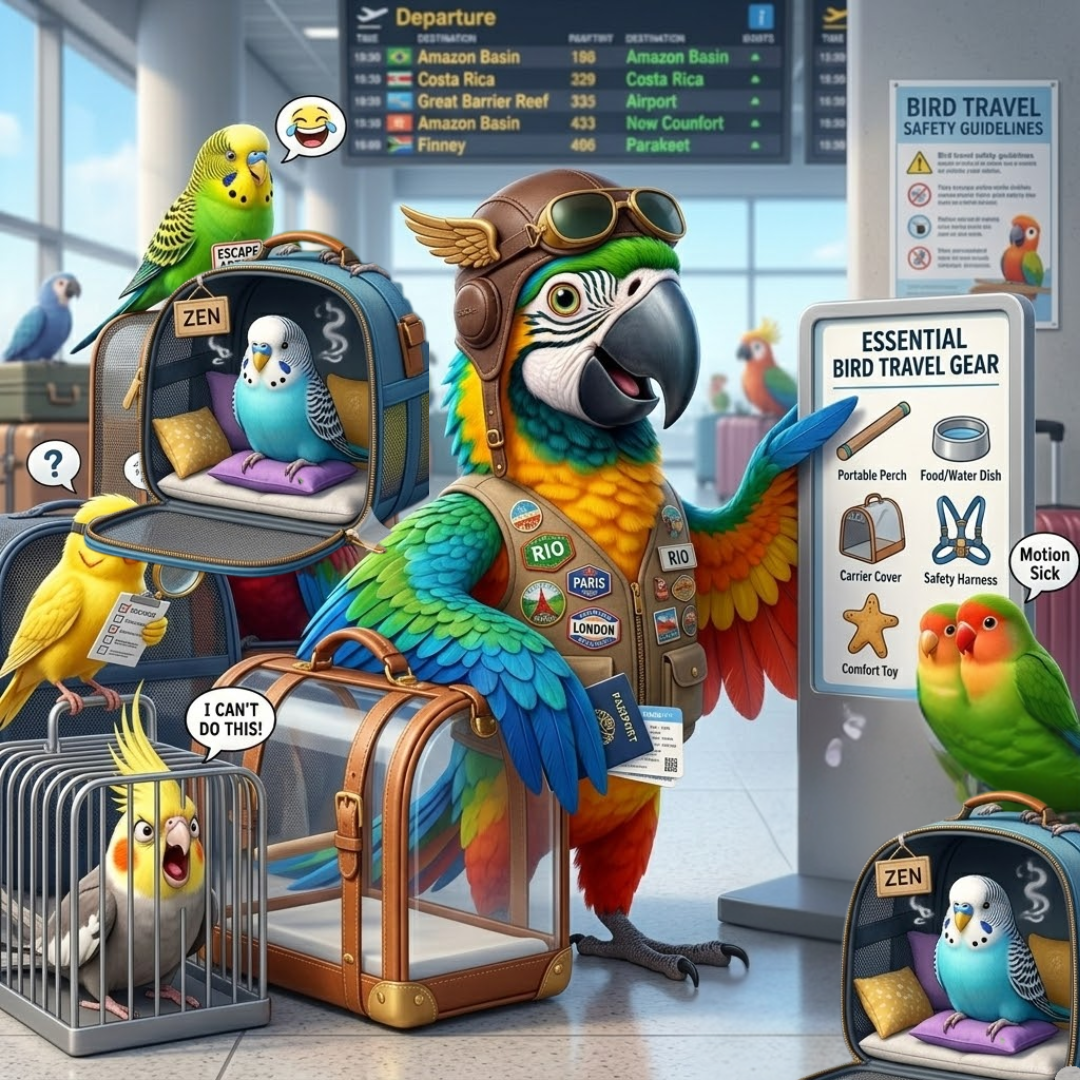
I remember my first road trip with my cockatiel. My heart was racing with worries. Would he be scared? Could I keep him safe? That trip taught me a lot about traveling with pet birds and how to enjoy adventures with my bird.
Birds are very sensitive. New places, loud sounds, and sudden moves can make them anxious. I learned this the hard way but found a silver lining. With the right bird travel preparation, these trips can bring us closer.
Over the years, I’ve learned a lot. I’ve talked to vets and tried many things. This guide will show you how to pick the best carrier, spot when your bird is stressed, and make a calm space for them.
Whether it’s a vet visit or a long trip, I’ve got you covered. I’ve mixed my own experiences with expert advice for a stress-free journey. For more tips, check out petzvibes.com as you get ready for your next adventure together.
Key Takeaways
- Birds experience heightened stress during transport due to sensitivity to environmental changes and unfamiliar sounds
- Proper preparation and the right carrier are essential for safe and comfortable bird transportation
- Understanding your bird’s stress signals helps you respond quickly during the journey
- Successful bird travel strengthens the bond between you and your feathered companion
- Combining veterinary advice with practical experience creates the most effective travel strategies
- Even short trips require careful planning to ensure your bird’s safety and comfort
1. Why Traveling with Your Bird Requires Special Planning
My journey into understanding bird travel stress started with a panicked bird. I regret not doing my homework first. I thought taking my parrot on a weekend getaway would be like traveling with a dog or cat. But birds are different.
Birds are creatures of habit who thrive on predictable routines. They need familiar surroundings for their sense of security. When their routine gets disrupted, even the most social bird can become anxious or sick.
I learned quickly that proper travel preparation isn’t optional. It’s essential for pet bird safety and your peace of mind. Here’s what I wish someone had told me before my first trip.
Understanding Your Bird’s Travel Stress Triggers
The first time my bird encountered the vibrations of a moving car, I saw stress behaviors I’d never witnessed before. New sounds, unfamiliar movements, and changes in their environment can trigger serious anxiety in birds. These aren’t just minor inconveniences—they can lead to health problems if we don’t address them properly.
I’ve learned to watch for specific warning signs that indicate my bird is experiencing bird travel stress. Recognizing these signals early allows me to take action before the situation worsens.
- Panting or rapid breathing patterns that seem abnormal
- Fluffed-up feathers held close to the body for extended periods
- Sudden silence from a normally vocal bird or nonstop screaming
- Refusal to perch, eat, or drink during the journey
- Aggressive behavior or frantic movement inside the carrier
- Loss of balance or unusual body positioning
- Excessive preening or feather plucking
Temperature changes hit birds harder than most people realize. I now monitor the temperature constantly during travel. Sudden shifts from air conditioning to hot outdoor air can shock their delicate respiratory systems.
Motion sickness affects birds too. The constant movement and vibrations can disorient them. Some birds handle this better than others, but it’s something to prepare for with proper avian travel products.
Legal Considerations and Interstate Travel Requirements
Here’s something that caught me completely off guard during my second road trip. Some states require official health certificates for birds crossing their borders. I didn’t know this existed until a quick internet search saved me from legal trouble.
Interstate travel regulations vary significantly depending on your route and destination. What’s required when traveling from California to Nevada might be completely different from traveling from New York to Vermont. I learned to research every state along my route, not just my final destination.
Many states require health certificates issued within 30 days of travel. Some states have stricter rules for certain bird species, like parrots and exotic birds. I always check the state veterinarian’s office website for current requirements before planning any trip.
Documentation isn’t just about following rules—it protects your bird. If something happens during your journey and you need emergency veterinary care, having proper paperwork can make the process much smoother. It also proves ownership, which matters more than you might think.
Health Certificates and Veterinary Preparation
I schedule a pre-travel wellness check at least two weeks before any major trip. This timing gives me enough buffer to address any health concerns that might come up. It also ensures the health certificate remains valid for the entire journey.
During these vet visits, I ask specific questions beyond just getting the certificate. I want to know if my bird is physically ready for travel stress. Some birds have underlying health conditions that make travel risky.
Important questions I always ask my avian veterinarian:
- Is my bird’s current health stable enough for the planned journey?
- Should we consider wing clipping for added safety during travel?
- Are nail trimmings needed to prevent injury in the carrier?
- What calming supplements or medications might help reduce anxiety?
- How should I adjust feeding schedules around travel times?
- What emergency warning signs should I watch for during the trip?
My vet also provides copies of my bird’s complete medical records. I keep these in a waterproof folder along with the health certificate. If we need emergency care away from home, any veterinarian can quickly review my bird’s history.
The veterinary preparation extends beyond paperwork. I ask about temporary diet adjustments that might make travel easier on my bird’s digestive system. Some vets recommend slightly reducing food portions the morning of travel to minimize mess and discomfort.
Investing time in proper preparation has transformed my travel experiences. What once felt overwhelming now feels manageable because I understand the specific needs my bird has. The combination of recognizing stress triggers, following legal requirements, and getting veterinary guidance creates a foundation for safe travel.
2. The Best Bird Travel Carriers for Different Journey Types
Choosing the right bird travel carrier is key. The wrong one can make a simple trip stressful. I’ve tried many, from basic cages to backpack systems. Each type has special features for your bird’s safety and comfort.
It’s important to match your carrier to your travel needs. A vet visit is different from a camping trip or a long move. Here are three carriers I trust for various situations.
Prevue Hendryx Travel Carrier for Short Car Trips
The Prevue Hendryx is great for trips under two hours. It’s small but has good airflow. It’s perfect for cockatiels, budgies, and small conures.
I love its locking front door for quick stops. The non-slip bottom keeps it steady in the car. This reduces your bird’s stress during travel.
This carrier is around $30-$40. It’s a good choice for short trips and vet visits. You can find it at petzvibes.com.
Celltei Pak-o-Bird Backpack Carrier for Active Adventures
The Celltei Pak-o-Bird is perfect for outdoor adventures. It’s a backpack that lets you carry your bird hands-free. It’s great for hiking, shopping, and festivals.
It has mesh panels for good airflow and visibility. Your bird will feel more connected to the outdoors. The multiple entry points make it easy to put your bird inside.
Its features include:
- Adjustable padded shoulder straps for comfort
- Built-in perch system with natural wood
- Removable food and water cup holders
- Collapsible design for easy storage
- Weight capacity for birds up to 500 grams
This carrier is for active bird owners. It costs between $150-$200. You can find it in different colors and sizes at petzvibes.com.
Vision Model L01 Bird Travel Cage for Extended Journeys
The Vision Model L01 is for long trips or relocations. It’s big enough for natural perches, food stations, and toys. It’s 18 x 14 x 21 inches.
I like its clear-sided acrylic construction for monitoring my bird. The deep base keeps messes in. The locking mechanism is secure, even on rough roads.
It has built-in food and water holders. The ventilation slots keep the air flowing. This keeps my bird comfortable on long drives.
This cage costs about $80-$120. It’s a must-have for long trips or vacations with your bird.
Choosing the Right Size Carrier for Your Bird Species
Size is critical when picking a carrier. Your bird needs room to stand, turn, and balance. But too much space can be dangerous.
For budgies and small finches, 10-12 inch carriers work. Cockatiels and small conures need 12-16 inches. African Greys and medium parrots need 16-20 inches. Large macaws and cockatoos need 20+ inch carriers.
The carrier should keep your bird safe but not cramped. Measure your bird’s height and add 3-4 inches for the carrier. The width should allow for wingspan extension to 75% capacity.
When looking at carriers, consider these factors:
- Proper perch placement with natural wood
- Secure food and water dish attachment
- Adequate ventilation without drafts
- Easy cleaning access with removable trays
- Visibility balance for your bird’s comfort
Reading reviews helps find the best carrier. Check weight limits, assembly, and warranty. The right carrier keeps your bird safe and reduces travel stress.
3. Essential Bird Harnesses and Restraint Systems
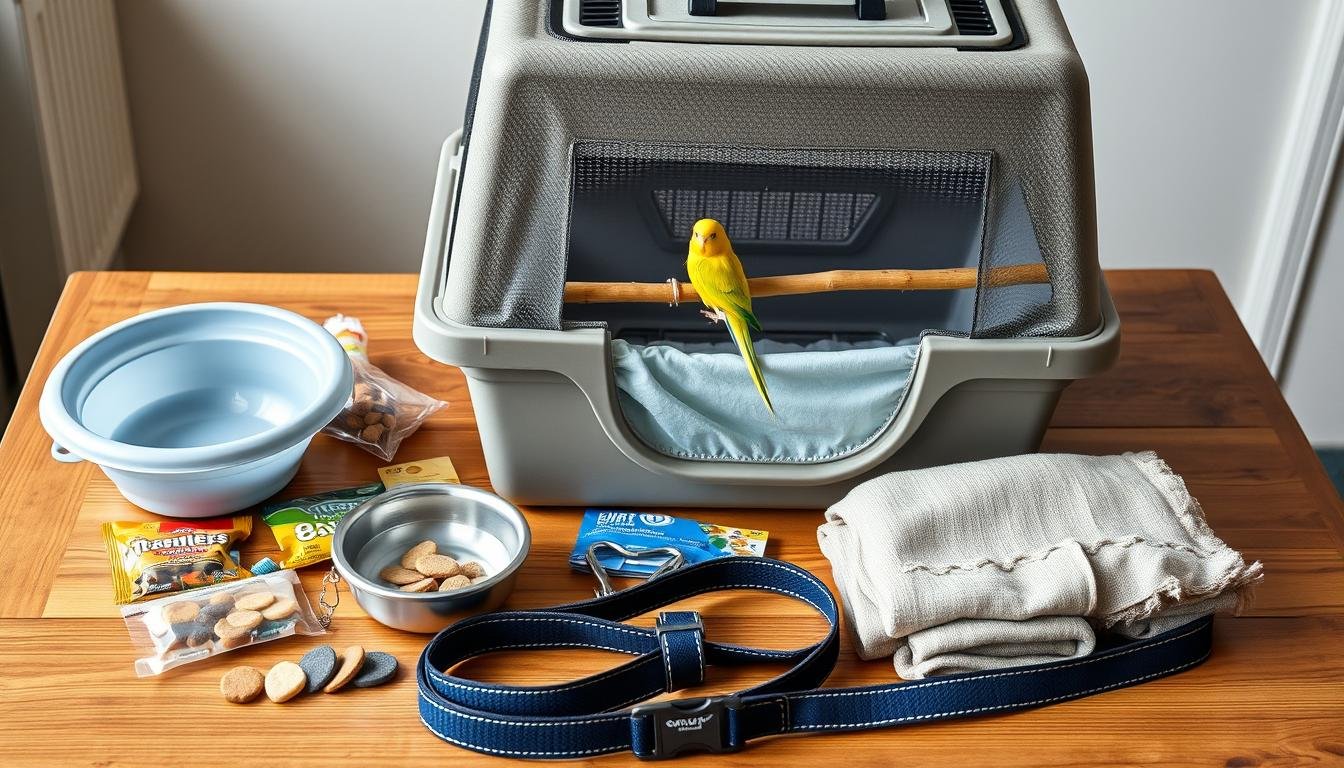
Harness training changed my bird’s travel from stressful to exciting. A proper restraint system lets my parrot enjoy fresh air and new places. This made traveling with my parrot much better.
A well-fitted harness gives you peace of mind and freedom for your bird. I’ve tried many, and some stand out for different needs. The right accessories make outdoor adventures safe and fun.
The Aviator Bird Harness: Why I Trust It Most
I’ve used the Aviator Bird Harness for over five years. It’s my top pick for medium to large parrots. Its figure-8 design doesn’t go through wings, making it stress-free for your bird.
The elastic leash is perfect for sudden movements. At a rest stop, my African Grey could perch on my shoulder. The harness stayed secure without restricting him.
The Aviator comes in various sizes, from small to extra-large. You can find sizing guides and buy at https://petzvibes.com. They offer detailed fitting instructions.
Feather Tether Harness for Budgies and Small Parrots
Small birds need lightweight solutions. The Feather Tether is perfect for budgies and small parrots. It’s less than half an ounce, ideal for tiny birds.
The adjustable strap system fits growing birds and different feather conditions. The clasp is small but secure. My budgie barely noticed it after adjusting.
Color-coded sizing makes it easy to choose. Red fits budgies, while blue is for slightly larger birds.
Proper Harness Training Before Your Trip
Start harness training weeks before your trip. Rushing can lead to failure. I learned this the hard way.
Here’s a training timeline I follow:
- Week 1-2: Let your bird get used to the harness without wearing it, using treats for positive reinforcement
- Week 3-4: Practice putting the harness on for seconds, then remove it and reward your bird
- Week 5-6: Increase wearing time to 5-10 minutes indoors while doing normal activities
- Week 7-8: Practice in your actual travel carrier and simulate car movement
Positive reinforcement is key. I use millet spray and praise to help my bird get used to the harness. Apps like Bird Journal help track progress.
Never force the harness on your bird. If they resist, slow down training. Some birds need three months to get comfortable.
Safety Leashes and Attachment Hardware
The leash and attachment points are critical. Always check the quality before each trip. A weak link can lead to losing your bird.
Look for stainless steel clasps and swivels that prevent tangling. The leash should be long enough for movement but short enough for control. I find 6 feet ideal.
Carry backup hardware in your travel kit. Spring-loaded carabiners are great for small animals. They can attach to belt loops or bird harness vests.
Never leave a harnessed bird alone. Leashes can wrap around objects or catch on surfaces, creating dangers.
| Harness Model | Best For | Key Feature | Price Range |
|---|---|---|---|
| Aviator Bird Harness | Medium to large parrots (cockatiels to macaws) | Figure-8 design with elastic leash | $25-$35 |
| Feather Tether | Small birds (budgies, lovebirds, parrotlets) | Ultra-lightweight with color-coded sizing | $15-$22 |
| The BIRD Harness | First-time harness users, all sizes | Easy-on Velcro design for quick training | $20-$28 |
| Pakoway Adjustable Harness | Growing birds and multi-bird households | Wide adjustment range fits multiple species | $18-$25 |
When shopping for harnesses and safety gear, check https://petzvibes.com. They offer product comparisons and reviews to help you choose.
Using bird training apps with physical practice is a great way to prepare. Apps like Flock help set reminders and track progress, which is helpful for frequent travelers.
4. Temperature Control and Comfort Products
I’ll never forget the sinking feeling I had when I noticed my cockatiel panting heavily during a summer road trip. I had underestimated just how quickly birds overheat. This taught me that temperature management isn’t optional when traveling with birds. Unlike mammals, birds can’t sweat to cool down, and they’re incredibly sensitive to temperature extremes.
Never place your carrier in direct sunlight, even for a minute. Birds can overheat in seconds under harsh sun exposure. Temperatures over 85°F or under 45°F create dangerous conditions for avian travel.
If you’re blasting the air conditioning on a hot day, make sure your bird isn’t directly in the cold draft path. Rapid cooling can trigger respiratory issues just as quickly as overheating causes distress. The key to pet bird safety is avoiding sudden temperature changes that stress your feathered friend’s delicate system.
Snuggle Up Bird Warmer for Cold Weather Travel
When temperatures drop below 60°F or you’re traveling through drafty conditions, the Snuggle Up Bird Warmer becomes an essential piece of safety equipment. This product features a safe, low-voltage heating element that attaches directly to your carrier without creating hot spots that could burn your bird.
I always pack mine for winter trips or early morning departures when temperatures are unpredictable. The warmer maintains a consistent, gentle heat that keeps your bird comfortable without overheating the carrier space.
You can find quality bird travel accessories like the Snuggle Up warmer at https://petzvibes.com, where I source most of my temperature control products. The installation takes just seconds—simply attach it to the outside of your carrier and plug it into a car adapter or portable power bank.
Sandy Perch and Cooling Products for Summer Trips
Summer travel requires a completely different approach to temperature management. I rely on several cooling strategies to keep my bird safe during hot weather journeys.
Sandy perches help birds regulate their body temperature naturally. These textured perches allow heat to dissipate through their feet, which is one of the primary ways birds cool themselves. I install one in every travel carrier during warm months.
For additional cooling, I use these techniques:
- Frozen water bottles wrapped in thin towels placed near (not touching) the carrier
- Cooling perch options made from ceramic or stone materials
- Water-rich fruits like cucumber and melon to boost hydration
- Misting bottles for gentle humidity control (never spray directly on your bird)
Weather monitoring apps like Weather Underground or CARROT Weather help me plan travel during optimal temperature windows. I schedule departures for early morning or evening hours to avoid peak heat.
Carrier Covers and Light Management Tools
Light management is one of the most underrated aspects of avian travel products. A proper carrier cover reduces stress by creating a den-like environment that helps your bird feel secure during the journey.
I always travel with two types of covers: a light-blocking cover for complete darkness when my bird needs rest, and a light-filtering cover that allows some visibility while reducing visual overstimulation. The key is maintaining airflow—never use plastic or non-breathable materials.
A breathable cotton or mesh cover blocks strong sunlight while allowing proper ventilation. This prevents both overheating and the stress that comes from constant visual stimulation during travel. You can use a lightweight towel in a pinch, but dedicated carrier covers provide better temperature regulation.
During rest stops, I partially remove the cover so my bird can observe the surroundings calmly without feeling exposed to possible threats. This balanced approach to light management has dramatically reduced my bird’s travel anxiety.
Portable Perch Options for Rest Stops
Familiar perching options provide psychological comfort that’s just as important as physical comfort during travel. I never take a trip without portable perches for hotel rooms and extended rest stops.
Collapsible travel perches pack flat in your luggage and set up in seconds. These provide a familiar roosting spot when you reach your destination, helping your bird feel more at home in unfamiliar environments.
Suction-cup perches are perfect for hotel room windows or smooth surfaces. My bird loves having a window perch where she can observe new surroundings from a safe vantage point. This simple comfort item reduces stress and helps maintain normal routines during extended trips.
For vehicles, I use a portable T-stand that fits in the back seat area. During long rest stops at pet-friendly locations, I can safely supervise my bird outside the carrier while keeping pet bird safety protocols. Never leave your bird unattended on a portable perch, even in a secured vehicle.
The combination of temperature control products and comfort items creates a travel environment that prioritizes your bird’s well-being. These investments in quality avian travel products have transformed my travel experiences from stressful ordeals into manageable journeys that both my bird and I can handle confidently.
5. How to Travel with My Bird: Step-by-Step Preparation Guide
Traveling with my parrot has taught me a lot. I’ve made a guide to help others prepare for bird travel. It’s important to plan ahead to avoid stress for both you and your bird.
This guide shows what I do before each trip. I’ve learned from my mistakes, and this timeline helps.
Two Weeks Before: Schedule Your Avian Vet Visit
First, schedule a vet visit two weeks before you leave. This is to get a health certificate that’s valid for travel.
Bring all your travel plans to the vet. They need to know where you’re going and how long you’ll be away. This helps them give you the best advice.
Here’s what happens at the vet:
- Comprehensive health examination: The vet checks your bird’s health, listens to their heart and lungs, and looks at their feathers and skin.
- Wing and nail assessment: You discuss if trimming is needed based on your travel plans and your bird’s flying skills.
- Health certificate issuance: For travel across states, you get a document that meets legal requirements.
- Travel fitness evaluation: The vet checks if your bird is ready for travel’s stress.
- Calming supplement discussion: If your bird is anxious, you talk about safe ways to calm them down.
Ask your vet to write down any special diet or medication needs. This is important for emergency vet visits while traveling.
One Week Before: Start Carrier Acclimation Training
Carrier training is key for bird travel. I learned the hard way not to rush it. Stuffing my cockatiel into a carrier for the first time was a disaster.
I now follow a seven-day plan to help my bird get used to the carrier. This has worked for every bird I’ve traveled with.
Day 1-2: Place the carrier in your bird’s favorite room with the door open. Put treats inside for them to find. Let them explore at their own pace.
Day 3-4: Start feeding meals inside the carrier. This makes your bird associate good things with it. Keep the door open so they can come and go.
Day 5: Move the carrier near your vehicle. Some birds get stressed by new places, so give them time to adjust.
Day 6: Sit in the car with the carrier in place but don’t drive. This helps your bird get used to the sounds and vibrations.
Day 7: Take a short drive around the block. Just five minutes is enough for the first trip. Watch your bird’s body language and reassure them with your voice.
By following this schedule, your bird will go into the carrier willingly on travel day. This has changed my travel experiences for the better.
Three Days Before: Pack Your Bird Travel Emergency Kit
Three days before, pack your bird’s emergency kit. I do this early to avoid forgetting important items. Having everything ready reduces stress for both you and your bird.
Here’s what to pack:
- Health documents: Original health certificate, vaccination records, and vet contact information
- Emergency vet list: Pre-researched avian vets along your route and at your destination
- First-aid supplies: Styptic powder, gauze, antiseptic wipes, and a small towel for restraint
- Extra food and water: At least three days’ worth beyond what you think you’ll need
- Familiar items: Favorite toys, a piece of fabric from home cage, and preferred perches
- Cleaning supplies: Paper towels, bird-safe wipes, and small trash bags
- Comfort tools: Carrier cover, portable warmer or cooling pack depending on season
- Medication: Any prescription items with dosing instructions clearly labeled
Keep all these items in a dedicated travel bag. Also, take a photo of your checklist on your phone for future trips.
Never forget a recent photo of your bird on your phone. If your bird gets lost, a clear photo helps identify them.
Travel Day Morning: Final Checklist and Routine
On travel day, follow a calm routine. Birds pick up on our emotions, so stay calm.
Wake up early to avoid feeling rushed. This helps keep the atmosphere peaceful.
My morning routine includes:
- Feed a light meal about two hours before departure to reduce motion sickness
- Double-check that the carrier is securely assembled with all latches working properly
- Verify that all packed supplies are in the car and easily accessible
- Give your bird one final bathroom break opportunity in their regular cage
- Speak in calm, reassuring tones while moving your bird to the travel carrier
Stick to your bird’s usual routine on travel day. If they normally get morning cuddles, make sure that happens. Play their favorite song softly.
Before leaving, check the carrier’s safety in your vehicle. It should be secured with a seatbelt, away from airbags, and where you can watch your bird without looking away from the road.
Understanding how to travel with my bird means respecting their need for consistency. This preparation timeline has made travel less stressful for both of us.
This step-by-step approach removes the chaos from travel preparation. Each stage builds on the previous one, creating a foundation of confidence and safety that makes the actual journey much smoother for both of us.
6. Portable Food and Water Solutions for Bird Travel
Right food and water solutions make bird travel easier. I’ve learned that keeping food fresh and water accessible is key. Water dishes spill easily, making travel messy.
When traveling with pet birds, how you hydrate and feed them matters. I use spill-proof systems that attach to carrier bars. This keeps my bird comfortable and me stress-free.
Secure Feeding Systems That Prevent Spills
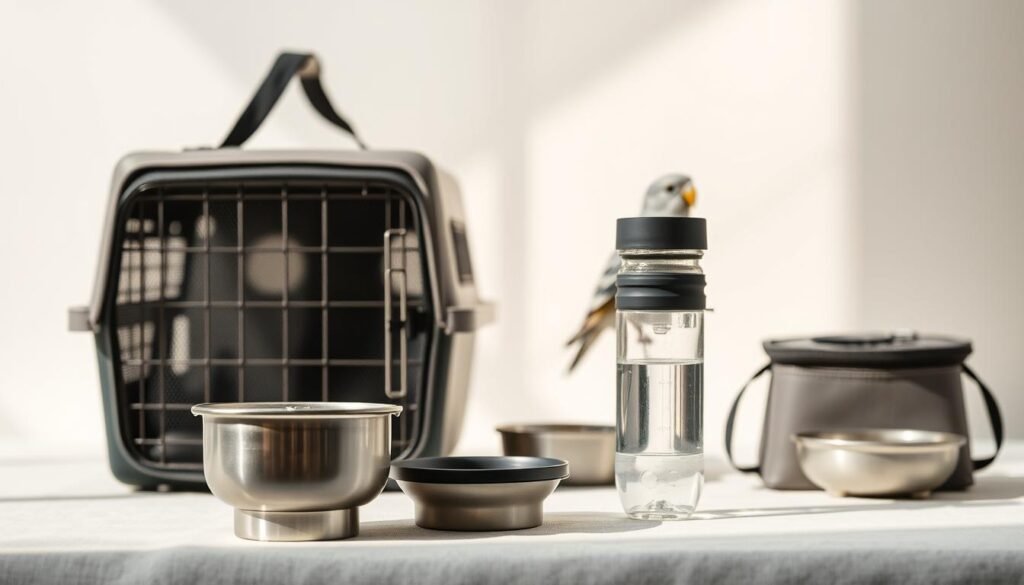
The JW Pet Insight Clean Cup Feed and Water Cups are my top choice. They have a twist-lock mechanism that secures to carrier bars. They’re perfect for any road trip.
I love how easy it is to see when food and water need refilling. The clear design lets me check levels without opening the carrier. They come in various sizes to fit any carrier.
These cups are dishwasher safe, making cleanup a breeze. I bring two sets for long trips. You can find them at https://petzvibes.com along with other travel essentials.
Water Bottle Systems for Mess-Free Hydration
Lixit Quick Lock Bird Water Bottles solve the hydration problem. Their no-drip tube design works even on bumpy roads. My bird drinks without spilling.
I prefer bottles over dishes for trips over an hour. The quick-lock system attaches fast. Training my birds to use them at home makes travel smoother.
These bottles come in sizes from 4 ounces to 32 ounces. For short trips, I use the smaller sizes. Longer trips need the bigger bottles to avoid constant refills.
Smart Storage Solutions for Fresh Food
Keeping food fresh during travel requires the right accessories. I use small divided containers to separate food types. Seeds, pellets, and treats stay fresh.
Silicone travel containers are great because they’re flexible, lightweight, and easy to clean. You can find them at https://petzvibes.com. They seal tightly, keeping food fresh.
For fresh foods, I pack them in insulated bags with ice packs. This keeps veggies and fruits fresh on hot days. I cut them into bird-sized portions before leaving.
Keeping Your Bird’s Diet Consistent on the Road
Keeping your bird’s diet consistent is key for their safety and comfort. I always bring their usual food brand. Changing their diet can upset their stomach.
I also bring bottled water from home for long trips. Different water can taste strange to birds. Hydration is essential, so I offer water-rich foods like cucumber and apple.
For short rides, fruits provide enough moisture. Longer trips need a water bottle attached to the carrier. I stop every two hours to check food and water levels and offer fresh snacks.
I plan meal times with natural rest stops in mind. This helps my bird stay calm and eat normally, even away from home.
| Trip Duration | Hydration Method | Feeding Schedule | Check Frequency |
|---|---|---|---|
| Under 2 hours | Fresh fruits (cucumber, apple) | Light snack before departure | Check at destination |
| 2-4 hours | Water bottle + fruits | Small meal before trip, snack at rest stop | Every 2 hours |
| 4-8 hours | Large water bottle + vegetables | Regular meals at 2-3 hour intervals | Every 90 minutes |
| Over 8 hours | Multiple bottles + fresh produce | Full meals every 3-4 hours | Every hour |
Pre-portioning meals in small containers makes feeding efficient. I measure out exact amounts before leaving. This prevents overfeeding and helps track if my bird is eating normally.
7. Safety Equipment Every Bird Traveler Needs
Pet bird safety is more than just a carrier. It’s about being ready for anything on the road. I’ve traveled with my birds for years. I’ve learned that the right safety gear can make all the difference.
These items are not just nice to have. They’re essential for avoiding stressful situations. Whether you’re on a short trip or flying far, these products will keep your bird safe.
Building Your Complete Avian First Aid Kit
First aid kits are key for bird travel. Mine fits in a waterproof pouch in my bag. I’ve worked with my vet and other bird owners to make sure it’s just right.
Here’s what’s in my kit:
- Styptic powder or cornstarch for stopping bleeding from broken blood feathers or nail injuries
- Sterile gauze pads and self-adhesive bandage wrap in small sizes appropriate for birds
- Small scissors and tweezers (sterilized) for removing foreign objects or trimming damaged feathers
- Emergency heat source like chemical hand warmers for treating shock or hypothermia
- Electrolyte solution specially made for birds to prevent dehydration
- Feeding syringe (1-3ml) for giving fluids or medicine
- Bird-safe antiseptic solution (chlorhexidine-based, never hydrogen peroxide)
- Emergency contact list with numbers for avian vets along your route
- Any prescribed medications your bird takes, plus extras in case of delays
- Small flashlight or penlight for looking at your bird in dim light
Check out pre-assembled avian first aid kits at https://petzvibes.com. They have items you might not think of and are made for bird emergencies. I add my bird’s specific meds and customize for my trip.
Organizing Emergency Contacts and Medical Documentation
I learned the importance of medical records the hard way. My cockatiel got sick during a trip. Having his medical history helped the vet save his life.
I make an emergency contact card with my vet’s info, local vets, 24-hour clinics, and the ASPCA hotline. I carry one in my carrier and another in my wallet.
My medical records organizer has vaccination records, blood work, medication lists, allergies, and a medical history summary. I also have digital copies on my phone using the Pet First Aid app by Red Cross.
Attach a USB drive to your key ring with scanned documents. It’s a backup for your backup. It helped me when my phone died at a vet visit.
Essential Bird-Safe Cleaning Supplies for Travel
Accidents happen, more so when birds are stressed and eating irregularly. I have a mini cleaning kit ready with safe supplies for quick cleanup.
Poop-Off Bird Poop Remover is my favorite for messes. It breaks down dried droppings without harsh chemicals. It works on fabric, plastic, and car upholstery. I’ve tried others, but Poop-Off is the best and safest.
Beyond Poop-Off, my kit has paper towels and extra cage liners for quick cleanups. I prefer natural bird-safe wipes over chemical ones. Small garbage bags or zipper bags hold soiled materials until disposal.
I also carry extra perches and food dishes for quick swaps. A small bottle of bird-safe dish soap and a compact scrub brush complete my supplies.
Keep cleaning supplies in a sealed bag away from your bird’s food and water. Even bird-safe products shouldn’t contaminate your bird’s meals.
Reliable Identification Solutions for Your Traveling Bird
Pet bird safety depends on proper identification. I once met a traveler who lost her sun conure at a hotel. Thanks to multiple IDs, they were reunited in 48 hours. This taught me the importance of thorough identification.
I use a layered approach to identification. My parrot has a leg band with a unique number registered with the breeder. I keep photos of the band in my travel folder.
Microchipping is a more permanent option, though less common for birds. My vet uses a bird-specific chip, and I carry the registration in my emergency kit. But not all facilities can scan bird chips, so I don’t rely on it alone.
For the carrier, I attach durable ID tags with my contact info, alternate numbers, and a note saying “LIVE BIRD – CALL IMMEDIATELY IF FOUND.” I update these tags before every trip.
A recent color photo is the most practical ID tool. I have a printed photo in my kit and high-resolution images on my phone. If my bird escapes, I can share these photos with authorities and shelters.
Here’s a comparison of different identification methods to help you decide which combination works best for your situation:
| Identification Method | Permanence | Cost | Effectiveness | Limitations |
|---|---|---|---|---|
| Leg Bands | Permanent if closed band | $5-$20 | High if registered properly | Can be removed; requires visible inspection |
| Microchips | Permanent | $25-$50 | Very high with compatible scanners | Not all facilities can scan bird chips |
| Carrier ID Tags | Temporary per trip | $3-$10 | Moderate | Only helps if bird is found with carrier |
| Photographs | Update as bird ages | Free | High for visual identification | Requires you to distribute actively |
Use at least three different identification methods. A leg band, current photos, and carrier tags give you the best chance of recovery if you’re separated.
Monitor your bird for signs of heat stress or distress. Keep them away from direct air conditioning vents and never in direct sunlight near windows. Watch for panting, drooping wings, or vomiting, which signal heatstroke needing vet attention.
Having the right safety equipment makes bird travel preparation easier. These products give me confidence to travel more with my birds, knowing I’m ready for anything. The small investment in quality gear pays off in peace of mind and your bird’s health.
8. Apps and Tools to Make Bird Travel Easier
Right apps and tools can make bird travel smooth and organized. I’ve found digital resources for safer journeys, tracking health, and finding bird-friendly places. These tools have made planning easier.
Modern apps give real-time info for better travel decisions. I check weather, find vet clinics, and track my bird’s health. This helps a lot during travel.
Pet Travel Apps That Accept Birds
BringFido is great for finding places that welcome birds, even if it’s mainly for dogs. I use filters to find pet-friendly hotels and call to confirm they accept birds. It shows pet policies, fees, and size limits for many places.
Pets Welcome app is perfect for finding pet-friendly spots like restaurants and parks. I’ve found cafes where I can eat with my bird. It also has reviews from other pet owners.
Roadtrippers helps plan routes with rest stops and scenic views. It’s great for planning bird-friendly stops. This app breaks long drives into segments with rest breaks.
Weather Apps for Safe Journey Planning
Weather Underground gives local weather forecasts. I check the forecast for every stop, not just my destination. This helps avoid extreme temperatures.
CARROT Weather offers detailed forecasts and alerts. It warns of sudden temperature changes. Its funny personality makes checking the weather fun.
Weather Alert USA sends severe weather warnings. I’ve changed plans due to tornado warnings and extreme cold. Its real-time radar helps navigate storms.
Bird Care Tracking for Consistent Routines
Bird Journal helps keep care routines consistent during travel. I log feeding times, water changes, and behavior. It’s great for emergency vet visits.
The app tracks weight, medication, and diet. I set reminders for feeding times. This keeps my bird’s routine consistent, even across time zones.
Flock is great for managing multiple birds. It organizes vet appointments, health records, and vaccination. It’s easy to access all documents for airline or hotel staff.
Both apps export reports for my vet. This helps identify travel patterns. The digital records are more reliable than my notes.
| App Category | Recommended Apps | Key Features | Cost |
|---|---|---|---|
| Pet Travel | BringFido, Pets Welcome | Bird-friendly accommodations, restaurant filters, user reviews | Free with premium options |
| Weather Monitoring | Weather Underground, CARROT Weather | Hyper-local forecasts, severe weather alerts, hourly timelines | Free to $4.99/month |
| Bird Care Tracking | Bird Journal, Flock | Health logs, medication reminders, vet record organization | Free to $2.99/month |
| Route Planning | Roadtrippers, Google Maps | Rest area identification, distance calculations, time estimates | Free with premium features |
Earning Opportunities Through Product Recommendations
Sharing bird travel experiences can earn income. Recommending bird travel accessories through affiliate programs is a win-win. It helps others and earns me commissions.
Amazon Associates has a wide selection of bird travel products. I link to products I trust. The key is to provide real value, not just random links.
Chewy affiliate program specializes in pet supplies. Their commission structure rewards repeat purchases. I recommend their travel food containers and portable perches.
Specialized bird retailers like https://petzvibes.com offer unique accessories. Partnering with niche retailers provides exclusive recommendations. These partnerships often have higher commissions and dedicated support.
I focus on solving real bird travel problems. My top recommendations are the Aviator Harness and temperature-controlled carriers. Real experiences are more valuable than generic descriptions.
9. Car, Plane, and Hotel Considerations for Bird Owners
Traveling with birds can be challenging. Each method—driving, flying, or staying in hotels—has its own set of rules. Securing your bird in a car is different from preparing for a flight. Also, finding hotels that welcome birds requires special research.
I’ve made mistakes in all three areas. These experiences taught me a lot. Now, I plan every trip carefully, covering safety, accommodations, and backup plans.
Securing Your Bird Carrier Safely in Vehicles
My first car trip with a parrot was a learning experience. I placed the carrier on the back seat. At a sharp turn, it slid and tipped over, scaring my bird.
The safest spot for your bird carrier is on the floor behind the front seat. This keeps it stable and safe from sudden stops or collisions. The carrier won’t slide or tip during normal driving.
Here’s how I secure the carrier:
- Place the carrier on the floor, not on seats where it can shift
- Thread the seat belt through the carrier handle if possible
- Use bungee cords to attach the carrier to seat anchors for extra stability
- Never position the carrier in the front seat due to airbag deployment risks
- Ensure the carrier remains level throughout the journey
- Check security at each stop to verify nothing has loosened
Temperature control is also key. Never leave your bird alone in a parked car. Cars can get very hot or cold quickly.
I use a sunshade for the windows and crack them slightly for air. During a trip, I keep the carrier away from air conditioning vents to avoid drafts.
Understanding Airline Policies for In-Cabin Bird Travel
Flying with my bird was stressful. Each airline has different rules, and some don’t allow birds. I start researching two months before any flight.
Call the airline directly—don’t rely solely on website information. Phone reps can give you the latest policy details. Emails can take days and miss important points.
Domestic flights require an approved carrier that fits under the seat. These carriers need ventilation and secure closures. Your bird counts as one pet per cabin.
Health certificates are needed for flying. Most airlines require a vet’s note within 10 days of your flight. I carry two copies of this document.
TSA checkpoints are another challenge. You’ll need to remove your bird from the carrier for screening. Harness training is essential for air travel. I walk through the metal detector with my harnessed bird while the carrier is screened separately.
| Airline | Birds Allowed in Cabin | Carrier Size Limit | Fee Per Flight |
|---|---|---|---|
| American Airlines | Yes (domestic only) | 19″ x 13″ x 9″ | $125 each way |
| Delta Airlines | Yes (restrictions apply) | 18″ x 11″ x 11″ | $125 each way |
| Southwest Airlines | No (birds not accepted) | N/A | N/A |
| United Airlines | Yes (domestic only) | 17.5″ x 12″ x 7.5″ | $125 each way |
International flights rarely allow birds in the cabin. If you’re traveling abroad, your bird will likely fly as cargo with extra health checks.
Finding Bird-Friendly Hotels and Vacation Rentals
Learning that “pet-friendly” doesn’t always mean “parrot-friendly” was tough. Many hotels welcome dogs and cats but not birds. This is often due to noise or allergy concerns.
Always call the hotel directly before booking. Explain that you have a small parrot and ask about their bird policy. Many hotels update their pet policies but don’t reflect these changes online.
When researching hotels, I ask these questions:
- Do you allow pet birds in guest rooms?
- Are there size or species restrictions for birds?
- What is the pet deposit or additional fee?
- Are rooms with balconies available for fresh air access?
- Can you provide a quiet room away from high-traffic areas?
Smaller hotels and vacation rentals are often more welcoming than big chain hotels. On platforms like Airbnb and VRBO, you can message hosts about their bird policies before booking.
When I arrive at my accommodation, I do a safety check. I look for ceiling fans to disable, open windows to secure, and possible escape routes. I bring my own portable perch and set up a familiar space for my bird right away.
For more travel tips, I check out https://petzvibes.com. There, bird owners share their experiences and advice.
Rest Stop Strategies and Outdoor Safety During Long Drives
I almost lost my bird at a rest stop once. I opened the carrier door to give water without checking my surroundings. A truck door slammed nearby, startling my bird. This moment taught me to be more careful at stops.
Plan rest stops every 90 to 120 minutes during long drives. Birds need regular chances to drink water and stay calm. I choose quiet rest areas away from highway noise.
My rest stop routine is strict:
- Pull into a parking spot away from other vehicles and foot traffic
- Turn off the engine and assess the noise level outside
- Check the temperature before opening any carrier doors
- Offer water using attached cups—never fully open the carrier door in public spaces
- Provide small snacks through the carrier opening if needed
- If harness-trained, only remove your bird in a completely secure, calm environment
I never open my carrier door while the car is running or in an unsecured area. Even the most well-behaved bird can get startled by unexpected sounds or movements. The risk isn’t worth those few extra minutes of convenience.
In summer, I look for shaded parking spots at rest areas. In winter, I keep the car running with heat for a few minutes before giving my bird food or water. Sudden temperature changes can stress and harm your bird.
I also watch my bird’s body language at each stop. Signs of stress like heavy breathing, fluffed feathers, or unusual vocalizations tell me if I need to slow down or take a longer break.
Traveling long distances with parrots requires patience and flexibility. I always add extra time for these stops. Rushing through breaks only increases stress for both me and my bird, making the journey harder than it needs to be.
10. Post-Travel Care and Helping Your Bird Readjust
After every trip with my bird, the first 48 hours back are key. They need time to relax, adjust, and get better from the trip. It’s not just about arriving home or reaching your destination.
I give extra attention during this time. Even the smoothest trips can cause stress that shows up later. Being proactive about care helps me catch issues early and keep my bird healthy.
Monitoring for Signs of Travel Stress and Illness
Watching my bird closely after traveling is essential. Bird travel stress can show in many ways, some obvious, others not so much.
I keep a detailed log for 72 hours after we return. This helps me track changes and notice any issues. Here’s what I watch for:
- Droppings changes: I check the color, consistency, and frequency. Watery droppings or unusual colors signal digestive upset.
- Appetite and thirst: Decreased food or water intake is one of the earliest stress indicators I notice.
- Energy levels: Excessive sleeping, lethargy, or unusual quietness concerns me immediately.
- Feather condition: I watch for plucking, over-preening, or destructive behaviors directed at feathers.
- Respiratory symptoms: Sneezing, nasal discharge, tail bobbing, or labored breathing require immediate attention.
- Behavioral shifts: Aggression, fearfulness, excessive vocalization, or withdrawal from interaction are red flags.
- Physical coordination: Loss of balance, difficulty perching, or clumsiness can indicate serious problems.
I once caught a respiratory infection in my cockatiel within 24 hours of returning from a weekend trip. She seemed fine initially, but I noticed slight tail bobbing when she breathed. Because I was monitoring closely, we got to the vet quickly and avoided a serious illness. That experience reinforced how critical observation is for pet bird safety.
I use bird care tracking apps to document what I see. This creates a record I can share with my veterinarian if concerns arise. Detailed notes make a huge difference when describing symptoms.
Re-establishing Home Routines and Comfort Zones
Getting back to normal routines is essential for reducing bird travel stress. Birds thrive on predictability, and travel disrupts their sense of security. I make it my priority to restore familiarity as quickly as possible.
Here’s my reintegration strategy that works every time:
- Same cage setup: I position perches, toys, and food dishes exactly where they were before we left.
- Consistent feeding times: I stick to the regular schedule without variation, using the same foods my bird is accustomed to.
- Normal lighting routine: I maintain the usual wake-up and bedtime hours to support their circadian rhythm.
- Favorite enrichment: I provide preferred toys and activities to create positive associations.
- Quiet adjustment period: I allow my bird to explore at their own pace without forcing interaction.
- Gradual socialization: If we’re at a new location, I introduce the surroundings slowly over several days.
I also stay consciously calm and relaxed. Birds are incredibly perceptive and pick up on owner anxiety. When I project confidence and normalcy, my bird responds by settling down faster.
At a destination, I let my bird gradually check out their temporary environment. I set up a “home base” area with familiar items before allowing wider exploration. This gives them a safe retreat zone.
Positive reinforcement works wonders. I reward calm behavior with favorite treats and gentle attention. This helps my bird associate the new routine with good experiences.
When to Schedule a Follow-Up Vet Appointment
Knowing when to contact your veterinarian is a key part of pet bird safety. I don’t hesitate to schedule an avian vet check if anything seems off after traveling.
I immediately book an appointment if I notice:
- Any respiratory symptoms: These can escalate quickly and require prompt treatment.
- Appetite loss beyond 24 hours: Extended refusal to eat indicates a serious problem.
- Persistent abnormal droppings: If changes continue past 48 hours, medical evaluation is necessary.
- Dramatic behavior changes: Sustained aggression, extreme fear, or personality shifts warrant professional assessment.
- Traumatic travel events: If my bird experienced an escape attempt, extreme temperature exposure, or physical injury, I schedule an exam regardless of visible symptoms.
- Extended trip duration: After trips longer than one week, I arrange a routine follow-up even without obvious concerns.
For more information on finding qualified avian veterinarians, visit https://petzvibes.com. They offer vet finder tools and post-travel care guides.
I’ve learned that early intervention prevents minor issues from becoming major health crises. The cost of a preventive avian vet check is minimal compared to treating advanced illness. When in doubt, I always err on the side of caution.
Post-travel care might seem tedious, but it’s protected my bird’s health countless times. Those first few days of careful observation and routine maintenance make all the difference in successful travel experiences.
Conclusion
I remember my first time figuring out how to travel with my bird. It felt overwhelming. I worried about every little thing.
But after that first successful trip, everything changed. The process became second nature.
Bird travel preparation may seem extensive at first glance. Start weeks in advance. Invest in quality carriers like the Prevue Hendryx or Celltei Pak-o-Bird.
Practice with harnesses like The Aviator before departure day. Monitor your bird’s comfort constantly. These steps protect your feathered companion.
Traveling with pet birds actually strengthens your bond. Birds who journey with their owners often show more confidence. They trust you to keep them safe in new situations.
That trust creates shared experiences you’ll both treasure.
Your first trip might challenge you. The reward makes it worthwhile. Watching your bird confidently explore a new place by your side brings incredible joy.
I’ve gathered detailed guides, product reviews, and community support at https://petzvibes.com to help you every step of the way.
Take that first step. Pack your carrier. Schedule your vet visit. Your bird is ready for adventure with you. Safe travels, and remember: you’ve got this!
FAQ
Can I travel with my bird without any special preparation?
No, traveling with a bird requires careful planning. Birds need routine for security. Start two weeks before your trip with carrier training and a vet check.
Get all safety gear ready. Without prep, your bird may get stressed, sick, or even escape. The effort you put in will help your bird’s safety and happiness.
Do I need a health certificate to travel with my bird across state lines?
Yes, many states need health certificates for birds crossing borders. Check your route and destination’s rules. Your vet can give you a Certificate of Veterinary Inspection (CVI) for 30 days.
Book your vet visit one to two weeks before. This ensures the certificate is valid for your trip. Always check with the state veterinarian’s office for the latest rules.
What are the warning signs that my bird is stressed during travel?
Look for signs like too much talking or silence, fast breathing, and feather fluffing. Also, watch for pacing, loss of appetite, and aggressive behavior.
Signs of respiratory distress include tail bobbing and droopy wings. If you see these, check the environment and make changes. I once almost overheated my bird before realizing the signs.
Which carrier should I choose for a three-hour car trip with my cockatiel?
For a three-hour trip, use the Vision Model L01 Bird Travel Cage. It’s bigger than compact carriers, giving your cockatiel room for comfort. The Prevue Hendryx is good for shorter trips.
The Vision model is secure and well-ventilated. It has perches for stability. Choose a carrier based on your bird’s size and the trip’s length.
How long before my trip should I start harness training my bird?
Start harness training three to four weeks before. It takes patience and gradual steps. Begin indoors with positive reinforcement.
Practice putting the harness on and off daily. Increase wearing time. Use the Aviator Bird Harness for easier training. Spend 10-15 minutes daily on training, ending with treats and praise.
What temperature range is safe for traveling with my bird?
Most birds prefer 65°F to 80°F. I learned to manage temperature after almost overheating my bird. Use the Snuggle Up Bird Warmer for cold.
In summer, use frozen water bottles and sandy perches. Monitor temperature with a thermometer. Plan your route with weather apps to avoid extreme temperatures.
Can I bring my bird on an airplane in the cabin with me?
Yes, but check airline policies first. They vary a lot. Call airlines directly to confirm bird acceptance.
Delta, United, and American Airlines used to allow small birds in-cabin. But policies change. You’ll need health certificates and an approved carrier.
What should I include in my bird’s travel first aid kit?
Your kit should have styptic powder, gauze, tweezers, and emergency heat. Include electrolyte solution, a syringe, and bird-safe antiseptic.
Keep a list of vet contacts and any prescribed meds. Add Poop-Off spray and bird-safe wipes. Download the Pet First Aid app for emergencies.
How often should I stop during a long car journey with my bird?
Stop every 90 to 120 minutes. Choose quiet areas away from noise. Check the carrier temperature before opening it.
Offer fresh water and snacks. Monitor for stress signs. Use the Aviator Bird Harness for outdoor time. Plan your route with the Roadtrippers app.
What should I feed my bird during travel to prevent digestive issues?
Stick to your bird’s regular diet as much as possible. Bring familiar food brands. Offer water-rich veggies like cucumber and apple.
Feed a light meal on travel day morning. Use JW Pet Insight Clean Cup containers and Lixit water bottles for mess-free hydration. Keep feeding times consistent.
How do I find bird-friendly hotels and accommodations?
Use BringFido and Pets Welcome apps to find pet-friendly places. Then call to ask about bird policies. Explain your bird’s size and needs.
Confirm in writing if possible. Ask about temperature control and request ground-floor rooms. Keep a list of bird-friendly hotels on petzvibes.com.
How long does carrier acclimation training typically take?
It takes at least seven days, sometimes longer. Start by placing the carrier in a familiar room. Gradually increase time in the carrier.
Move to the car, then take a short drive. Watch for stress signs. Rushing this process can create fear.
What apps do you recommend for planning bird travel routes?
Use Weather Underground for local forecasts. CARROT Weather gives hourly temperature timelines. Weather Alert USA sends severe weather warnings.
For route planning, try Roadtrippers. It helps find rest areas and vet appointments. BringFido and Pets Welcome are good for finding accommodations. Use Bird Journal and Flock for tracking care.
Should I cover my bird’s carrier during travel?
Yes, use breathable covers for light management. This reduces stress. But avoid covers that block airflow to prevent overheating.
Adjust covering based on your bird’s behavior. During stops, partially uncover the carrier for reassurance.
What’s the best way to introduce my bird to a new environment after arriving?
Set up familiar perches and maintain regular feeding times. Provide favorite toys and comfort items. Let your bird decompress quietly.
Introduce new surroundings gradually. Create a “safe zone” in hotel rooms. This prevents panic and disorientation.
Are there affiliate marketing opportunities for bird travel products?
Yes, share your bird travel experiences with products. Join programs like Amazon Associates and Chewy Affiliate. Only recommend products you trust.
Be transparent about affiliate relationships. Focus on providing value through detailed guides. Honest recommendations build trust and increase conversions.